

Pet Supplies
The Best Slow-Feeder Dog Bowls: 4 Compared (and One to Skip)
We compared four maze bowls on how much they actually slow a gulper, plus material hygiene, cleanability, and whether they stay put.
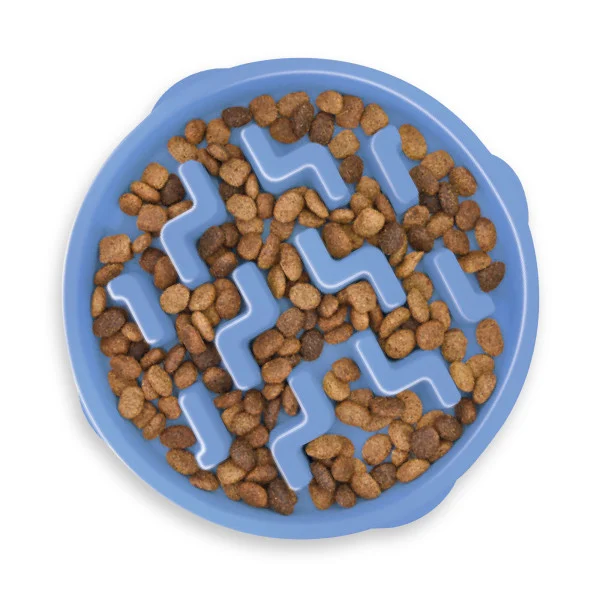
The short version
Most dogs are best served by the Outward Hound Fun Feeder Slo Bowl: its deep maze genuinely slows fast eaters, and it comes in escalating difficulty levels and sizes (including a flat-face version) so you can match it to your dog. The Neater Pets Non-Tip Stainless Steel Slow Feed Bowl is the runner-up for anyone who values hygiene and a bowl that won't move — stainless doesn't scratch or hold odor, and the weighted base stays put. The Messy Mutts Interactive Slow Feeder is a gentler melamine option that's great for moderate or flat-faced eaters but under-challenges a determined gulper. Skip the Aspen Pet Skid Stop: it's cheap, but too shallow and light to solve the fast-eating problem. And remember a slow feeder curbs gulping and gulped air — it is not a treatment for bloat. Best for: fast eaters who need a real maze, with material and difficulty matched to the individual dog.
Our picks at a glance
- Outward Hound Fun Feeder Slo Bowl - Buy. The default recommendation for good reason: a genuinely challenging maze, sold in a range of difficulty levels and sizes.
- Neater Pets Non-Tip Stainless Steel Slow Feed Bowl - Buy. The hygienic, stays-put pick: a stainless maze in a weighted, non-skid base that a pushy dog can't shove around.
- Messy Mutts Interactive Slow Feeder - It depends. A gentler melamine flower-maze that suits moderate eaters and dogs the fiendish bowls frustrate — but not an extreme gulper.
- Aspen Pet Skid Stop Slow Feeder Dog Bowl - Skip. Cheap and light, with a shallow ridge pattern that a fast eater plows straight through.
The verdict in 30 seconds
What mattered most
- Slows a fast eater
- Material & hygiene
- Cleanability
- Stays put
- Difficulty & size options
- Snout-friendly / flat-face
A slow-feeder bowl turns a 30-second inhale into a few minutes of nose-work, which can cut the gulped air, choking, and vomiting that come from eating too fast. But the category is full of shallow, slippery plastic that a determined dog empties in seconds. We synthesized independent testing and owner reports to sort four current bowls: two we'd buy, one that depends on your dog, and one we'd skip.
The default recommendation for good reason: a genuinely challenging maze, sold in a range of difficulty levels and sizes.
Best for: Most fast eaters; owners who want to dial difficulty up or down by choosing the right level and size
- Deep, twisting ridge pattern that meaningfully slows most fast eaters
- Sold in escalating difficulty levels and multiple capacities, plus a flat-face version for snub-nosed breeds
- Food-safe plastic (no BPA, PVC, lead, or phthalates), non-slip base, top-rack dishwasher safe
- Tight channels take a scrub to get fully clean
- Hard plastic can scuff over years, and scratches eventually harbor bacteria
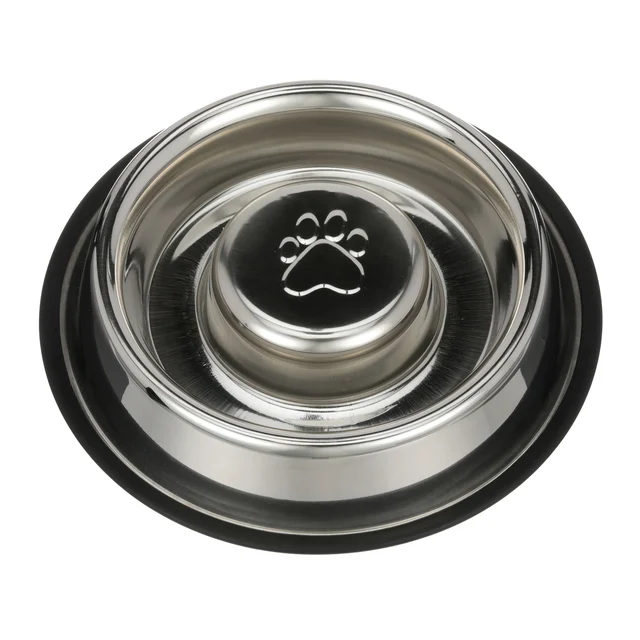
The hygienic, stays-put pick: a stainless maze in a weighted, non-skid base that a pushy dog can't shove around.
Best for: Chewers and bowl-destroyers, raw feeders, and anyone who prioritizes hygiene and a bowl that stays put
- Stainless steel won't scratch, absorb odor, or harbor bacteria the way scuffed plastic does
- Heavy, non-tip base with a non-skid ring keeps it planted for shove-and-chase eaters
- Dishwasher safe and effectively indestructible for chewers
- Molded metal ridges are shallower than a deep plastic maze, so it slows a determined gulper a bit less
- Costs more and is heavier to handle than plastic
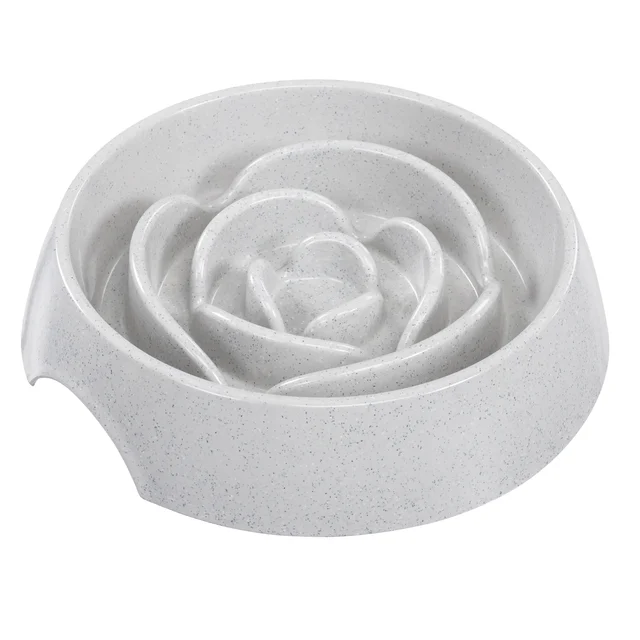
A gentler melamine flower-maze that suits moderate eaters and dogs the fiendish bowls frustrate — but not an extreme gulper.
Best for: Moderate eaters, dogs that give up on hard mazes, and owners who want an easy-clean, odor-resistant bowl
- Melamine resists stains and odor and wipes clean easily; dishwasher safe
- Rounded flower pattern and shallower profile are friendlier for gentle or flat-faced dogs
- Heavier and more durable than thin budget plastic
- The gentle maze is a modest challenge — a truly determined gulper can still clear it fast
- Pricier and heavier than plastic, and melamine must never go in the microwave
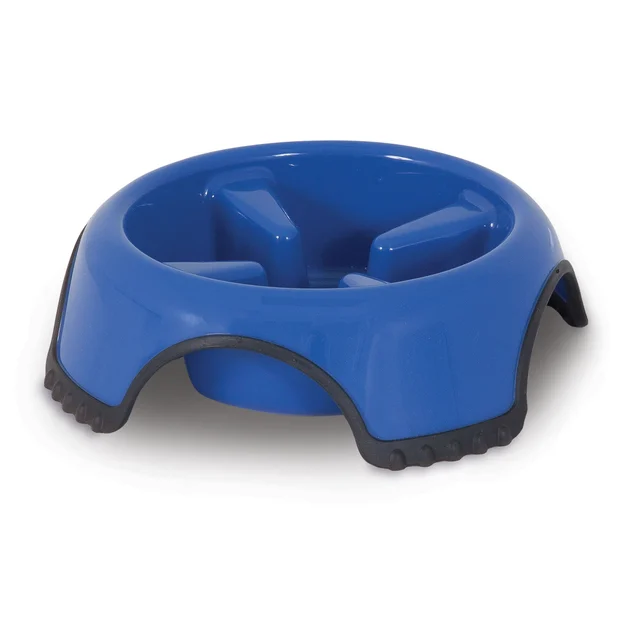
Cheap and light, with a shallow ridge pattern that a fast eater plows straight through.
Best for: Only a mild, tidy eater on a tight budget; the wrong tool for the fast eater this list is about
- Inexpensive and widely available
- Non-skid ring and dishwasher safe; fine for a mild eater on a budget
- Ridges are too shallow to meaningfully slow a determined gulper
- Thin, light plastic slides and flips for a pushy dog, and scuffs quickly — and scratches harbor bacteria
| Criteria | Outward Hound Fun Feeder Slo Bowl Top pick | Neater Pets Non-Tip Stainless Steel Slow Feed Bowl | Messy Mutts Interactive Slow Feeder | Aspen Pet Skid Stop Slow Feeder Dog Bowl |
|---|---|---|---|---|
| Verdict | Buy it | Buy it | It depends | Skip it |
| Best for | Most fast eaters; owners who want to dial difficulty up or down by choosing the right level and size | Chewers and bowl-destroyers, raw feeders, and anyone who prioritizes hygiene and a bowl that stays put | Moderate eaters, dogs that give up on hard mazes, and owners who want an easy-clean, odor-resistant bowl | Only a mild, tidy eater on a tight budget; the wrong tool for the fast eater this list is about |
| Price tier | $$ · mid-range | $$$ · premium | $$ · mid-range | $ · budget |
| Slows a fast eater | Strong — deep twisting maze | Good — but shallower metal ridges | Moderate — gentle flower maze | Weak — shallow ridges |
| Material & hygiene | Food-safe plastic; can scuff over time | Stainless — no scratch or odor | Melamine — stain/odor resistant | Thin plastic — scuffs, holds odor |
| Cleanability | Dishwasher safe; tight channels need a scrub | Dishwasher safe; wipes clean | Dishwasher safe; easy wipe | Dishwasher safe |
| Stays put | Non-slip base | Heavy non-tip base — excellent | Weighted, non-slip base | Light — slides and flips |
| Difficulty & size options | Multiple levels and sizes | Limited sizing | A couple of capacities | Few options |
| Snout-friendly / flat-face | Flat-face version available | Open, shallow-ish profile | Rounded, gentle profile | Basic shallow profile |
| Price tier | $$ · mid-range | $$$ · premium | $$ · mid-range | $ · budget |
Which one is right for you?
- Most fast eaters; owners who want to dial difficulty up or down by choosing the right level and size Buy it Outward Hound Fun Feeder Slo Bowl
- Chewers and bowl-destroyers, raw feeders, and anyone who prioritizes hygiene and a bowl that stays put Buy it Neater Pets Non-Tip Stainless Steel Slow Feed Bowl
- Moderate eaters, dogs that give up on hard mazes, and owners who want an easy-clean, odor-resistant bowl It depends Messy Mutts Interactive Slow Feeder
- Only a mild, tidy eater on a tight budget; the wrong tool for the fast eater this list is about Skip it Aspen Pet Skid Stop Slow Feeder Dog Bowl
How we judged the field
We don’t run our own lab. Instead, we read across independent testing and a wide base of owner reports, then weigh the tradeoffs that decide whether a slow feeder is worth owning. The single most important question is simple: does it actually slow your dog? A bowl that looks busy but has shallow ridges lets a determined gulper plow straight through, which defeats the entire point.
Beyond that, four things separated the field. Material and hygiene: food-grade plastic molds the deepest mazes but can scratch over time, and scratches harbor bacteria; stainless steel never scratches or holds odor; melamine resists stains and wipes clean. Cleanability: the deeper and more fiendish the maze, the more it slows the dog — and the harder it is to scrub, so difficulty is a genuine tradeoff, not a free upgrade. Whether it stays put: a fast dog shoves a light bowl across the kitchen, so a non-slip or weighted base matters. And fit to the individual dog: capacity sized to the meal, difficulty matched to temperament, and a shallow, flat-face design for snub-nosed breeds who can’t reach into a deep maze.
One honest caveat up front, because the marketing blurs it: slowing a gulper reduces gulped air, choking, and vomiting from eating too fast, and adds a little enrichment. It is not a treatment for GDV (bloat). If you own a bloat-risk breed, that’s a vet conversation, not a bowl.
This is the bowl most people mean when they say “slow feeder,” and it earns the default spot. The ridge pattern is deep and twisting enough to genuinely stretch a rushed meal into minutes, and owners consistently report it works where flatter bowls failed. The reason we recommend it over near-identical clones is range: it’s sold in escalating difficulty levels and several capacities, plus a flat-face version for brachycephalic dogs — so you can match the challenge to your specific dog instead of hoping one shape fits all. It’s food-safe plastic with no BPA, PVC, lead, or phthalates, has a non-slip base, and is top-rack dishwasher safe. The honest downsides are minor: the tight channels take a scrub to get fully clean, and hard plastic can scuff over years of use — at which point it’s worth replacing, since scratches eventually harbor bacteria.
If hygiene and a bowl that stays put matter more to you than squeezing out the last bit of maze depth, this is the pick. Stainless steel doesn’t scratch, doesn’t absorb odor, and doesn’t harbor bacteria the way scuffed plastic eventually does — a real advantage for raw feeders and for chewers who’d destroy a plastic bowl. It sits in a heavy, non-tip base with a non-skid ring, so the shove-and-chase eaters who send a light plastic bowl skating across the floor can’t move it. The tradeoff is honest: molded metal ridges can’t be as deep as a plastic maze, so it slows a truly determined gulper a little less, and it costs more and weighs more. For the right dog and owner, that’s a worthwhile trade for a bowl that’s essentially indestructible and the easiest to keep sanitary.
This melamine flower-maze is a good bowl for the right dog, which is exactly why it lands on “it depends.” Melamine resists stains and odor and wipes clean easily, it’s dishwasher safe, and it’s heavier and more durable than thin budget plastic. The rounded pattern and shallower profile are gentler — a plus for a flat-faced dog or one that gets frustrated and quits on the fiendish deep mazes, and a minus if your dog is a serious gulper who’ll simply clear the softer challenge quickly. It also costs more and weighs more than plastic, and melamine must never go in the microwave. Buy it if you want an easy-clean, odor-resistant bowl for a moderate eater; look at the Outward Hound instead if your dog needs a real fight for every bite.
This is the honest dis-buy of the group, and it’s representative of a whole shelf of cheap slow feeders. It’s inexpensive, has a non-skid ring, and is dishwasher safe — fine on paper. In practice, the ridge pattern is too shallow to meaningfully slow a determined eater, so the fast dog you bought it for barely slows down. The thin, light plastic slides and can flip when a pushy dog leans into it, and it scuffs quickly — and once it’s scratched, it holds odor and bacteria. If you have a genuinely mild, tidy eater and a tight budget, it’ll do. For the fast eater this whole category exists to help, spend a little more on a deeper maze or a stainless bowl.
Outward Hound Fun Feeder Slo Bowl vs Neater Pets Non-Tip Stainless Steel Slow Feed Bowl: which should you buy?
These are our two picks, and they optimize for different priorities. The Outward Hound wins on the headline job — its deep plastic maze slows a gulper the most — and its range of difficulty levels and sizes lets you tune the challenge to your dog, including a flat-face version. That flexibility, plus a lower price, makes it the right first buy for most people.
Choose the Neater Pets stainless bowl instead if any of these describe you: you have a dog who chews or destroys plastic, you feed raw and want the most sanitary surface, or you’re tired of chasing a bowl across the floor. Stainless never scratches or holds odor, and the weighted non-tip base is the hardest to move of anything here. You give up a little maze depth and pay more, but you gain hygiene and permanence. In short: Outward Hound for maximum slowdown and flexibility, Neater Pets stainless for hygiene and a bowl that never budges.
What to look for
- Match maze depth to the dog. A deep, fiendish maze slows a gulper most; a shallow ridge bowl barely helps. If your dog empties one instantly, size up the difficulty rather than giving up on slow feeders.
- Weigh difficulty against cleanability. The hardest mazes are the hardest to scrub. Don’t buy more difficulty than your dog needs.
- Mind the material. Quality plastic molds the deepest mazes but scratches over time; stainless is the most hygienic and never scratches; melamine resists odor and wipes clean. Replace any bowl once it’s visibly scuffed.
- Make sure it stays put. A fast dog shoves a light bowl. Look for a non-slip or weighted, non-tip base.
- Size it to the meal, and the dog. Capacity should fit the portion; flat-faced breeds need a shallow, flat-face-friendly design to reach the food.
- Keep expectations honest. A slow feeder curbs gulping, gulped air, and eating-too-fast vomiting. It is not a bloat treatment — that’s a vet conversation.
Our final take
For most dogs, the Outward Hound Fun Feeder Slo Bowl is the buy: it actually slows a fast eater, and its levels and sizes let you fit it to the individual dog. If hygiene and a bowl that never moves matter more to you, the Neater Pets Non-Tip Stainless Steel Slow Feed Bowl is the durable, sanitary runner-up. The Messy Mutts Interactive Slow Feeder is a fine gentler option for moderate or flat-faced eaters, but it under-challenges a serious gulper. And we’d skip the Aspen Pet Skid Stop — it’s too shallow and too light to solve the problem you’re buying a slow feeder to fix. Whatever you choose, match the maze depth and material to your dog, keep the bowl clean and unscratched, and remember what a slow feeder can and can’t do.
Questions, answered
Do slow-feeder bowls actually slow a fast eater?
Independent testing and owner reports agree they can stretch a rushed meal from seconds into several minutes — but only if the maze is deep enough and matched to the dog. A fiendish, deep pattern slows a gulper most; a shallow ridge bowl barely registers. If your dog clears one bowl instantly, size up the difficulty rather than assuming slow feeders don't work.
Will a slow feeder prevent bloat (GDV)?
Be careful here. Slowing a gulper reduces the gulped air, choking, and vomiting-from-eating-too-fast that come with inhaling a meal, and it adds a little mental enrichment. But a slow feeder is not a treatment or a reliable preventive for GDV (bloat), which is a life-threatening emergency. If you have a deep-chested or otherwise bloat-risk breed, that's a conversation with your veterinarian — not something a bowl fixes. This is general product information, not veterinary advice; consult your vet.
Plastic, stainless, or melamine — which material is best?
It's a hygiene-versus-maze-depth tradeoff. Quality food-grade plastic molds the deepest, most challenging mazes, but it can scratch over the years and scratches harbor bacteria. Stainless steel never scratches or holds odor and is the most hygienic and durable, but its ridges are shallower so it slows a gulper a little less. Melamine sits in between — stain and odor resistant and easy to wipe, with a gentler pattern. Avoid cheap, thin plastic that scuffs and smells fast, and replace any bowl once it's visibly scratched.
How do I clean the tight channels in a maze bowl?
Most quality slow feeders are top-rack dishwasher safe, which handles the everyday job. For stuck-on wet or raw food in narrow channels, a bottle brush or an old toothbrush gets into the grooves. Cleanability is a real reason to match difficulty to your dog: the most fiendish deep mazes slow the dog most but are the biggest pain to scrub, so don't buy more difficulty than your dog actually needs.
My dog shoves the bowl around or gets frustrated — what should I do?
A fast dog will push a light bowl across the floor, so choose one with a non-slip or weighted, non-tip base (the stainless option here is the hardest to move). If your dog gives up or gets frustrated, drop to an easier pattern and build up gradually. For flat-faced (brachycephalic) breeds, pick a shallow, flat-face-friendly design so they can actually reach the food.
Deciding between the top two? See our head-to-head: Outward Hound Fun Feeder Slo Bowl vs Neater Pets Non-Tip Stainless Steel Slow Feed Bowl.
More Pet Supplies reviews
 The Best Small Animal Cages: 4 Compared (and One to Skip)
  The Best Wireless & GPS Dog Fences: 4 Compared (and One to Skip)
  The Best Cat Litter Boxes: 4 Compared (and One to Skip)
  The Best Dog Ramps and Stairs: 4 Compared (and One to Skip)
  The Best Aquarium Lights: 4 Compared (and One to Skip)
  The Best Aquarium Air Pumps: 4 Compared (and One to Skip)