Explained
Reptile Heat Lamps, Explained
You will know which type of heat source your reptile actually needs, what wattage and fixture ratings mean, and why the thermostat is part of the heater rather than an add-on.
In this guide
Reptile heating is not one product category. It is four or five genuinely different technologies that produce heat in different ways, emit different amounts of visible light, and demand different control gear. Most first-time buyers pick a bulb by wattage alone, plug it straight into a clamp lamp, and end up with an enclosure that is either too cold at the far end or hot enough to burn the animal. The choice that matters is what the lamp emits and how you regulate it, not how many watts are printed on the box.
The 30-second version
- A thermostat is part of the heater, not an accessory. An unregulated lamp has one setting, full output, and it can keep pushing heat into the enclosure until something stops it. Thermal burns and enclosure fires are the failure mode, so budget the controller in the same breath as the bulb.
- Pick by emission, then by wattage. Whether the source produces bright light, a red glow, or nothing visible at all decides whether it can run overnight. Wattage only decides how much heat, and the right number depends on your enclosure and room.
- Light and heat are two separate jobs. A day-active lizard needs a bright, focused hot spot during daylight hours and, if the room is cold, a lightless source overnight. Most keepers end up owning both rather than one lamp that tries to do everything.
- The fixture is a safety component too. Ceramic sockets rated at or above the lamp wattage, and a guard whenever the animal can physically reach the bulb. Plastic sockets degrade under sustained heat, and ceramic emitters give no visual cue that they are on.
- Coloured night bulbs solve nothing. Many reptiles see red and blue light, so a tinted bulb burning all night is still light in the enclosure. A ceramic emitter costs a similar amount and emits no visible light.
The products this guide is about
Our verdict on each, with the full reasoning on the companion review.
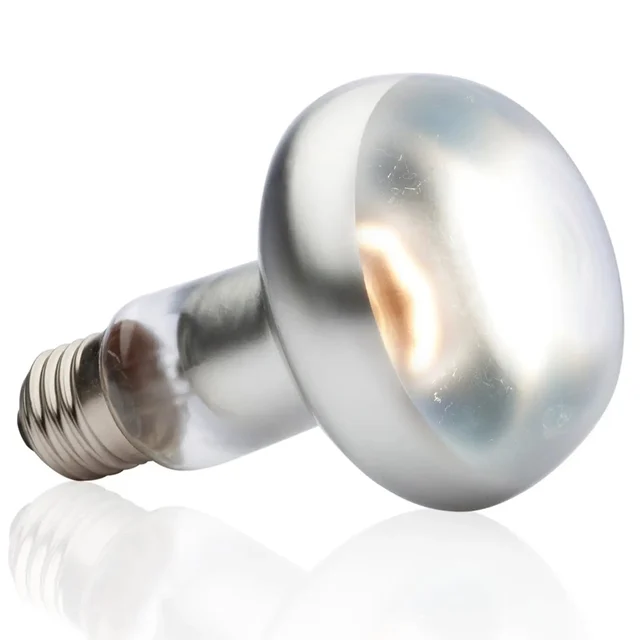
- Buy Exo Terra Intense Basking Spot A tight, bright reflector beam that gives day-active reptiles a proper basking hot spot for very little money.
- Buy Zoo Med ReptiCare Ceramic Infrared Heat Emitter The no-light workhorse for round-the-clock warmth, and the correct answer whenever a red night bulb is tempting. Amazon
- It depends Arcadia Reptile Deep Heat Projector A no-light infrared projector that heats the animal rather than the air, at a price that only makes sense for some setups.
- Skip Exo Terra Infrared Basking Spot Lamp A well-made red night bulb solving a problem that a ceramic emitter solves properly, without lighting the enclosure all night.
What actually matters
- What the lamp emits. Bright white plus UVA, a red glow, or infrared only. This single property decides whether the lamp belongs in the day cycle, the night cycle, or both, and it matters far more than brand.
- Thermostat compatibility. Filament bulbs and deep heat projectors want a dimming thermostat that ramps output smoothly. Ceramic emitters are happy on a cheaper pulse or on/off unit because they have no filament to flicker and no light to strobe.
- Beam shape and coverage. A reflector concentrates output into a defined basking patch that the animal can move into and out of. A bare or diffuse source warms the whole enclosure evenly, which flattens the thermal gradient your reptile relies on to regulate itself.
- Fixture rating and socket material. Check the fixture's stated maximum wattage and never exceed it, and insist on a ceramic socket for anything running hot for hours. This is where cheap clamp lamps fail.
- Service life and failure mode. Filament bulbs die suddenly and usually overnight. Ceramic elements and projectors tend to last longer. If a sudden failure would leave your animal cold until you notice, that is a real cost of the cheaper option.
- Wattage matched to the actual enclosure. Enclosure size and material, lamp-to-basking-surface distance, and your room temperature all move the answer. Start lower than you expect and measure rather than guessing upward.
- A way to measure temperature. A digital probe at the basking surface plus an infrared thermometer for spot checks. Stick-on dial thermometers are not accurate enough to make safety decisions on.
The specs, in plain English
Green flags vs red flags
Green flags
- The listing states a maximum wattage for the fixture and describes the socket as ceramic
- The lamp is sold in several wattages, so you can tune a gradient instead of accepting whatever one option exists
- The maker names the thermostat type the lamp is designed for, dimming or pulse, rather than staying vague
- A flat-faced ceramic emitter, which keepers generally prefer to a cone
- A reflector or a stated beam angle, which means a defined basking patch rather than diffuse warming
- Owner reports over long periods mention consistent output and no early failures
Red flags
- A coloured night bulb marketed as invisible to reptiles, which many reptiles can in fact see
- A clamp fixture with a plastic socket, or one with no stated wattage rating at all
- Wattage recommendations given as a flat number with no reference to enclosure size, room temperature or lamp distance
- A heat lamp described in a way that implies it also covers UVB needs
- Kits that bundle a bulb and fixture but no thermostat and no mention of one
- A single lamp sold as the complete solution for both day and night, which no single lamp actually is
Who's who: the brands
- Exo Terra - Mainstream range covering reflector basking spots and infrared basking lamps, with the basking spots being the useful end of the catalogue.
- Zoo Med - The other big general reptile brand, best known for ceramic infrared heat emitters, including a flat-faced design.
- Arcadia Reptile - UK specialist notable for deep heat projectors (50W and 80W) and lighting aimed at keepers building considered setups.
- Fluker's - US brand with basking bulbs, ceramic emitters and clamp fixtures, often found in starter kits.
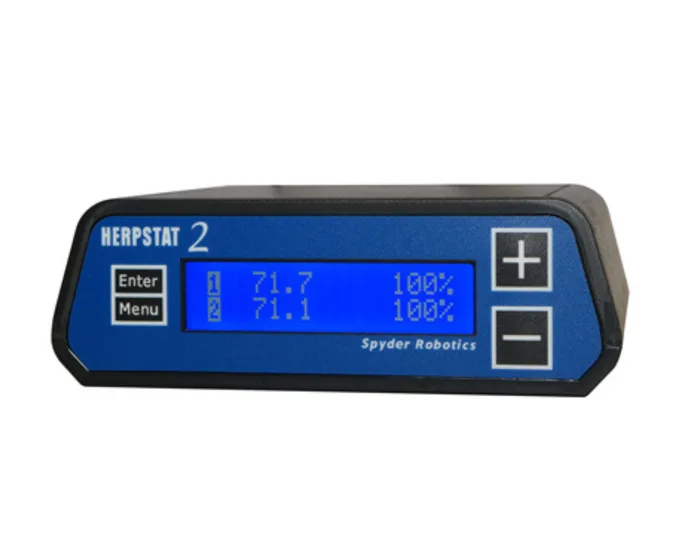
- Herpstat and similar thermostat makers - Controller specialists rather than bulb makers, offering dimming and pulse thermostats with probe alarms. Worth knowing because the controller matters as much as the lamp.
How to read a listing without getting fooled
Start with what the product emits, because listings bury it. If the description mentions light, brightness or UVA at all, it is a day lamp and cannot run overnight. If it says infrared only, no light, or ceramic, it can. Treat the wattage number as a starting point rather than a specification: the same wattage that gives a perfect basking patch in a glass tank can cook a small plastic tub, so what matters is the temperature you measure at the basking surface with the lamp at its actual mounted height. Read the fixture listing separately from the bulb listing, since they are usually sold apart, and check two things there: socket material and maximum wattage. A fixture rated below your lamp is a fire risk, not a minor mismatch. Watch for language that implies one lamp covers everything. Heat lamps are not UVB lamps, and a red bulb is not invisible to your animal no matter how the packaging phrases it. Finally, if a listing never mentions a thermostat, that is not because the lamp does not need one.
How much should you spend?
Reptile heat sources are cheap relative to the animal and the enclosure, so the money question is really about where to allocate a fixed budget. Basic reflector basking bulbs sit at the bottom of the range and are genuinely fine there; there is little to gain by paying more for a filament bulb that will fail in months anyway, and keeping a spare in the drawer costs less than the inconvenience of a dead lamp at midnight. Ceramic emitters cost more up front but tend to last longer, which usually makes them cheaper per month than the filament bulbs they replace. Deep heat projectors sit at a clear premium, and that premium is worth it mainly for tall enclosures, species that benefit from penetrating infrared, or a considered build where you want one high-quality lightless source. It is not a sensible first purchase for a starter setup. The one place not to economise is control and measurement. A quality thermostat with a reliable probe, and a way to check surface temperatures independently, protect the animal in a way that a more expensive bulb does not. If the budget is tight, buy the cheaper bulb and the better thermostat, never the reverse. Similarly, a properly rated ceramic-socket fixture with a guard costs little more than a bargain clamp lamp and removes the most common failure point in the whole setup.
Questions, answered
Do I really need a thermostat, or is it just an upsell?
You need one. A heat lamp plugged straight into the wall runs at full output continuously and keeps heating until something else stops it, which is how reptiles get thermal burns and enclosures start fires. Match the type to the lamp: dimming for filament bulbs, halogens and deep heat projectors, pulse or on/off for ceramic emitters. Position the probe where guidance for your species indicates, and verify the basking surface separately with an infrared thermometer rather than trusting the controller's display alone.
What is the difference between a ceramic heat emitter and a deep heat projector?
Both produce heat with no visible light, so both can run through a dark cycle. A ceramic emitter mostly warms the air and surfaces around it. A deep heat projector emits shorter infrared wavelengths that Arcadia says reach deep into tissue more like sunlight does, and its directional output suits taller enclosures. The projector costs well above a ceramic emitter and Arcadia offers it in 50W and 80W only, so a large or cold enclosure may still need a second source. For most keepers who just need overnight warmth, the ceramic emitter is the sensible buy.
Is a halogen better than a regular incandescent basking bulb?
Often, yes, for a diurnal basker. Halogens run hotter and more efficiently, giving a brighter, whiter beam and more infrared for the same wattage, which produces a basking site that looks and feels more like sunlight. The trade-offs are unchanged: it is still a filament, so it still fails suddenly, still needs a dimming thermostat, and still gets hot enough to burn an animal that can reach it. It also runs hotter at the fixture, so the socket rating matters even more.
What wattage should I buy?
There is no universal answer, and any source giving you one without asking about your setup is guessing. Enclosure size and material, the distance from lamp to basking surface, your room temperature and the species' target range all change it. Start lower than you think you need and measure. Moving a lamp closer or stepping up one wattage is easy; a lamp that overheats an enclosure is dangerous. Confirm your fixture is rated for at least the wattage you fit.
Can I leave a heat lamp on all night?
Only one that emits no visible light, meaning a ceramic emitter or a deep heat projector, and only if your species actually needs supplemental night heat. Many reptiles benefit from a natural night-time temperature drop, so check before adding one. A basking bulb or a coloured night bulb left running overnight breaks the photoperiod, because many reptiles see red and blue light regardless of what the packaging claims. For occasional night viewing, a brief pass with a dim torch does far less harm than a tinted lamp burning for hours.
Does my species change the answer?
Considerably. A desert agamid wants a scorching, tightly focused basking patch; a nocturnal gecko wants gentle ambient warmth and no bright hot spot at all; a ball python wants a warm end rather than a spotlight. Follow a current care sheet for your specific animal, since it outranks any general guide including this one. This is product information rather than veterinary advice, so speak to an exotics vet about any animal showing signs of a burn or heat stress.
Or jump to the head-to-head: Exo Terra Intense Basking Spot vs Zoo Med ReptiCare Ceramic Infrared Heat Emitter.