

Pet Supplies
The Best Reptile Heat Lamps: 4 Compared (and One to Skip)
We compared basking bulbs, ceramic emitters and infrared projectors on heat control, photoperiod safety, fixture demands and real-world lifespan.
The short version
Buy the Exo Terra Intense Basking Spot if you keep a diurnal basker: it gives a bright, tightly focused hot spot cheaply, and it runs on a dimming thermostat. Buy the Zoo Med ReptiCare Ceramic Infrared Heat Emitter for overnight or cold-room warmth, because it emits no visible light and typically outlasts filament bulbs. The Arcadia Deep Heat Projector emits penetrating IR-A and IR-B with no light and heats tall enclosures well, but it carries a premium price and the maker specifies a thermostat, so it suits considered builds more than starter setups. Skip the Exo Terra Infrared Basking Spot Lamp and other red night bulbs, since many reptiles see red light and a ceramic emitter does the same job in darkness. Whatever you choose, a thermostat is a safety requirement rather than an accessory, and species needs vary enough that your animal's care sheet outranks any general recommendation. Best for: keepers who want a bright daytime basking site plus a safe, lightless overnight heat source, both under thermostatic control.
Our picks at a glance
- Exo Terra Intense Basking Spot - Buy. A tight, bright reflector beam that gives day-active reptiles a proper basking hot spot for very little money.
- Zoo Med ReptiCare Ceramic Infrared Heat Emitter - Buy. The no-light workhorse for round-the-clock warmth, and the correct answer whenever a red night bulb is tempting.
- Arcadia Reptile Deep Heat Projector - It depends. A no-light infrared projector that heats the animal rather than the air, at a price that only makes sense for some setups.
- Exo Terra Infrared Basking Spot Lamp - Skip. A well-made red night bulb solving a problem that a ceramic emitter solves properly, without lighting the enclosure all night.
The verdict in 30 seconds
What mattered most
- Heat source type
- Visible light output
- Safe to run overnight
- Thermostat pairing
- Fixture demands
- Expected service life
Reptile heating splits into a few genuinely different technologies, and the right one depends on whether your animal needs bright daytime basking, quiet overnight warmth, or both. We looked at a reflector basking lamp, a ceramic heat emitter, a deep heat projector and a red night bulb. Two are easy recommendations, one is a premium upgrade that suits some setups and not others, and one is a product category that should have been retired years ago. A thermostat is assumed throughout: it is a safety component, not an accessory.
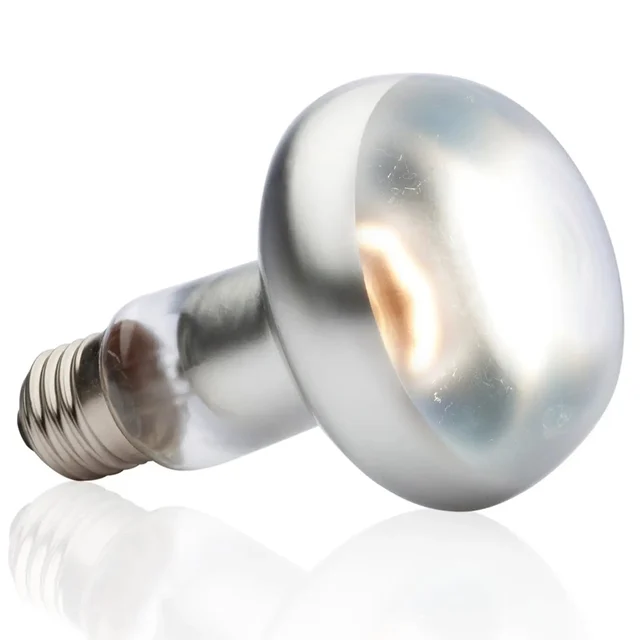
A tight, bright reflector beam that gives day-active reptiles a proper basking hot spot for very little money.
Best for: Bearded dragons, tortoises, day geckos and other diurnal baskers that need a bright, focused daytime hot spot.
- Reflector concentrates heat and light into a defined basking zone instead of warming the whole enclosure evenly
- Bright visible output plus a small portion of UVA, which day-active species respond to
- Sold in several wattages, so you can tune a gradient rather than settle for one
- Cheap enough that keeping a spare on hand is painless
- Filament bulbs fail suddenly and without warning
- Unusable at night, so a cold room still needs a separate non-light heat source
- Runs hot enough to burn, so a lamp guard and a dimming thermostat are mandatory rather than optional
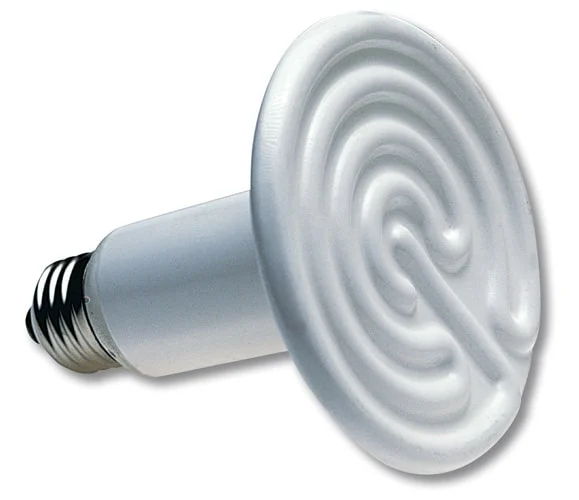
The no-light workhorse for round-the-clock warmth, and the correct answer whenever a red night bulb is tempting.
Best for: Snakes, nocturnal geckos, and any enclosure that needs ambient warmth overnight or through a cold season.
- Radiates heat with no visible light, so it can run through a full night cycle
- Flat-faced porcelain design, which keepers prefer to cone-shaped emitters
- Works on a cheaper pulse or on/off thermostat instead of a dimming controller
- Owner reports commonly describe long service where filament bulbs fail sooner
- Runs very hot with no visual cue, so a ceramic socket rated for the wattage and a lamp guard are required
- No light and no UV, so it cannot be the only fixture over a diurnal species
- Easy to overheat a small enclosure by buying too high a wattage
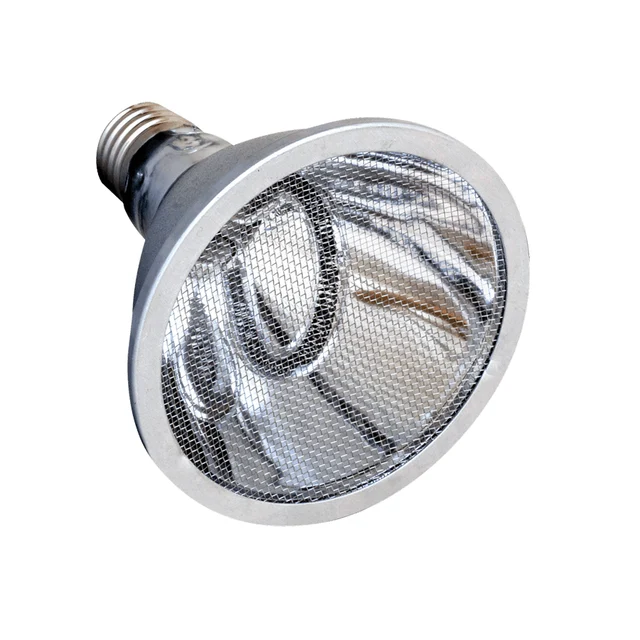
A no-light infrared projector that heats the animal rather than the air, at a price that only makes sense for some setups.
Best for: Keepers building a considered setup, especially tall enclosures or species that benefit from penetrating infrared.
- Arcadia says it emits IR-A and IR-B, wavelengths it says reach deep into tissue rather than only warming surface air
- Virtually no visible light, so Arcadia says it can run day and night
- Directional output suits taller enclosures
- Arcadia expects years of stable heat when used correctly
- Costs well above a ceramic emitter of similar output
- Arcadia specifies a thermostat and recommends a dimming controller, which adds another premium component
- Offered in 50W and 80W only, so large or cold enclosures may need a second heat source
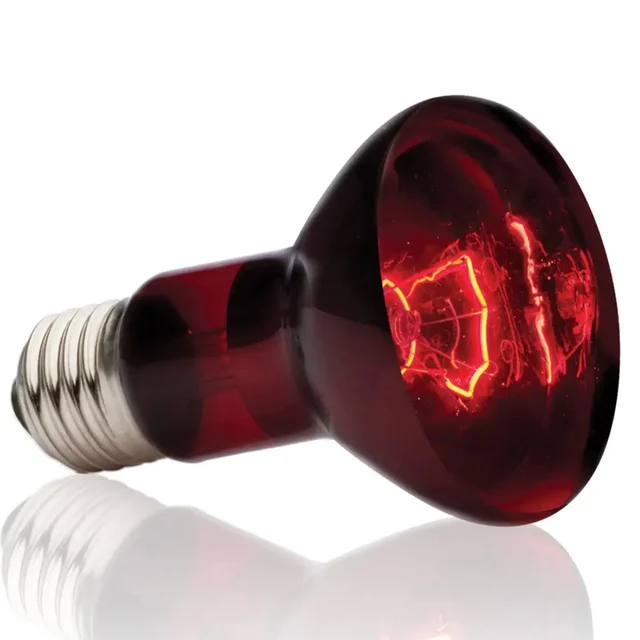
A well-made red night bulb solving a problem that a ceramic emitter solves properly, without lighting the enclosure all night.
Best for: Hard to say. If you need night heat, a ceramic emitter or a deep heat projector does the same job without the light.
- Cheap and widely sold
- Puts out plenty of heat for the wattage
- Reflector shape does concentrate output where you point it
- Many reptiles can see red light, so running it overnight can mean the dark cycle is not dark
- Tinted glass gives no benefit during the day, when you want bright light at the basking site
- Same sudden filament failure as any incandescent, and it still needs a dimming thermostat
- A ceramic emitter costs a similar amount, tends to last longer and emits no visible light
| Criteria | Exo Terra Intense Basking Spot Top pick | Zoo Med ReptiCare Ceramic Infrared Heat Emitter | Arcadia Reptile Deep Heat Projector | Exo Terra Infrared Basking Spot Lamp |
|---|---|---|---|---|
| Verdict | Buy it | Buy it | It depends | Skip it |
| Best for | Bearded dragons, tortoises, day geckos and other diurnal baskers that need a bright, focused daytime hot spot. | Snakes, nocturnal geckos, and any enclosure that needs ambient warmth overnight or through a cold season. | Keepers building a considered setup, especially tall enclosures or species that benefit from penetrating infrared. | Hard to say. If you need night heat, a ceramic emitter or a deep heat projector does the same job without the light. |
| Price tier | $ · budget | $ · mid-range | $$ · premium | $ · budget |
| Heat source type | Incandescent reflector basking lamp | Ceramic heat emitter | Deep heat projector (IR-A and IR-B) | Red incandescent reflector lamp |
| Visible light output | Bright white plus UVA | None | None | Red glow |
| Safe to run overnight | No, it breaks the photoperiod | Yes | Yes | No, many reptiles see red light |
| Thermostat pairing | Dimming | Pulse or on/off | Dimming recommended by the maker | Dimming |
| Fixture demands | Ceramic socket and lamp guard | Ceramic socket rated for wattage, guard essential | Ceramic socket and guard | Ceramic socket and lamp guard |
| Expected service life | Short, filament failure is sudden | Long, commonly years | Years of stable heat per the maker | Short, filament failure is sudden |
| Best suited to | Diurnal baskers needing a bright hot spot | Nocturnal species and cold-room ambient heat | Tall enclosures and considered builds | No photoperiod it fits well |
| Price tier | $ · budget | $ · mid-range | $$ · premium | $ · budget |
Which one is right for you?
- Bearded dragons, tortoises, day geckos and other diurnal baskers that need a bright, focused daytime hot spot. Buy it Exo Terra Intense Basking Spot
- Snakes, nocturnal geckos, and any enclosure that needs ambient warmth overnight or through a cold season. Buy it Zoo Med ReptiCare Ceramic Infrared Heat Emitter
- Keepers building a considered setup, especially tall enclosures or species that benefit from penetrating infrared. It depends Arcadia Reptile Deep Heat Projector
- Hard to say. If you need night heat, a ceramic emitter or a deep heat projector does the same job without the light. Skip it Exo Terra Infrared Basking Spot Lamp
How we judged the field
Heat lamps are one of the few reptile purchases where a bad choice can injure the animal, so we weighted safety and control above everything else. We do not run a lab. What we do is read across manufacturer specifications, independent testing of output and beam behaviour, and the pattern of owner reports that build up over years of keepers running these bulbs on real enclosures.
Four criteria drove the verdicts. First, what the lamp actually emits: visible light, infrared only, or a mix, because that determines whether it can run through a night cycle. Second, controllability, meaning whether the lamp pairs cleanly with a dimming or pulse thermostat. Third, durability, since filament bulbs die suddenly and ceramic elements generally do not. Fourth, fixture demands, because a lamp that needs a ceramic socket and a guard is not a like-for-like swap for one that does not.
One thing applies to every product below. Species requirements vary enormously, from a nocturnal gecko that wants gentle ambient warmth to a desert agamid that wants a scorching focused basking patch. Follow a current care sheet for your specific animal and verify surface temperatures with a probe or an infrared thermometer rather than trusting a wattage number.
This is the plain, useful answer for a day-active basker. The reflector concentrates output into a defined beam, which is what you want: a hot spot the animal can move into and out of, not an enclosure heated uniformly to one temperature. Owners commonly report that it produces a noticeably tighter and hotter patch than an unreflected household bulb of the same wattage, which is the whole point of a basking lamp.
It also emits bright visible light and UVA, and day-active reptiles respond to that. A basking site that is hot but dim gets used less than one that looks like sunlight.
The limits are the limits of every incandescent. Filaments fail without warning, so keep a spare in the drawer. It cannot run at night without wrecking the photoperiod. And it gets hot enough to burn an animal that can climb to it, which means a guard on the fixture and a dimming thermostat controlling the output. Treat the thermostat as part of the purchase, not an upgrade.
Where the basking lamp handles daytime, a ceramic emitter handles everything else. It screws into a standard socket and radiates heat with no visible light at all, so it can run overnight, in a cold room, or through a winter cold snap without giving the animal a permanent dusk.
The flat-faced porcelain design is the version to buy. Keepers prefer the flat-faced shape to cone-shaped emitters, and owner reports commonly describe long service where filament bulbs fail sooner. It also plays nicely with a simple pulse or on/off thermostat, which is cheaper than the dimming controller a filament bulb wants.
Two cautions. It runs very hot and gives no visual cue that it is on, so a ceramic socket rated for the wattage and a lamp guard are both required, not suggested. And it produces no light or UV, so it is a companion to a lighting setup for a diurnal species, never a replacement for one.
The deep heat projector is the interesting one. Arcadia says it emits IR-A and IR-B, shorter infrared wavelengths the maker says reach deep into tissue rather than simply warming the air and the surface an animal is sitting on. The stated logic is that sunlight delivers heat this way, and reptiles evolved under sunlight. Arcadia says it produces virtually no visible light, so it can run day and night.
Some keepers report animals settling under a projector in a way they did not under a ceramic emitter, and the directional output suits a taller enclosure. That can be an advantage if your setup is vertical.
The reason this is not a straight buy is cost and constraint. It sits at a premium price against a ceramic emitter that will also keep an animal warm. Arcadia specifies a thermostat and recommends a dimming controller for accurate gradient control, which is another premium component on top. And it is offered in 50W and 80W only, so a large or cold enclosure may still need a second heat source. Worth it if you are building a considered setup for a species that benefits from penetrating infrared. Overkill for a small tub that needs a few degrees of ambient lift.
Red night bulbs are the category’s most persistent bad habit, and this is a well-made example of a product we would not buy. The pitch is night heat plus the ability to watch nocturnal animals. The problem is the premise: many reptiles are not blind to red light. A red bulb burning over an enclosure all night is light in the enclosure all night, and a disrupted dark cycle is exactly the thing the product claims to protect.
It is not defective. It puts out heat, it is cheap and widely sold. It is simply solved better by a ceramic emitter that emits no visible light, for a similar tier of spend, with a longer service life. If your goal is night viewing, a dim red LED torch used briefly does less harm than a red heat source running for eight hours.
The tinted glass also buys you nothing during the day, when you want a bright basking light rather than a dim red one. There is no photoperiod in which this is the right lamp.
Exo Terra Intense Basking Spot vs Zoo Med ReptiCare Ceramic Infrared Heat Emitter: which should you buy?
This is less a contest than a division of labour, and most keepers eventually own both. The question is which one you buy first.
Buy the basking spot first if your animal is diurnal. A bearded dragon, a tortoise, a day gecko: these species need a bright, focused, hot patch during daylight hours, and a ceramic emitter cannot provide the light half of that. The basking lamp is the primary heat source and the ceramic emitter is the optional overnight supplement, needed only if your room drops below the species’ night minimum.
Buy the ceramic emitter first if your animal is nocturnal or crepuscular, or if your problem is a cold room rather than a missing basking site. A ball python or a nocturnal gecko wants ambient warmth and a gentle gradient, not a spotlight. Here the emitter is the primary source and there may be no basking lamp at all.
On running costs and hassle the emitter wins clearly: it tends to last longer, it works on a cheaper pulse thermostat, and there is no midnight bulb failure. On suitability for a sun-loving lizard, the basking lamp wins outright, because light is part of what it is delivering. Pick by species, not by spec sheet.
What to look for
- A thermostat, always. An unregulated heat lamp has one setting: full. Thermostats are the mechanism that prevents burns and overheating, and burns from uncontrolled heat sources are a known risk for captive reptiles. Filament and projector lamps want a dimming thermostat; ceramic emitters work fine on a pulse or on/off unit.
- A fixture rated for your wattage, with a ceramic socket. Plastic-socket clamp lamps fail under sustained high heat. Check the fixture’s stated maximum wattage and do not exceed it.
- A lamp guard. If the animal can physically reach the bulb, it will eventually touch it. Guards are cheap.
- Wattage matched to enclosure and room, not to ambition. Start lower than you think and measure. It is easier to move a lamp closer than to fix a cooked enclosure.
- The right emission for the photoperiod. Bright and hot for the day, no visible light at night. Coloured night bulbs do not satisfy the second condition.
- A way to measure. A digital probe at the basking surface and an infrared thermometer for spot checks. Stick-on dial thermometers are not accurate enough to make safety decisions on.
- A spare bulb. Filament lamps fail suddenly and usually at an inconvenient hour.
Our final take
For most keepers the setup is a bright reflector basking lamp on a dimming thermostat for the day, and a ceramic emitter on a pulse thermostat if the room gets cold overnight. The Exo Terra Intense Basking Spot and the Zoo Med ReptiCare Ceramic Infrared Heat Emitter cover that pairing at a sensible cost, and both come in several wattages to tune a gradient.
The Arcadia Deep Heat Projector is a step up in what it emits and suits a tall enclosure, and it is worth the premium for a considered build or a species that benefits from penetrating infrared. It is not a first purchase for a beginner setting up a starter enclosure.
Skip the red night bulb. It is the one product here that works against the animal’s biology rather than for it, and the alternative costs about the same.
Whatever you buy, the thermostat is not optional and the care sheet for your specific species outranks any general guide, including this one.
Questions, answered
Do I really need a thermostat with a reptile heat lamp?
Yes. An unregulated bulb has one output level and can keep climbing until something stops it, which is how thermal burns and enclosure fires happen. Use a dimming thermostat for filament bulbs and deep heat projectors, and a pulse or on/off thermostat for ceramic emitters. Position the probe where the guidance for your species says, and verify basking surface temperature separately with an infrared thermometer.
What wattage should I buy?
There is no universal answer, because it depends on enclosure size and material, the distance from lamp to basking surface, your room temperature and the species' target range. Start lower than you expect to need and measure. Moving a lamp closer or stepping up one wattage is easy, while a lamp that overheats an enclosure is dangerous. Check that your fixture is rated for at least the wattage you fit.
Can I leave a heat lamp on all night?
Only a lamp that emits no visible light, such as a ceramic heat emitter or a deep heat projector, and only if your species needs supplemental night heat at all. Many reptiles benefit from a natural night-time temperature drop, so check a care sheet before adding one. A basking bulb left on overnight destroys the photoperiod.
Are red or blue coloured night bulbs safe for reptiles?
They are not the good idea the packaging suggests. Many reptiles can see red and blue light, so a coloured bulb burning overnight is still light in the enclosure and still disrupts the day and night cycle. If you need night heat, use a source that emits no visible light. For occasional night viewing, a brief pass with a dim torch does far less harm than a coloured lamp running for hours.
What fixture do I need, and does the socket matter?
Yes, the socket matters. Use a fixture with a ceramic socket rated at or above the lamp's wattage, since plastic sockets degrade under sustained heat, and this is non-negotiable for ceramic emitters which run very hot with no visual warning. Add a lamp guard whenever the animal can physically reach the bulb. This is general product information and not veterinary advice, so follow a current care sheet for your species and speak to an exotics vet about any animal showing signs of a burn or heat stress.
Deciding between the top two? See our head-to-head: Exo Terra Intense Basking Spot vs Zoo Med ReptiCare Ceramic Infrared Heat Emitter.
More Pet Supplies reviews
 The Best Reptile Terrariums: 4 Compared (and One to Skip)
  The Best Reptile Thermostats: 4 Compared (and One to Skip)
  Best Self-Cleaning Litter Boxes (2026): What We'd Actually Put in Our Homes
  The Best Slow-Feeder Dog Bowls: 4 Compared (and One to Skip)
  The Best Small Animal Cages: 4 Compared (and One to Skip)
  The Best Squirrel-Proof Bird Feeders: 4 Compared (and One to Skip)