Explained
Pet Stain and Odor Removers, Explained
You will be able to tell a true enzymatic cleaner from a scented deodorizer at a glance, and know how to apply it so the smell does not come back.
In this guide
Pet stain products look interchangeable on the shelf, but they split into two mechanisms that have almost nothing in common. One group carries bacteria that release enzymes to digest the uric acid crystals responsible for old urine smell. The other group perfumes or oxidises the surface and leaves those crystals sitting in the carpet backing, which is why the smell comes back on the first humid day. Price does not sort them, marketing does not either, and technique matters more than brand once you have picked correctly.
The 30-second version
- Enzymes are the only thing that removes the source. Uric acid crystals are not water soluble, so surface cleaning lifts the mark and leaves the smell, and only a bacteria-based formula digests them.
- Dwell time is a specification, not a suggestion. Enzymes need moisture and minutes, typically ten to fifteen on a fresh accident and an hour or more on a set-in spot, so a label that stays silent on dwell time is telling you something.
- You have to reach the depth the accident reached. Urine travels into the carpet backing and pad, so a light misting of the visible stain treats the wrong layer and produces most of the disappointed owner reports in this category.
- What you used first can end the job before it starts. Ammonia cleaners, general detergents and hot steam extraction can chemically or thermally set a pet stain so that no later treatment removes it.
- Odor eliminator is not a regulated claim. Products that promise instant freshness without naming enzymes or bacteria are usually fragrance or citrus oil, and some brands sell both types in nearly identical bottles.
The products this guide is about
Our verdict on each, with the full reasoning on the companion review.
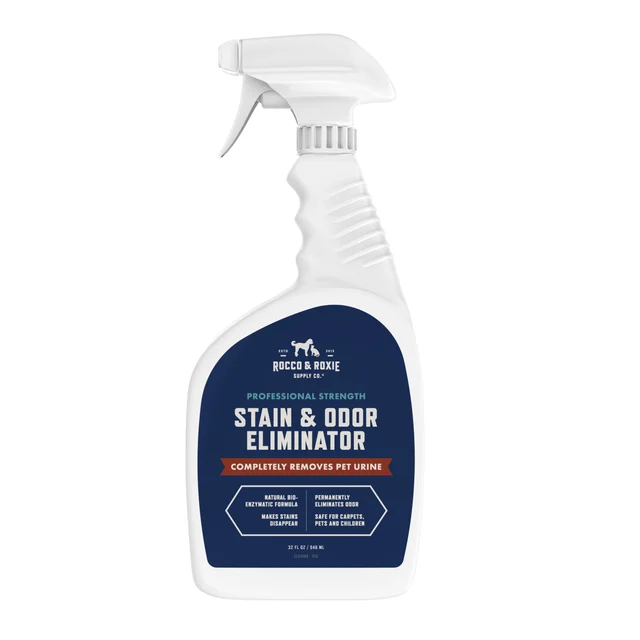
- Buy Rocco & Roxie Supply Co. Rocco & Roxie Professional Strength Stain & Odor Eliminator A true bio-enzymatic formula with carpet-safety certification and a scent that does not take over the room. Amazon
- Buy Nature's Miracle Advanced Stain & Odor Eliminator for Dogs The best instructions in the category attached to a bacteria-based formula cheap enough to use in the volume real saturation needs. Amazon
- It depends Skout's Honor Professional Strength Urine Destroyer Fast, shelf-stable and effective on fresh messes, but the company confirms it is not an enzymatic cleaner. Amazon
- Skip Angry Orange Pet Odor Eliminator Spray A citrus room deodorizer sold in the stain remover aisle, and the brand's own comparison chart shows it contains no enzyme cleaner. Amazon
What actually matters
- Formula type (bio-enzymatic or bacteria-based versus deodorizer). This is the single biggest variable. Bacteria-based formulas keep producing enzymes as long as organic material is present, so they work on the buried source. Surfactant, oxidiser and citrus formulas can lift a visible stain well but leave the uric acid behind.
- Stated dwell time. A label that tells you how long to keep the area wet is a label written by someone who tested the product. Silence on dwell time is common in the deodorizer half of the aisle and it is the exact information that decides deep contamination outcomes.
- Saturation instructions. The best directions in this category tell you to soak the spot, and on bad accidents to lift the carpet and treat the pad and subfloor directly. Spray and wipe instructions mean the product was never designed to reach where the smell lives.
- Volume per dollar. Real saturation of a dinner-plate-sized spot takes far more liquid than people expect. A cheap large jug you use generously beats an expensive trigger bottle you ration.
- Carpet safety certification. The Carpet and Rug Institute Seal of Approval means the cleaner has been checked for fiber damage and for residue that attracts soil later, which is why some treated spots grey faster than the carpet around them.
- Surface limits. Wool, silk, leather, suede and untreated hardwood are off limits for nearly everything in this class. Check the exclusion list against what you actually own before buying.
- Scent load and pet acceptance. A heavy fragrance is often covering rather than cleaning, and citrus and orange oil are commonly flagged in veterinary guidance as poorly tolerated by cats.
The specs, in plain English
Green flags vs red flags
Green flags
- The words bio-enzymatic or bacteria-based appear on the front label, not just odor eliminator.
- Directions give a specific dwell time and tell you to keep the area wet while it works.
- Directions describe saturating to the odor source, including lifting carpet to treat the pad on severe spots.
- The product is sold in a large enough size, at a low enough price, that you can afford to use it generously.
- The label warns that previous cleaners or heat may have set the stain, which shows the maker understands the failure mode.
- A Carpet and Rug Institute Seal of Approval on a product you intend to use on carpet or rugs.
Red flags
- Instant odor elimination is the headline claim and no enzyme or bacteria is named anywhere.
- No dwell time and no saturation guidance in the directions at all.
- Spray and wipe instructions, which treat the fibers and never reach the pad.
- Fragrance is the main selling point, especially strong citrus in a household with cats.
- A confusing product family where the basic version is much weaker than the advanced one and both share the same branding.
- Marketing that implies it fixes stains a steam cleaner already ran over, which is usually past saving.
Who's who: the brands
- Rocco & Roxie Supply Co. - Best known for a genuinely bio-enzymatic professional strength spray with carpet safety certification and a scent that fades rather than layering perfume.
- Nature's Miracle - The oldest name in the category, widely stocked and inexpensive, with the most useful saturation and dwell instructions on any label here and a sprawling product line that is easy to buy wrong.
- Skout's Honor - Fast, shelf-stable formulas built on a surfactant system plus a molecular deodorizer rather than enzymes, which suits fresh accidents, laundry and hard floors.
- Angry Orange - A citrus d-limonene deodorizer line whose own comparison chart shows the odor eliminator spray contains no enzyme cleaner, so it is a room product rather than a stain remover.
- Simple Solution - Grocery-aisle enzymatic sprays and extractor solutions, often sold alongside pads and training aids, with formulas aimed at repeat marking spots.
- Bissell - Better known for the machines, and its branded pet formulas are designed to go through carpet cleaners, so read carefully whether a given bottle is enzymatic or a machine detergent.
How to read a listing without getting fooled
Start on the front of the bottle and look for a mechanism word rather than a benefit word. Bio-enzymatic and bacteria-based are mechanisms. Odor eliminator, urine destroyer, instant freshness and professional strength are benefits, and any of them can sit on a bottle with no enzymes in it at all. If the mechanism is not stated on the front, turn the bottle over and read the directions, because the directions leak the truth: a product designed to digest a buried source will tell you to saturate the area, give a dwell time, and often describe a damp towel or a second application, while a deodorizer will say spray the surface and enjoy the scent. Then check the product family. Several brands sell an enzymatic cleaner and a fragrance spray under near-identical branding, and within a single enzymatic line the basic version is usually weaker than the advanced or severe mess version, so match the exact product name to the review you read rather than the brand. Finally, read the exclusion list before the claims list. Wool, silk, leather, suede and untreated wood appear on nearly every label in this class, and no formula quality makes up for using it on a rug it was never meant to touch.
How much should you spend?
This is a category where spending more buys you very little and buying too small costs you the result. The main cost drivers are formula type, concentration and bottle size, and the value sweet spot sits with a mid-priced true enzymatic spray in the largest size you can find. Trigger bottles are convenient and are the most expensive way per application to treat anything larger than a small spot, so if you are dealing with a soaked pad, a repeat marking corner or a room inherited from a previous pet, buy a jug or a concentrate instead and pour generously. Paying a premium is defensible for carpet safety certification, a mild scent you will not mind living with, or shelf stability if the bottle will sit unused in a garage for a year. Paying a premium for stronger fragrance, professional branding or an instant-results claim buys you nothing that removes urine. The genuinely false economy is a cheap deodorizer applied over and over to a spot that needed one proper enzymatic soak, which ends up costing more in bottles and time than doing it right once.
Questions, answered
What is the actual difference between an enzymatic cleaner and an odor eliminator?
An enzymatic or bacteria-based cleaner carries microbes that release enzymes when they meet organic waste, and those enzymes consume the uric acid crystals that make old urine keep smelling. Odor eliminator is a marketing phrase with no fixed meaning, and in practice it usually means fragrance, citrus oil or a molecular deodorizer that covers the smell without touching the source. Look for the words bio-enzymatic or bacteria-based. If a product only promises instant freshness, treat it as a deodorizer.
Why does the smell come back a few days after I clean the spot?
Because the visible stain and the odor source are in different places. Surface cleaning lifts the mark from the fibers while the uric acid crystals stay in the backing and the pad, and since they are not water soluble they survive. Humidity pulls moisture back into them and the smell returns. That pattern is the clearest sign you either used a deodorizer or used an enzyme product without enough volume or dwell time.
How much should I use and how long should it sit?
Use far more than feels reasonable and leave it far longer than feels reasonable. Ten to fifteen minutes is the usual minimum on a fresh accident and old stains want an hour or more. Volume matters as much as time, because the product has to reach the same depth the urine reached, which on carpet usually means the backing and the pad. On a bad spot, lift the carpet and apply directly to the pad and subfloor, then lay a water-soaked towel over the area for one to two hours so it stays wet while the bacteria work. Blot rather than scrub, and let it air dry.
Can I steam clean or use a general cleaner first?
Do the enzyme treatment first. Heat sets protein stains, so running a hot extractor over an untreated accident is one of the most common ways a fixable spot becomes permanent, and some labels warn outright that other cleaners and detergents may chemically set a stain beyond recovery. Avoid ammonia-based household cleaners entirely on pet spots, because ammonia is part of what urine smells like and a dog can read the treated area as an invitation to go there again.
Do enzyme cleaners expire or go bad?
Live bacteria formulas can lose potency over time and are sensitive to temperature, so a bottle that spent a summer in a hot garage or froze in a car may underperform. Store them indoors at room temperature, note the date on the bottle, and buy sizes you will actually use up. Non-enzymatic surfactant formulas do not have this problem, which is a genuine reason to keep one in a garage or car kit even if an enzymatic bottle is your main product.
Are these safe around dogs and cats?
The mainstream products say they are safe when used and stored as directed, which generally means keeping pets off the area until it has dried completely and testing an inconspicuous spot for colorfastness first. Two specifics are worth knowing. Citrus and orange oil products are commonly flagged in veterinary guidance as poorly tolerated by cats, so they are a poor choice in a cat household. And nearly every product in this class carries warnings against wool, silk, leather, suede and untreated wood. This is general product information rather than veterinary advice, so check with your vet if a pet has had contact with a cleaner or if you are unsure about a specific animal.
Or jump to the head-to-head: Rocco & Roxie Supply Co. Rocco & Roxie Professional Strength Stain & Odor Eliminator vs Nature's Miracle Advanced Stain & Odor Eliminator for Dogs.