Explained
Pet Grooming Vacuums, Explained
After reading, you'll know exactly which specs on a grooming vacuum listing matter, which are marketing filler, and how to match a kit to your pet's coat.
In this guide
A pet grooming vacuum is a small canister vacuum with brush, clipper, and de-shedding heads that pull loose fur straight into a sealed bin as you groom, so it never lands on your couch. The category has matured to the point that most kits share the same core design, which makes the spec sheet look more confusing than it needs to be. What actually separates a keeper from a drawer-dweller comes down to a few things buyers routinely overlook: whether the suction holds the fur it pulls, whether it's quiet enough for your pet, and whether replacement parts are cheap and easy to find.
The 30-second version
- Suction that holds beats a big number. A high rated airflow figure means nothing if fur falls back out of the attachment mid-stroke, so weight real hair-capture behavior over the spec.
- Noise is the quiet make-or-break. especially for cats, where the gap between a unit a pet tolerates and one it flees is usually just a few decibels.
- More attachments only help if you'll use them. a seven-piece kit is overkill for one short-haired pet and merely adds clutter, while a thick double coat genuinely needs the extra heads.
- Cheap, stocked filters and blades decide longevity. a clogged filter is the number-one reason suction fades, so easy consumables matter more than any single spec.
- Corded is normal here, not a compromise. sustained suction draws more power than most cordless designs deliver, so be skeptical of cordless claims of equal strength.
The products this guide is about
Our verdict on each, with the full reasoning on the companion review.
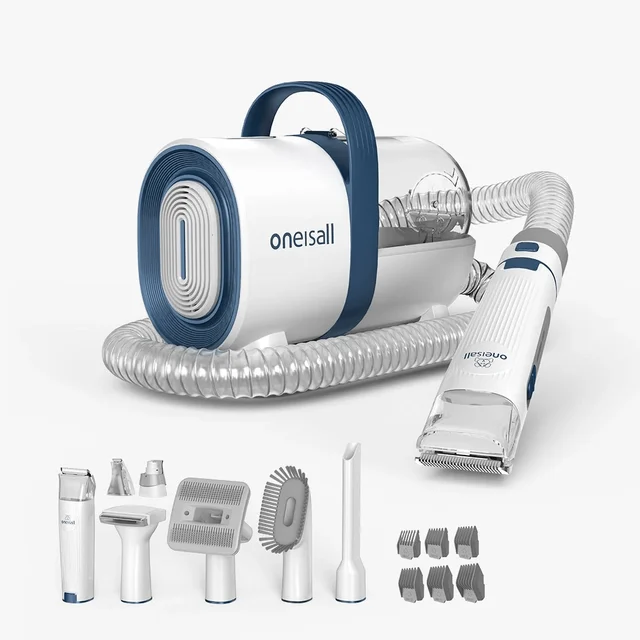
- Buy Oneisall LM2 7-in-1 Pet Grooming Vacuum Kit The most complete corded kit here - strong steady suction, a full set of heads, and cheap replacement parts that keep it useful for years. Amazon
- Buy Meowant PV01 Pet Grooming Vacuum Kit A compact, notably quiet grooming vacuum that nails the essentials for cats and light-to-medium shedders at the lowest price here.
- It depends HomerunPET HC15 Pet Grooming Kit & Dog Hair Vacuum A tidy clipper-and-combs kit with a simple filter that works well on short-to-medium coats - just don't expect it to tame a heavy double coat.
- Skip Oneisall Cozy C1 8-in-1 Pet Grooming Vacuum & Dryer Kit The do-everything unit that folds a blow-dryer into the vacuum - and ends up bulkier, louder, and pricier without clearly beating the focused kits at grooming. Amazon
What actually matters
- Suction that holds is the whole point: the vacuum has to keep freed fur moving into the bin rather than letting it drop back out of the brush. Owner reports on real capture tell you more than any airflow rating.
- Noise level determines whether your pet tolerates the tool at all. Cats are far more noise-sensitive than dogs, so a quieter unit is easier to introduce and keep using.
- The tool set decides how many coats and jobs one kit can handle. Match the number of heads to your actual pets: thick and varied coats want more, a single short-haired pet wants fewer.
- Long-term upkeep separates a kit that lasts years from one that quietly dies. Favor washable filters and widely stocked, affordable replacement blades, filters, and hoses.
- Dust bin and emptying affect whether you'll actually keep it clean. A clear bin you can read at a glance and dump in one motion means suction stays strong because you empty it.
- Coat match matters more than raw power: the right kit for a heavy double coat is different from the right kit for a light-shedding cat, and no single unit is best at both.
The specs, in plain English
Green flags vs red flags
Green flags
- Owner reports specifically praise that it holds fur rather than spitting it back out, not just a high rated suction number
- A stated low-mode noise level that is low, ideal for cats and anxious pets
- Filters, blades, and hoses are widely stocked and inexpensive from the maker or common retailers
- A clear, see-through bin that empties in one motion so you'll actually keep it clean
- A pet-safe, rounded-tooth clipper blade with a set of guard combs for different lengths
- An attachment count that matches your coats rather than the biggest number available
Red flags
- Marketing leans entirely on a big suction figure with no owner confirmation that hair stays captured
- No published noise level, or reviews describing it as loud, a dealbreaker for cats
- Replacement heads and filters are hard to source or only from one obscure seller
- A built-in dryer or bonus feature is the headline, but it's underpowered and adds noise and parts
- Lots of attachments you'll never touch, adding cost, clutter, and cleaning for no real gain
- Cordless claims of suction equal to corded units, which rarely hold up for sustained grooming
Who's who: the brands
- Oneisall - A pet-grooming specialist known for complete kits that sell replacement blades and filters direct.
- Meowant - Value-focused maker whose compact units are often described by owners as quiet, making them cat-friendly.
- HomerunPET - Makes tidy, approachable kits built around a safety-design blade head and guide combs for everyday touch-ups.
- Neabot / Neakasa - A popular name in the category known for larger multi-tool kits; a common cross-shop alternative when comparing feature sets.
How to read a listing without getting fooled
Read a grooming vacuum listing from the bottom up. Skip past the headline suction figure first, because it's measured at the motor and tells you little about real capture, and go straight to owner reports for the phrase that matters: does it hold the fur or cough it back out? Next, find the noise level; if it isn't published, treat that as a warning, especially for a cat. Then count the attachments you'll genuinely use rather than the total in the box, since a 7-in-1 and a 5-in-1 can be equally right depending on your pet. Check that replacement filters and blades are listed and in stock, because that's what keeps the unit alive for years. Finally, be wary of a bonus feature, like a built-in dryer, presented as the main selling point: added parts and added noise often work against the calm a grooming vacuum is supposed to deliver.
How much should you spend?
You don't need to spend at the top of the range to get a grooming vacuum that works. The value sweet spot sits in the middle, where you get suction that genuinely holds fur, a low enough noise level, and, most importantly, cheap and widely stocked replacement filters and blades that keep the unit useful for years. Budget units can be the right call for a cat or a single light shedder who needs quiet and simplicity over a big tool set. Spending more is worth it when you have multiple pets or a heavy double coat that demands more attachments and a roomier bin. Where extra money is usually wasted is on all-in-one gimmicks, like a built-in dryer folded into the vacuum, which tend to add bulk, noise, and parts without grooming any better than a cheaper, focused kit from the same maker. Buy for the coat you actually have, not the longest spec sheet.
Questions, answered
Do grooming vacuums really capture most of the loose hair?
The good ones do. As you brush or clip, suction pulls the freed fur straight into a sealed bin instead of letting it float onto floors and furniture. The catch is that capture depends on genuine, steady suction, weaker units let hair fall back out of the attachment. No tool grabs 100 percent, so a quick pass with a lint roller or regular vacuum afterward is normal.
Are these safe and comfortable to use on cats?
Yes, with a gentle introduction. Cats are more noise-sensitive than dogs, so start with the quietest unit you can find. Let your pet sniff the switched-off vacuum, run it nearby before touching them, use the softest brush head first, and keep early sessions short. This is general product guidance, not veterinary advice, if your pet has skin conditions, heavy matting, or unusual anxiety, check with your vet or a professional groomer before clipping.
Corded or cordless, does it matter?
For a grooming vacuum, corded is the safer choice. The sustained suction that actually holds fur draws more power than most cordless designs deliver for long, so cordless units often show weaker suction and short runtimes. Corded means grooming near an outlet, but you never run out of battery mid-session, which is why most kits in this category are corded by design.
How many attachments do I actually need?
Fewer than the marketing suggests. Match the tool count to your pet: a single short-haired dog or a cat is well served by a small kit covering brushing, de-shedding, and trimming, while a thick double coat or a multi-pet home benefits from extra heads. More attachments only help if you'll use them; otherwise they're just more to store and clean.
Will a grooming vacuum replace professional grooming?
It replaces a lot of it, routine de-shedding, tidy-ups, and light trims at home, which cuts shedding around the house and stretches the time between salon visits. It won't replace a professional for heavy matting, breed-specific styling, full baths, or anxious pets that need experienced handling. Think of it as maintenance between grooms, not a full substitute.
How do I keep suction strong over time?
Empty the bin before it's packed, and rinse or replace the filter on the maker's schedule, a clogged filter is the most common reason suction fades. Check the hose and attachment openings for fur clumps, and let any washed parts dry fully before reassembly. Kits with widely available, inexpensive filters and blades are cheapest to keep in top form, which is why easy consumables are worth prioritizing at purchase.
Or jump to the head-to-head: Oneisall LM2 7-in-1 Pet Grooming Vacuum Kit vs Meowant PV01 Pet Grooming Vacuum Kit.