Explained
Dog Training Collars, Explained
You'll understand what a remote dog training collar's specs mean and how to choose one you can use gently and responsibly.
In this guide
A remote training collar (often called an e-collar) is a serious tool, not a shortcut, and the whole game is being able to work at the lowest level your dog can just barely notice. First-time buyers usually get tripped up by two things: assuming more stimulation levels means a harsher collar (it's the opposite), and ignoring modes like tone and vibration that let you cue a dog with no static at all. This guide decodes the jargon so you can choose a collar you'll actually use responsibly.
The 30-second version
- More levels means gentler, not harsher. A collar with 100 fine increments lets you find and hold the barely-there setting your dog notices; a 10-level unit can jump right past that sweet spot.
- Tone and vibration come first. The best habit is to cue with non-static modes and reserve static for when it's genuinely needed, at the lowest effective level.
- Match water protection to your use. Submersible for swimmers and hunters, waterproof for rain and splashing, splash-resistant only for dry everyday walks.
- Fit and receiver size matter. A receiver that's too big or heavy is a poor match for a small dog, so confirm the neck-size range before buying.
- Paying more should buy more control. A premium price is only justified if it delivers finer increments and better build, not just a familiar brand name.
The products this guide is about
Our verdict on each, with the full reasoning on the companion review.
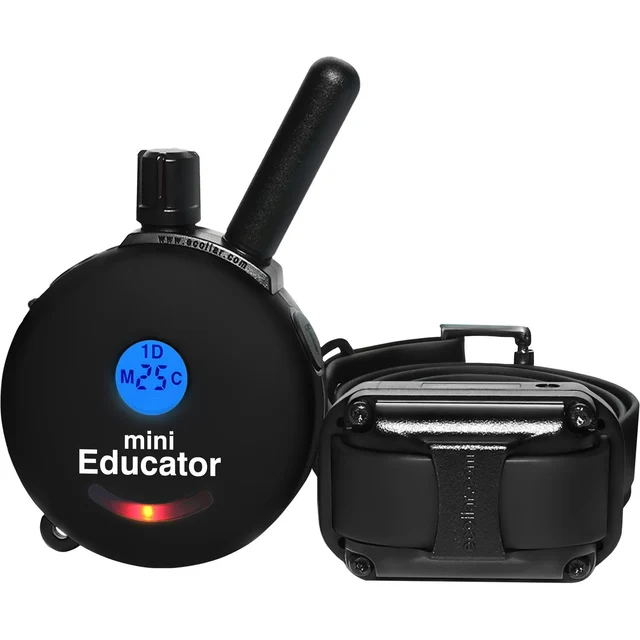
- Buy E-Collar Technologies Educator ET-300 Mini Educator The finest low-level control here, with 100 gentle increments and a boost dial that make it easy to find the setting your dog barely feels. Amazon
- Buy Dogtra 200C A compact, low-to-medium-output trainer whose 0-100 rheostat dial makes gradual, precise adjustment second nature.
- It depends SportDOG SportTrainer 575E A rugged, submersible OLED trainer built for the field, but its 10 levels are coarser than the rheostat-style rivals. Amazon
- Skip PetSafe Basic Dog Trainer with Remote A low-cost, waterproof remote with tone and vibration, but only eight static levels and a 300-foot range make it the coarsest and shortest-reaching option here. Amazon
What actually matters
- Stimulation granularity - the number and smoothness of intensity steps is the single most important feature, because gentle training depends on making small, gradual adjustments and staying at the lowest level your dog perceives.
- Non-static modes - tone (an audible beep) and vibration let you cue your dog without any static, and many dogs respond to these alone once they understand them.
- Water protection - a collar that dies in a puddle is useless in the field, so the rating should match whether your dog swims, works in wet country, or just walks in the rain.
- Fit and receiver size - the receiver and neck-size range must suit your dog's weight; a bulky unit is wrong for a small breed.
- Range - how far the handheld reaches matters for off-leash and field work, but everyday backyard training rarely needs the longest range.
- Everyday usability - no-look controls, how many dogs a handheld manages, and battery and charge time all affect whether sessions stay consistent.
- Value for control - the price should reflect how much precise, gentle control you get, not just brand reputation.
The specs, in plain English
Green flags vs red flags
Green flags
- Many fine stimulation increments or a smooth rheostat dial, so you can dial in a low level precisely
- Both tone and vibration modes, so you can cue without static
- A water rating that clearly matches how your dog will use it
- A receiver and neck-size range that genuinely fits your dog's weight and build
- Intuitive, no-look controls and a memory/lock feature for the working level
- Rechargeable battery with reasonable life and a quick charge time
Red flags
- Only a handful of coarse stimulation steps, making low-level tuning a guessing game
- Static only, with no tone or vibration option
- A premium or flagship price that buys fewer increments or weaker water protection than cheaper rivals
- A large, heavy receiver marketed for a small dog
- Vague water claims ("weatherproof") with no clear submersible or waterproof rating
- Marketing that leans on maximum power or "correction strength" rather than fine, gentle control
Who's who: the brands
- E-Collar Technologies (Educator) - Known for very fine, low-level control, such as 100-step ranges plus an adjustable boost, favored for gentle everyday training.
- Dogtra - Popular for smooth rheostat-dial control and compact, fully waterproof receivers well suited to smaller, milder dogs.
- SportDOG - Field-and-hunting focused, known for rugged submersible units with long battery life and clear displays.
- PetSafe - A well-known budget brand; compare each model's static step count and listed range before buying.
How to read a listing without getting fooled
When you read a product listing, start with the stimulation spec and translate it into how gentle you can be: a high level count or a rheostat dial means small, controllable steps, while a low count like 10 means bigger jumps that are harder to keep gentle. Don't be swayed by big numbers on range or power; range beyond your actual training distance is wasted, and raw output tells you nothing about how finely you can control it. Check the water rating precisely (submersible with a depth figure, waterproof, or merely water-resistant) and confirm the neck-size and receiver weight fit your dog rather than trusting a vague "all sizes" claim. Finally, weigh the price against control and build: a flagship price is only worth it if it buys more granularity and durability, not just a familiar logo.
How much should you spend?
Spend based on how much fine control and durability you get, not on brand prestige. Entry-level remotes can be a false economy if their stimulation steps are coarse, because the ability to work gently is the entire point of the tool. The value sweet spot tends to sit in the mid-range, where a smooth rheostat or a high level count, solid waterproofing, and a compact receiver come together without a flagship premium. Paying up is worth it when you genuinely need the extra flexibility (tone plus vibration, a boost dial, multi-dog control, or true submersibility for a swimming or hunting dog). It's not worth it when a pricier, better-known unit actually offers fewer increments or weaker water protection than a cheaper rival; in that case you're paying more for less of the thing that matters.
Questions, answered
Are remote training collars humane?
They can be a humane tool when used responsibly, and they can cause fear or harm when they're not. The most important habit is to work at the lowest level your dog can just perceive, leaning on tone and vibration before any static, and to pair the collar with reward-based training rather than punishment. Because dogs vary so much, we strongly recommend getting guidance from a qualified, credentialed trainer or behaviorist before you start, and always using the lowest effective settings, adjusting only gradually. This is general product information, not behavioral advice for your specific dog.
How many stimulation levels do I actually need?
More levels aren't about training harder; they're about training more gently. A collar with 100 fine increments, or a smooth rheostat dial, makes it far easier to find and hold the low setting your dog barely notices. Ten-level units can jump past that sweet spot, which is why finer control is generally better for everyday, low-level work.
What's the difference between tone, vibration, and static?
Tone is an audible beep, vibration is a buzz you can feel, and static is a mild electrical tingle through the contact points. Responsible use means reaching for the least intense option first; many dogs respond to tone or vibration alone once they understand them. Reserve static for when it's genuinely needed and keep it at the lowest effective level.
Which collar is best if my dog swims or trains in wet conditions?
Look for a submersible rating with a stated depth (some are rated to around 25 feet) for dogs that swim, or a fully waterproof receiver for wet, rainy work. A unit that's only water-resistant to splashes is fine for dry everyday walks but not for a dog that gets fully wet, so match the rating to how your dog will actually use it.
Do these work for small dogs?
Some do, but fit is everything. Certain compact receivers suit dogs as small as roughly 5 pounds, while others are sized for medium and large dogs and would be too bulky for a small breed. Always confirm the receiver weight and the collar's neck-size range fit your dog before buying.
How should a beginner get started safely?
Start slow and low. Introduce the collar gradually, begin at the lowest settings, lead with tone and vibration, and pair everything with reward-based training. Most importantly, work with a qualified professional trainer or behaviorist rather than experimenting on your own, and keep every session at the lowest effective level. This guide is general information, not a substitute for hands-on professional guidance for your individual dog.
Or jump to the head-to-head: E-Collar Technologies Educator ET-300 Mini Educator vs Dogtra 200C.