

Pet Supplies
The Best Dog Training Collars: 4 Compared (and One to Skip)
We compared four current remote e-collars on stimulation granularity, modes, waterproofing, range, and humane low-level control for responsible everyday training.
The short version
For humane, low-level remote training the Educator ET-300 Mini Educator is our top pick: its 100 levels plus a boost dial make it the easiest to keep at the gentlest effective setting, and it offers tone and vibration modes. The Dogtra 200C is the value runner-up, with a smooth 0-100 rheostat and a compact waterproof receiver, held back only by the lack of an audible tone. The SportDOG SportTrainer 575E is an it-depends pick, superb for wet, outdoor, and sporting use thanks to 25-foot submersibility, but coarser at 10 levels. The PetSafe Basic Dog Trainer with Remote is the skip: it is inexpensive and waterproof, but the maker lists only eight static levels and a range of up to 300 feet, so it gives the least control and the least reach. Any of these should be introduced slowly, at the lowest levels, ideally with professional guidance. Best for: owners who want precise, gentle, well-built off-leash reinforcement and are committed to using it responsibly.
Our picks at a glance
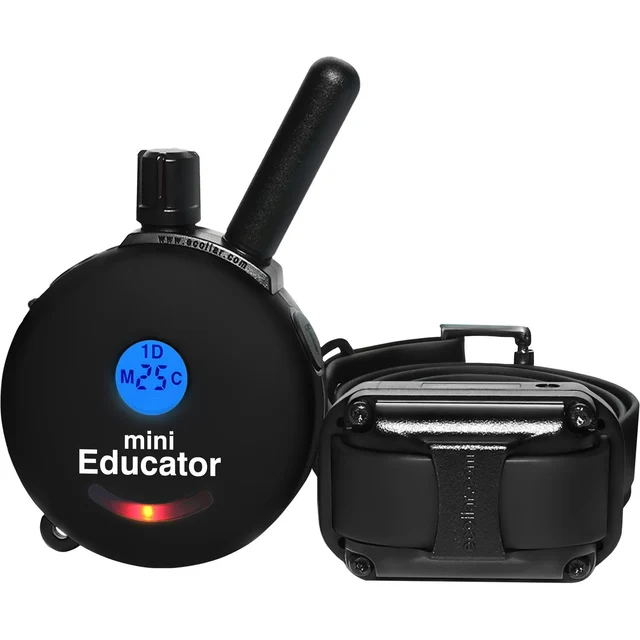
- E-Collar Technologies Educator ET-300 Mini Educator - Buy. The finest low-level control here, with 100 gentle increments and a boost dial that make it easy to find the setting your dog barely feels.
- Dogtra 200C - Buy. A compact, low-to-medium-output trainer whose 0-100 rheostat dial makes gradual, precise adjustment second nature.
- SportDOG SportTrainer 575E - It depends. A rugged, submersible OLED trainer built for the field, but its 10 levels are coarser than the rheostat-style rivals.
- PetSafe Basic Dog Trainer with Remote - Skip. A low-cost, waterproof remote with tone and vibration, but only eight static levels and a 300-foot range make it the coarsest and shortest-reaching option here.
The verdict in 30 seconds
What mattered most
- Stimulation granularity
- Non-static modes
- Water protection
- Range
- Dogs per handheld
- Best-suited dog size
Remote training collars are a serious tool, not a shortcut, and the best ones are the ones that let you work at the lowest level your dog notices and no higher. We weighed four current 2026 remotes on how finely they let you dial in stimulation, how forgiving their modes are (tone and vibration before static), how well they survive water and weather, and how intuitive they are under real conditions. Two earn a clear buy, one is a solid "it depends" for outdoor and sporting work, and one lands on skip because it gives you the coarsest control and the shortest range.
The finest low-level control here, with 100 gentle increments and a boost dial that make it easy to find the setting your dog barely feels.
Best for: Owners who want the gentlest possible increments and are willing to learn the settings to train responsibly at low levels.
- 100 stimulation levels plus an adjustable 1-60 boost give you unusually fine control for working at the lowest effective setting
- Tone and vibration modes let you rely on non-static cues first
- Compact, lightweight receiver suits small and medium dogs (roughly 5 lbs and up) and its Lock-and-Set memory allows no-look operation
- A night tracking light on the collar, solid or flashing, helps with low-light visibility
- Priced above the mid-range pack
- Deep feature set (boost, lock-and-set, mode switching) is more than a first-time owner needs on day one
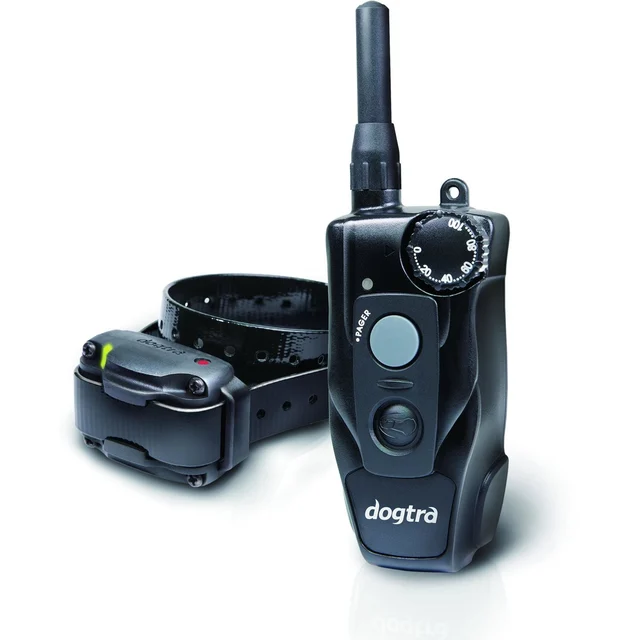
A compact, low-to-medium-output trainer whose 0-100 rheostat dial makes gradual, precise adjustment second nature.
Best for: Owners of small-to-medium, milder dogs who want smooth manual control and a compact receiver.
- Front-facing 0-100 rheostat dial gives smooth, gradual stimulation control right under your thumb
- Low-to-medium output range is well matched to mild-mannered and first-time-trained dogs
- Ultra-compact, fully waterproof receiver fits dogs as small as about 10 lbs comfortably
- Simple, intuitive one-handed transmitter with a separate vibration (pager) button
- Has a vibration pager but no separate audible tone mode
- Base 200C runs a single collar; you need the 202C for two dogs
Amazon had no buyable listing for this when we last checked. The link still works if it returns.
Find it on Amazon Read our detailed assessment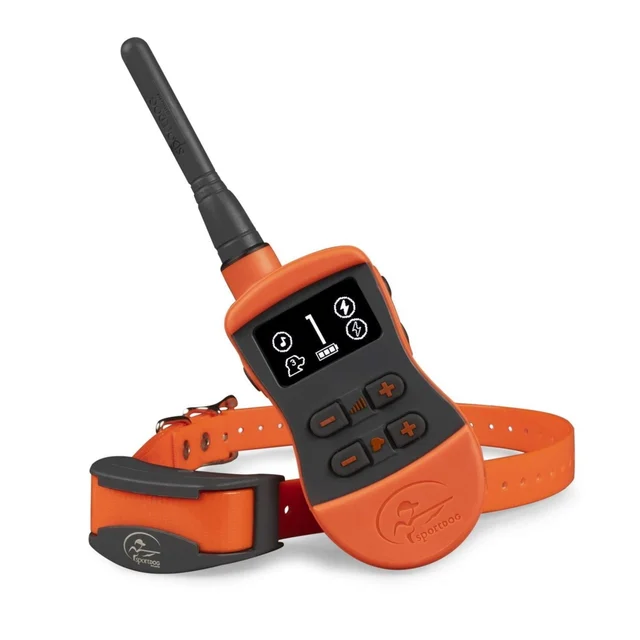
A rugged, submersible OLED trainer built for the field, but its 10 levels are coarser than the rheostat-style rivals.
Best for: Hunting and outdoor handlers who prioritize waterproofing, range, and durability over the finest increments.
- Submersible to 25 feet with DryTek waterproofing, plus tone and vibration alongside static
- Clear OLED screen shows selected dog, level, and battery at a glance
- Adjustable low and medium stimulation ranges add flexibility on top of the 10 levels
- Long battery life and a fast 2-hour charge suit all-day outdoor sessions
- 10 static steps are coarser than the 100-point dials on the Educator and Dogtra
- 500-yard range and larger receiver skew it toward medium-to-large and sporting dogs
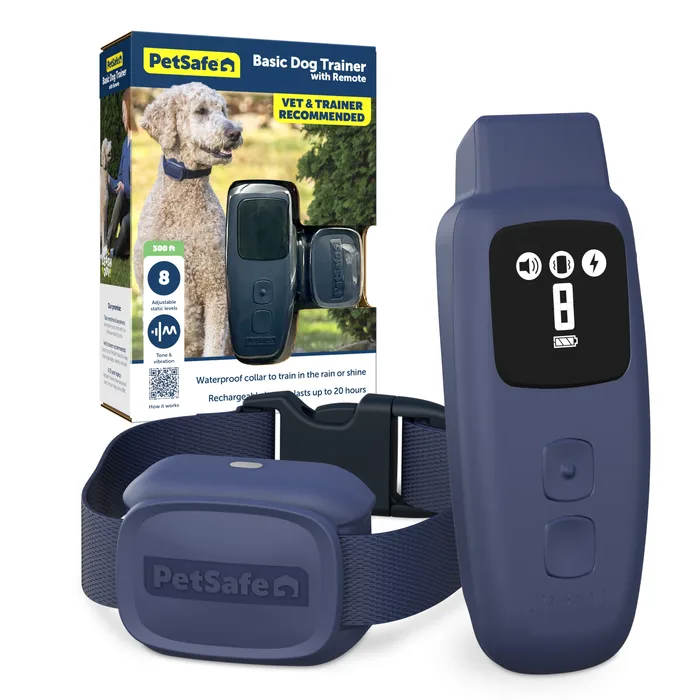
A low-cost, waterproof remote with tone and vibration, but only eight static levels and a 300-foot range make it the coarsest and shortest-reaching option here.
Best for: Owners training one dog at close range in a yard who want a simple, low-cost remote and accept coarser steps than the 100-level options.
- Offers tone, vibration and static modes, so cues can start without static
- The collar is described as waterproof, and the maker lists a quick 2-hour charge for up to 20 hours of use
- Adjustable fit for dogs with 10 to 22 inch necks
- The maker lists only eight levels of static, the coarsest control in this group, which makes fine low-level tuning harder
- Range is up to 300 ft (100 yd), the shortest here, and the maker pitches it for backyard training
- The page does not list a dog weight range, a dogs-per-remote count, or a depth rating for the waterproof collar
| Criteria | Educator ET-300 Mini Educator Top pick Buy it Buy | Dogtra 200C Buy it | SportDOG SportTrainer 575E It depends Buy | Basic Dog Trainer with Remote Skip it Buy |
|---|---|---|---|---|
| Best for | Owners who want the gentlest possible increments and are willing to learn the settings to train responsibly at low levels. | Owners of small-to-medium, milder dogs who want smooth manual control and a compact receiver. | Hunting and outdoor handlers who prioritize waterproofing, range, and durability over the finest increments. | Owners training one dog at close range in a yard who want a simple, low-cost remote and accept coarser steps than the 100-level options. |
| Price tier | $$$ · premium | $$ · mid-range | $$ · mid-range | $ · budget |
| Stimulation granularity | 100 levels + 1-60 boost | 0-100 rheostat dial | 10 levels + low/medium ranges | 8 static levels |
| Non-static modes | Tone + vibration | Vibration (pager) only | Tone + vibration | Tone + vibration |
| Water protection | Not stated on maker page | Fully waterproof | Submersible to 25 ft | Waterproof collar, no depth rating |
| Range | About 1/2 mile | About 1/2 mile | 500 yards | Up to 300 ft (100 yd) |
| Dogs per handheld | Up to 2 | 1 (202C for 2) | Up to 2 | Not listed |
| Best-suited dog size | Small to large (5 lb+) | Small to medium (10 lb+) | Dogs 8 lb+ per maker | 10 to 22 in. necks, weight not listed |
| Ease of low-level tuning | Excellent | Excellent | Good | Limited by 8 steps |
| Price tier | $$$ · premium | $$ · mid-range | $$ · mid-range | $ · budget |
Which one is right for you?
- Owners who want the gentlest possible increments and are willing to learn the settings to train responsibly at low levels. Buy it E-Collar Technologies Educator ET-300 Mini Educator
- Owners of small-to-medium, milder dogs who want smooth manual control and a compact receiver. Buy it Dogtra 200C
- Hunting and outdoor handlers who prioritize waterproofing, range, and durability over the finest increments. It depends SportDOG SportTrainer 575E
- Owners training one dog at close range in a yard who want a simple, low-cost remote and accept coarser steps than the 100-level options. Skip it PetSafe Basic Dog Trainer with Remote
How we judged the field
We do not run our own lab. Instead we synthesize independent testing, long-run owner reports, and manufacturer specifications, then weight them toward the things that matter for responsible, everyday training. Four criteria did most of the sorting.
First and most important: stimulation granularity. The humane way to use any remote collar is to work at the lowest level your dog can just perceive, so the ability to make small, gradual adjustments is the single most valuable feature. Second, modes - units that offer tone and vibration let you cue your dog without static at all. Third, durability and water protection, since a collar that dies in a puddle is no use in the field. Fourth, range, fit, and everyday usability, including how many dogs a handheld controls and whether the controls are easy to operate without looking. Price tier acted as a tiebreaker: paying more should buy more control, not less.
Educator ET-300 Mini Educator
Buy itThe Mini Educator is the easiest collar here to keep gentle. Its 100 stimulation levels plus a separate adjustable boost make it easy to settle on a low, barely-there setting and stay there. It adds tone and vibration modes, a Lock-and-Set memory for no-look operation, a compact receiver for dogs 5 lbs and up, and a night tracking light for low-light visibility. It costs more than the mid-range pack and its depth can feel like a lot on day one, but for owners committed to low-level work it is the most capable and the most forgiving.
Dogtra 200C
Buy itThe 200C is the value pick and, in terms of control feel, nearly the equal of the Educator. Its front-facing 0-100 rheostat dial sits under your thumb and adjusts smoothly and gradually, and its low-to-medium output is well matched to milder and first-time-trained dogs. The receiver is compact and fully waterproof, fitting dogs from around 10 lbs. The main caveats are that it has a vibration pager but no separate audible tone, and the base model runs a single collar, so two-dog households need the 202C. For a smaller, gentler dog it is an excellent, affordable choice.
SportDOG SportTrainer 575E
It dependsThe 575E is built for the field, and the maker backs that up: it is submersible to 25 feet, has a clear OLED screen, offers tone and vibration alongside static, and pairs long battery life with a fast charge. Its 10 levels are extended by adjustable low and medium ranges, which helps, but the steps are still coarser than the 100-point dials on our two top picks. Combined with a 500-yard range and a larger receiver, that makes it a specialist: a strong choice for hunting and outdoor handlers, less ideal if your priority is the finest possible increments for a small companion dog.
PetSafe Basic Dog Trainer with Remote
Skip itThe PetSafe Basic Dog Trainer is an inexpensive, widely known remote with tone, vibration and static modes, a waterproof collar, a quick 2-hour charge for up to 20 hours of use, and an adjustable fit for 10 to 22 inch necks. The problem is fit for this review’s main test. The maker lists only eight levels of static, the coarsest control of the four, which makes fine low-level tuning harder, and the remote reaches up to 300 feet, which the maker itself frames as perfect for backyard training. The page also leaves out a dog weight range, a dogs-per-remote count and a depth rating for the waterproof collar. For a calm dog trained at close range in a yard it can do the job, but for gentle, finely graded work the other three are better tools, which is why it lands on skip.
Sources
Specs in this review come from these pages.
Educator ET-300 vs Dogtra 200C: which should you buy?
These are the two we would actually put on a dog, and both give you the smooth, fine control that responsible low-level training depends on. The Educator ET-300 is the more complete tool: it adds an audible tone mode, a wider fit range down to very small dogs, a boost dial for edge cases, and Lock-and-Set memory, all of which justify its higher price for owners who want maximum flexibility. The Dogtra 200C answers with a beautifully simple rheostat, a fully waterproof compact receiver, and a mid-range price that makes it the better value for a smaller, milder dog whose owner does not need tone or multi-dog support. Choose the Educator if you want the most control and the gentlest possible increments; choose the Dogtra if you want most of that feel for less money in a simpler package.
What to look for
- Fine stimulation increments. Prioritize collars that let you make small, gradual adjustments so you can find and hold the lowest level your dog notices.
- Tone and vibration modes. These let you cue your dog without static at all; use them first.
- Correct fit and size range. Match the receiver and neck-size range to your dog’s weight and neck; a collar that is too big or heavy is a poor fit for a small dog.
- Water protection that matches your use. Submersible for swimmers and hunters; waterproof is fine for rain; splash-resistant only for dry, everyday walks.
- Battery and charge time. Rechargeable lithium packs with quick charging keep sessions consistent.
- Intuitive, no-look controls. You should be able to change dogs, modes, and levels without staring at the remote.
Our final take
Remote collars reward restraint, and the best ones are simply the easiest to keep gentle. The Educator ET-300 Mini Educator earns our top pick for exactly that reason: nothing here makes low, barely-there stimulation easier to dial in and hold, and it is well built besides. The Dogtra 200C is the smart-value runner-up for smaller, milder dogs. The SportDOG SportTrainer 575E is the one to grab if your training happens in water and rough country. The PetSafe Basic Dog Trainer is the one we would pass on in this company, because its eight static levels and 300-foot range give the least control and the least reach. Whichever you choose, introduce it slowly, stay at the lowest effective settings, pair it with reward-based training, and lean on a qualified professional if you are at all unsure - the tool matters far less than how carefully you use it.
Questions, answered
Are remote training collars humane?
They can be a humane tool when used responsibly, and they can cause fear or harm when they are not. The single most important habit is to work at the lowest level your dog can just perceive, leaning on tone and vibration cues before any static, and to pair the collar with reward-based training rather than punishment. Because dogs vary widely, we strongly recommend getting guidance from a qualified, credentialed trainer or behaviorist before you start, and starting at the lowest effective settings and only adjusting gradually. This is general product information, not behavioral advice for your specific dog.
How many stimulation levels do I actually need?
More levels are not about training harder; they are about training more gently. A collar with 100 fine increments, like the Educator ET-300 or the Dogtra 200C rheostat, makes it far easier to find and stay at the low setting your dog barely notices. Units with only eight static steps, such as the PetSafe Basic Dog Trainer, can jump past that sweet spot, which is why we favor finer control for everyday, low-level work.
Which collar is best if my dog swims or trains in wet conditions?
The SportDOG SportTrainer 575E is the standout for water, rated submersible to 25 feet, and the Dogtra 200C is fully waterproof as well. We could not confirm a water rating for the Educator ET-300, so check before using it around water. The PetSafe Basic Dog Trainer describes its collar as waterproof but gives no depth rating, so confirm before using it around deep water.
Do these work for small dogs?
The Educator ET-300 has a compact receiver suited to dogs roughly 5 lbs and up, and the Dogtra 200C fits dogs from about 10 lbs, making both good choices for smaller breeds. The SportDOG 575E has a larger receiver better matched to medium and large dogs, and the PetSafe Basic Dog Trainer lists 10 to 22 inch necks but no weight range. Always confirm the collar's neck-size range fits your dog before buying.
Tone and vibration versus static: what should I use first?
Responsible use generally means reaching for the least intense option first. Every collar here offers vibration and most offer an audible tone, and many dogs respond to those cues alone once they understand them. Reserve static for when it is genuinely needed, keep it at the lowest effective level, and if you are unsure how to introduce any of these modes, work with a professional trainer rather than experimenting on your own.
Deciding between the top two? See our head-to-head: E-Collar Technologies Educator ET-300 Mini Educator vs Dogtra 200C.
More in Pet Supplies
Dog Training Collars, Explained Plain-English guide → E-Collar Technologies Educator ET-300 Mini Educator vs Dogtra 200C Head-to-head →  The Best Dog Winter Coats: 4 Compared (and One to Skip)
  The Best Elevated Dog Bowls: 4 Compared (and One to Skip)
  The Best Hamster and Small Animal Exercise Wheels: 4 Compared (and One to Skip)
  The Best Heated Bird Baths: 4 Compared (and One to Skip)