Explained
Dog Shampoos, Explained
After reading, you'll understand what soap free, sulfate free, pH balanced and colloidal oatmeal actually mean on a dog shampoo label, why the pH argument against human shampoo is real but overstated, and which claims tell you a maker has done real work.
In this guide
First-time buyers get tripped up by the fact that almost every dog shampoo makes the same four claims. Gentle, soothing, pH balanced and natural appear on bottles that cost very different amounts and contain very different things. The useful signal is not which words appear but how much detail sits behind them: a full ingredient list, a stated minimum age, a named coat type, an explicit statement about topical flea preventatives. Everything else is language anyone can print.
The 30-second version
- Disclosure beats adjectives, so judge a shampoo by whether the maker publishes a full ingredient list rather than by how soothing the copy sounds.
- The pH argument is real but blurry, because canine skin is less acidic than human skin on average while published canine values span a wide range across studies and body sites.
- Soap free is a meaningful claim, since true soap can leave residue on a coat and behaves badly in hard water, and the better makers state it explicitly.
- Rinsing matters more than the formula, because leftover shampoo on the skin is one of the more common causes of a dog itching after a bath.
- Medicated and flea shampoos are a different category, so treat anything antifungal, antibacterial or pesticidal as a veterinary decision rather than a shelf comparison.
The products this guide is about
Our verdict on each, with the full reasoning on the companion review.
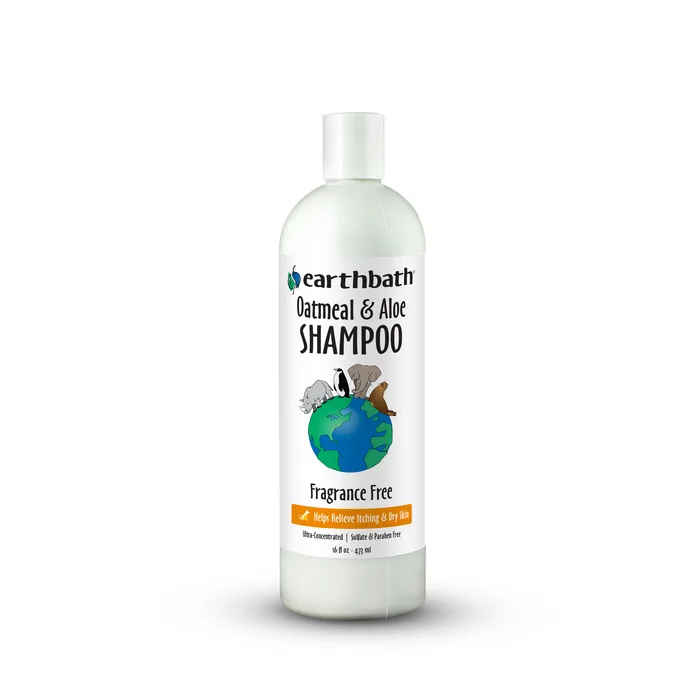
- Buy Earthbath Oatmeal & Aloe Itch Relief Shampoo, Fragrance Free The best-documented general shampoo here, and the fragrance free version removes the variable that bothers reactive dogs most. Amazon
- Buy Vet's Best Hypo-Allergenic Dog Shampoo Cheap enough to use properly, with a published ingredient list, a stated 12 week minimum age, and an answer to the compatibility question most owners have. Amazon
- It depends TropiClean PerfectFur Thick Double Coat Shampoo for Dogs Built for the short-undercoat, long-overcoat combination and largely beside the point on a smooth-coated dog. Amazon
- Skip Zesty Paws Itch-Soother Shampoo for Dogs Sold for itchy, irritated skin while carrying a vanilla fragrance and saying nothing about pH, soap-free status or topical flea products.
What actually matters
- Ingredient transparency - Some makers publish every ingredient, some publish four highlights, and at least one publishes none. The buyer most likely to need the list is the one with a dog whose skin already reacts to something.
- Soap free - It signals that the cleansing comes from mild surfactants rather than true soap. Soap can leave a film on a coat and forms scum in hard water.
- Stated minimum age - Puppies are bathed far more often than adult dogs, and one study found puppy skin pH sits lower than adult skin pH. A maker that names an age has at least considered the difference.
- Fragrance - It is the cheapest additive in the bottle and the most common thing to remove when a dog's skin reacts. A brand that offers a fragrance free version has given you a lever to pull.
- Compatibility with topical preventatives - Spot-on flea and tick products sit in the coat and on the skin, and bathing can interact with them. Makers that state their shampoo will not wash off or affect those products save you a phone call.
- Coat type - A double coat traps shampoo and takes far longer to rinse than a short single coat. A formula that names a coat type is aimed at a real problem rather than at a mood.
- Bottle size and format - Concentrates and gallon jugs change the cost per wash dramatically, and a bottle you can operate with wet, soapy hands is not a trivial detail when a large dog is trying to leave the tub.
The specs, in plain English
Green flags vs red flags
Green flags
- The maker publishes the complete ingredient list on the product page, not just a handful of highlights.
- The bottle states soap free rather than leaving you to infer it from the word gentle.
- There is a stated minimum age, ideally in weeks, for using it on a puppy.
- The maker says in writing that the shampoo will not wash off or affect topical flea and tick preventatives.
- A fragrance free version exists alongside the scented ones, so you can remove that variable if the dog reacts.
Red flags
- No ingredient list anywhere on the maker's own product page.
- Language about itchy or irritated skin on a product that is not medicated and gives no detail about what is doing the soothing.
- Scent longevity presented as a headline feature on a shampoo aimed at sensitive skin.
- A gallon or bulk size with no statement about whether it is ready to use or a concentrate.
- Claims that a general shampoo will treat, cure or resolve a skin condition, which is territory for a vet and a diagnosis.
Who's who: the brands
- Earthbath - Known for plant based, soap free formulas with full ingredient disclosure and a fragrance free option in the oatmeal and aloe line.
- Vet's Best - A widely stocked value line whose Hypo-Allergenic product page states compatibility with topical flea and tick control and a 12 week minimum age.
- TropiClean - A broad range spanning everyday scented shampoos and coat-specific formulas such as the PerfectFur line for double coats.
- Zesty Paws - A mass-market brand whose Itch-Soother oatmeal shampoo carries a vanilla fragrance and makes no pH or flea-product statement.
How to read a listing without getting fooled
Start at the bottom of the page rather than the top. Find the ingredient list first; if there isn't one, you have learned the most important thing about the product and can stop. If there is, read it as a hierarchy: water, then the cleanser, then the things the marketing is built on, then the preservative. Note whether the cleanser is named or hidden behind a phrase like mild cleansing agents. Next look for the three facts most makers skip: a stated minimum age, a statement about topical flea and tick preventatives, and whether the product is ready to use or a concentrate. Only then read the front-of-bottle claims, and treat pH balanced, gentle and natural as tone rather than specification, because none of them come with a number you can check. Finally, check the size, because a gallon of ready-to-use shampoo and a gallon of concentrate are not remotely the same purchase.
How much should you spend?
Budget bottles are easy to find in general stores and are perfectly capable of getting a healthy adult dog clean, but they are also where disclosure is thinnest, so read the label before you commit. Mid-range is where the category makes the most sense: this is the tier where you are more likely to get a full ingredient list, a soap free claim, a stated minimum age and a fragrance free option, and where the extra outlay buys information rather than exotic ingredients. Premium bottles, often sold through groomers or veterinary channels, tend to be smaller and are usually aimed at a specific coat or skin situation rather than at general washing. If you bathe often, the cost per wash matters more than the shelf price, so compare bottle sizes and check whether anything is a concentrate before you decide one option is expensive.
Questions, answered
What does soap free actually mean, and does it matter?
True soap is fat reacted with an alkali, and it tends to sit on the alkaline side and to form a film when it meets hard water. Soap free means the cleansing is done by milder surfactants instead, usually plant or coconut derived in this category. It is one of the few front-of-bottle claims that describes chemistry rather than mood, which is why it is worth looking for the exact words. It does not on its own guarantee a gentle formula, but a maker willing to state it is usually willing to publish the rest of the label too.
How do concentrates and dilution ratios work?
A concentrate is sold thick and mixed with water at a ratio the maker states, often something like one part shampoo to a stated number of parts water. Diluting it does not weaken the wash if you follow the ratio, because the product was formulated on the assumption you would. The practical effect is on cost per wash, which can differ enormously between a concentrate and a ready-to-use bottle of the same volume. Check whether a large bottle is ready to use or a concentrate before comparing it with anything else, because the labels look nearly identical on a shelf.
Can a puppy use the same shampoo as an adult dog?
Sometimes, but only if the maker says so. Some brands publish a minimum age, for example stating a product is safe for pets over six weeks, and others say nothing at all. That is worth taking seriously, because puppies get bathed far more often than adult dogs and their skin measures differently: one study found skin pH in dogs under 12 weeks sat lower than in older dogs. If a bottle gives no age guidance and your dog is very young, either pick one that does or ask your vet.
Is a more expensive shampoo actually different?
Often what you are buying is information rather than performance. The mid-range and premium bottles are where you are more likely to get a full ingredient list, a soap free claim, a stated age minimum and a fragrance free option, and those are the things that let you make a considered choice for a particular dog. For a healthy adult with no skin history, a cheaper soap free shampoo used often and rinsed properly will do the job perfectly well. The gap opens up when something goes wrong and you need to know what your dog has been washed in.
Or jump to the head-to-head: Earthbath Oatmeal & Aloe Itch Relief Shampoo, Fragrance Free vs Vet's Best Hypo-Allergenic Dog Shampoo.