Explained
Dog Raincoats, Explained
After reading, you'll understand how to judge a dog raincoat's waterproofing and fit before you buy.
In this guide
Dog raincoats are sold in bright colours with the word waterproof on every label, and many owners find their dog comes home soaked anyway. The difference lies in details that are rarely advertised: a measured waterproof rating, sealed seams, coverage under the chest and belly, and a fit that suits the dog's shape. Knowing what to look for makes the choice straightforward.
The 30-second version
- A millimetre rating is a measurement, and waterproof on its own is a claim.
- Seams leak unless they are taped, however good the fabric is.
- Most splash comes from below, so belly and chest coverage matter.
- Dog shapes vary enormously, and some brands offer different fits for different breeds.
- Harness access matters, because a coat that blocks the lead clip is hard to use.
The products this guide is about
Our verdict on each, with the full reasoning on the companion review.
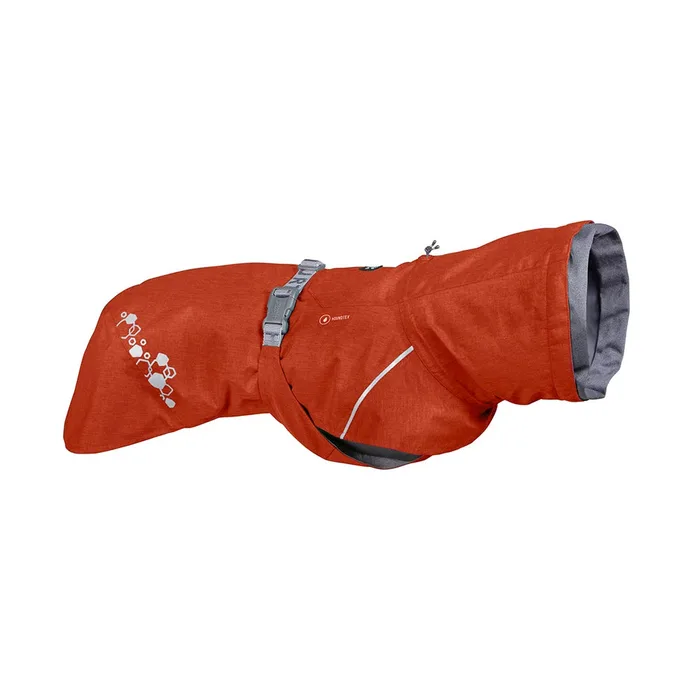
- Buy Hurtta Monsoon Coat II ECO A fully seam-taped raincoat with a water column above 10,000 mm and a belly flap that actually keeps mud off.
- Buy Ruffwear Sun Shower Dog Raincoat A light, relaxed-fit raincoat with a published 3,000 mm rating and a leash portal that works over a harness.
- It depends Chilly Dogs Harbour Slicker Dog Rain Coat A Canadian-made slicker offered in three body shapes, which is the answer for dogs no standard coat fits.
- Skip Gold Paw Series Rainpaw A soft, quiet, US-made rain layer with no published waterproof rating and nothing said about seam taping.
What actually matters
- Waterproof rating - a hydrostatic head figure in millimetres. Higher means the fabric resists more water pressure before leaking.
- Seam taping - sealing the stitching holes. Without it, water gets in along the seams in steady rain.
- Coverage - chest panels, belly flaps and extended backs keep more of the dog dry and clean.
- Fit system - buckles, webbing, Velcro and leg loops decide whether a coat stays put when a dog runs and shakes.
- Sizing method - by girth, back length or a brand's own system. Always use the maker's chart.
- Harness compatibility - a leash portal or harness hole lets the lead clip on without lifting the coat.
- Visibility - reflective details help in the dark, wet conditions when raincoats are most used.
The specs, in plain English
Green flags vs red flags
Green flags
- A published waterproof rating in millimetres.
- Taped seams stated.
- A clear sizing chart with the measurement method explained.
- Belly or chest coverage described.
- A leash portal or harness opening.
Red flags
- Waterproof claimed with no rating.
- No mention of seams.
- One-size or vague sizing.
- Wind resistant used where windproof is implied.
- No care instructions for a waterproof garment.
Who's who: the brands
- Hurtta - Finnish dog outdoor gear maker known for technical coats with published waterproof ratings and belly coverage.
- Ruffwear - Oregon-based dog adventure brand known for harnesses, packs and trail-focused coats.
- Chilly Dogs - Canadian maker offering coats in several body shapes for breeds that standard sizing does not fit.
- Gold Paw Series - US maker of stretchy fleece and rain layers, focused on low-noise fabrics and responsible materials.
How to read a listing without getting fooled
Start with the waterproof rating and look for taped seams. Then look at coverage and decide how much of your dog's belly and chest needs protecting. Read the sizing chart carefully, note which measurement it uses, and measure your dog standing. Check how the coat fastens and whether it works with your harness. Finally read the care instructions, because waterproof coatings do not tolerate heat or harsh detergents.
How much should you spend?
Budget dog raincoats are usually simple coated shells with no rating and minimal coverage, which can be enough for short walks in light rain. The mid-range is where published ratings, harness portals and better sizing appear, and it suits most dogs. Premium coats add high ratings, taped seams and belly flaps, and they are worth it for dogs who walk long distances in heavy rain. Fit matters more than price, so a mid-range coat that fits well beats a premium coat that does not.
Questions, answered
My dog hates wearing a coat. What can I do?
Introduce it gradually indoors, with treats and short sessions, before going outside. Choose a coat that goes on quickly without pulling over the head if your dog dislikes that, and pick quiet fabrics if rustling bothers them. Most dogs accept a well-fitting coat within a few walks.
Should the coat cover my dog's legs?
Only if you need maximum mud protection. Full-body suits and coveralls keep legs and bellies cleaner but take longer to put on and can restrict movement. Most dogs are fine in a coat that covers the back, chest and belly.
Can a raincoat keep my dog warm?
A raincoat mostly blocks wind and water, which helps a dog stay warm by staying dry. It adds little insulation on its own. For cold, wet weather, layer a raincoat over a fleece or choose an insulated coat.
How do I know if the coat fits?
It should sit close without pulling, let your dog move its shoulders and legs freely, and not slide sideways when they walk or shake. You should be able to slide two fingers under the straps. If it rubs under the front legs or rides up, try a different size or fit.
Or jump to the head-to-head: Hurtta Monsoon Coat II ECO vs Ruffwear Sun Shower Dog Raincoat.