Explained
Dog Crates, Explained
After reading this you will know which crate type fits your dog, how to size it correctly, and which build details actually matter.
In this guide
A dog crate is not one product but four very different tools: wire folding crates, molded plastic travel kennels, welded-steel heavy-duty cages, and furniture-style crates that hide as end tables. The single biggest mistake buyers make is shopping by looks or price instead of matching the crate to the dog and the job. Get the type and the size right first, and everything else falls into place.
The 30-second version
- Buy for the dog you have, not the crate you like. A calm, house-trained dog and a panic chewer need completely different builds, so temperament decides the type before anything else.
- Size is about proportion, not roominess. Your dog should stand, turn, and lie down fully stretched, and no bigger, because a too-large crate invites a bathroom corner.
- Wire, plastic, and steel each solve a different problem. Wire is the versatile everyday default, plastic is the travel standard, and welded steel is only for dogs that defeat ordinary crates.
- Latches and gauge matter more than brand. Heavier wire and tamper-resistant latches out of paw reach separate a secure crate from one a determined dog pops open.
- Furniture-style crates trade function for looks. They can work for small, calm, fully trained dogs, but thin panels and hard-to-clean finishes make them a poor primary crate.
The products this guide is about
Our verdict on each, with the full reasoning on the companion review.
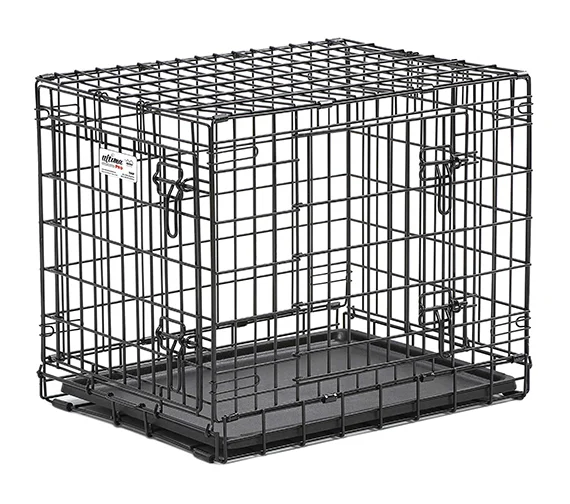
- Buy MidWest Homes for Pets Ultima Pro Double Door Dog Crate The sturdier, sensible wire folding crate that fits the most homes.
- Buy ProSelect Empire Dog Cage Welded-steel containment for the dogs that destroy everything else.
- It depends Petmate Sky Kennel A plastic travel kennel that earns its keep only if you actually travel.
- Skip Casual Home Wooden Pet Crate End Table Looks like furniture, performs like the compromise it is.
What actually matters
- Crate type matched to temperament because a calm dog is fine in wire or plastic, while escape artists and heavy chewers need welded steel with secure latches.
- Correct interior size because the dog should be able to stand without ducking, turn around, and lie fully stretched, and a crate that is too big undermines house-training.
- Construction and material honesty because wire gauge, weld points, and panel thickness determine whether the crate survives the dog or just looks the part.
- Latch design and placement because drop-pin or dual latches positioned out of muzzle and paw reach resist the dogs that pop single slide-bolts.
- Ease of cleaning because a removable leak-proof pan or slide-out tray saves real frustration over years of use.
- Portability versus permanence because you should decide honestly whether you need to fold, carry, and store the crate or want a fixed, heavy fixture.
- Ventilation and visibility because open wire maximizes airflow and lets you see the dog, while solid plastic feels more den-like and travel-ready.
The specs, in plain English
Green flags vs red flags
Green flags
- Interior sized so the dog can stand, turn, and lie down fully, and no larger
- Heavier-gauge wire or welded steel appropriate to the dog's strength
- Secure latches, ideally dual or drop-pin, positioned out of the dog's reach
- A removable, leak-proof pan or slide-out tray for easy cleaning
- A divider panel included when buying for a growing puppy
- A build clearly matched to how you will actually use it, such as travel-rated for flying
Red flags
- Thin, flexible wire or spindly wood panels that wobble under pressure
- A single flimsy slide-bolt latch a dog can nudge open
- A crate marketed on looks with vague or missing construction details
- An oversized crate bought only because it seems generous, undermining house-training
- A furniture-style crate chosen for a powerful, anxious, or chew-prone dog
- A non-travel crate assumed to be airline-ready without confirming the standard
Who's who: the brands
- MidWest Homes for Pets - Maker of widely stocked wire folding crates from the entry-level iCrate to the sturdier Ultima Pro.
- ProSelect - Known for welded-steel heavy-duty cages aimed at powerful, anxious, or escape-prone dogs.
- Petmate - Long-standing maker of molded plastic kennels, including travel crates built to airline live-animal standards.
- Casual Home - Makes furniture-style wooden crates designed to double as end tables and blend into living spaces.
How to read a listing without getting fooled
Start at the top of the listing and identify the crate type before anything else, because a wire folding crate, plastic travel kennel, welded-steel cage, and wood furniture crate solve different problems and are not interchangeable. Next find the interior dimensions and compare them to your dog measured nose to tail base and floor to top of head, rather than trusting a breed label or a vague size like large. Look for concrete construction language such as wire gauge, welded stress points, or panel thickness; marketing that leans on words like sturdy and premium without numbers or detail is a warning sign. Check how the door latches and where the latches sit, since placement out of a dog's reach matters as much as the mechanism. Finally, confirm the cleaning story, a removable pan or slide-out tray, and treat any airline claim as unverified until you have checked the specific standard and your carrier's rules.
How much should you spend?
How much to spend follows directly from your dog, not from a target figure. For the large majority of calm dogs and puppies in training, a mid-tier wire folding crate hits the value sweet spot: the extra outlay over a bargain crate buys heavier wire and better latches that genuinely last, while the jump to a welded-steel cage is money wasted on a dog that settles quietly. Paying up for heavy-duty steel is worth it only when containment is the whole point, for powerful breeds, panic chewers, or genuine escape artists that have already defeated lighter crates, because there the cheaper option simply fails. Travel kennels justify their cost only if you actually fly or take frequent road trips. Furniture-style crates command a premium for their looks, so you are paying for appearance rather than durability, which is rarely the best use of money for a primary crate. In short, spend where the dog demands it and resist paying for capability or aesthetics you will never use.
Questions, answered
What size crate does my dog need?
Your dog should be able to stand up without ducking, turn around, and lie down fully stretched out, and no larger. Measure length from nose to the base of the tail and height from the floor to the top of the head or ears, then add a few inches. For a growing puppy, buy for the adult size and use a divider panel to shrink the usable space so it does not become a bathroom corner.
Are wire crates or plastic crates better?
Neither is universally better; they solve different problems. Wire crates maximize airflow and visibility, fold flat, and suit everyday home use and training. Molded plastic crates feel more enclosed and den-like and are the standard for air travel. Match the type to how you will actually use it rather than assuming one is superior.
Do I really need a heavy-duty steel crate?
Only if your dog needs it. Heavy-duty cages are expensive, heavy, and do not fold, which is wasted on a dog that settles quietly. They earn their price for powerful breeds, panic chewers, and dogs with serious separation anxiety that have already bent, popped, or chewed through lighter crates.
Is a furniture-style crate safe for my dog?
For a small, calm, house-trained dog it can be fine, but furniture crates generally use thinner materials, so they flex more and offer little resistance to a chewer. A determined dog can damage both the crate and itself. If your dog is powerful, anxious, or an escape artist, choose a proper heavy-duty crate instead.
Can any crate be used to fly with my dog?
No. Air travel typically requires a plastic kennel built to the airline industry live-animal standards, with all-around ventilation, secure hardware-covered doors, and appropriate construction. Folding wire crates, furniture crates, and rolling steel cages are not intended for cargo air travel. Airline rules vary, so always confirm the specific requirements with your carrier before booking.
How do I stop my dog from escaping the crate?
First rule out anxiety, since crating a truly panicked dog can make things worse and may call for training or a professional. Then match construction to the dog: heavier-gauge wire or welded steel, and dual or drop-pin latches positioned where the dog cannot reach them. A crate that is correctly sized and introduced gradually is also far less likely to trigger escape attempts than one the dog resents.
Or jump to the head-to-head: MidWest Homes for Pets Ultima Pro Double Door Dog Crate vs ProSelect Empire Dog Cage.