Explained
Dog Dental Care, Explained
After reading this you will know which dog dental products have real evidence behind them, which are supplements, and how to read the label to tell the difference.
In this guide
The dog dental aisle is built around a promise it cannot keep: clean teeth without brushing. Plaque is a sticky bacterial film that has to be physically disrupted before it hardens into tartar, and only a brush reaches the gum line on every tooth. Everything else in the aisle, chews and additives and gels and wipes, is worth buying as a layer on top of brushing rather than a replacement for it, and the one independent marker that separates tested products from marketing is a seal most shoppers have never heard of.
The 30-second version
- Brushing is the only home method with strong evidence. The bristles do the work of breaking up plaque at the gum line, and a dog safe paste exists mainly to make that thirty second ritual something your dog looks forward to.
- Chews and water additives are supplements, not substitutes. A good chew scrubs the back teeth the dog actually grinds with and does very little for the canines and incisors at the front, so it covers the days you miss rather than replacing the routine.
- The VOHC seal is the one real independent marker in this category. It means a manufacturer ran a controlled trial and someone outside the company checked the numbers against a defined threshold for plaque or tartar reduction.
- Human toothpaste is unsafe for dogs. It contains fluoride, which is a problem for an animal that swallows instead of spitting, and many human pastes contain xylitol, which is seriously toxic to dogs even in small amounts.
- Palatability decides whether any of this happens. The flavor your dog chases is the single biggest predictor of whether the routine survives past week two, which is why the cheap poultry paste outperforms the premium tube sitting unopened in a drawer.
The products this guide is about
Our verdict on each, with the full reasoning on the companion review.
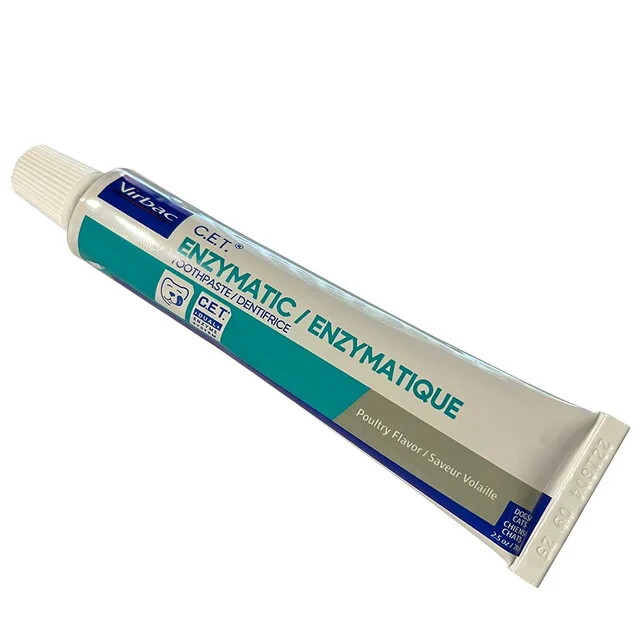
- Buy Virbac C.E.T. Enzymatic Toothpaste (Poultry Flavor) The default veterinary recommendation, and the reason daily brushing actually survives past week two. Amazon
- Buy Virbac C.E.T. VEGGIEDENT FR3SH Dental Chews A VOHC accepted chew with a shape that forces contact time and a texture that will not crack a tooth. Amazon
- It depends Petsmile Professional Dog Toothpaste The toothpaste with its own VOHC acceptance, sold with no brushing marketing that undercuts the point. Amazon
- Skip TropiClean Fresh Breath Oral Care Water Additive Freshens breath, which is the symptom, and leaves the plaque underneath exactly where it was. Amazon
What actually matters
- Mechanism, not marketing. Ask what the product physically does. Bristles scrape the biofilm off the tooth surface. A pliable chew scrapes the back teeth during extended chewing. A water additive flavors the water. Only the first two disrupt plaque, and only brushing does it everywhere.
- VOHC acceptance, and for what. The seal comes in two forms, plaque control and tartar control. Plaque is the soft film that drives gum inflammation, so plaque acceptance is the more meaningful of the two. Tartar acceptance means the product slows the hardened mineral deposit, which is a cosmetic and secondary benefit.
- Dog safe formulation. The paste must be free of xylitol and fluoride and formulated to be swallowed, because dogs cannot rinse and spit. Non foaming matters for the same reason. A label that says "for dogs" is doing real work here, and a human tube is not a budget substitute.
- Chew hardness. If you cannot dent it with a fingernail, it is hard enough to fracture a tooth. Slab fractures of the large upper chewing teeth are a common and expensive veterinary presentation, and antlers, bones, hooves, and hard nylon cause a meaningful share of them.
- Chew shape and contact time. A chew that shatters on the first bite does close to nothing. Shapes that force the dog to work the piece across the tooth surfaces, and sizing that stops the dog swallowing it whole, are where the mechanical benefit actually comes from.
- Calorie load. A daily chew is a daily treat. For a weight prone dog those calories need to come out of meals, and a small dog on a large chew can absorb a surprising share of its daily intake.
- Brush fit and reach. A soft bristled brush sized to the dog matters more than the paste in the tube. Finger brushes give control on a nervous dog but lose reach on the back teeth; dual ended brushes and a soft child's toothbrush cover most mouths.
The specs, in plain English
Green flags vs red flags
Green flags
- The product appears on the current VOHC accepted list, ideally for plaque control rather than tartar alone.
- The label states no xylitol and no fluoride, and says the paste is safe to swallow.
- Packaging assumes a brush. Instructions that describe brushing technique are a sign the company knows what drives the result.
- Multiple flavor options in a small starter tube, so you can find the one your dog chases without committing to a big purchase.
- A chew you can dent with a thumbnail, in a shape that forces extended chewing rather than a single crunch.
- Clear sizing guidance by weight, with calorie content printed on the bag.
Red flags
- "No brushing required" or "brushless" framing. No paste dissolves an established biofilm on its own, and this claim is the strongest signal you are buying convenience instead of dental health.
- Claims built entirely on fresh breath, with no mention of measured plaque or tartar reduction.
- A VOHC logo used loosely in marketing copy without the product appearing on the accepted list.
- Rock hard chews: antlers, real bones, hooves, and hard nylon. These fracture teeth.
- Vague "veterinarian formulated" or "vet recommended" language with no independent verification behind it.
- Human toothpaste repackaged or recommended as a cheaper option, or any pet product listing fluoride or xylitol on the panel.
Who's who: the brands
- Virbac - A veterinary pharmaceutical company whose C.E.T. line is the default recommendation in most veterinary dental guidance, covering enzymatic pastes, brushes, and VOHC accepted chews.
- Petsmile - A premium paste brand notable for carrying VOHC acceptance on a toothpaste in its own right, though its no brushing marketing works against the thing that matters.
- Greenies - A widely sold dental chew line, with VOHC acceptance on its main dental treat and heavy availability in grocery and big box stores.
- TropiClean - A mass market oral care brand built on breath freshening gels, sprays, and water additives; strong on convenience, with a few water additives accepted by VOHC for plaque.
- Vetoquinol - Another veterinary label with enzymatic pastes and oral gels, usually stocked through clinics and veterinary suppliers rather than general retail.
- Oxyfresh - Known for water additives and gels marketed around odor control; check the accepted list before treating any of it as plaque control.
How to read a listing without getting fooled
Start with the claim and work backwards to the mechanism. If the listing leads with fresh breath, it is a deodorizer and should be priced and judged as one. If it leads with plaque or tartar reduction, look for the VOHC seal and then verify the product on the council's current accepted list, because packaging art and actual acceptance do not always match, and a seal earned by one flavor or size does not automatically transfer to the whole line. Note which seal it carries: plaque control is the meaningful one, tartar control is secondary. On a paste, scan the ingredient panel for xylitol and fluoride, which should never appear, and check that the paste is described as non foaming and safe to swallow. On a chew, ignore the shape rendering and look for texture language, calorie content per piece, and a size chart by weight. Treat phrases like "veterinarian formulated," "clinically shown," and "advanced formula" as decoration unless a named independent verification sits behind them. And read any "works without brushing" line as an admission, not a feature.
How much should you spend?
This is a category where the cheap option is genuinely the right one. A tube of veterinary enzymatic paste and a soft bristled brush sit at the bottom of the price range and deliver the only intervention with strong evidence behind it, and the tube lasts months because the dose is pea sized. Premium pastes cost several times that, and what you get for the difference is either independent paperwork on the paste itself or a flavor your dog will accept when nothing else works. Both are legitimate reasons to spend more, but neither beats brushing with a basic paste. Chews are the recurring expense that actually adds up, since a daily chew for a large dog becomes a standing monthly cost, and here paying for a VOHC accepted product is worth it because the unaccepted ones are indistinguishable from ordinary treats. Water additives are cheap and mostly buy you fresher breath rather than dental health, so spending there is a preference, not an investment. The whole sensible setup, brush plus paste plus a few months of accepted chews, still costs a small fraction of one professional cleaning under anesthesia, which is the real financial argument for keeping the routine alive.
Questions, answered
Can dental chews or a water additive replace brushing?
No. Brushing is the only home method with strong evidence behind it, because bristles reach the gum line on every tooth, which is where periodontal disease starts. A chew works the surfaces the dog grinds with, mostly the back teeth on both sides, and does very little for the canines and incisors at the front. A water additive mostly affects odor. A VOHC accepted chew given daily is a genuinely useful supplement and far better than nothing, but the correct plan is brushing plus a chew, not a chew instead of brushing.
Can I use human toothpaste on my dog?
No, and this is not a technicality. Human toothpaste contains fluoride, which is fine when you spit it out and a problem for an animal that swallows everything. Many human pastes also contain xylitol, which is seriously toxic to dogs and can cause a dangerous drop in blood sugar and liver injury even in small amounts. The foaming agents upset stomachs on top of that. Use a paste labeled for dogs, formulated to be swallowed.
What is the VOHC seal and does it actually mean anything?
The Veterinary Oral Health Council reviews trial data submitted by manufacturers and awards a seal to products that meet a defined threshold for plaque or tartar reduction. It is an independent review rather than a government approval, and it only covers products companies choose to submit, so a missing seal is not proof a product fails. But a present seal means a controlled study was run and checked by someone outside the company, which is more than most of this aisle can claim. Check the council's current accepted list, since packaging claims and actual acceptance do not always line up.
How often should I brush, and how do I start with a dog that hates it?
Daily is the target and every other day still helps a lot; below roughly twice a week the benefit drops off sharply. Build it in stages over a week or two: let the dog lick paste off your finger, then rub a finger along the outer gum line, then introduce the brush for a few teeth, then the whole outer arcade. Focus on the outer surfaces of the upper teeth near the gum line, where plaque builds fastest, and skip the inner surfaces. Thirty seconds done consistently beats a thorough session that ends the routine.
My dog already has brown tartar and bad breath. Will any of these products fix it?
No. Once plaque has mineralized into tartar and the gums are inflamed or receding, home care cannot reverse it. Brushing and chews prevent new disease; they do not treat disease already established, and that requires a professional cleaning under anesthesia along with dental radiographs to see below the gum line. This guide is general product information, not veterinary advice: persistent bad breath, bleeding gums, visible tartar, a dropped appetite, or chewing on one side all warrant a veterinary exam rather than a new product.
Do I really need a dog toothbrush, or will a finger brush do?
Either works, and the better one is the one you will use. Finger brushes give more control and feel less threatening to a nervous dog, but they lose reach on the back teeth where plaque accumulates heavily. A dual ended brush or a soft child's toothbrush reaches further and is fine for medium and large dogs. Whichever you pick, keep the bristles soft, aim them at the gum line rather than the middle of the tooth, and replace the brush every few months.
Or jump to the head-to-head: Virbac C.E.T. Enzymatic Toothpaste (Poultry Flavor) vs Virbac C.E.T. VEGGIEDENT FR3SH Dental Chews.