

Pet Supplies
The Best Dog Dental Care Products: 4 Compared (and One to Skip)
We compared dog toothpastes, dental chews, and a water additive on independent verification, mechanism, safety, and whether owners keep using them.
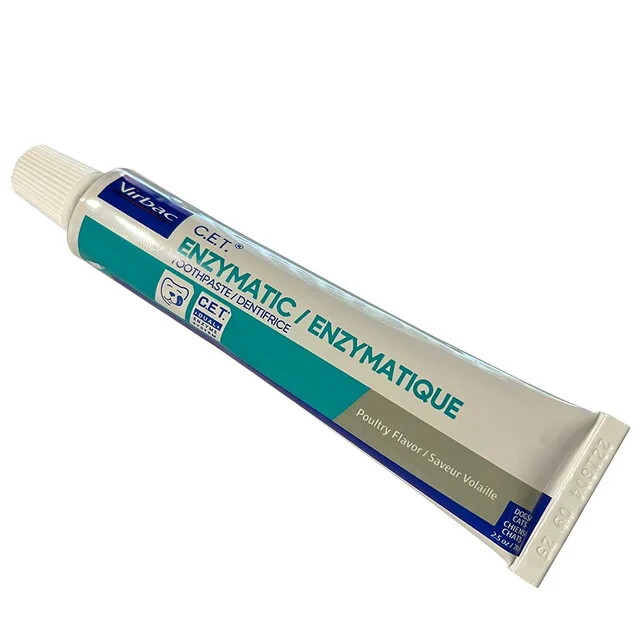
The short version
Brushing is the only dog dental method with strong evidence behind it, and everything else in the aisle is a supplement. Virbac C.E.T. Enzymatic Toothpaste is the buy because its poultry flavor turns brushing into a reward, and a soft bristled brush costs very little alongside it. Virbac C.E.T. VEGGIEDENT FR3SH chews are the second buy: VOHC accepted for plaque and tartar, with a pliable texture that will not fracture a tooth the way antlers and bones do. Petsmile Professional is the one paste with its own VOHC acceptance, but it is priced well above the enzymatic pastes and its no brushing marketing works against the thing that actually matters, so it depends on whether you already brush. Skip the TropiClean water additive: it improves breath, which is the symptom, and its claims center on breath rather than measured plaque or tartar reduction. Best for: households that will commit to a thirty second daily brush, with an accepted chew covering the days they do not.
Our picks at a glance
- Virbac C.E.T. Enzymatic Toothpaste (Poultry Flavor) - Buy. The default veterinary recommendation, and the reason daily brushing actually survives past week two.
- Virbac C.E.T. VEGGIEDENT FR3SH Dental Chews - Buy. A VOHC accepted chew with a shape that forces contact time and a texture that will not crack a tooth.
- Petsmile Professional Dog Toothpaste - It depends. The toothpaste with its own VOHC acceptance, sold with no brushing marketing that undercuts the point.
- TropiClean Fresh Breath Oral Care Water Additive - Skip. Freshens breath, which is the symptom, and leaves the plaque underneath exactly where it was.
The verdict in 30 seconds
What mattered most
- What it actually does
- VOHC acceptance
- Daily effort
- Dog acceptance
- Safety notes
- Role in a routine
Dog dental care is sold as a shortcut and works as a habit. Independent verification exists here in the form of the VOHC seal, which separates products with real trial data from products that only improve breath. We looked at two toothpastes, a chew, and a water additive, and the verdicts follow one rule: mechanical brushing is the only home method with strong evidence behind it, and everything else is a supplement to it.
The default veterinary recommendation, and the reason daily brushing actually survives past week two.
Best for: Anyone starting a real brushing routine, especially with a dog that needs to be convinced the process is a treat.
- Non foaming and safe for pets to swallow
- Poultry flavor gets high acceptance in owner reports, which drives compliance
- Pea sized doses make a small tube last months
- Multiple flavors (poultry, beef, malt, vanilla mint) for picky dogs
- Does nothing meaningful without a brush: the bristles do the work
- No VOHC seal of its own, unlike the accepted chews and one rival paste
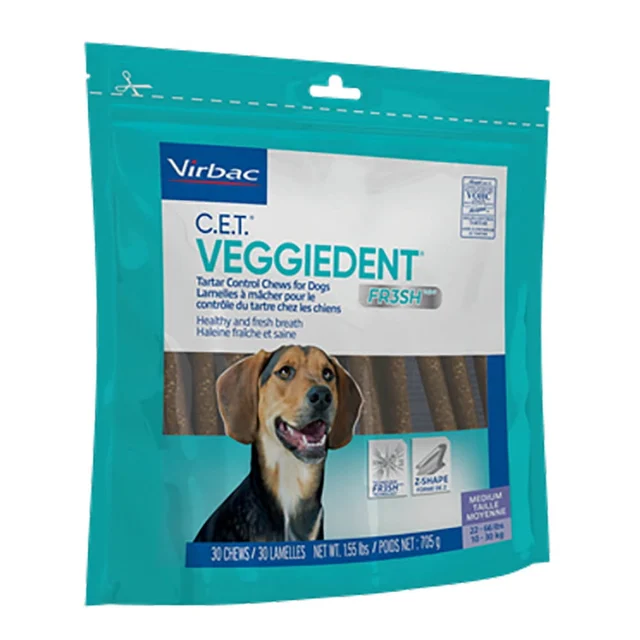
A VOHC accepted chew with a shape that forces contact time and a texture that will not crack a tooth.
Best for: Households that cannot brush every day, and dogs that need the gap days covered.
- VOHC accepted for both plaque and tartar control
- Pliable texture extends chewing time instead of shattering on the first bite
- Lower fracture risk than antlers, bones, hooves, or hard nylon
- Abrasive cleaning action works across the tooth surfaces
- Adds daily calories that need to come out of meals for weight prone dogs
- Some owners report loose stool in the first few days
- Sizing matters: too small and the dog swallows it with no contact time
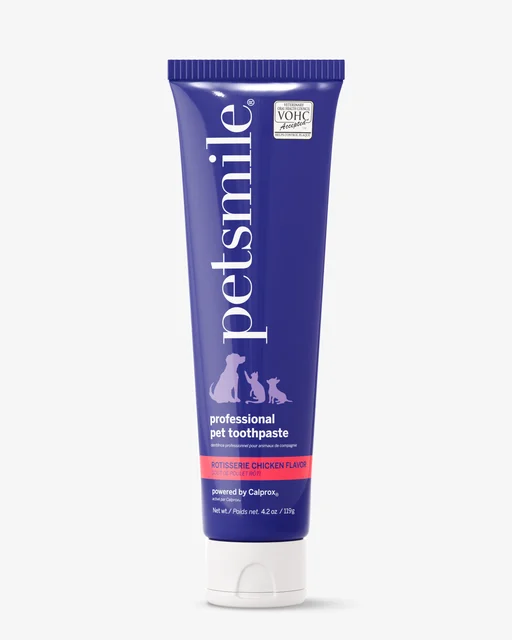
The toothpaste with its own VOHC acceptance, sold with no brushing marketing that undercuts the point.
Best for: Consistent brushers who want the paste with the strongest independent paperwork, or dogs that refuse poultry and beef flavors.
- Carries VOHC acceptance for plaque control in its own right, which is rare for a paste
- Flavors score well on palatability in owner reports
- Marketed as working without brushing, which no paste does on an established biofilm
- Sits at a much higher tier than the enzymatic pastes
- Check the ingredient panel against your own preferences for a swallowed product
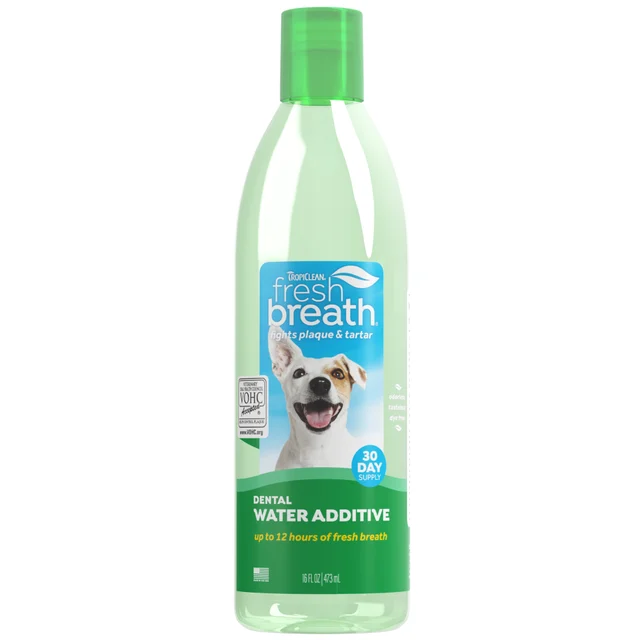
Freshens breath, which is the symptom, and leaves the plaque underneath exactly where it was.
Best for: Almost nobody as a dental measure. Buy a brush, paste, and accepted chews instead.
- Zero effort: it goes in the water bowl
- Owners do report noticeably fresher breath
- Marketed mainly for fresher breath; VOHC lists some TropiClean water additives for plaque, so confirm this exact product before relying on it
- Flavor change causes some dogs to drink less, a bad trade in older or renal watch dogs
- Masking odor can delay a vet visit while inflammation continues
- No dose control in a multi pet household
| Criteria | Virbac C.E.T. Enzymatic Toothpaste (Poultry Flavor) Top pick | Virbac C.E.T. VEGGIEDENT FR3SH Dental Chews | Petsmile Professional Dog Toothpaste | TropiClean Fresh Breath Oral Care Water Additive |
|---|---|---|---|---|
| Verdict | Buy it | Buy it | It depends | Skip it |
| Best for | Anyone starting a real brushing routine, especially with a dog that needs to be convinced the process is a treat. | Households that cannot brush every day, and dogs that need the gap days covered. | Consistent brushers who want the paste with the strongest independent paperwork, or dogs that refuse poultry and beef flavors. | Almost nobody as a dental measure. Buy a brush, paste, and accepted chews instead. |
| Price tier | $ · budget | $ · mid-range | $$ · premium | $ · budget |
| What it actually does | Enzymes plus flavor that make brushing tolerable; bristles remove the plaque | Mechanical scraping across tooth surfaces during an extended chew | Applied to the tooth surface, best with a brush | Flavors and deodorizes the water; breath is the main claim |
| VOHC acceptance | No seal of its own | Accepted for plaque and tartar | Accepted for plaque control | Some TropiClean water additives are accepted for plaque; confirm this exact product |
| Daily effort | About thirty seconds of brushing | Hand it over and walk away | About thirty seconds of brushing | A capful in the bowl |
| Dog acceptance | High, especially the poultry version | Very high; dogs treat it as a reward | High across flavors | Mixed; some dogs drink less |
| Safety notes | Non foaming; safe for pets to swallow | Pliable texture, low fracture risk; watch sizing and calories | Check the ingredient panel; use as directed | Watch for reduced water intake and uncontrolled dosing |
| Role in a routine | The core of it | The layer that covers gap days | A premium swap for the core paste | Breath support only |
| Price tier | $ · budget | $ · mid-range | $$ · premium | $ · budget |
Which one is right for you?
- Anyone starting a real brushing routine, especially with a dog that needs to be convinced the process is a treat. Buy it Virbac C.E.T. Enzymatic Toothpaste (Poultry Flavor)
- Households that cannot brush every day, and dogs that need the gap days covered. Buy it Virbac C.E.T. VEGGIEDENT FR3SH Dental Chews
- Consistent brushers who want the paste with the strongest independent paperwork, or dogs that refuse poultry and beef flavors. It depends Petsmile Professional Dog Toothpaste
- Almost nobody as a dental measure. Buy a brush, paste, and accepted chews instead. Skip it TropiClean Fresh Breath Oral Care Water Additive
How we judged the field
Dog dental care is one of the few pet categories with a real independent yardstick. The Veterinary Oral Health Council (VOHC) reviews submitted trial data and awards a seal to products that hit a measured threshold for plaque or tartar reduction. It is not a government body and it does not test everything on the shelf, but a VOHC seal means a manufacturer ran a controlled study and someone outside the company checked the numbers. Nothing else in this aisle offers that.
We synthesized manufacturer specifications, the current VOHC accepted product list, veterinary dental guidance, and aggregated owner reports covering palatability, digestive tolerance, and whether people actually stick with the routine. We did not run our own lab.
The criteria that mattered:
- Mechanism. Does the product physically disrupt plaque before it mineralizes into tartar, or does it only affect odor?
- Independent verification. VOHC acceptance, and for plaque or tartar or both.
- Compliance. A product used daily beats a better product used twice a month, so palatability and effort per session carry real weight.
- Safety. No xylitol, no fluoride, appropriate chew hardness, sane calorie load.
- Role. Whether it belongs at the center of a routine or on the edge of one.
One finding shaped every verdict below: mechanical brushing is the only home method with strong evidence behind it. Chews, additives, gels, and wipes are supplements. They are not substitutes. Anything sold as a way to skip brushing is selling convenience, not dental health.
This is the default recommendation from most veterinary dental guidance, and it earns that position by being boring in the right ways. It is a non foaming enzymatic paste with a dual enzyme system, formulated to be swallowed, which matters because dogs cannot rinse and spit. Unlike human toothpaste, it contains no foaming agents.
The poultry flavor is the reason it works. Owners consistently report that dogs treat it as a food reward rather than a procedure, which converts brushing from a wrestling match into a thirty second ritual. Beef, malt, and vanilla mint versions exist if your dog objects to poultry, and a small tube lasts a long time at pea sized doses.
What it does not do: the enzymes are a supporting player, not the active mechanism. The bristles remove the plaque. Enzymatic pastes applied by finger without brushing give far weaker results than brushing with the same paste, which tracks with everything known about biofilm. Buy this to make brushing pleasant, not to replace it.
Pair it with a soft bristled brush. The dual ended and finger brush options from the same line are inexpensive, and a soft child’s toothbrush works fine for medium and large dogs. Aim the bristles at the gum line on the outer surfaces of the upper teeth, where plaque accumulates fastest, and do not worry much about the inner surfaces.
If you only add one non brushing product, make it a chew with VOHC acceptance for both plaque and tartar, and this one qualifies. Virbac describes an abrasive cleaning action, and the point is to make the dog work the chew across the tooth surfaces rather than crunching it in two, which is where the mechanical benefit comes from. Chews that shatter on the first bite do close to nothing.
The texture is the other reason it lands well. It is pliable rather than rock hard, so it carries less fracture risk than antlers, bones, hooves, or nylon chews. Slab fractures of the upper carnassial teeth are a common and expensive presentation in veterinary dentistry, and hard chews cause a meaningful share of them. A chew you can dent with a thumbnail is the safer class.
Caveats worth knowing. It still carries calories, so it needs to come out of the daily food budget for dogs prone to weight gain. Sizing matters: too small and the dog swallows it whole with no contact time. Some owners report loose stool during the first few days, which usually settles.
Treat it as the layer that covers the days brushing does not happen, not as the routine itself.
Petsmile is the unusual case: it is the toothpaste that carries VOHC acceptance in its own right, and it is accepted for plaque control rather than only for cosmetic effect. That is a legitimate distinction, and the flavors get high acceptance scores in owner reports.
The complication is how it gets marketed. The brand leans on messaging that the paste works without brushing, applied by finger or even smeared on a chew. That framing is where independent testing and veterinary dental opinion part ways with the sales copy, because the trial data underpinning the acceptance involves application to the tooth surface, and no paste dissolves an established biofilm on its own. If you buy this expecting to skip the brush, you are buying an expensive breath product.
It also sits at a much higher tier than the enzymatic pastes, and read the ingredient list yourself, since this is a product designed to be swallowed.
Where it makes sense: a dog with a diagnosed plaque problem whose owner brushes consistently and wants the paste with the strongest independent paperwork, or a dog that flatly refuses poultry and beef flavors. Where it does not: as a shortcut. Verdict depends entirely on whether the brush is already in your hand.
Water additives are the most appealing idea in this category and the weakest performer. Pour a capful in the bowl, do nothing else, get clean teeth. The appeal is obvious and the evidence is not there.
VOHC does list some TropiClean water additives for plaque, so check whether this exact product carries the seal, but the claims here center on fresher breath rather than measured plaque or tartar reduction. Breath improvement is real and owners report it, but breath is a symptom, not the disease. Masking odor while periodontal inflammation continues underneath is worse than useless if it delays a vet visit.
There are two practical problems on top of the evidence gap. First, the flavor change causes some dogs to drink less, and reduced water intake is a bad trade for cosmetic freshness, especially in older dogs and dogs on any renal watch. Second, in a multi pet household you lose all control over dosing.
If you want a passive product, choose one with VOHC acceptance for plaque, and understand that even the accepted additives show modest effects compared with a brush. For most households the money is better spent on a brush, a tube of enzymatic paste, and a bag of accepted chews.
Virbac C.E.T. Enzymatic Toothpaste (Poultry Flavor) vs Virbac C.E.T. VEGGIEDENT FR3SH Dental Chews: which should you buy?
They are not really rivals, which is the most useful thing to say about them. The paste plus a soft brush is the core of the routine and the only part with strong evidence behind it. The chew is the insurance policy for the evenings when brushing does not happen, which for most households is a lot of evenings.
If you can only buy one, buy the toothpaste, and only if you will genuinely use it. Daily brushing beats every other home intervention by a wide margin, and the enzymatic paste is what makes daily brushing sustainable for a dog that would otherwise fight the process. Two or three sessions a week already produces a visible difference over a few months.
Buy the chew instead if you are honest with yourself that brushing will not happen: a dog that snaps at hands near the mouth, a rescue with a bite history, an owner with limited hand mobility, or a household schedule that simply will not hold a daily ritual. A VOHC accepted chew given every day is far better than a toothbrush used four times a year and then abandoned in a drawer.
The best answer for most dogs is both, at a total cost well under a single professional cleaning. Brush on the days you can, give the chew on the days you cannot, and keep the annual oral exam on the calendar either way.
What to look for
- VOHC acceptance, and for what. The seal comes in two forms: plaque control and tartar control. Plaque is the soft biofilm that drives gum inflammation, so plaque acceptance is the more meaningful one. Check the current accepted list rather than trusting packaging art.
- A soft bristled brush sized to the dog. Dual ended brushes cover small and large mouths, finger brushes give more control on nervous dogs but less reach on the back teeth, and a soft child’s toothbrush is a perfectly good option for medium and large breeds. Replace it every few months.
- No xylitol, no fluoride. Human toothpaste is unsafe for dogs on both counts. Xylitol can cause a dangerous drop in blood sugar and liver injury, and swallowed fluoride is a problem for an animal that cannot spit. Only use paste labeled for dogs.
- Flavor your dog will chase. Palatability is the single biggest driver of whether the routine survives past week two. Poultry, beef, malt, and vanilla mint all exist for a reason. Buy the small tube first.
- The thumbnail test for chews. If you cannot dent it with a fingernail, it is hard enough to fracture a tooth. Skip antlers, bones, hooves, and hard nylon. Choose pliable textures and size up correctly so the dog has to work at it.
- Calories and ingredients. Daily chews add up. Subtract them from meals for weight prone dogs, and check the ingredient panel against known food sensitivities.
- A realistic routine, not a perfect one. Thirty seconds a day on the outer surfaces of the upper teeth, aimed at the gum line, beats an elaborate five minute plan you abandon. Start with a finger and paste for a week before the brush ever appears.
Our final take
The category sells convenience and delivers it, but convenience and dental health are different products. Brushing with a dog safe enzymatic paste is the intervention with real evidence behind it, and the reason to buy a good paste is that it makes the brushing happen at all. Everything else in this aisle is a supplement to that, useful in the gaps, useless as a replacement.
Buy the Virbac C.E.T. enzymatic paste and a soft bristled brush. Add VEGGIEDENT FR3SH chews for the days the brush stays in the drawer. Consider Petsmile only if you already brush consistently and want the paste with the strongest independent documentation, and ignore its no brushing marketing. Leave the water additive on the shelf.
One thing no home product fixes: once tartar is cemented on and the gums are inflamed and receding, brushing cannot reverse it. Home care prevents the next round of disease. It does not treat the round already underway, and that part belongs to your veterinarian.
Questions, answered
Do dental chews replace brushing?
No. Chews reduce plaque and tartar on the surfaces the dog actually chews with, which mostly means the back teeth on both sides, and they do very little for the canines and incisors at the front. Brushing reaches the gum line on every tooth, which is where periodontal disease starts. A VOHC accepted chew every day is a genuinely useful supplement and far better than nothing, but the correct plan is brushing plus a chew, not a chew instead of brushing.
Can I use human toothpaste on my dog?
No, and this one is not a technicality. Human toothpaste contains fluoride, which is fine when you spit it out and a problem for an animal that swallows everything. Worse, many human pastes contain xylitol, which is seriously toxic to dogs and can cause a dangerous drop in blood sugar and liver injury even in small amounts. The foaming agents also upset stomachs. Use a paste labeled for dogs, which is formulated to be swallowed.
What is the VOHC seal and does it mean anything?
The Veterinary Oral Health Council reviews trial data submitted by manufacturers and awards a seal to products that meet a defined threshold for plaque or tartar reduction. It is an independent review rather than a government approval, and it only covers products companies choose to submit, so a missing seal is not proof a product fails. But a present seal means a controlled study was run and checked by someone outside the company, which is more than most of this aisle can claim. Check the current accepted list, since packaging claims and actual acceptance do not always match.
How often should I brush, and how do I start with a dog that hates it?
Daily is the target and every other day still helps a lot; below roughly twice a week the benefit drops off sharply. Build it in stages over a week or two: let the dog lick paste off your finger, then rub a finger along the outer gum line, then introduce the brush for a few teeth, then the whole outer arcade. Focus on the outer surfaces of the upper teeth near the gum line, where plaque builds fastest, and skip the inner surfaces. Thirty seconds done consistently beats a thorough session that ends the routine.
My dog already has brown tartar and bad breath. Will these products fix it?
No. Once plaque has mineralized into tartar and the gums are inflamed or receding, home care cannot reverse it. Brushing and chews prevent new disease; they do not treat disease that is already established, and that requires a professional cleaning under anesthesia, along with dental radiographs to see what is happening below the gum line. Anesthesia free cleaning scrapes the visible surface and leaves the part that matters untouched. This article is general product information, not veterinary advice: persistent bad breath, bleeding gums, visible tartar, a dropped appetite, or chewing on one side all warrant a veterinary exam rather than a new product.
Deciding between the top two? See our head-to-head: Virbac C.E.T. Enzymatic Toothpaste (Poultry Flavor) vs Virbac C.E.T. VEGGIEDENT FR3SH Dental Chews.
More Pet Supplies reviews
 The Best Dog Doors: 4 Compared (and One to Skip)
  The Best Dog Food Storage Containers: 4 Compared (and One to Skip)
  Best Dog GPS Trackers: Which One Actually Finds Your Dog
  The Best Dog Grooming Clippers: 4 Compared (and One to Skip)
  The Best Dog Harnesses: 4 Compared (and One to Skip)
  The Best Dog Leashes: 4 Compared (and One to Skip)