Explained
Dog Cooling Mats, Explained
After reading this you will know which cooling mechanism suits your climate and your dog, how long a mat realistically cools before it needs a break, and why a cooling mat is a comfort product rather than a safety net.
In this guide
Dog cooling mats look identical in product photos and behave nothing alike in a hot room. Three different technologies sit behind the same flat rectangle: pressure activated gel, water filled bladders and evaporative fabric, and each one has a different runtime, a different climate it works in and a different way of failing. The thing that trips up most first time buyers is expecting all day cooling from a passive pad, then deciding the mat is defective when it turns lukewarm after an hour.
The 30-second version
- A cooling mat is a comfort product, not a treatment. It gives a warm dog a place to shed heat faster than the floor will. It does not treat heatstroke, and any dog showing signs of heat illness needs a veterinarian immediately, not a mat.
- The mechanism decides everything. Gel works anywhere but in short sessions, evaporative pads cool hardest and longest but only in dry air, and cool touch fabric fades within minutes once a dog settles onto it.
- Gel mats need off time to recharge. They have no power source, so once the gel has absorbed your dog's body heat the cooling stops until the mat sits empty for roughly fifteen minutes.
- Punctures are the dominant failure. The thin outer layer on sealed gel pads splits under claws and teeth, the gel leaks, and the mat is finished. If your dog chews, buy a format with nothing to rupture.
- Shade and airflow do the heavy lifting. Every passive mat loses to direct sun and still hot air. A mat in shade is a useful tool, and the same mat baking on a patio is a warm plastic sheet.
The products this guide is about
Our verdict on each, with the full reasoning on the companion review.
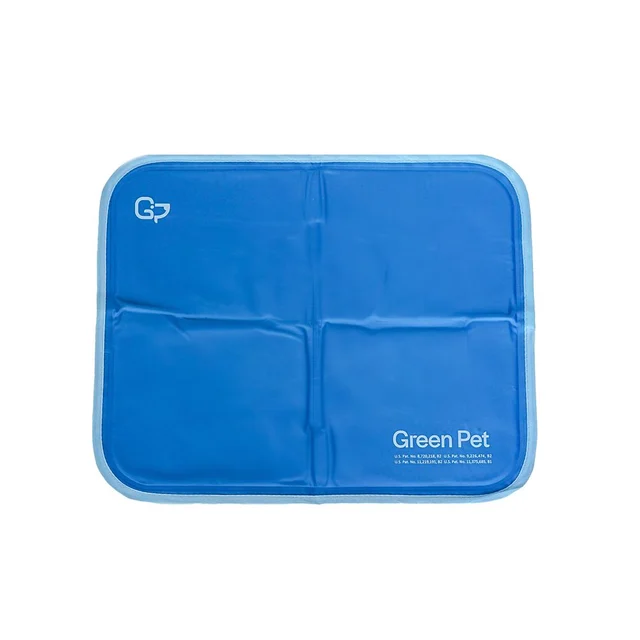
- Buy The Green Pet Shop Cool Pet Pad The pressure activated gel pad everyone else copies, and still the least fussy way to cool a calm dog indoors. Amazon
- Buy TechNiche International HyperKewl Evaporative Cooling Dog Pad Soak it, wring it, lay it down: the coldest running and longest lasting mat here, as long as your air is dry. Amazon
- It depends Top Paw Wave Bolstered Cooling Mat A genuinely nice bolstered lounging mat with a cool touch surface, but the cooling fades fast once a dog settles.
- Skip Arf Pets Self-Cooling Solid Gel Pad It cools like the pad it copies and then leaks, which is the one failure that makes a cheap mat a wasted one. Amazon
What actually matters
- Cooling mechanism versus your climate. Evaporative pads depend on water leaving the fabric, so they slow sharply as humidity rises. Gel and water filled pads do not care about humidity at all. Pick the mechanism your local air supports before you compare anything else.
- Session length and recharge. Pressure activated gel typically gives a couple of hours before it saturates, then wants off time. One soak of an evaporative pad runs far longer. Cool touch fabric is measured in minutes. Match that runtime to how long your dog actually lies still.
- Chew and claw tolerance. Sealed gel and water bladders both fail the same way, through a puncture that empties the mat. Fabric based evaporative pads and elevated airflow cots have nothing to leak, which quietly removes the category's biggest failure mode.
- Sizing for a stretched out dog. Buy for the length of a dog lying flat on its side, not curled up. A pad the dog overhangs cools only the fraction of the body actually touching it.
- Coat type. A contact pad has to reach skin to move heat, and a dense double coat insulates the dog from the very surface it is lying on. Thick coated breeds usually do better with evaporative cooling, which also chills the air right around the dog.
- Upkeep you will actually do. Gel is wipe clean and needs no routine. Evaporative pads need a soak, a wring and a towel underneath. Water filled pads need filling and occasional topping up. The best mat is the one whose routine you will not abandon in week two.
- Where it will sit. Thin gel pads slide on hardwood and behave better inside a crate or on a bed base. Damp evaporative pads want a towel under them on upholstery or car seats.
The specs, in plain English
Green flags vs red flags
Green flags
- The listing states a session length and a recharge window instead of implying continuous cooling
- The mechanism is named clearly, so you know whether you are buying gel, water or evaporative fabric
- Sizing is given as a flat surface area you can check against your dog stretched out on its side
- Nothing to puncture, which is to say a fabric or mesh construction rather than a sealed gel or water bladder
- Cleaning instructions are specific, including whether a cover actually comes off
- A long sales history with years of accumulated owner reports rather than a listing that appeared last spring
Red flags
- Claims of constant or all day cooling from a mat with no power source
- No mention of humidity on an evaporative product, which is the one condition that determines whether it works
- Photos of a mat in full sun, when direct sunlight defeats every passive mat in this category
- Owner reports clustering on tears, scratches and leaking gel, which is the failure that ends a mat permanently
- A pattern of complaints about condition on arrival, since a pad that ships already leaking points at the seal, not the dog
- Any suggestion, however soft, that the mat helps with heatstroke or replaces veterinary care
Who's who: the brands
- The Green Pet Shop - Maker of the pressure activated gel pad most of the category now imitates, with a long track record and patented cooling technology.
- TechNiche (HyperKewl) - Evaporative cooling specialist, applying soak and wring fabric to dog pads.
- K&H Pet Products - Broad pet bedding maker known for water filled cooling pads and elevated cots alongside conventional beds.
- Coolaroo - Best known for raised mesh cots that cool by airflow rather than absorption, which sidesteps the puncture problem entirely.
- Top Paw - Retailer exclusive house brand covering cool touch fabric mats, often with bolsters and furniture styling.
- Arf Pets - Budget entry into pressure activated gel, where the low price and the durability complaints tend to travel together.
How to read a listing without getting fooled
Start by finding the mechanism, because listings often bury it under adjectives like self cooling, instant cool or advanced cooling technology, all of which describe three incompatible products. If the copy mentions gel or pressure activation, expect a couple of hours then a recharge. If it says soak, wring or evaporative, expect longer and colder cooling that collapses in humid air. If it only says cool touch or cooling fabric, you are looking at a comfort bed with a short lived chill, not a heat management tool. Next, treat any runtime number as a best case from a manufacturer's own testing, usually in favourable conditions, and read the recharge instruction sitting next to it, since that is the half of the claim that tells you what daily use looks like. Check the dimensions against your dog lying flat rather than against a breed name in the size chart, because breed labels are marketing and measurements are not. Finally, sort the owner reports by the lowest ratings and look for a repeated story rather than isolated bad luck. In this category the repeated story is almost always a puncture and a leak, and one recurring failure mode tells you more than a hundred cheerful one line reviews.
How much should you spend?
Cooling mats span a wide range, and the money buys durability and track record far more than it buys cold. The cheapest gel pads cool roughly as well as the expensive ones on day one, which is exactly why they are tempting, and they are also where the tears and leaks concentrate. That makes the bottom of the market a false economy, since a mat that splits mid summer has to be replaced anyway. The value sweet spot sits in the middle, where evaporative fabric pads live: they cost less than premium gel, run longer per session, and have no bladder to rupture. Paying premium prices is worth it when you want the established gel design with the longest history of holding together, especially for a calm senior dog indoors, or when you need a size and build quality that survives a large heavy dog. Paying more stops making sense once you are buying styling, bolsters and cover fabrics, because none of that changes how the mat cools. Two mid priced mats in rotation will usually serve a dog better than one expensive mat that spends half the afternoon recharging.
Questions, answered
Can a cooling mat help with heatstroke?
No. A cooling mat is a comfort product, not a treatment for heat illness, and it should never be relied on as one. Heatstroke in dogs is a medical emergency, and the signs include heavy distressed panting, bright red or very pale gums, vomiting, wobbliness, confusion or collapse. Move the dog into shade or air conditioning, offer small amounts of water, wet the coat with cool but not ice cold water, and contact a veterinarian or emergency clinic immediately. This guide is general product information, not veterinary advice, and a professional should make the call on any dog you are worried about.
Gel, water filled or evaporative: which type should I buy?
Match the type to your climate and your dog. Pressure activated gel works in any humidity, needs no setup at all, and cools for a couple of hours before it wants time off the dog. Evaporative pads cool harder and much longer per soak, but the cooling comes from water leaving the fabric, so they fade in muggy air and the pad stays damp while in use. Water filled pads sit in between, holding cool longer than gel and costing almost nothing to refill, at the price of real weight once full and a waterbed feel some dogs refuse. Humid climate and no patience for routines points at gel, dry heat and a thick coat points at evaporative.
Why did my gel mat stop feeling cold after an hour?
Because that is how it works. A gel pad has no power source and no refrigeration. It absorbs heat from whatever is lying on it, and once the gel has taken on your dog's body temperature there is no temperature gradient left to move heat across, so the cooling stops. Manufacturers usually quote around fifteen minutes of non use to recharge. If your dog wants an all afternoon cool spot, buy two smaller mats and rotate them, or switch to an evaporative pad. Leaving a gel mat in direct sun or hot air also wrecks its performance, so keep it in shade.
My dog chews everything. Is a gel mat safe?
Sealed gel is the wrong format for a chewer. The outer layer on most gel mats is a thin flexible vinyl, and punctures from teeth and claws are the single most reported failure in this category. Manufacturers generally describe the gel as non toxic, but they still warn against leaving the mat unattended with a dog prone to chewing and advise calling a veterinarian if any gel is swallowed. For a determined chewer, an evaporative fabric pad or a raised airflow cot removes the problem instead of managing it.
Do cooling mats work for thick coated and double coated dogs?
Less well than owners expect, which is why the type matters more for these breeds. A contact pad has to reach skin to move heat, and a dense undercoat insulates the dog from the surface it is lying on. Evaporative pads are the type most often recommended here because they cool the air immediately around the dog as well as the contact surface. Whichever you use, pair it with shade and moving air, and pay attention to the belly, groin and paw pads, where a dog sheds heat most efficiently.
How do I get my dog to actually use the mat?
Put it where the dog already chooses to lie, in shade with some airflow, rather than where it looks tidy. Introduce it before the heat arrives so it is familiar furniture rather than a strange cold surface in a stressful moment. Size it generously, because a dog that overhangs the pad gets little benefit and tends to give up on it. Some dogs dislike the slick feel of vinyl or the damp of an evaporative pad, in which case a thin sheet over part of the surface, or a bolstered mat with a head rest, often changes their mind.
Or jump to the head-to-head: The Green Pet Shop Cool Pet Pad vs TechNiche International HyperKewl Evaporative Cooling Dog Pad.