Explained
Deshedding Tools, Explained
After reading, you'll know which type of deshedding tool actually reaches the undercoat that causes most shedding, and which one fits your pet's coat.
In this guide
"Deshedding tool" is a catch-all label stuck on very different products, from serious undercoat rakes to soft rubber curries and grooming gloves that barely move fur. The single thing that trips up first-time buyers is not realizing that most shed hair comes from the loose undercoat down near the skin, and only some of these tools reach it. Match the tool to your pet's coat first, and the rest of the decision gets easy.
The 30-second version
- Most shedding comes from the undercoat, the soft layer beneath the guard hairs, so the tools that reach it (edge tools, blades, undercoat rakes) cut visible shedding far more than surface tools do.
- Gloves and rubber curries feel great but shed little, they lift loose surface fluff and are pleasant finishing or bath tools, not a fix for a heavy shedder.
- Coat type decides everything, double-coated breeds need real undercoat reach, while short single coats do fine with a light blade or curry and can be irritated by aggressive tools.
- Simpler tools last longer, fewer moving parts means less to break, clog, or wear out, which is why a plain blade often outlives fancier gadgets.
- Technique matters as much as the tool, light pressure and short, frequent sessions remove more hair over time and are gentler on skin than occasional hard scraping.
The products this guide is about
Our verdict on each, with the full reasoning on the companion review.
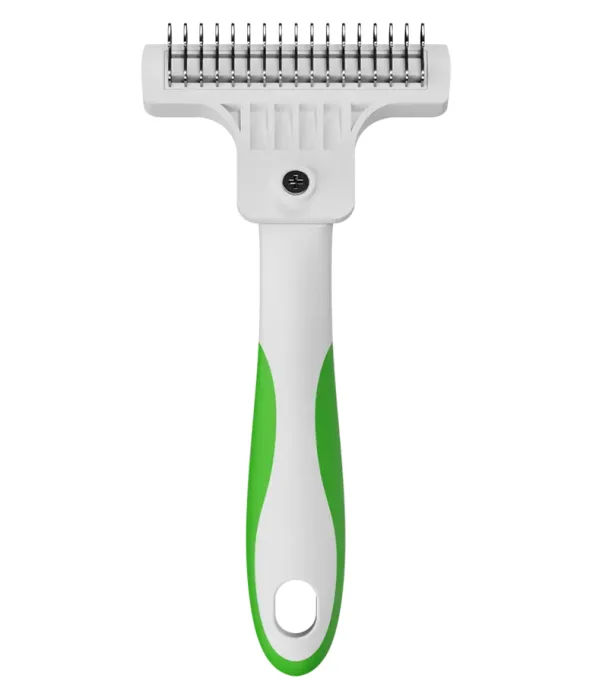
- Buy Andis Deshedding Tool A grooming-tool maker's everyday deshedder that lifts loose undercoat and leaves the topcoat intact. Amazon
- Buy SleekEZ Original Deshedding Grooming Tool A dead-simple toothed grooming tool that removes loose hair, sold in sizes for cats, dogs and horses. Amazon
- It depends KONG ZoomGroom A soft rubber curry that pets love and lifts surface hair, but won't touch a thick undercoat. Amazon
- Skip HandsOn Pet Grooming Gloves A pleasant petting-and-bathing mitt often sold as a deshedder, but it removes the least fur of anything here. Amazon
What actually matters
- Undercoat reach is the single biggest factor if your goal is less fur around the house, because the loose undercoat is where the shedding actually comes from; a tool that only skims the surface won't solve the problem.
- Coat match matters because a tool built for a thick double coat is overkill (and potentially harsh) on a short single coat, while a gentle curry does almost nothing on a plush double coat.
- Skin safety matters because edge and blade tools work by catching hair against a hard edge, so the wrong pressure or too many passes over one spot can scratch skin or thin the coat.
- Gentleness and tolerance matter for anxious pets and cats; a tool your pet hates is a tool you won't use, so massage-like options earn their place for finishing and skittish animals.
- Cleanup and durability matter for daily use; hair should clear off the tool quickly so grooming doesn't stall, and a rugged build means the tool survives years of shedding seasons.
- Versatility matters for multi-pet homes, where one durable tool that works across dogs, cats, and short-to-medium coats beats a drawer full of single-purpose gadgets.
The specs, in plain English
Green flags vs red flags
Green flags
- The tool clearly states which coat types and lengths it's for, and it matches your pet
- A metal edge, blade, or rake designed to reach undercoat, if shedding is your actual problem
- Simple, sturdy construction with few or no moving parts to break or clog
- A comfortable, secure handle you can hold through a full brush-out of a large dog
- Owner reports across your breed or coat type describing visible reduction in loose fur
- Easy cleanup, where hair wipes or pulls off the tool in seconds
Red flags
- A glove or soft rubber curry marketed as a heavy-duty deshedder, when it only lifts surface hair
- Aggressive-looking blades sold for short single coats, where they can scratch skin or thin the coat
- Flimsy nubs or parts that reviewers say flatten, wear, or fall off with use
- Vague marketing that never names a coat type and leans on 'works on all pets'
- A premium price attached to a tool that performs like a novelty for shedding
- No guidance on pressure or safe technique for a tool that works against a hard edge
Who's who: the brands
- Andis - Grooming-tool maker whose deshedding tools are aimed at everyday shedding.
- SleekEZ - Maker of a simple toothed deshedding tool sold in sizes for cats, dogs, and horses.
- KONG - Pet-product brand whose ZoomGroom rubber curry is a gentle finishing and bath tool.
- HandsOn - Grooming-glove maker whose mitts are pleasant bonding and bath tools but weak dedicated deshedders.
- FURminator - The brand that popularized the edge-style deshedding tool; a common reference point for the whole category.
How to read a listing without getting fooled
Start by ignoring the word 'deshedding' on the front of the box and look for the mechanism. A metal edge, toothed blade, or pinned rake is built to reach undercoat; rubber nubs or a fabric-and-rubber glove are surface tools no matter how they're marketed. Next, find the coat type the maker actually recommends, and be suspicious of anything that claims to work equally well on every animal, because a tool tuned for a plush double coat is the wrong tool for a short single coat and vice versa. Check that the listing describes real construction (stainless edge, solid handle) rather than just adjectives, and skim owner reports from people with your breed or coat length, watching for comments about how much fur actually comes out versus how nice it feels to use. Those are two different things, and the packaging blurs them on purpose.
How much should you spend?
The good news is that effective deshedding is not an expensive category, and the best value often sits in the middle rather than at the top. A simple, well-made blade tool can outperform pricier gadgets because there's less to break and nothing to wear out, so paying more buys durability and comfort more than raw performance. Spending up makes sense for a comfortable handle if you're deshedding a large double-coated dog for long stretches, or for a rugged edge tool you'll use through years of coat blows. Where extra money is usually wasted is on grooming gloves and premium 'deshedding' mitts that cost like a serious tool but perform like a novelty on real undercoat; if you want a gentle massage-and-bath mitt, buy it as that, not as your shedding solution. For most households, one durable mid-range tool matched to the coat, plus an inexpensive rubber curry for finishing, covers everything.
Questions, answered
What's the difference between a deshedding tool, a slicker brush, and a grooming glove?
A deshedding tool, whether an edge tool, a toothed blade, or an undercoat rake, is built to reach past the top coat and pull out loose undercoat, which is where most shed fur comes from. A slicker brush uses fine bent wires to remove loose surface hair and tangles but reaches less undercoat. Grooming gloves and rubber curries mostly lift surface fluff and are gentle finishing or bath tools rather than true deshedders.
How do I know if my pet is double-coated?
Double-coated pets have a soft, dense layer of fur beneath the coarser outer hairs, and they tend to shed in big seasonal 'coat blows' during spring and fall. Many popular breeds (Huskies, Golden Retrievers, German Shepherds) and some cats are double-coated. If parting the fur reveals a thick, fluffy underlayer and you're constantly cleaning up tumbleweeds, you likely have a double coat and want a tool with real undercoat reach.
Can a deshedding tool hurt my pet's skin or coat?
It can if misused. Edge and blade tools work by catching loose hair against a hard edge, so pressing hard, going over the same spot repeatedly, or using them on already-thin or single coats can scratch skin or break healthy guard hairs. Use light pressure, follow the direction of the coat, stop when little hair is coming out, and avoid bony areas and irritated skin. This is general product information, not veterinary advice; if your pet has skin issues or a coat you're unsure about, check with a groomer or vet first.
Will a deshedding tool stop my pet from shedding completely?
No. Healthy animals shed as part of a normal coat cycle, and no tool changes that. What a good deshedder does is capture loose undercoat before it lands on your floor and furniture, which dramatically cuts the fur around your home. Pair regular deshedding with a good diet and occasional bathing for the best results.
How often should I use one?
For most double-coated pets, one to three sessions a week keeps shedding manageable, ramping up during the spring and fall coat blows. Short-coated pets often need only a weekly pass. Little and often beats occasional marathon sessions, which are more likely to irritate skin, and cats in particular usually prefer short, frequent, gentle sessions.
Which type should I buy for a cat?
Cats have thin skin, so favor gentler tools and a very light hand. A simple blade tool or a soft rubber curry works well for most cats, and skittish cats often tolerate a massage-like glove or curry best for finishing. An edge tool can be used on thick-coated cats, but only with very light pressure, and many cat owners prefer a fine comb or softer rubber tool instead.
Or jump to the head-to-head: Andis Deshedding Tool vs SleekEZ Original Deshedding Grooming Tool.