

Pets
The Best Aquarium Substrates: 4 Compared (and One to Skip)
We compared four aquarium substrates on what the makers actually publish: composition, effect on pH and hardness, grain size, rinsing, and whether they ever need replacing.
The short version
Seachem Flourite Black is the pick for most people, because Seachem states it will not alter pH and that it is good for the life of the aquarium and need not be replaced, so it grows plants without changing your water or asking for a redo later. CaribSea Super Naturals Peace River is the value answer, a 1.0 to 2.0 mm sand that CaribSea's own FAQ names as its favorite for corydoras and other bottom dwellers. ADA Aqua Soil Amazonia Ver.2 grows plants better than either, but its manual says the included supplement causes ammonium and nitrite right after setup and that you must not add fish or shrimp until both read zero, so it suits a patient, fishless-cycled planted build and not a same-day stocking. Skip GloFish Aquarium Gravel: its own page publishes no grain size, no composition and nothing about water chemistry, which are exactly the facts you need to check it against your fish. If you keep African rift lake cichlids, none of the above applies and a buffering aragonite mix like CaribSea's African Cichlid Mix Ivory Coast Sand is the right tool. Best for: a planted community tank where you want to set the substrate once and stop thinking about it.
Our picks at a glance
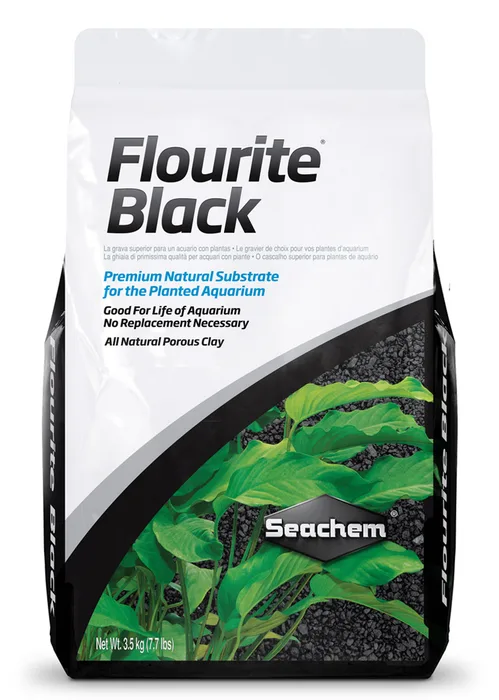
- Seachem Flourite Black - Buy. A porous clay gravel that feeds plant roots without moving your pH, and that Seachem says you will never have to replace.
- CaribSea Super Naturals Peace River - Buy. The smooth 1.0 to 2.0 mm river sand CaribSea itself names when asked what to put under corydoras.
- ADA (Aqua Design Amano) Aqua Soil Amazonia Ver.2 - It depends. The best plant growth here, bought at the price of a proper fishless cycle and a water chemistry you do not get to choose.
- GloFish Aquarium Gravel - Skip. A best-selling gravel sold entirely on how it looks under a blue LED, with none of the facts you would need to check it.
The verdict in 30 seconds
What mattered most
- Material as described by the maker
- Stated effect on pH
- Published grain size
- Rinse before use
- Replacement interval stated
- Plant nutrition
Substrate is the one thing in an aquarium you install once and then live with for years. It is also the piece most likely to quietly change your water, because some products release ammonium for weeks and push pH down, others push pH and hardness up on purpose, and plenty do nothing to chemistry at all. Choose the wrong one for your fish and you spend the life of the tank fighting it. We picked four that cover the real decisions, and every spec below comes from the maker's own product page, instruction manual or catalog.
A porous clay gravel that feeds plant roots without moving your pH, and that Seachem says you will never have to replace.
Best for: Planted-tank keepers who want to choose a substrate once and never revisit it.
- Seachem states it is not chemically coated or treated and will not alter the pH of the water.
- Seachem states it is good for the life of the aquarium and need not be replaced, so there is no exhaustion clock.
- Seachem says gravel modifiers such as laterite are not necessary, so it works as the whole substrate bed.
- Dusty in practice: Seachem calls it pre-washed but still says it may need rinsing, and its own support answer covers people still getting heavy clouding after washing.
- No grain size is published, so you cannot check it against barbeled bottom dwellers.
- It does nothing to pH, KH or GH, so it will not help you if your goal is softer or harder water.
- Sold by weight in 3.5 kg and 7 kg bags, so you have to work out coverage yourself.
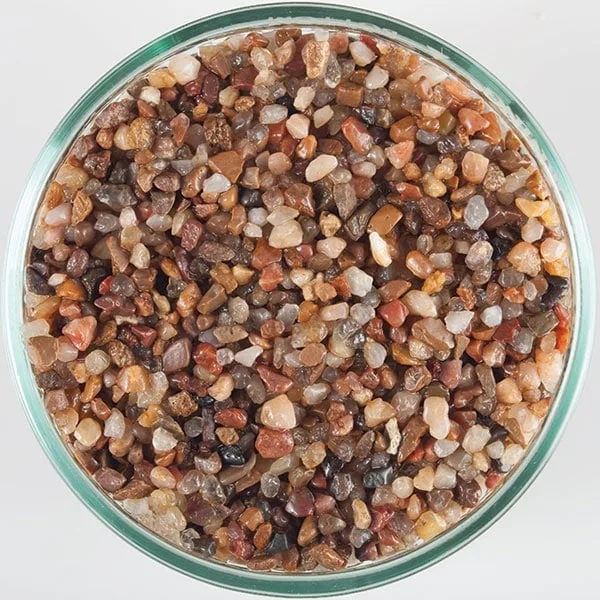
The smooth 1.0 to 2.0 mm river sand CaribSea itself names when asked what to put under corydoras.
Best for: A community tank built around catfish, loaches or anything else that sifts the bottom.
- CaribSea's FAQ answer on substrate for corys and other bottom dwellers names Super Naturals as very smooth-grained and Peace River as its favorite.
- Published typical grain size of 1.0 to 2.0 mm, so you can actually check it against your fish.
- CaribSea markets the sand-sized Super Naturals as all natural with no paints, dyes or coatings.
- No plant nutrition of any kind, so rooted plants will need root tabs or a nutrient layer underneath.
- CaribSea's FAQ says to rinse it before use, which is a real chore on a large tank.
- CaribSea makes no buffering claim for the Super Naturals line, so it will not correct water that is too soft or too hard for your stock.
- Natural river coloring means no strong dark contrast if that is the look you are after.
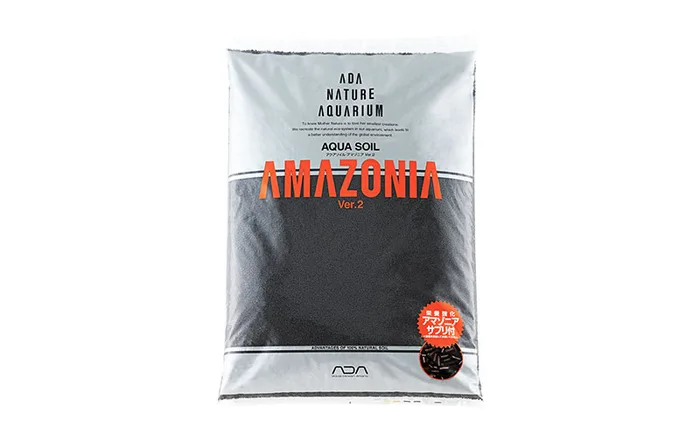
The best plant growth here, bought at the price of a proper fishless cycle and a water chemistry you do not get to choose.
Best for: A patient planted-tank build where the tank is cycled empty before anything is stocked.
- Black natural soil that ADA supplies with an Amazonia supplement, 50 mL with the 9 L bag and 16 mL with the 3 L bag.
- No rinsing step at all: ADA says rinsing is not necessary and that washing makes the granules crumble.
- ADA gives a concrete fill figure, one 9 L bag for a 60 by 30 by 36 cm tank, which works out at roughly 5 cm of depth.
- ADA's manual states the supplement causes ammonium and nitrite right after use and that you must not add fish or shrimp until both are down to zero.
- ADA describes the natural soil in the Amazonia line as adjusting water to a slightly acidic condition, which is the wrong direction for hard-water species.
- We found no replacement or exhaustion interval published on ADA's product page or in the Ver.2 manual, so the eventual re-scape is unbudgeted.
- ADA advises against using it alongside other manufacturers' products and against dosing fish medication in a tank that uses it.
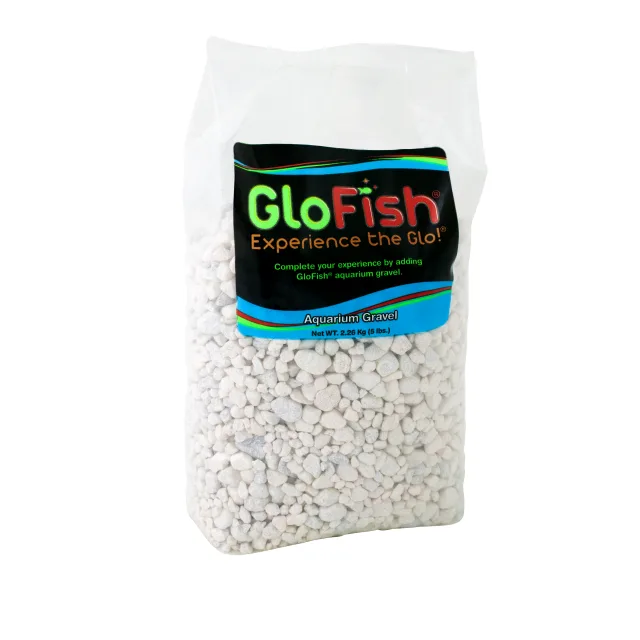
A best-selling gravel sold entirely on how it looks under a blue LED, with none of the facts you would need to check it.
Best for: Someone who only wants the fluorescent look and keeps no plants or bottom-dwelling fish.
- Widely stocked and sold in small bags, so a nano tank does not force a big purchase.
- The maker does tell you to rinse it before use, which is the correct instruction for an uncoated or coated gravel alike.
- It gives a fill rate by weight per gallon of water, which is more guidance than some decorative gravels offer.
- The product page publishes no grain size, so you cannot judge whether it is safe for corydoras and other barbeled fish.
- No composition is given and nothing is said about pH, KH or GH, so you cannot predict what it will do to your water.
- Nothing is published about what the color is or how it is applied to the stone.
- The fill guidance is by weight per gallon rather than by depth, which tells you nothing about whether you have enough to root plants in.
| Criteria | Flourite Black Top pick | Super Naturals Peace River | Aqua Soil Amazonia Ver.2 | GloFish Aquarium Gravel |
|---|---|---|---|---|
| Verdict | Buy it | Buy it | It depends | Skip it |
| Best for | Planted-tank keepers who want to choose a substrate once and never revisit it. | A community tank built around catfish, loaches or anything else that sifts the bottom. | A patient planted-tank build where the tank is cycled empty before anything is stocked. | Someone who only wants the fluorescent look and keeps no plants or bottom-dwelling fish. |
| Price tier | $$ · mid-range | $ · budget | $$$ · premium | $ · budget |
| Material as described by the maker | Fracted porous clay gravel | Natural river sand, no paints or dyes | Black natural soil granules | Not published |
| Stated effect on pH | Will not alter pH | No buffering claim made | ADA states slightly acidic water for the Amazonia line | Not published |
| Published grain size | Not published | 1.0 to 2.0 mm typical | Not published, normal and powder types sold | Not published |
| Rinse before use | Pre-washed, but maker says it may still need rinsing | Yes, CaribSea says rinse first | No, ADA says rinsing crumbles the granules | Yes, maker says rinse first |
| Replacement interval stated | None needed, good for life of aquarium | None stated | None found on the page or in the manual | None stated |
| Plant nutrition | Mineral-rich clay, laterite not needed | None, use root tabs | Nutrient-loaded, ships with a supplement | None claimed |
| Maker guidance for bottom dwellers | None stated, a separate sand version is sold | CaribSea names it their pick for corys | None stated | None stated |
| Package sizes | 3.5 kg and 7 kg | 5, 10, 20 and 40 pound bags | 3 L and 9 L | Not confirmed |
Which one is right for you?
- Planted-tank keepers who want to choose a substrate once and never revisit it. Buy it Seachem Flourite Black
- A community tank built around catfish, loaches or anything else that sifts the bottom. Buy it CaribSea Super Naturals Peace River
- A patient planted-tank build where the tank is cycled empty before anything is stocked. It depends ADA (Aqua Design Amano) Aqua Soil Amazonia Ver.2
- Someone who only wants the fluorescent look and keeps no plants or bottom-dwelling fish. Skip it GloFish Aquarium Gravel
How we judged the field
Five things decide whether a substrate helps you or fights you. First, active versus inert: an active aquasoil deliberately shifts water chemistry and releases nutrients, while an inert sand or gravel does nothing, and only one of those is compatible with stocking fish quickly. Second, the direction of any buffering: carbonate materials such as aragonite and crushed coral dissolve slowly and push pH and hardness up, which is exactly right for African rift lake cichlids and exactly wrong for soft-water tetras and shrimp. Seachem quantifies this on its own Onyx Sand page, describing a slight buffering capacity that may raise pH by 0.1 to 0.5 units depending on your source water. Third, grain size, which is a welfare question for corydoras and other barbeled fish, not an aesthetic one. Fourth, whether it needs rinsing, because that is hours of your life. Fifth, whether the maker admits the substrate wears out.
The field splits cleanly along the active-versus-inert line, and then splits again on whether the maker publishes enough to check. We picked one inert plant substrate that never expires, one inert sand chosen for bottom dwellers, one active soil that is genuinely better at growing plants and genuinely more demanding, and one enormously popular decorative gravel that publishes almost nothing. We also flag CaribSea’s African Cichlid Mix range throughout, because if you keep mbuna or other rift lake fish, the buffering substrate is not an upgrade, it is the requirement, and none of our three main picks does that job.
Seachem Flourite Black
Buy itSeachem describes Flourite Black as a specially fracted, stable porous clay gravel that is not chemically coated or treated, and says flatly that it will not alter the pH of the water. That sentence is why it is our default pick: it supports plant roots without picking a fight with whatever comes out of your tap, so your existing stock stays in the conditions it was already in. Seachem adds that gravel modifiers such as laterite are not necessary, and that Flourite Black is good for the life of the aquarium and need not be replaced, which removes the recurring replacement that active soils quietly impose. The catch is dust. Seachem calls it pre-washed and still tells you it may need rinsing, and its own support answer walks through what to do when you still get a dense cloud after washing. It comes in 3.5 kg and 7 kg bags, and Seachem publishes no grain size, so keepers of barbeled catfish should look at Flourite Black Sand instead. For planted-tank people who want to decide once.
CaribSea Super Naturals Peace River
Buy itPeace River is one of CaribSea’s sand-sized Super Naturals, listed at a typical grain size of 1.0 to 2.0 mm. When CaribSea’s own FAQ answers the question of what substrate suits corys and other bottom dwelling fish, it calls the Super Naturals very smooth-grained and names Peace River as its favorite, which is about as direct a manufacturer endorsement as you will get on a welfare question. CaribSea markets the sand-sized line as all natural with no paints, dyes or coatings, and unlike its cichlid range it makes no buffering claim for it, so this is the substrate that leaves your chemistry exactly where it is. It comes in 5, 10, 20 and 40 pound bags. You do have to rinse it, since CaribSea’s FAQ says to rinse everything except its bacteria-packed lines. It carries no plant nutrition either, so rooted plants will want root tabs underneath. For a community tank with catfish and loaches, this is the safe answer.
ADA (Aqua Design Amano) Aqua Soil Amazonia Ver.2
It dependsAmazonia Ver.2 is ADA’s black-soil aquasoil, sold in 3 L and 9 L bags, and it grows plants better than anything else here. It is also the one that will bite you if you treat it like gravel. ADA’s own manual says the nutrient-rich Amazonia supplement packed with it causes ammonium and nitrite in the aquarium right after use, and instructs you not to add fish and shrimp until both are down to zero. That is not a defect, it is how the product works, but it means a fishless cycle rather than a same-day setup. The manual also tells you not to rinse it, because washing makes the granules crumble and the water harder to clear. ADA describes the natural soil in its Amazonia line as adjusting water to a slightly acidic condition, so hard-water species are the wrong stocking list. One 9 L bag suits a 60 by 30 by 36 cm tank, which is roughly 5 cm deep. For a patient planted build.
GloFish (Spectrum Brands Pet) GloFish Aquarium Gravel
Skip itGloFish Aquarium Gravel is everywhere, and the reason to skip it is what its own product page does not say. The maker describes it as specially selected to stand out under the blue lighting in your GloFish aquarium, tells you to rinse it before use and gives a fill rate by weight per gallon, and that is the entire specification. There is no grain size, no composition, nothing about pH or hardness, and nothing about what the color is or how it is applied to the stone. Every other substrate here publishes at least some of that, and those are precisely the numbers you need to decide whether it is safe under corydoras barbels or deep enough to root a plant in. Fill guidance by weight per gallon rather than by depth compounds the problem, because it tells you nothing about how thick the finished bed will be. If you want the fluorescent look, a natural sand under the same blue LEDs gets you most of the way there. For decoration only.
Sources
Specs in this review come from these pages.
- ADA, Aqua Soil series product page (adana.co.jp)
- ADA, Aqua Soil Amazonia Ver.2 instruction manual (PDF) (adana.co.jp)
- Seachem, Flourite Black product page (seachem.com)
- Seachem, Onyx Sand product page (stated buffering range) (seachem.com)
- CaribSea, freshwater substrates and FAQ (caribsea.com)
- Journal of the American Association for Laboratory Animal Science, Comprehensive Husbandry Protocol for Corydoras Catfish (2024) (doi.org)
Seachem Flourite Black vs CaribSea Super Naturals Peace River: which should you buy?
Flourite Black and Peace River are both inert, both permanent, and both leave your water chemistry alone, so the choice between them is really a choice about what lives in the tank. Flourite Black is a mineral-rich clay gravel aimed squarely at plants: Seachem says laterite and other gravel modifiers are unnecessary with it, which means it can be the entire substrate bed in a planted tank with no second layer and no root-tab regime on day one. Peace River is plain smooth river sand at a published 1.0 to 2.0 mm, with no nutrient content at all, and its advantage is the one thing Flourite Black does not publish: a grain size you can check against your fish.
So pick by your stocking list. If the tank is a plant display and the bottom dwellers are incidental, take Flourite Black and accept that you will spend an evening rinsing it. If the tank is built around corydoras, kuhli loaches, geophagus or anything else that pushes its face into the substrate, take Peace River and add root tabs where you plant. If you want both, the usual answer is Flourite Black across most of the footprint with a smooth sand area in the open front, which is legitimate but doubles the rinsing. And if you keep African rift lake cichlids, neither is right, because both are specifically designed not to move pH and you need a substrate that does.
What to look for
- Active or inert: an aquasoil deliberately changes your water and releases nutrients, an inert sand or gravel does not, and that single distinction decides whether you can stock the tank the same week.
- Which way it buffers: carbonate materials like aragonite and crushed coral raise pH and hardness, which Seachem quantifies on its Onyx Sand page as a possible rise of 0.1 to 0.5 pH units, so match the direction to your fish rather than to the picture on the bag.
- A published grain size: the makers who take bottom dwellers seriously print a number, and CaribSea goes further and names a specific product when asked about corydoras, so treat a missing figure as a reason to look elsewhere.
- Rinsing instructions from the maker: CaribSea says rinse first, Seachem says pre-washed but expect dust, and ADA says do not rinse at all because it crumbles the granules, so read the bag rather than applying a habit.
- Whether it expires: Seachem states Flourite is good for the life of the aquarium and need not be replaced, and if a maker does not make that claim, assume the substrate is a consumable and plan for a future tear-down.
- Depth for what you actually want: rooted plants want a bed measured in centimetres, while a laboratory husbandry protocol for corydoras recommends only about 0.5 to 1 cm of sand, so decide which goal the tank serves before you buy by weight.
Our final take
Substrate is not decoration, it is a chemistry decision you make once and live with. Seachem Flourite Black wins for most people because it does the useful half of the job, supporting plant roots, without doing the disruptive half, and Seachem is willing to say in print that it will not alter pH and will never need replacing. CaribSea Super Naturals Peace River is the honest cheap answer for a tank built around fish that sift the bottom, and it has the rarest thing in this category, a manufacturer naming it for that exact use. ADA Aqua Soil Amazonia Ver.2 is better at growing plants than either and asks for a proper fishless cycle in return. Skip anything that will not tell you what it is made of.
Questions, answered
Do I really have to rinse substrate before it goes in the tank?
It depends entirely on the product, and the maker will tell you. CaribSea's FAQ says to rinse its substrates first unless you are using one of its bacteria-packed lines, and suggests either the bucket method or cutting the corners off the bag and running a hose through it. Seachem calls Flourite pre-washed but still warns it can arrive dusty and need rinsing, and its support answers describe people getting heavy clouding even after washing. ADA goes the other way and says explicitly not to rinse Aqua Soil Amazonia Ver.2, because washing makes the granules crumble and the cloudiness harder to clear. Reading the bag beats following a general rule here.
How deep does the substrate need to be?
It depends on what the substrate is for. If you want rooted plants, use the maker's own fill figures rather than a rule of thumb: ADA says one 9 L bag of Amazonia Ver.2 suits a 60 by 30 by 36 cm tank, which is roughly 5 cm across that footprint. CaribSea gives a general rule of 1 to 2 pounds per gallon, plus a formula of length times width times desired depth in inches, divided by 1,728, multiplied by the substrate density. If the tank is built around corydoras rather than plants, a published laboratory husbandry protocol for the genus recommends a thin sand layer of only about 0.5 to 1 cm. Those two goals genuinely pull in opposite directions, so decide which one the tank is for.
Will fine sand create toxic gas pockets that kill my fish?
The concern is real but it is usually stated far more dramatically than the sources support. A 2024 husbandry protocol for Corydoras in the Journal of the American Association for Laboratory Animal Science recommends fine sand and handles the risk by controlling depth, advising a layer of roughly 0.5 to 1 cm so fish can forage while avoiding an accumulation of anaerobic bacteria that produce poisonous gasses. Note what that is: a depth recommendation, not a warning against sand. The practical version is to keep a sand bed shallow, or stir and siphon it during water changes, rather than avoiding sand altogether. If you want a deep planted bed, a coarser granular substrate makes that easier than sugar-fine sand does.
Can I add fish the same day I set up an active soil?
Not with ADA Aqua Soil Amazonia Ver.2, and the manufacturer says so directly. ADA's instruction manual states that the nutrient-rich Amazonia supplement packed with the soil causes ammonium and nitrite in the aquarium right after use, and instructs you not to add fish and shrimp until the levels of both are down to zero. That is a fishless cycle, measured with a test kit, not a wait of a fixed number of days. Inert substrates do not have this issue: Seachem's Flourite pages make no such warning and say the product will not alter pH. If you need to stock quickly, an inert sand or gravel is the honest choice.
Can I change the substrate in a tank that already has fish in it?
You can, but slowly, because the substrate is part of your biological filtration. CaribSea's own guidance is to start at one side of the tank and siphon out and replace only about 5 to 10 percent of the substrate per week. Even at that pace, CaribSea says biological filtration will be impacted for the next four to six weeks and that you should increase water changes to counteract accumulating ammonia, nitrite and nitrate. CaribSea also advises against capping an old bed with new substrate, since that can trigger another cycle, and says to mix new material gently into the existing bed instead. This is the main reason to get the choice right the first time.
Deciding between the top two? See our head-to-head: Seachem Flourite Black vs CaribSea Super Naturals Peace River.
More Pets reviews
 The Best Aquarium Water Test Kits: 4 Compared (and One to Skip)
  The Best Aquarium Thermometers: 4 Compared (and One to Skip)
  Best Automatic Pet Feeders: What Reviewers Actually Recommend (and One to Skip)
  The Best Bird Cages: 4 Compared (and One to Skip)
  The Best Cat Litter Deodorizers: 4 Compared (and One to Skip)
  The Best Cat Litter Mats: 4 Compared (and One to Skip)