Explained
Water Flossers, Explained
After reading, you will understand what water flosser specs actually mean and how to pick one you will keep using every day.
In this guide
A water flosser is a small pump that shoots a thin jet of water between your teeth and along the gumline to flush out food and plaque. The category looks confusing because brands lead with big pressure numbers and mode counts that say little about daily use. What actually decides whether the device works for you is simpler: whether it fits your bathroom, holds enough water, and feels comfortable enough that you keep reaching for it.
The 30-second version
- The best water flosser is the one you keep using, so match the format to your bathroom and routine before you compare spec sheets.
- Countertop versus cordless is the real decision, trading tank size and pressure range against portability and shower use.
- A wide, adjustable pressure range beats a high top number, because you want to start gentle on your gums and build up to comfort.
- Reliability is the quiet dealbreaker, since leaks and pump failure are the top reasons these devices end up in a drawer.
- Run it dry and air the tank after every use, or mold builds up in the reservoir and tubing of any water flosser left damp.
The products this guide is about
Our verdict on each, with the full reasoning on the companion review.
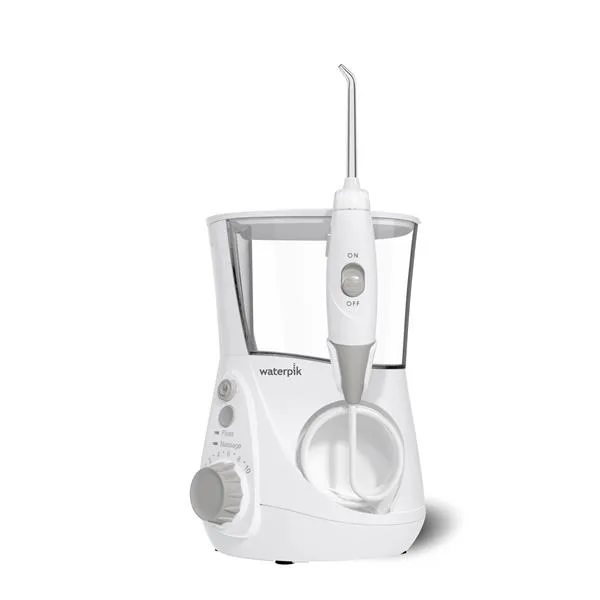
- Buy Waterpik Aquarius Water Flosser (WP-660) The safe default: a big tank, ten pressure settings and 90-plus seconds of flossing without a refill. Amazon
- Buy Philips Sonicare Cordless Power Flosser 3000 (HX3826) The cordless one to get: the strongest yet gentlest stream reviewers tested, in a compact USB-charged body. Amazon
- It depends Waterpik Cordless Advanced 2.0 (WP-580) Comfortable, waterproof and shower-safe, but the small tank cuts you off fast. Amazon
- Skip Waterpik Sonic-Fusion 2.0 Professional (SF-04) A brush-and-flosser-in-one that costs more and does neither job better than buying the two separately.
What actually matters
- Format (countertop vs cordless) decides the biggest trade-off: countertop units hold far more water and offer wider pressure control, while cordless units win on portability and shower use but force mid-session refills.
- Reservoir (tank) capacity determines whether you can clean your whole mouth in one pass; a small tank means stopping to refill partway through.
- Pressure range matters more than peak pressure, because a wide, adjustable range lets sensitive gums start low and work up gradually.
- Runtime per fill tells you how long the tank lasts at your chosen pressure, which is what daily convenience really comes down to.
- Reliability and build quality weigh heavily, since leaks at seals and pump failure are the most common long-term complaints in the category.
- Tip selection and fit affects how well the jet reaches braces, implants, or gum pockets, so check that the tips you need are available.
- Noise and footprint shape the daily experience: countertop units are louder and take real counter space, which can quietly discourage use.
The specs, in plain English
Green flags vs red flags
Green flags
- A wide, adjustable pressure range rather than one or two fixed settings
- A removable reservoir that is easy to fill and rinse, ideally dishwasher-safe
- The ADA Seal of Acceptance as a baseline of proven effectiveness
- Consistent long-run owner reports praising durability and no leaks
- A format that genuinely fits your bathroom, whether corded or cordless
Red flags
- Marketing that leads with a single big pressure number and little else
- Recurring owner reports of leaking at the tank seal or waterline
- Reports of the pump slowing or failing after several months
- All-in-one designs where one fault disables two tools at once
- A tank so small that a normal clean needs multiple refills
- Proprietary tips or parts that are hard or costly to replace
Who's who: the brands
- Waterpik - The category originator; best known for reliable countertop units with large tanks and wide pressure ranges.
- Philips Sonicare - Oral-care specialist; makes well-regarded cordless flossers with wide-coverage stream nozzles.
- Oral-B - Major oral-care brand offering water flossers and combination oral-care systems, often paired with its brushes.
- Panasonic - Electronics maker with a line of compact, portable cordless flossers aimed at travel use.
How to read a listing without getting fooled
When you read a listing, translate the marketing back into daily use. A headline pressure number in PSI means little on its own; look instead for how many adjustable levels sit between the lowest and highest, because that range is what protects sensitive gums. Check the reservoir capacity and, more usefully, the stated runtime per fill, since a big-sounding tank paired with high pressure can still drain in under a minute. Treat mode counts and named 'technologies' as extras, not deciders. Confirm the format matches your bathroom, note whether the tank is removable and easy to clean, and look for the ADA Seal as a baseline. Finally, scroll past the spec table to the long-run owner reports, where leaks and pump failure show up long before the marketing copy admits them.
How much should you spend?
You do not need to spend at the top of the range to get a genuinely good water flosser. Most of the value sits in the mid-range, where a solid countertop unit gives you a large tank, a wide pressure range, and a proven reliability record. Spending more usually buys convenience features, extra modes, or an all-in-one brush-and-floss design rather than a meaningfully better clean, and combination gadgets can actually cost you more over time through pricier replacement parts and the risk that one failure disables two tools. Spending less on a bargain cordless can make sense for travel, but very cheap units tend to have tiny tanks and short-lived pumps. The sweet spot is a well-reviewed mid-range model in the format that fits your bathroom, chosen for pressure control and durability rather than the longest feature list.
Questions, answered
Does a water flosser replace regular flossing?
Dental professionals generally treat a water flosser as a strong complement to brushing rather than a total replacement for string floss, and it is especially helpful around braces, implants, and bridges where string is awkward. This is general information, not dental or medical advice; consult a dentist or hygienist about what is right for your teeth and gums.
Is a cordless or countertop water flosser better?
Countertop units hold more water and offer wider pressure control, so they clean more thoroughly in one pass and suit home use. Cordless models are better for small bathrooms, travel, and shower use, but their smaller tanks mean refilling mid-session. Choose based on your space and routine rather than features alone.
Does higher pressure clean better?
Not necessarily, and too much pressure can irritate your gums. Effective flossing comes from consistent coverage along the gumline, not maximum force. Start at the lowest setting and increase only to comfort, which is why a wide adjustable range matters more than a high top number.
How do I stop mold building up in a water flosser?
Empty the reservoir and run the unit dry after each use, then leave the tank off to air out. Mold builds up in any flosser left damp, and manuals rarely warn about it, so drying is the main prevention. Periodically rinse the tank and, where the maker allows, run a mild cleaning solution through it.
Are all-in-one brush-and-flosser devices worth it?
They save counter space, but combining two tools in one handle concentrates the risk: owners frequently report leaks and pump failures, and a single fault can disable both the brush and the flosser. For most people, a separate toothbrush and water flosser clean just as well, cost less over time, and are easier to replace individually.
Or jump to the head-to-head: Waterpik Aquarius Water Flosser (WP-660) vs Philips Sonicare Cordless Power Flosser 3000 (HX3826).