Explained
Electric Shavers, Explained
After reading this you'll understand foil vs rotary, know which specs actually affect your shave, and be able to match a shaver to your beard and skin.
In this guide
Electric shavers come in two very different flavors, and picking the wrong one is the single biggest reason people end up disappointed. The spec sheets pile on marketing terms - linear motors, flex heads, cleaning pods, precision numbers - that rarely tell you how the thing will actually feel on your face. This guide untangles all of it so you're choosing on the two things that matter: how close it shaves and how comfortable it feels on your skin.
The 30-second version
- The type matters more than the brand. Foil shavers shave closer and faster; rotary shavers are gentler on necks and curly or patchy beards - your skin usually decides the winner before price does.
- Closeness and comfort pull against each other. Aggressive, close-cutting shavers can irritate sensitive skin, so the 'best' model is the one that balances the two for your face, not the one with the highest specs.
- Multi-day stubble separates good from cheap. Almost any shaver handles one-day growth; the money buys heads that lift and cut flat-lying, longer hairs without repeat passes.
- The real cost isn't the sticker. Replacement foils or cutters every one to two years - and cleaning-station cartridges if you go that route - are the ongoing costs that make the cheapest models a false economy.
The products this guide is about
Our verdict on each, with the full reasoning on the companion review.
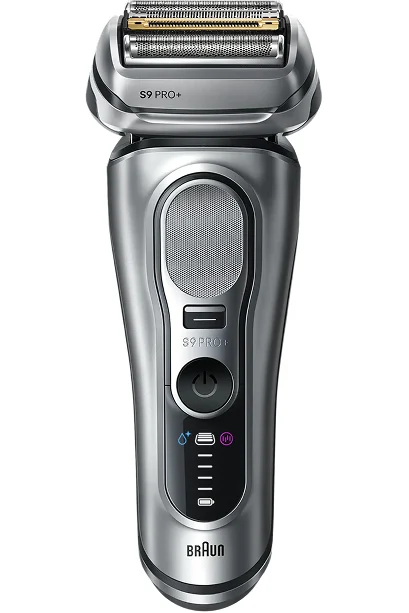
- Buy Braun Series 9 Pro+ The most complete foil shaver you can buy - close, gentle, and effortless to live with. Amazon
- Buy Panasonic Arc5 ES-LV67 The value champion - arguably the closest, fastest shave here for mid-range money. Amazon
- It depends Philips Norelco Shaver 9500 (Series 9000) The rotary to pick if foils have never agreed with your skin.
- Skip Philips Norelco Shaver 3600 (Series 3000) A cheap, waterproof rotary built on Philips' basic ComfortCut system, with no way to shave once the battery runs flat. Amazon
What actually matters
- Foil vs rotary - this is the first fork in the road: foils use oscillating blades behind a thin perforated screen for a close, fast shave on flat beards, while rotaries use circular heads (usually three) that float over curves and suit necks, patchy growth, and sensitive skin.
- Closeness - how smooth your face feels after a single pass, especially on two-to-four-day growth; this is where fast motors and multi-blade foil heads earn their keep.
- Comfort on your skin - whether you finish irritation-free; the deciding factor for anyone with sensitive skin, ingrown hairs, or a beard that grows in different directions.
- Multi-day growth handling - cheaper heads bog down or miss longer, flat-lying hairs, so if you skip days between shaves this matters far more than it does for daily shavers.
- Wet/dry capability - the ability to shave in the shower with gel or foam, which adds comfort and lets you clean the shaver under the tap.
- Maintenance reality - automatic clean-and-charge stations are hands-off but need refill cartridges forever, while tap-rinse models cost nothing to maintain but ask a little effort.
- Battery and runtime - roughly an hour of cordless use with quick-charge is the comfortable standard; below that you'll be tethered to the charger more than you'd like.
The specs, in plain English
Green flags vs red flags
Green flags
- The type matches your face - a foil if you want the closest, fastest result on a flat, dense beard, or a rotary if your skin is sensitive or your beard is curly and patchy.
- Independent testing and owner reports agree it handles multi-day stubble without repeat passes.
- It's waterproof for wet/dry use and easy tap-rinse cleaning.
- Roughly an hour of cordless runtime with a quick-charge option.
- Replacement foils or cutters are readily available and reasonably priced, so you can keep it performing for years.
- A track record of lasting several years in long-term owner reports rather than tugging within months.
Red flags
- Owners repeatedly report going over the same spot on two-to-three-day growth - a sign of entry-level blades or a weak motor.
- Frequent complaints of skin irritation, burn, or pulling, especially from sensitive-skin users.
- A rock-bottom price paired with vague specs and no clear replacement-head availability.
- Short battery life or no cordless operation, tethering you to the outlet.
- A cleaning station is mandatory to keep it running well and cartridges are pricey - a hidden recurring cost.
- Marketing that leans on blade counts and buzzwords while saying nothing about motor power or comfort.
Who's who: the brands
- Braun - German brand known for premium foil shavers with density-sensing power and automatic clean-and-charge stations; strong on the close-plus-comfortable balance.
- Panasonic - Foil specialist famous for fast linear motors and multi-blade heads that deliver a very close, quick shave, often at strong value.
- Philips Norelco - The dominant rotary-shaver name (sold as Philips outside North America); floating heads make them a go-to for sensitive skin and curly or patchy beards.
- Remington - Long-running budget-to-midrange maker offering both foil and rotary shavers at accessible prices, popular for value and entry-level buyers.
How to read a listing without getting fooled
Start by identifying the type - foil or rotary - because that single word tells you more about the shave than any spec below it. Then look past the headline blade count, which brands love to inflate; a fast motor and a good beard sensor do more for a close, comfortable shave than an extra cutting element. Treat 'precision' and 'ultimate' style adjectives as marketing and hunt instead for concrete facts: cordless runtime in minutes, whether it's genuinely wet/dry, and whether replacement heads are cheap and easy to find. If a listing trumpets an automatic cleaning station, mentally add the recurring cost of refill cartridges. And weigh the pattern in owner reports over the spec sheet - the specs tell you what it's built from, but the reports tell you how it feels on a real face after three days of stubble.
How much should you spend?
Spend according to your beard and skin, not the marketing tier. If you shave every day and never let stubble build, an inexpensive shaver does the job and paying up buys mostly polish and convenience. The value sweet spot sits in the mid-range, where a fast motor and a capable multi-blade or floating head give you nearly all the shave quality of a flagship for meaningfully less - this is where most people should shop. Stepping up to the top tier is worth it if you have sensitive skin and want the rare combination of very close and very gentle, or if a hands-off clean-and-charge station genuinely fits your routine. Going too cheap is the common regret: entry-level blades struggle the moment your beard gets ahead of them, and since every shaver needs fresh foils or cutters every year or so anyway, a bargain model you replace sooner can cost more in the long run than a mid-range one you keep for years.
Questions, answered
Foil or rotary - which type should I get?
Neither is universally better; they suit different faces. Foil shavers generally shave closer and faster and excel on flat, dense beards. Rotary shavers tend to be gentler on the neck and better at handling curly, patchy, or ingrown-prone growth. If you want the smoothest possible finish, lean foil; if comfort and irritation are your main concern, try a rotary.
Do electric shavers shave as close as a razor?
For most people a good electric shaver gets close to a manual razor without being quite as baby-smooth, and it's far faster, kinder to sensitive skin, and lower-maintenance. The top foil models close much of that gap. If an absolutely perfect finish for a special occasion is the goal, a blade still wins, but for everyday shaving many people happily trade the last few percent of closeness for speed and comfort.
How often do I need to replace the foils or blades?
Plan on new foils or cutter heads roughly every one to two years, depending on the maker's schedule for that model. Worn blades tug and shave less closely, so this is a real ongoing cost - and part of why the cheapest shavers can end up a false economy compared with a mid-range model you keep longer.
Is an automatic cleaning station worth it?
It's a genuine convenience - the station cleans, lubricates, and charges the shaver hands-free, which also helps the blades keep performing. But it isn't free forever: you'll buy refill cartridges periodically. Tap-rinse models cost nothing to maintain but ask a little more effort. If you value a set-and-forget routine, the station is worth it; if you want the lowest running cost, skip it.
I have sensitive skin and get irritation or ingrown hairs. What should I look for?
Many people with sensitive, breakout-prone, or ingrown-prone skin find rotary shavers more comfortable because the floating heads glide rather than press, and shaving with gel in the shower helps. Keeping blades fresh matters too, since worn blades pull. This is general grooming guidance, not medical advice - if you have a persistent skin condition, consult a professional.
Or jump to the head-to-head: Braun Series 9 Pro+ vs Panasonic Arc5 ES-LV67.