Explained
At-Home Microdermabrasion, Explained
After reading, you'll know which abrasive suits your skin, how often to treat, and how to spot a device that is sold as microdermabrasion but is not.
In this guide
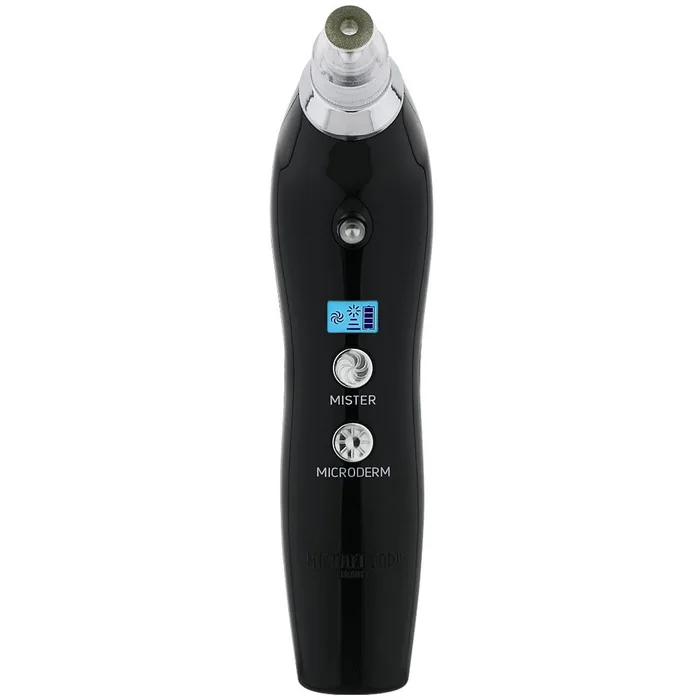
Microdermabrasion is one of the more mechanical things done to skin: an abrasive surface removes the outermost layer of dead cells while a vacuum lifts the debris away and draws blood towards the surface. Everything else in the category is a variation on how the abrasion is delivered. Knowing that makes it easy to tell a genuine device from an adjacent one.
The 30-second version
- Abrasion plus suction is the definition, and a device missing either is doing something else.
- Diamond tips are the easier choice for the face, while crystal discs give a wider range for the body.
- More grits beats more speeds, because different areas of skin want different coarseness.
- Weekly is the standard frequency, with meaningful change over eight to twelve weeks.
- Sunscreen afterwards is not optional, since freshly exfoliated skin burns more easily.
The products this guide is about
Our verdict on each, with the full reasoning on the companion review.
- Buy Michael Todd Beauty Sonic Refresher Three diamond grits, three extraction heads, a wet mode and a three-year warranty.
- Buy Spa Sciences MIO Diamond Microdermabrasion System Five speeds, a travel-legal battery and the clearest statement of what to expect and when.
- It depends PMD Beauty Personal Microderm Pro A spinning crystal disc rather than a diamond tip, with the widest grit range and the thinnest documentation.
- Skip DERMAFLASH DERMAPORE+ A good ultrasonic pore extractor, and not microdermabrasion in any sense.
What actually matters
- Abrasive type - a diamond-coated tip, a spinning disc coated in crystals, or in clinic machines a stream of loose aluminium oxide crystals. Diamond is cleaner and more controllable; discs offer a wider coarseness range.
- Grades included - how many levels of coarseness come in the box. One tip means one level of abrasion for every part of your face and body.
- Suction - the vacuum that lifts away debris and draws circulation to the surface. Separate extraction tips in different shapes make congested areas easier to treat.
- Speed settings - how finely you can control intensity. Five distinct speeds is genuine adjustability.
- Wet or dry - whether the device can be used on damp skin or with a mist, which changes glide and comfort.
- Consumables - replacement discs, diamond tips and single-use filters. These decide the real cost of ownership over a year.
- Warranty and battery - the ordinary durability signals, which in this category range from a three-year warranty to no published terms at all.
The specs, in plain English
Green flags vs red flags
Green flags
- Both an abrasive surface and suction are described.
- More than one grit or grade included in the box.
- A specific speed count rather than a comparison to a previous model.
- A published treatment frequency and expected timeline.
- Warranty length, battery runtime and cleaning instructions all stated.
Red flags
- Microdermabrasion in the category name with no abrasive described.
- A percentage claim with no study cited.
- Patented or world's first claimed with no patent number.
- No warranty terms anywhere on the page.
- Consumables required but never mentioned in the product description.
Who's who: the brands
- Michael Todd Beauty - Known for the Sonic Refresher wet and dry sonic system and the Sonicsmooth dermaplaning line, with three-year warranties across its devices.
- Spa Sciences - Value-focused skincare device brand whose MIO and SIMA diamond microdermabrasion tools publish unusually complete usage, cleaning and timeline guidance.
- PMD Beauty - The best-known home microdermabrasion name, using a spinning crystal disc with vacuum and selling graded replacement discs from sensitive to very coarse.
- DERMAFLASH - Built on at-home dermaplaning with the LUXE line, and the DERMAPORE+ ultrasonic pore extractor, which is a different technology from microdermabrasion.
- Trophy Skin - Long-standing home microdermabrasion brand whose MicrodermMD and Microderm mini devices are widely sold, though its current online catalogue is inconsistent.
How to read a listing without getting fooled
Check first that both halves of the treatment are present: something abrasive and something that sucks. A device described only as ultrasonic, sonic cleansing or pore extraction is not doing microdermabrasion whatever aisle it sits in. Then count the grits in the box, because that is the specification that limits a home device most, and treat speed settings as a secondary control rather than a substitute. Look for a specific number of speeds rather than a comparison with an earlier model. Read what the consumables are and how many come included, since filters and discs turn a one-off purchase into a subscription. Then find the warranty, the battery runtime and the cleaning instructions, which in this category separate the companies sharply. Finally look for a published protocol: how often, for how many weeks, and what changes to expect. A maker that commits to eight to twelve weeks is telling you something honest about how this works.
How much should you spend?
Home microdermabrasion spans a surprisingly wide range for devices that do the same two things. The budget tier now buys a genuine diamond-tip device with multiple speeds, several extraction tips, a published protocol and a one-year warranty, which is more than enough to find out whether you will use one weekly for three months. Mid-range buys the best-known brand names and, in the case of crystal-disc systems, a wider range of abrasive grades that is genuinely useful for body treatment, though not necessarily more published information. The premium tier buys multiple grits in one box, wet operation and a three-year warranty, which is a reasonable purchase once you know the routine suits you. Factor consumables in: discs and filters are ongoing, diamond tips that wash are not, and over a year that difference can approach the price of the cheaper device.
Questions, answered
How is a home device different from a clinic treatment?
Mostly in intensity and depth of control. Clinic machines run far higher vacuum pressure and more aggressive abrasives, and the operator can adjust both continuously while watching how your skin responds. Home devices are deliberately limited so that an untrained person cannot injure themselves, which means gentler results and more sessions to get there. The trade is reasonable: a home device used weekly for months will improve texture and dullness meaningfully, and it costs less than two clinic appointments.
What should I do immediately after a session?
Apply your hydrating and repairing products, because freshly exfoliated skin absorbs them much better, and this is the best moment in your routine for a serum or a rich moisturiser. Avoid actives for a day or two, including retinoids, strong acids and vitamin C, which on newly exfoliated skin are far more irritating than usual. Do not use a scrub or a cleansing brush. And use sunscreen the next morning without fail, since the layer that was providing some protection has just been removed.
How do I keep the device hygienic?
Clean the tips after every use and replace any filters. Spa Sciences publishes a usable routine: detach the tip, remove the small foam filter with tweezers and throw it away, insert a fresh one, wash the tips with soap and water or alcohol, and wipe the handle down, with the specific warning not to soak the tips in alcohol. Whatever device you own, the principle is the same, because a vacuum head that has pulled debris out of pores is not something to leave unwashed in a drawer until next week.
Can I use it on my body?
Yes, and it is one of the better uses for the coarser settings. Elbows, knees, upper arms and the backs of the legs have thicker skin that tolerates more abrasion than a face, and a very coarse disc or the coarse diamond head makes a visible difference to roughness there. Devices that offer a separate body cap, as PMD does, are designed around exactly this. Keep the same rules: one pass, not several, several days between sessions, and moisturise afterwards.
Or jump to the head-to-head: Michael Todd Beauty Sonic Refresher vs Spa Sciences MIO Diamond Microdermabrasion System.