Explained
Beard Trimmers, Explained
After reading, you'll understand every spec on a beard trimmer's box and know which features actually matter for your face.
In this guide
Beard trimmers all look similar in photos, but they split into two camps: focused beard tools built for precise, repeatable lengths, and all-in-one kits that also handle hair, body, nose and ears. The specs that trip people up are length control (a dial versus a drawer of plastic combs), blade type, and how honest the battery and 'waterproof' claims really are. This guide untangles the jargon so you can match the tool to how you actually groom.
The 30-second version
- Length control is the real decision. A built-in dial with fine steps is faster and more repeatable than a set of loose guide combs, and it's the single feature that most changes day-to-day satisfaction.
- Scope changes the value math. A beard-only tool can cost the same as an all-in-one kit that also does hair, body, nose and ears, so decide up front whether you want one job done well or a whole routine covered.
- T-blades are for lines, not lengths. A wide T-shaped cutter excels at crisp necklines and edges but leans on guide combs for bulk trimming, which suits detail-focused groomers.
- Maintenance quietly matters. Self-sharpening blades that the maker says need no oil and rinse-clean or waterproof bodies save real hassle over the life of the tool.
- Battery claims are ballpark. Runtime figures assume ideal conditions and fade with age, so treat a stated number as a rough ceiling rather than a promise.
The products this guide is about
Our verdict on each, with the full reasoning on the companion review.
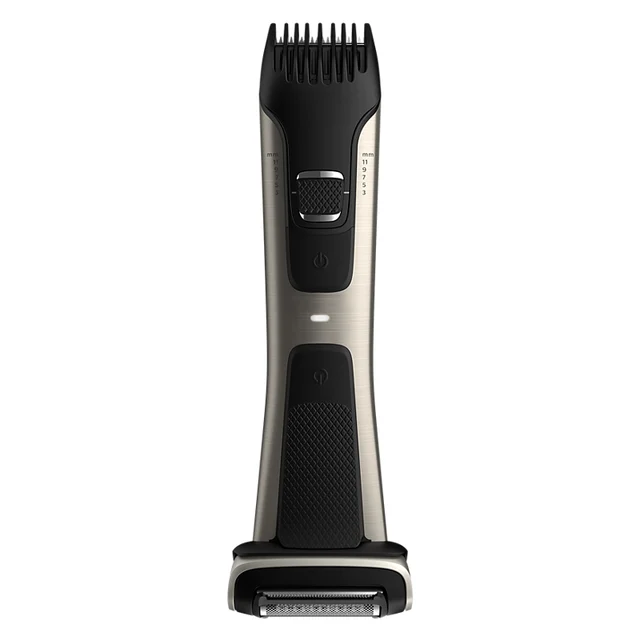
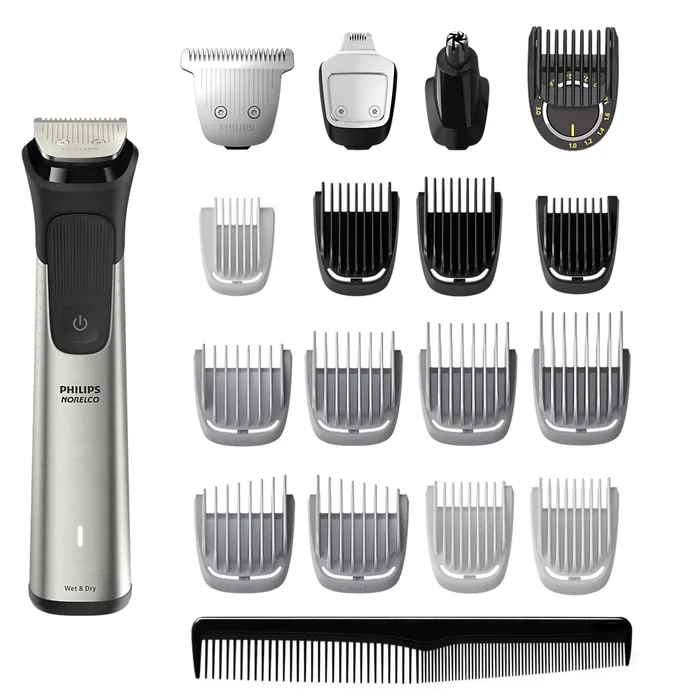
- Buy Philips Norelco All-in-One Trimmer Series 7000 (MG7900/49) The do-everything kit that trims a beard as happily as it tidies your neck, ears, and body hair.
- Buy Braun Beard Trimmer Series 7 BT7540 The precision specialist, with a built-in length dial and density-sensing motor that nails an even beard.
- It depends Wahl Stainless Steel Lithium-Ion+ Trimmer (9864) A pro-lineage T-blade that draws crisp lines, wrapped in an older, bulkier all-in-one body. Amazon
- Skip Manscaped The Beard Hedger A slick, skin-friendly single-tasker that asks a premium price for less capability than the field. Amazon
What actually matters
- Length control - a built-in wheel or dial with fine steps (often half-millimetre increments) beats a set of clip-on guide combs for speed and consistency; it's the difference between dialing in a look and hunting for the right plastic attachment.
- Blade type and width - standard trimmer blades handle even bulk trimming, while a wider T-blade is built for detailing sharp lines, cheek borders and necklines.
- Motor strength or density sensing - a strong motor (some read beard density and adjust) powers through thick patches without pulling, tugging, or stalling on dense growth.
- Versatility (scope) - decide whether you want a dedicated beard tool or an all-in-one kit that swaps in heads for hair, body, nose and ears; more attachments mean more value if you'll use them.
- Battery and charging - several hours of cordless runtime means you rarely think about the dock; quick-charge and USB charging are conveniences worth noting.
- Waterproofing and cleaning - rinse-clean or fully waterproof bodies make cleanup trivial and allow wet trimming or shower use; check whether 'washable' means the head only or the whole tool.
- Blade durability - where owner reports over months matter far more than spec-sheet claims, since cheap blades dull and drag over time.
The specs, in plain English
Green flags vs red flags
Green flags
- A built-in length dial with many fine, locked steps rather than a bag of loose combs
- Self-sharpening blades that the maker says need no oil
- Long, consistently reported cordless runtime backed by long-term owner reviews
- Fully waterproof or rinse-clean body for easy maintenance
- A clear match between scope and price - an all-in-one kit that genuinely includes the extra heads you'll use
Red flags
- A premium price for a beard-only tool that does less than cheaper, more versatile kits
- Length control that relies entirely on flimsy guide combs with big gaps between sizes
- A weak motor that owners report tugs, pulls, or stalls in thick growth
- Vague 'waterproof' wording that turns out to mean head-only when you read the manual
- Glossy battery or performance claims that don't show up in independent testing or long-run owner reports
Who's who: the brands
- Philips Norelco - Known for versatile all-in-one grooming kits with self-sharpening blades and long battery life at mid-range prices.
- Braun - Precision-focused beard specialists, often with fine-step length dials and density-sensing motors.
- Wahl - Professional barber heritage; their T-blades are prized for crisp lines and edging, though bodies can feel dated.
- Manscaped - Style-led, skin-friendly single-taskers that lean on brand and design, typically at a premium price.
How to read a listing without getting fooled
Start by ignoring the marketing headline and finding the length-control section: is it a built-in dial (and how many steps), or a set of guide combs? That tells you more about daily experience than any other line. Next, separate scope from price - a box photo crammed with attachments only adds value if you'll use the hair, body, nose and ear heads, so mentally strip the tool back to just its beard capability and ask whether that alone justifies the cost. Read battery numbers as best-case ceilings, not guarantees, and check whether 'waterproof' covers the whole body or only the head. Finally, weight long-term owner reports on blade durability and motor strength over spec-sheet superlatives; a trimmer that pulls or dulls after a few months undoes every feature on the box.
How much should you spend?
You don't need to spend at the top to get an excellent beard trimmer. The value sweet spot sits in the mid-range, where you can get a capable, self-sharpening, long-battery tool - often an all-in-one kit that covers far more than the beard. Paying up to the premium tier is justified when you specifically want a built-in precision length dial for exact, repeatable beard lengths without swapping guards; note that some mid-range kits now include density sensing too. It's harder to justify a premium price for a beard-only tool that does less than mid-range rivals; there you're mostly paying for design and brand rather than capability. Going too cheap usually shows up later as weak motors, coarse length steps, and blades that dull, so the bottom of the market is a false economy for anyone who trims regularly.
Questions, answered
Is a length dial really better than guide combs?
For most people, yes. A built-in dial with fine, locked steps lets you set an exact length and return to it next week without hunting for the right plastic comb. Guide combs still work and often cover a wider range, but they're slower to swap and jump in bigger increments, so they're fiddlier for everyday consistency.
What's the difference between a beard trimmer and an all-in-one kit?
A beard trimmer focuses on doing one job well, usually with the best length control in its class. An all-in-one kit swaps in extra heads for hair, body, nose and ears, replacing several gadgets. If you only shape a beard, buy focused; if you groom your whole routine, a kit is usually better value even at a similar price.
Do beard trimmers need oil or special upkeep?
It depends. Many modern trimmers use self-sharpening blades that their makers say need no oil and are washable or fully waterproof, so upkeep is just a rinse. Some professional-style T-blade tools still include oil in the traditional style. Check the manual for whether the body or only the head is waterproof before rinsing.
How much should I trust the battery life on the box?
Treat it as a rough ceiling. Stated runtime assumes a fresh battery under light load, and it shrinks as the cell ages and when cutting dense growth. Long-term owner reports are a better guide to real-world endurance than the headline number.
Which type is best for sharp lines and edging?
A wide T-blade tool is built for that. It excels at necklines, cheek borders and crisp edges, drawing on barber-style design. The trade-off is that detailing-first tools often lean on guide combs rather than a dial for bulk length, and their bodies can feel bulkier or more dated.
Is this grooming advice or health advice?
This is general product information to help you compare beard trimmers, not professional grooming, skincare, or medical advice. If you have skin sensitivity, ingrown-hair problems, or any condition affected by shaving or trimming, consult a qualified professional.
Or jump to the head-to-head: Philips Norelco All-in-One Trimmer Series 7000 (MG7900/49) vs Braun Beard Trimmer Series 7 BT7540.