Explained
Dermaplaning Tools, Explained
After reading, you'll understand what dermaplaning removes, how sonic and manual tools differ in practice, and how to avoid buying a razor by mistake.
In this guide
Dermaplaning is one of the few skincare treatments where the home version is close to the professional one, and also one where the wrong purchase is almost guaranteed. Tools designed for exfoliation and razors designed for hair look nearly identical in a listing photograph and cost similar money. Knowing what each is built to do, and what a sonic handpiece is actually for, sorts the category out in a minute.
The 30-second version
- Dermaplaning is exfoliation, and removing peach fuzz is the side effect rather than the point.
- A facial razor is not a dermaplaning tool, even though it removes the same hair.
- Sonic vibration buys consistency, not power, by keeping the edge working through an imperfect angle.
- A dull blade causes the irritation, which is why single-use edges exist and why replacements are the real cost.
- Every two to four weeks is the normal cadence, matching how long the outer skin layer takes to renew.
The products this guide is about
Our verdict on each, with the full reasoning on the companion review.
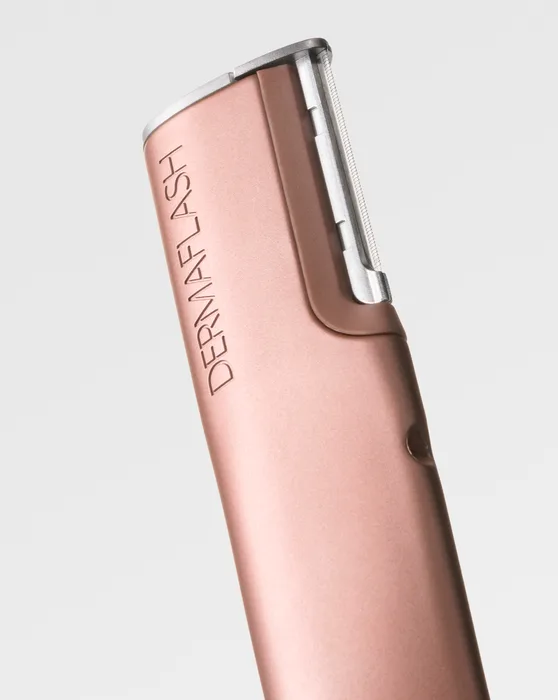
- Buy DERMAFLASH LUXE+ Sonic dermaplaning at 14,000 vibrations a minute, sold as a complete kit.
- Buy StackedSkincare Dermaplaning Exfoliation Tool A manual tool designed by an aesthetician around exfoliation, with hair removal as the side effect.
- It depends Michael Todd Beauty Sonicsmooth Pro+ Sonic dermaplaning with an LED to show you the fuzz, plus microdermabrasion tips.
- Skip Tweezerman Prep & Plane Facial Razors A good facial razor, and a facial razor is not a dermaplaning tool.
What actually matters
- Design intent - whether the maker describes the product as exfoliation or as hair removal. StackedSkincare states plainly that its tool is a skin treatment and not a face razor; Tweezerman describes its razors as being for peach fuzz.
- Sonic vibration - a handpiece that oscillates the blade at high frequency. DERMAFLASH states 14,000 vibrations a minute for the LUXE+, and the benefit is a consistent lift rather than a drag.
- Edge type - single-use, replaceable or fixed. Single-use removes the decision about when a blade is spent; replaceable is cheaper; fixed means it is a razor.
- Blade angle - dermaplaning uses a shallow angle against taut, dry, clean skin. It is a technique rather than a specification, and it is the thing a sonic device partly compensates for.
- Included consumables - how many edges come in the box. Since the edge is the working part, a kit with four is materially different from a device sold bare.
- Running cost - replacement edges over a year, which can exceed the price difference between a manual tool and a premium device.
- Visibility - whether the tool helps you see fine hair. Michael Todd builds an LED into the Sonicsmooth Pro+ for exactly this.
The specs, in plain English
Green flags vs red flags
Green flags
- The product is described as exfoliation, not only as hair removal.
- A vibration rate is published for any sonic device.
- Replacement edges are sold openly with a stated count.
- Several edges are included in the starting kit.
- The maker gives guidance on frequency and on skin conditions to avoid.
Red flags
- A facial razor listed under dermaplaning with no mention of exfoliation.
- A sonic device with no published vibration rate.
- No replacement blades offered, which means the tool is disposable.
- Claims that hair will grow back finer, which is not how hair works.
- No warning about active acne, broken skin or recent chemical exfoliation.
Who's who: the brands
- DERMAFLASH - Built the at-home sonic dermaplaning category, using single-use Microfine Edges across the LUXE+ and COOL devices.
- StackedSkincare - Aesthetician-founded brand whose manual dermaplaning tool is designed around exfoliation with hair removal as the secondary benefit.
- Michael Todd Beauty - Sonic skincare device maker whose Sonicsmooth line combines dermaplaning with microdermabrasion tips and an LED visibility aid.
- Tweezerman - Long-established grooming tool brand whose facial and brow razors are excellent for hair removal and are not dermaplaning tools.
- Schick - Mass-market brand whose small facial razors are the cheapest and most widely sold entry point, and the one most often mistaken for dermaplaning.
How to read a listing without getting fooled
Read the first sentence of the product description and see which word appears: exfoliation or hair. That single word usually tells you which half of the category you are in, and makers on both sides are honest about it if you look. Then check whether the tool is powered, and if it is, look for a vibration rate; a sonic device that will not state one is asking to be taken on faith. Look at what comes in the box next, because the edge is the working component and a device sold without spares has a hidden first cost. Find the replacement edges before buying, not after, and work out the cost per session rather than the cost per pack. Finally, look for the safety guidance, since a maker that tells you not to work over active acne or broken skin has thought about how the product is actually used.
How much should you spend?
Dermaplaning tools span budget to premium, and unusually the budget end is a legitimate choice rather than a compromise. A manual aesthetician-designed tool costs about as much as a decent moisturiser and does the same job as a device if your technique is good, which makes it the sensible way to find out whether dermaplaning suits your skin. The premium tier buys sonic vibration, which is really buying tolerance for imperfect technique, plus a complete kit and single-use edges. That is worth paying for if you are nervous with a blade or if consistency matters more to you than cost. The thing to calculate before committing is the running cost: single-use edges at one per session add up faster than replaceable blades sold in trios, and over a year the cheaper device can be the more expensive one to own.
Questions, answered
Should I dermaplane before or after cleansing?
After cleansing and on completely dry skin. Dermaplaning works on a dry, taut surface, which is why DERMAFLASH includes a PREFLASH cleanser in the LUXE+ kit as a preparation step rather than a lubricant. Any residue, oil or moisture makes the edge skate instead of lifting. Apply your serum or moisturiser afterwards, when the freshly exfoliated surface will absorb it far better, which is the main reason to do this at all.
Can I dermaplane if I use retinol or acids?
Yes, with spacing. Retinoids and chemical exfoliants are already accelerating skin turnover, so stacking mechanical exfoliation on the same day is how people end up with a compromised barrier. The usual approach is to dermaplane on a night when you skip the active, and to pause for several days either side if you have had a peel or started a new prescription. If a dermatologist prescribed the topical, ask them before adding this.
Does dermaplaning help with makeup application?
Noticeably, and it is the effect most people report first. Foundation sits on the skin surface, and fine hair plus dead cell buildup is what makes it look textured or patchy by the afternoon. Removing both gives a flatter surface for product to sit on. Michael Todd lists flawless makeup application among the benefits of the Sonicsmooth Pro+. The effect lasts as long as the smoothness does, which is usually a couple of weeks.
Is it safe to do at home at all?
For most people, yes, which is why the category exists and why makers design single-use edges and sonic handpieces to reduce the risk. The blade is held at a shallow angle and is not intended to break skin. The situations to avoid are active acne, cold sores, eczema, sunburn and any open or inflamed area, and the practice to avoid is reusing a dull blade. If you have a skin condition under treatment, or you are unsure, ask a dermatologist rather than a product page.
Or jump to the head-to-head: DERMAFLASH LUXE+ vs StackedSkincare Dermaplaning Exfoliation Tool.