

Health & Wellness
The Best Dermaplaning Tools: 4 Compared (and One to Skip)
We compared four dermaplaning tools on sonic against manual, what each maker claims to remove, what comes in the box and the running cost of replacement edges.
The short version
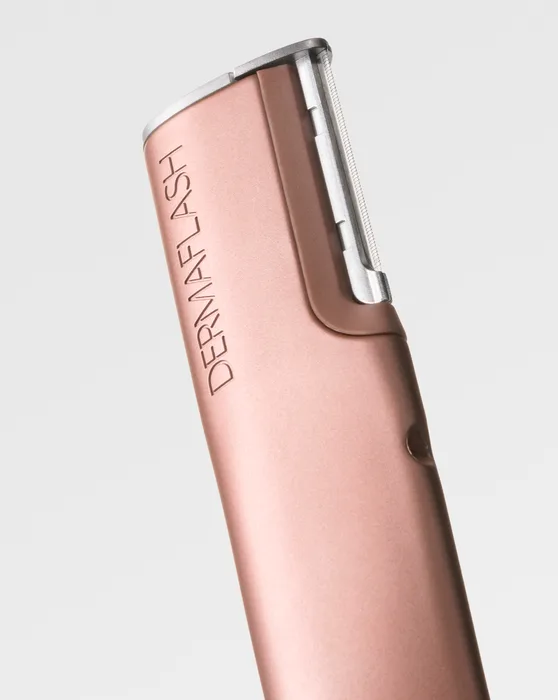
The DERMAFLASH LUXE+ is the one to buy: a sonic device running 14,000 vibrations a minute with single-use Microfine Edges, sold as a complete kit with the device, four edges, a cleanser, a charging cable and a base, and covered by a clinical claim that hair does not grow back thicker or faster. The StackedSkincare Dermaplaning Exfoliation Tool is the value pick and the one to choose if you want a treatment rather than a gadget, developed by an aesthetician and designed around exfoliation with hair removal as the secondary effect. The Michael Todd Beauty Sonicsmooth Pro+ is the one for people who struggle to see what they are doing, since it adds LED light technology to pick out fine hair and pairs the sonic head with microdermabrasion tips. The Tweezerman Prep & Plane Facial Razors are excellent at what they do and the wrong purchase here, because a stainless blade in a petite handle removes peach fuzz and is not a dermaplaning tool. Best for: anyone whose serums seem to sit on top of their skin.
Our picks at a glance
- DERMAFLASH LUXE+ - Buy. Sonic dermaplaning at 14,000 vibrations a minute, sold as a complete kit.
- StackedSkincare Dermaplaning Exfoliation Tool - Buy. A manual tool designed by an aesthetician around exfoliation, with hair removal as the side effect.
- Michael Todd Beauty Sonicsmooth Pro+ - It depends. Sonic dermaplaning with an LED to show you the fuzz, plus microdermabrasion tips.
- Tweezerman Prep & Plane Facial Razors - Skip. A good facial razor, and a facial razor is not a dermaplaning tool.
The verdict in 30 seconds
What mattered most
- Type
- Stated vibration rate
- Designed for
- Edge type
- Extra treatment head
- Visibility aid
Dermaplaning is exfoliation that happens to remove fine facial hair, and the confusion in this category comes from products that only do the second half. A tool designed to exfoliate uses a blade held at a shallow angle to take off the dead outer layer of skin along with peach fuzz; a facial razor just removes the hair. Both leave skin feeling smoother on the day. Only one changes how your skincare absorbs. The specifications that separate the field are whether the tool vibrates, what the blade edge is designed for, and what a replacement costs, because these are consumables rather than appliances.
Sonic dermaplaning at 14,000 vibrations a minute, sold as a complete kit.
Best for: Anyone who wants the most controlled at-home version of a treatment they would otherwise book.
- 14,000 sonic vibrations per minute, which keeps the edge moving so it lifts dead skin rather than dragging.
- Single-use Microfine Edges, so you never work with a dulled blade, and four are included to start.
- The kit includes the device, the edges, a PREFLASH cleanser, a charging cable and a base, so there is nothing else to buy on day one.
- Single-use edges are the running cost, and they are the reason this is the most expensive tool here to own.
- DERMAFLASH does not publish a battery life or a charge time.
- A sonic handpiece is bulkier than a manual tool and cannot travel as easily.
- It needs charging, which a manual dermaplaning tool obviously does not.
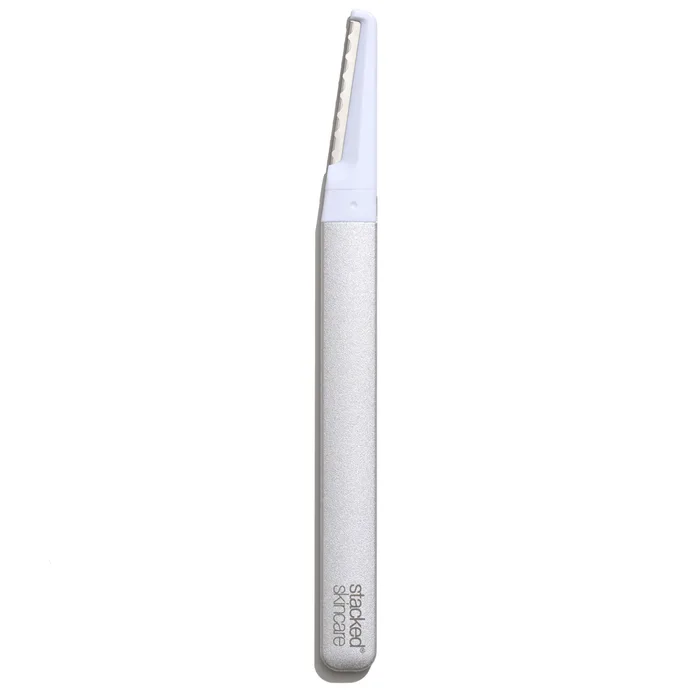
A manual tool designed by an aesthetician around exfoliation, with hair removal as the side effect.
Best for: Anyone who wants the exfoliation benefit without buying a charged appliance, and is willing to learn the angle.
- StackedSkincare is explicit that this is a skin treatment rather than a face razor, and designs the edge for removing dead skin buildup as well as fuzz.
- Developed by aesthetician Kerry Benjamin, with the stated aim of improving how skincare absorbs afterwards.
- Manual, so there is nothing to charge and it packs flat for travel.
- No sonic assistance, so technique matters far more than with a vibrating device.
- StackedSkincare does not publish a blade material or an edge angle.
- Replacement blades are a separate purchase and are sold in trios rather than singly.
- A manual blade at a shallow angle on your own face has a learning curve that a sonic tool smooths over.
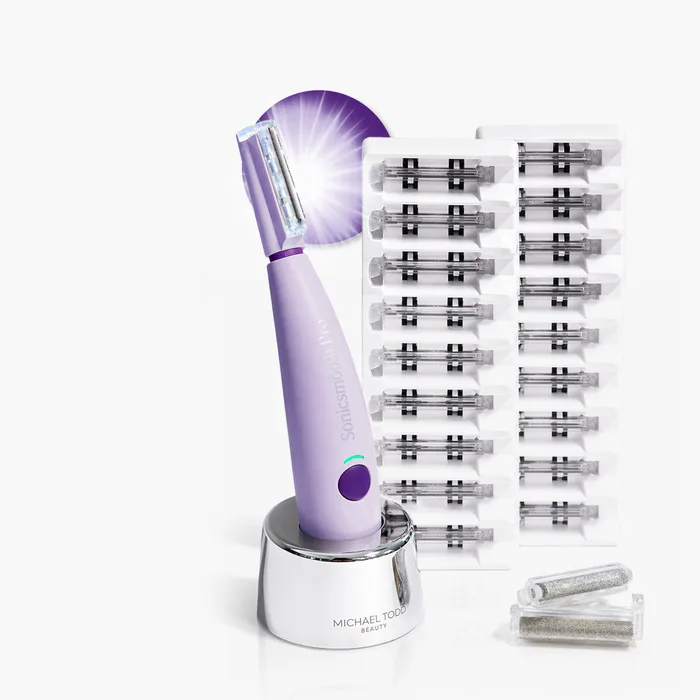
Sonic dermaplaning with an LED to show you the fuzz, plus microdermabrasion tips.
Best for: Anyone who finds fine hair hard to see, or who wants microdermabrasion and dermaplaning from one device.
- LED light technology to pick out peach fuzz and fine hair, which is the practical problem with doing this in a bathroom mirror.
- Pairs sonic dermaplaning with microdermabrasion tips, so it covers two exfoliation methods in one handpiece.
- Michael Todd describes it as dermatologist approved for quick, painless exfoliation and peach fuzz removal.
- Michael Todd does not publish a vibration rate, so there is no way to compare it with DERMAFLASH's 14,000 per minute.
- Two consumables to buy rather than one, since the blades and the microdermabrasion tips are separate refills.
- Combining two treatments in one device means neither is as simple as a dedicated tool.
- No battery life or charge time is published.
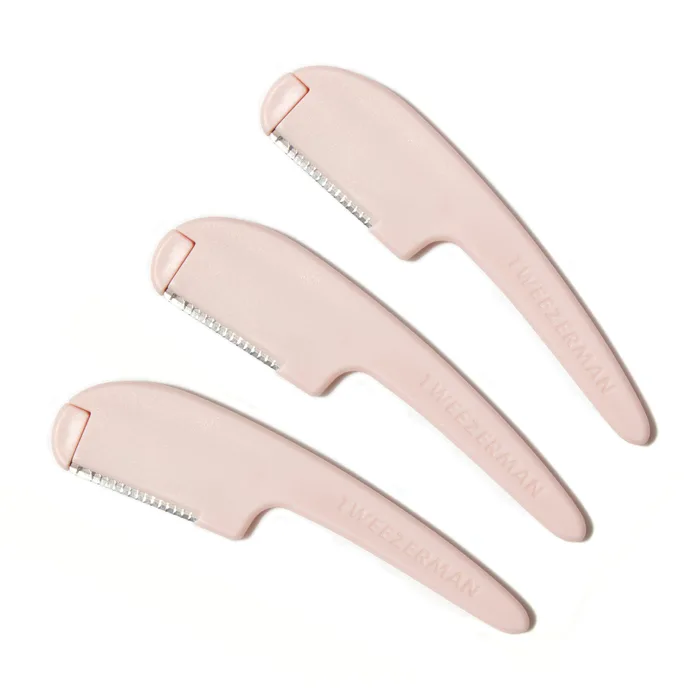
A good facial razor, and a facial razor is not a dermaplaning tool.
Best for: Tidying brows and upper lip hair on the go, which is what it was designed for.
- A high-grade stainless steel blade in a petite handle that is genuinely easy to control on brows and the upper lip.
- Cheap, packable and sold as a set, so one can live in a handbag.
- For its actual purpose, tidying unwanted peach fuzz, it works well.
- Tweezerman describes it as a razor for removing peach fuzz, not as an exfoliation tool, and the blade geometry follows from that.
- There is no sonic assistance and no guidance on holding an angle, which is the whole of dermaplaning technique.
- It does not address dead skin buildup, so it will not change how your skincare absorbs.
- People searching for dermaplaning tools buy facial razors constantly and then conclude dermaplaning does nothing.
| Criteria | LUXE+ Top pick | Dermaplaning Exfoliation Tool | Sonicsmooth Pro+ | Prep & Plane Facial Razors |
|---|---|---|---|---|
| Verdict | Buy it | Buy it | It depends | Skip it |
| Best for | Anyone who wants the most controlled at-home version of a treatment they would otherwise book. | Anyone who wants the exfoliation benefit without buying a charged appliance, and is willing to learn the angle. | Anyone who finds fine hair hard to see, or who wants microdermabrasion and dermaplaning from one device. | Tidying brows and upper lip hair on the go, which is what it was designed for. |
| Price tier | $$ · premium | $ · budget | $$ · premium | $ · budget |
| Type | Sonic device | Manual tool | Sonic device | Manual razor |
| Stated vibration rate | 14,000 per minute | Not applicable | Not published | Not applicable |
| Designed for | Exfoliation and peach fuzz | Exfoliation first, hair second | Exfoliation and peach fuzz | Peach fuzz removal |
| Edge type | Single-use Microfine Edges | Replaceable blades, sold in trios | Replaceable blades | Stainless steel, fixed |
| Extra treatment head | None | None | Microdermabrasion tips | None |
| Visibility aid | None | None | LED light technology | None |
| In the box | Device, 4 edges, cleanser, cable, base | Tool | System with refill kit options | Set of razors |
| Needs charging | Yes | No | Yes | No |
Which one is right for you?
- Anyone who wants the most controlled at-home version of a treatment they would otherwise book. Buy it DERMAFLASH LUXE+
- Anyone who wants the exfoliation benefit without buying a charged appliance, and is willing to learn the angle. Buy it StackedSkincare Dermaplaning Exfoliation Tool
- Anyone who finds fine hair hard to see, or who wants microdermabrasion and dermaplaning from one device. It depends Michael Todd Beauty Sonicsmooth Pro+
- Tidying brows and upper lip hair on the go, which is what it was designed for. Skip it Tweezerman Prep & Plane Facial Razors
How we judged the field
Five things decide whether a dermaplaning tool is the right one. The first is what it was designed to do, because the category contains genuine exfoliation tools and facial razors that look almost identical in a photograph, and only the first group changes anything about your skin beyond the hair. The second is whether the tool vibrates, since a sonic handpiece keeps the edge moving and makes holding a consistent angle far easier for someone doing this to their own face in a mirror. The third is the edge: single-use, replaceable or fixed, because a dulled blade is the usual cause of a session that leaves skin irritated. The fourth is what is in the box, which matters more here than in most categories because the consumable is the product. The fifth is the running cost, since these are not appliances you buy once.
The field splits between devices and tools. Sonic devices, led by DERMAFLASH and Michael Todd, charge on a base, run a blade at high frequency and cost premium money with a consumable attached. Manual tools, of which StackedSkincare’s is the best known aesthetician-designed example, are a handle and a replaceable blade, cost a fraction as much and put the technique entirely on you. Sitting alongside both, and outselling them, are facial razors: cheap, effective at hair removal, and not the same product. We took two devices, one manual tool and one facial razor, because the last of those is what a great many people searching for dermaplaning end up with.
The LUXE+ is DERMAFLASH’s flagship and the most controlled way to do this at home. The device runs at 14,000 sonic vibrations a minute, and the point of that is not power but consistency: a vibrating edge lifts dead cells rather than dragging across them, which is the difference between an exfoliation and a scrape. It uses single-use Microfine Edges, which removes the main judgement call in dermaplaning, since you never have to decide whether a blade has another session left in it. The kit is complete: the device, four edges, a 0.33 fluid ounce PREFLASH cleanser, a charging cable and a base. DERMAFLASH states the product is suitable for all ages, skin types and tones including sensitive skin, and that it is clinically proven that hair will not grow back thicker or faster. The gaps are practical rather than performance-related. There is no published battery life or charge time, and single-use edges make this the most expensive tool here to run over a year. For someone who wants the closest thing to a booked treatment, it is worth it.
StackedSkincare’s tool makes the argument the rest of the category dances around. Its own product copy leads with it: dermaplaning is exfoliation, hair removal is the side benefit, and this is not a face razor. The tool was developed by aesthetician Kerry Benjamin, and the design intent is removing dead skin buildup so that serums and actives actually reach living skin, with the peach fuzz coming off as a consequence. That framing is correct and it is the reason to buy this over a razor that costs the same. Being manual is both the appeal and the catch. There is nothing to charge, it packs flat, and it costs a fraction of the sonic devices. But holding a blade at a consistent shallow angle against your own cheekbone is a skill, and a sonic handpiece forgives a lot of wobble that a manual tool does not. StackedSkincare also does not publish a blade material or an edge angle, and replacement blades come in trios as a separate purchase.
The Sonicsmooth Pro+ is Michael Todd’s attempt to solve the two practical problems with at-home dermaplaning at once. The first is seeing what you are doing, and it adds LED light technology specifically to pick out peach fuzz and fine hair against skin, which in a normally lit bathroom is genuinely difficult. The second is that dermaplaning is one exfoliation method among several, so the Pro+ pairs the sonic dermaplaning head with microdermabrasion tips and sells refill kits covering both. Michael Todd describes it as dermatologist approved for quick, easy and painless exfoliation and peach fuzz removal. The reasons this is a depends rather than a buy are comparability and complexity. No vibration rate is published, so there is no way to line it up against DERMAFLASH’s 14,000 per minute, and no battery life or charge time is given either. Two consumables means two things to reorder. If visibility is your problem, this is the device that addresses it directly.
The Prep & Plane razors are a good product and they are in this comparison as a warning rather than a criticism. Tweezerman describes them accurately: a set of facial razors with a high-grade stainless steel blade in a petite handle, for removing unwanted peach fuzz on the go. They do that well, they are inexpensive, and one living in a handbag is a sensible thing to own. What they are not is a dermaplaning tool. The blade geometry and the handle are designed for hair removal at a shallow depth, not for lifting the dead outer layer of skin, and there is no sonic assistance and no angle guidance. The consequence is predictable and common: someone searching for dermaplaning buys the cheapest thing that looks right, removes some fuzz, notices no change in texture or product absorption, and concludes that dermaplaning is marketing. It is not, but a facial razor is not how you find that out.
DERMAFLASH LUXE+ vs StackedSkincare Dermaplaning Exfoliation Tool: which should you buy?
The LUXE+ and the StackedSkincare tool are the two worth choosing between, and the decision is whether you are buying a technique or a device. StackedSkincare gives you the correct understanding of what dermaplaning is and a tool built around it, for the price of a good moisturiser. It packs flat, needs no charging, and if you already have a steady hand and some patience it does everything the expensive option does. The catch is that the entire outcome rests on you holding a consistent shallow angle, and most people’s first few attempts are tentative and uneven.
The LUXE+ buys that consistency. Fourteen thousand vibrations a minute keeps the edge working even when your angle is imperfect, and single-use edges mean every session starts sharp, which removes the most common cause of irritation. It also arrives as a kit with a cleanser and four edges, so there is no research required before the first use. Buy the StackedSkincare tool if you want to find out whether dermaplaning does anything for your skin before committing, which is a sensible order of operations. Buy the LUXE+ if you already know it does, or if the idea of holding a blade to your own face makes you nervous enough that a device with training wheels is worth the money.
What to look for
- What the maker says it is for: a tool described as exfoliation is built differently from one described as a razor for peach fuzz, and both descriptions are accurate.
- A published vibration rate: DERMAFLASH’s 14,000 per minute is a checkable figure, and a sonic device with no rate published cannot be compared with it.
- Single-use or replaceable edges: single-use removes the judgement call about a dull blade, replaceable is cheaper to run, and a fixed blade is a razor.
- What is included: the consumable is the product here, so a kit with several edges and a cleanser is worth more than a device on its own.
- The running cost, not the purchase price: a premium device with single-use edges can cost more over a year than one with replaceable blades.
- Any visibility aid: fine hair is genuinely hard to see, and Michael Todd’s LED is a targeted answer to a real problem rather than a feature for its own sake.
Our final take
Dermaplaning works, and the way to be disappointed by it is to buy a facial razor instead of a dermaplaning tool. The DERMAFLASH LUXE+ is the one to buy for the most controlled result: 14,000 sonic vibrations a minute, a fresh single-use edge every session, and a kit that needs nothing else on day one. The StackedSkincare Dermaplaning Exfoliation Tool is the smarter first purchase for anyone testing whether this belongs in their routine, and its own description of dermaplaning as exfoliation first is the most useful sentence in this category. The Michael Todd Sonicsmooth Pro+ earns its place if seeing the fuzz is your problem. And the Tweezerman razors are good at the job they were designed for, which is a different job.
Questions, answered
Is dermaplaning just shaving your face?
No, and the distinction is the whole category. Shaving removes hair at the skin surface with a blade held nearly flat and usually with a lubricant. Dermaplaning holds a blade at a shallow angle against dry, clean skin and scrapes off the outermost layer of dead cells along with the fine hair, which is why StackedSkincare describes it as a skin treatment rather than a face razor. The visible result is smoother texture and better product absorption rather than simply less fuzz. A facial razor can do the shaving half and is not designed for the other.
Will the hair grow back thicker or darker?
No. Cutting a hair does not change the follicle that produced it, so regrowth returns at the same thickness and colour as before. The belief comes from the blunt cut end of a regrowing hair feeling coarser than the tapered tip it replaced. DERMAFLASH states this as a clinically proven claim on its LUXE+ product page, and it matches how hair growth works. What does change is timing: once you start, the smoothness fades as the hair returns, so most people settle into a routine every few weeks.
How often should I dermaplane?
Every two to four weeks for most skin, which is roughly the cycle time for the outer layer to renew. Doing it more often removes skin that has not finished rebuilding, which shows up as sensitivity, tightness and sometimes irritation around the jaw and upper lip. If you use retinoids, acids or any prescription topical, space dermaplaning away from them and introduce it slowly, and speak to whoever prescribed the topical first.
Do I need to replace the blade every time?
It depends on the system, and it is the main running cost. DERMAFLASH uses single-use Microfine Edges, so each session starts with a fresh edge and there is no judgement call. StackedSkincare sells replacement blades in trios, and Michael Todd sells refill blades separately along with microdermabrasion tips. A dulled blade is the usual cause of a bad dermaplaning session, because it drags rather than glides and that is what causes irritation. When in doubt, change it.
Can I dermaplane over active acne?
No. Dragging a blade across inflamed or broken skin spreads bacteria and can worsen a breakout, and the same applies to cold sores, eczema, sunburn and any open lesion. Work around active spots or wait until they have settled. If you have persistent inflammatory acne or rosacea, this is a conversation to have with a dermatologist before adding any mechanical exfoliation, not after.
Deciding between the top two? See our head-to-head: DERMAFLASH LUXE+ vs StackedSkincare Dermaplaning Exfoliation Tool.
More Health & Wellness reviews
 The Best Digital Thermometers: 4 Compared (and One to Skip)
  The Best Earplugs for Sleeping: 4 Compared (and One to Skip)
  The Best Electric Heated Blankets: 4 Compared (and One to Skip)
  The Best Electric Shavers: 4 Compared (and One to Skip)
  The Best Electric Toothbrushes (and the Trendy One to Skip)
  The Best Escape Ladders: 4 Compared (and One to Skip)