Explained
Curling Irons, Explained
After reading this, you'll be able to look at any curling iron, wand, or multi-styler listing and know exactly which barrel, material, and heat range suits your hair - and which marketing claims to ignore.
In this guide
Curling irons look simple - a hot metal tube with a handle - but the listings are a thicket of barrel sizes, exotic coatings, temperature claims, and now air-powered stylers and automatic rotating curlers that promise push-button curls. What trips most first-time buyers up is shopping by maximum temperature or by gadget appeal, when the things that actually determine your results are barrel size, barrel material, and whether the heat range goes low enough for your hair type.
The 30-second version
- Barrel size sets the curl, not the brand: three-quarter inch for tight ringlets, one inch for versatile defined curls, 1.25 inches and up for loose waves. When in doubt, one inch.
- Less heat than you think: fine and color-treated hair curls well at lower settings, and independent testing consistently finds that extra heat mostly buys damage, not hold.
- Usable low settings beat a hotter top end. A wide, adjustable heat range is the single most important spec, because it lets one tool work for every hair type in the house.
- Material matches hair type: ceramic heats evenly and treats hair gently; gold and other metal barrels recover heat faster under load, which suits thick, coarse, resistant hair.
- Automation is a trade, not an upgrade: enclosed rotating curlers and air stylers exchange control (or hold) for convenience - a fine trade for some hair, a frustrating one for long, thick, or layered hair.
The products this guide is about
Our verdict on each, with the full reasoning on the companion review.
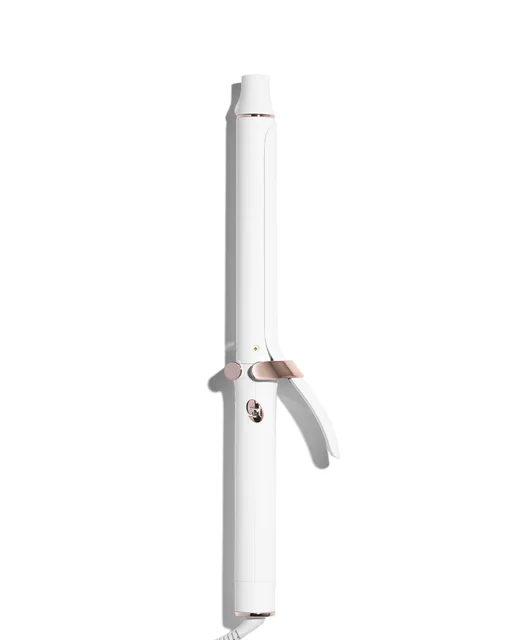
- Buy T3 SinglePass Curl X 1-Inch Curling Iron A precise, gentle-heating ceramic iron that produces polished, long-lasting curls with a single pass - the best all-around tong you can buy. Amazon
- Buy Hot Tools Pro Artist 24K Gold Extended Barrel Curling Iron (1.25-Inch) The stylist-kit classic: a gold extended barrel that gets seriously hot, holds its temperature, and costs a fraction of the premium tools. Amazon
- It depends Dyson Airwrap i.d. Multi-Styler and Dryer A brilliant low-heat styler and dryer in one - but you pay flagship money, and its soft air-formed curls won't out-hold a hot tong. Amazon
- Skip CHI Lava 1-Inch Pro Spin N Curl An automatic rotating curler that promises push-button curls but delivers tangles, length limits, and one fixed curl size at a premium price.
What actually matters
- Barrel diameter is the number that determines what your curls actually look like - it matters more than any coating or brand name, because a one-inch barrel makes defined curls and a 1.5-inch barrel makes loose waves no matter what the box promises.
- Adjustable heat with a real range - not just a high maximum, but genuinely low settings. Fine, thin, or color-treated hair should be curled well below a tool's ceiling, and a tool with only two or three hot presets forces damage on hair that doesn't need it.
- Barrel material shapes both gentleness and power: ceramic distributes heat evenly for one-pass curls with less cumulative damage, while gold-plated and other metal barrels hold their temperature under load, which coarse and resistant hair needs.
- Styler type - clip iron, clipless wand, or air styler - decides your technique and finish. Clips are the most beginner-friendly and grip the ends for polish; wands give relaxed, crease-free waves; air stylers are the gentlest but produce the softest, shortest-lived curls.
- Heat recovery - how quickly the barrel returns to temperature after touching a cool section of hair - is what separates tools that curl a whole head consistently from tools whose last sections come out limp.
- Barrel length is an underrated spec: a longer barrel swallows bigger sections, which speeds up styling dramatically on long or thick hair and reduces the awkward-sectioning tax.
- Safety basics - automatic shut-off, a cool tip to steady the tool, and heat-resistant surfaces or an included glove - matter every single day you use a tool that runs at oven-like temperatures near your face.
The specs, in plain English
Green flags vs red flags
Green flags
- A wide temperature range with genuinely low settings, not just an ever-hotter maximum
- Even, well-regulated heating that sets a curl in a single pass - the phrase 'one pass' in independent testing is high praise
- A long barrel on a one-inch or 1.25-inch tool, which handles thick and long hair without fussy sectioning
- A long track record in salons and years-old owner reports that still describe consistent performance
- Auto shut-off, a cool tip, and sensible clip tension that grips without denting the hair
- Clear guidance from the maker about which settings suit which hair types
Red flags
- Marketing that leads with maximum temperature as if hotter were better - for most hair it's just more damage
- Only two or three heat presets, all of them hot, with nothing gentle enough for fine or color-treated hair
- Enclosed rotating designs paired with owner reports of tangling, snagging, or hair trapped in a hot chamber
- A narrow stated hair-length window - a tool that only works on shoulder-length, unlayered hair does less for more money
- Ion, gemstone, or 'infrared' claims doing the heavy lifting in place of concrete specs like temperature range and barrel material
- Premium pricing on a single fixed curl size with no versatility to show for it
Who's who: the brands
- T3 - Premium styling-tool specialist known for precise digital heat control and even ceramic heating aimed at one-pass, lower-damage curling.
- Hot Tools - The working stylist's staple for decades - gold-barrel irons that run hot, hold their temperature under load, and cost mid-range money.
- Dyson - Engineering-led flagship brand whose Airwrap line replaced the hot barrel with low-temperature air styling that also dries - priced accordingly.
- CHI - Salon-rooted brand best known for flat irons; its curling lineup ranges from classic tongs to automatic rotating curlers of mixed reputation.
- Conair / Infiniti Pro - The budget-to-mid mass-market giant - enormous range, serviceable basics, and the usual big-brand spread between good and forgettable models.
- BaBylissPRO - Professional-line brand favored for titanium and ceramic barrels with salon-grade heat, popular with stylists who need fast heat recovery.
How to read a listing without getting fooled
Start with the two numbers that matter: barrel diameter (which sets your curl shape) and the temperature range (check the low end, not the headline maximum). Then identify the barrel material - ceramic for gentle, even heat; gold or titanium for thick, resistant hair - and the styler type: clip iron, clipless wand, air styler, or rotating curler. Be suspicious when a listing leads with a scary-high maximum temperature, ion counts, or gemstone coatings instead of those basics; those are the signs of a spec sheet papering over an ordinary heater. For automated tools, look for the fine print about which hair lengths and textures they support - a narrow stated window is the manufacturer telling you, politely, who this will not work for. Finally, scan long-term owner reports for the failure modes that never appear on the box: clips that lose tension, coatings that wear, barrels that no longer hold heat, and - for enclosed rotating curlers - tangling.
How much should you spend?
What drives cost in this category is heat intelligence and materials: precise digital temperature control, even ceramic or well-plated barrels, and fast heat recovery cost more than a basic dial on a bare metal tube. The value sweet spot sits in the mid-range, where salon-classic clip irons deliver most of the performance of premium tools - especially for thick or coarse hair that benefits from a hot, heat-holding metal barrel. Spending up to premium makes sense if you curl regularly and your hair is fine, color-treated, or damage-prone, because precise low-heat control pays off in hair health month after month. Flagship money only makes sense for air-styling multi-tools that also replace your dryer and see near-daily use; if you just want defined curls that last all day, an excellent conventional iron costs a fraction of that. Be wary of paying premium prices for automation gimmicks - a rotating chamber that does one curl size for a narrow range of hair is less tool for more money.
Questions, answered
What barrel size should I buy if I'm only buying one tool?
One inch. It's the most versatile diameter: defined curls on short-to-medium hair, softer curls on long hair, and it works for most techniques. Go up to 1.25 inches if you mainly want loose glam waves or have long, thick hair; go down to three-quarter inch only if you specifically want tight ringlets.
Is a hotter curling iron better?
No - this is the most common buying mistake. Independent testing consistently finds fine and color-treated hair curls well at lower settings, medium hair in the middle ranges, and only coarse or very resistant hair benefits from top settings. The right test: if your curl sets in one pass and the hair still looks glossy, your temperature is correct. Sizzling, hot smells, or dull finish mean step down. Extra heat mostly buys damage, not longer hold.
Ceramic or titanium/gold - which barrel material is right for me?
Match it to your hair. Ceramic heats evenly and gently, which suits fine, thin, or color-treated hair and anyone prioritizing long-term hair health. Gold and titanium hold and recover heat faster under load, which is what thick, coarse, or resistant hair needs to take a curl. Neither is universally better - a fast, hot metal barrel on fine hair is a damage machine, and a gentle ceramic barrel may frustrate very coarse hair.
Are air stylers like the Dyson Airwrap a replacement for a curling iron?
Only for the right buyer. Air styling caps temperatures far below a hot barrel, making it the gentlest way to curl, and these tools dry and style in one session from damp hair. But the soft, air-formed waves consistently drop faster than tong-made curls, especially on thick, heavy, or very straight hair. If you want defined curls that survive the whole day, a good conventional iron does that better for far less money.
Are automatic rotating curlers worth it for beginners?
Usually not. They look beginner-friendly, but the enclosed chamber hides how your hair is wrapping - exactly the information you need to avoid a tangle - and owner reports frequently describe snagging on hair that's long, thick, or layered. They also lock you into one curl size and a narrow hair-length window. The classic wrist technique with a clip iron takes a few minutes to learn and works on far more hair types.
How do I curl my hair with less damage?
Use the lowest temperature that sets your curl in one pass, apply a heat protectant, work with fully dry hair on any hot-barrel tool, and keep the barrel moving rather than parking it on one section. Even heating (good ceramic tools) and one-pass technique matter more than any coating. This is general information, not medical advice - if you have scalp conditions, significant hair loss, or skin sensitivity concerns, consult a professional before regular heat styling.
Or jump to the head-to-head: T3 SinglePass Curl X 1-Inch Curling Iron vs Hot Tools Pro Artist 24K Gold Extended Barrel Curling Iron (1.25-Inch).