Explained
At-Home Wax Kits, Explained
After reading, you'll understand the main wax types, what a kit's warnings are telling you, and which details matter before you buy.
In this guide
Wax kit boxes promise salon results, but the useful information is in the small print. First-time buyers often pick by strip count, when the bigger question is where the maker allows the wax to be used. Makers disagree on areas, wait times and who should not wax. This guide explains the terms so you can read a listing with confidence.
The 30-second version
- Stated areas come first, because makers draw different lines around the face, underarms and bikini area.
- Hard wax lifts off without a strip, while soft wax and ready-made strips pull away on a backing.
- Patch-test wording varies, so look for a stated wait time, which is 24 hours on several kits.
- Exclusions are not identical, so check each kit's list for diabetes, retinoids and skin conditions.
- Warmers trade time for capacity, since they take longer to set up but can be refilled with more wax.
The products this guide is about
Our verdict on each, with the full reasoning on the companion review.
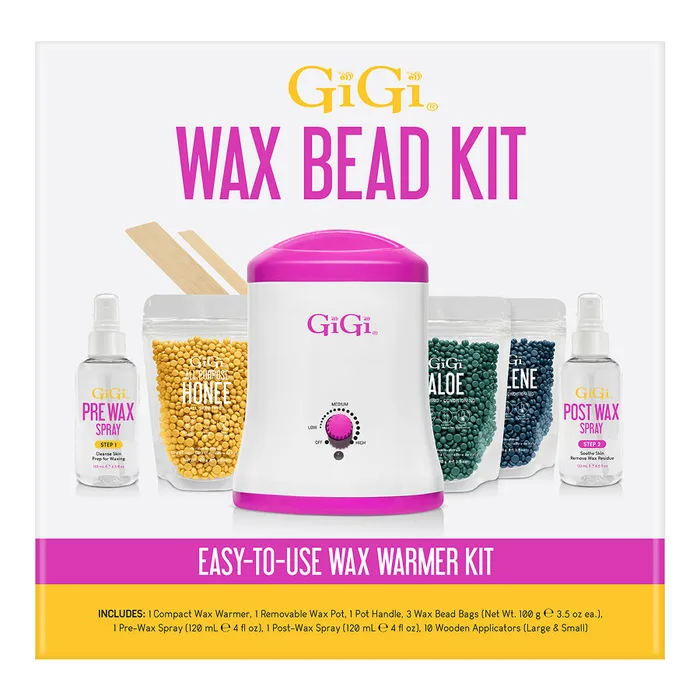
- Buy GiGi Wax Bead Kit A complete hard wax starter set with a dial-controlled warmer, three bead formulas and pre-wax and post-wax sprays. Amazon
- Buy Flamingo Head to Toe Wax Kit The easiest way to start, with 48 ready-to-use strips for face, pubic area and body and no heating step. Amazon
- Buy Parissa Brazilian Hot Wax A strip-free hard wax you heat in the microwave, aimed at bikini, underarm and coarse hair. Amazon
- It depends Veet Ready-To-Use Wax Strip Kit A large pack of cold strips for legs, arms, underarms and bikini line, with clear limits and no face use. Amazon
- It depends Bombshell Wax Company Bombshell In-Home Mini Wax Warmer Kit A small warmer with professional hard wax, good for buyers who already know how to wax.
- Skip Nad's Natural Hair Removal Wax Strip Kit A three-size strip kit whose precautions rule out two of the areas its strips are sold for. Amazon
What actually matters
- Stated areas - This is the list of body areas the maker allows. It can differ from the marketing, so read the precautions as well as the headline.
- Wax type - Hard wax, soft wax and strips behave differently. Hard wax is lifted off by hand, while soft wax and strips use a backing.
- Heating method - Warmers, microwaves and ready-to-use strips ask for very different amounts of setup. GiGi's kit takes 30 to 45 minutes, while strips take none.
- Patch test - Most makers ask for one before waxing. Look for how long they tell you to wait.
- Exclusions - These list who should not wax and which treatments rule it out. Retinoids, diabetes and skin conditions appear on several kits.
- Aftercare - Oil, wipes or sprays remove residue. Check how many come in the box, since a kit may be short of them.
- Quantity - Strip counts and wax weights tell you how far a kit goes. Compare them with the area you plan to cover.
The specs, in plain English
Green flags vs red flags
Green flags
- The maker lists specific body areas
- A patch test with a stated wait time
- A clear list of who should not wax
- Kit contents with weights or strip counts
- Aftercare included in the box
Red flags
- Warnings that are missing from the product page
- Marketing that names an area the precautions exclude
- No heating or temperature guidance for hot wax
- Contradictory hair length guidance
- Strip counts given with no breakdown by area
Who's who: the brands
- GiGi - A wax brand with beads, strips, warmers and accessories for home and professional use.
- Flamingo - A body care brand selling ready-to-use wax kits, hair removal creams and aftercare.
- Parissa - A maker of hot wax, sugar wax and wax strips, with this hot wax made in Canada.
- Veet - A long-running hair removal brand selling wax strips, creams and sugar wax.
- Bombshell Wax Company - A hard wax brand that sells kits for home users, professionals and beauty schools.
How to read a listing without getting fooled
Start with the precautions, not the headline. Note the areas the maker allows, then the ones it excludes, and compare that list with the area you actually want to wax. Next check the patch-test wording and the exclusions, including any named medicines or skin treatments. Only then compare quantity and aftercare. If a listing gives no warnings at all, check the leaflet in the box before using it, and treat that gap as a reason to compare other kits.
How much should you spend?
Budget kits are mostly strips and small microwave wax sets, and they suit first-timers or occasional use. Mid-range kits add a warmer, hard wax beads and sprays. Premium home kits add a choice of professional wax. Over time, strips cost more for regular waxers because each one is used once, while beads and warmers cost more upfront but can be refilled.
Questions, answered
What is the difference between a warmer kit and a microwave kit?
A warmer kit melts wax in a powered pot and keeps it at temperature, while a microwave kit heats wax in a container for a few minutes. GiGi's warmer takes 30 to 45 minutes on high, and Parissa says 2 to 3 minutes in a microwave. A warmer takes more space and time, and a microwave kit suits smaller jobs.
Do wax strips need heating?
Ready-to-use strips do not need a warmer or microwave. Veet says no warming is required, and Nad's asks you to rub strips between your palms. Flamingo strips are pulled apart slowly before use.
Why do makers tell you to avoid some areas?
Makers set limits for their own products, and those limits differ. Veet excludes the face, head and genitals, for example, while Flamingo sells a Face & Pubic strip. Follow the maker's list for the kit you own rather than a general rule.
What should I check in my skincare routine before waxing?
Look for the items your kit names. GiGi and Parissa name Accutane, glycolic acid and AHA treatments, along with Retin-A or retinol. Flamingo names retinoids, retinol and vitamin A products, and says to check with your doctor about prescription retinol.
Or jump to the head-to-head: GiGi Wax Bead Kit vs Flamingo Head to Toe Wax Kit.