

Beauty & Grooming
The Best Water Flossers: What Actually Cleans Between Your Teeth
We compared four popular water flossers on pressure, runtime and real-world cleaning: two clear buys, one travel compromise, and one pricey combo to skip.
The short version
The Waterpik Aquarius Water Flosser (WP-660) is our pick, pairing a large 22-ounce reservoir with ten pressure settings and a proven cleaning record for the most thorough countertop flossing. The Philips Sonicare Cordless Power Flosser 3000 (HX3826) wins when you need cordless use, though its small tank means refills. The Cordless Advanced 2.0 (WP-580) suits travelers. Skip the Sonic-Fusion 2.0 Professional (SF-04): the all-in-one brush-and-floss handle is leak-prone, and one failure disables both tools. Best for: anyone wanting effective daily water flossing with counter space to spare.
Our picks at a glance
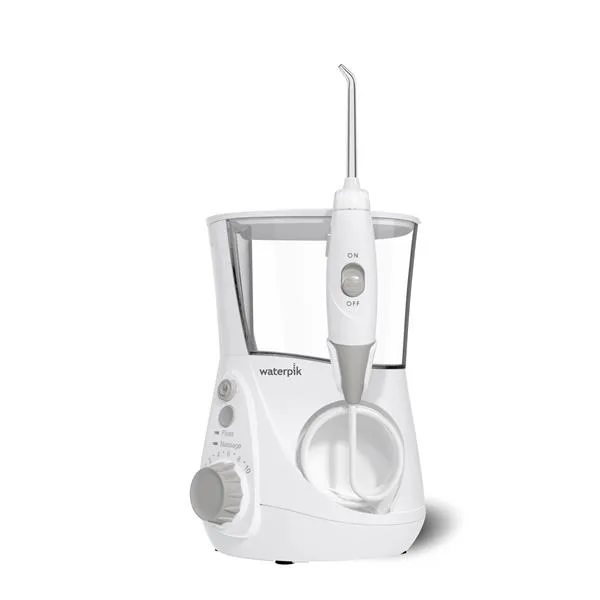
- Waterpik Aquarius Water Flosser (WP-660) - Buy. The safe default: a big tank, ten pressure settings and 90-plus seconds of flossing without a refill.
- Philips Sonicare Cordless Power Flosser 3000 (HX3826) - Buy. The cordless one to get: the strongest yet gentlest stream reviewers tested, in a compact USB-charged body.
- Waterpik Cordless Advanced 2.0 (WP-580) - It depends. Comfortable, waterproof and shower-safe, but the small tank cuts you off fast.
- Waterpik Sonic-Fusion 2.0 Professional (SF-04) - Skip. A brush-and-flosser-in-one that costs more and does neither job better than buying the two separately.
The verdict in 30 seconds
What mattered most
- Type
- Flossing time per fill
- Pressure settings
- Best use
- Price tier
- Our take
A water flosser only helps if you'll actually keep using it, so we looked past marketing claims at what reviewers and independent testing found on pressure, tank runtime and day-to-day fuss. Most people are choosing between a countertop unit that lives by the sink and a cordless one you can travel with. Below are three flossers worth your money for different needs, plus one popular splurge we think you should walk past.
The safe default: a big tank, ten pressure settings and 90-plus seconds of flossing without a refill.
Best for: Anyone flossing at home who wants the least-fuss, most-comfortable daily driver.
- Large reservoir handles a full mouth on one fill
- Ten pressure levels plus a massage mode suit sensitive gums
- Reviewers consistently rate it the easiest to live with long-term
- Countertop footprint takes real bathroom space
- Not portable, and the cord tethers you to an outlet
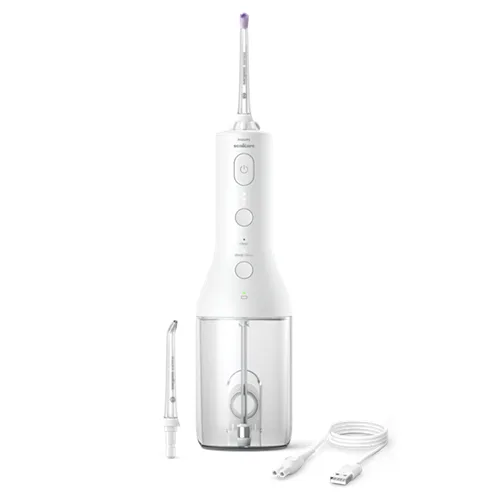
The cordless one to get: the strongest yet gentlest stream reviewers tested, in a compact USB-charged body.
Best for: Small bathrooms and frequent travelers who won't compromise on cleaning power.
- Rated the best-performing cordless in independent testing
- X-shaped stream covers more surface with less effort
- USB-A charging cable and a 40-day battery rating are travel-friendly
- 250ml tank barely covers a 60-second session before refilling
- Only three intensity settings versus a countertop's ten
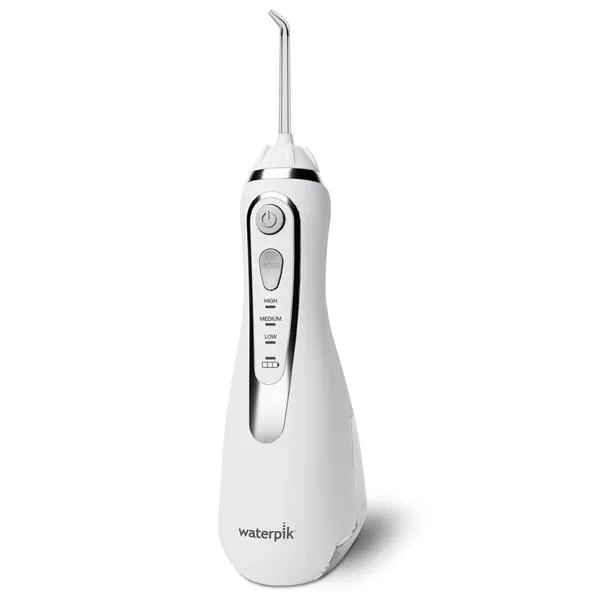
Comfortable, waterproof and shower-safe, but the small tank cuts you off fast.
Best for: Travel and shower use, or tight sinks where a countertop unit won't fit.
- One of the nicest cordless bodies to hold, with a rotating tip
- Waterproof enough to use in the shower
- Four-hour magnetic charging and a travel bag included
- About 45 seconds of runtime on high, roughly half a countertop's
- Costs about the same as more capable options
- Frequent refills get old for everyday use
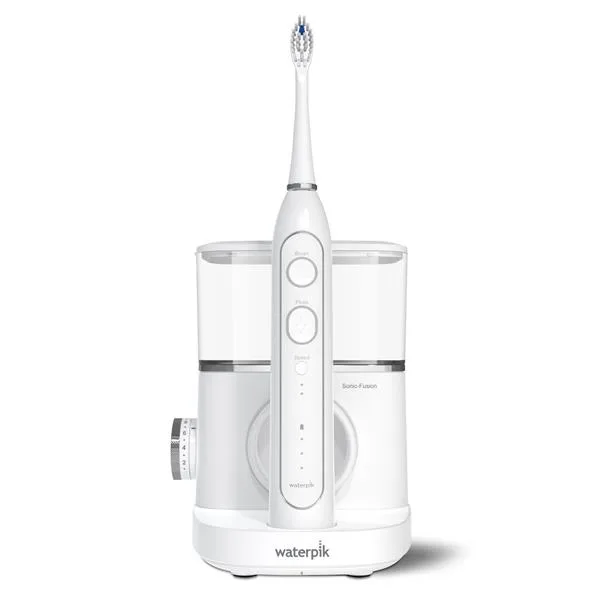
A brush-and-flosser-in-one that costs more and does neither job better than buying the two separately.
Best for: Only counter-space minimalists who value one gadget over value and long-term durability.
- Convenient all-in-one for a clutter-free counter
- ADA accepted, with brushing and flossing on one handle
- Replacement brush heads are pricey, adding up over time
- Reviewers report buttons failing within a year on some units
- You get better results buying a good toothbrush and flosser separately for less
| Criteria | Aquarius Water Flosser (WP-660) Top pick | Sonicare Cordless Power Flosser 3000 (HX3826) | Cordless Advanced 2.0 (WP-580) | Sonic-Fusion 2.0 Professional (SF-04) |
|---|---|---|---|---|
| Verdict | Buy it | Buy it | It depends | Skip it |
| Best for | Anyone flossing at home who wants the least-fuss, most-comfortable daily driver. | Small bathrooms and frequent travelers who won't compromise on cleaning power. | Travel and shower use, or tight sinks where a countertop unit won't fit. | Only counter-space minimalists who value one gadget over value and long-term durability. |
| Price tier | $$ · mid-range | $$ · mid-range | $$ · mid-range | $$$ · premium |
| Type | Countertop | Cordless | Cordless (portable) | Countertop combo |
| Flossing time per fill | 90+ seconds | ~60 seconds | ~45 seconds | 60+ seconds |
| Pressure settings | 10 levels | 3 levels | 3 levels | 10 settings + 2 brush speeds |
| Best use | Daily home flossing | Travel and small baths | Travel and shower | One-gadget counter |
| Price tier | $$ · mid-range | $$ · mid-range | $$ · mid-range | $$$ · premium |
| Our take | Best overall | Best cordless | Fine, but short runtime | Overpriced combo |
Which one is right for you?
- Anyone flossing at home who wants the least-fuss, most-comfortable daily driver. Buy it Waterpik Aquarius Water Flosser (WP-660)
- Small bathrooms and frequent travelers who won't compromise on cleaning power. Buy it Philips Sonicare Cordless Power Flosser 3000 (HX3826)
- Travel and shower use, or tight sinks where a countertop unit won't fit. It depends Waterpik Cordless Advanced 2.0 (WP-580)
- Only counter-space minimalists who value one gadget over value and long-term durability. Skip it Waterpik Sonic-Fusion 2.0 Professional (SF-04)
How we judged the field
We focused on what makes a water flosser worth keeping on the counter: effective plaque and debris removal, a usable pressure range you can actually dial to your gums, reservoir capacity that gets you through a full mouth without refilling, and long-term reliability, since leaks and pump failure are the top reasons these end up in a drawer. We set aside marketing around pressure numbers and mode counts, which say little about daily use. RBE does not lab-test; we synthesize independent expert assessments with long-run owner reports on durability. Our pick is the Waterpik Aquarius Water Flosser (WP-660), a countertop unit with a large reservoir and fine pressure control. The Philips Sonicare Cordless Power Flosser 3000 (HX3826) is the runner-up for those who need cordless.
Waterpik Aquarius Water Flosser (WP-660)
Buy itThe countertop standard, and for good reason. It offers ten pressure settings (Waterpik publishes no PSI range for it), so you can start gentle on sensitive gums and work up, plus two modes: a steady Floss mode and a pulsing Massage mode for gum stimulation. The removable 22-ounce reservoir runs about 90 seconds at full pressure, enough to cover the whole mouth without a mid-session refill, and it lifts off for top-rack dishwasher cleaning.
Owners and independent reviewers consistently credit its plaque and debris removal, and it carries the ADA Seal of Acceptance. Pressure control is the feature people appreciate most day to day.
The common complaints are real: it is loud at higher settings by wide owner consensus (Waterpik publishes no noise figure), and like all reservoir flossers it can grow mold in the tubing if you do not run it dry and air it out. A minority of owners report leakage over time.
Right buyer: anyone with bathroom counter space who wants the most thorough, tunable clean. Wrong buyer: a traveler or someone who needs a quiet, compact unit.
Philips Sonicare Cordless Power Flosser 3000 (HX3826)
Buy itThe cordless choice, and the pick if counter space or travel rules out a plug-in unit. Its signature is the Quad Stream nozzle, which fires water in four directions at once so you cover more of each tooth and gumline without aiming precisely. Three pressure levels and two flossing modes handle sensitivity, Philips rates the battery at 40 days of one-minute sessions, and the 250ml tank covers a 60-second Clean session or up to 90 seconds in Deep Clean mode. Philips publishes no waterproof rating, so treat shower use as unsupported.
Owners praise the battery life and the forgiving Quad Stream coverage. It is easier to be thorough with than a single-jet cordless.
The trade-offs follow the cordless format. The onboard reservoir is small, so a full clean means refilling partway through, and the built-in pause after 15 seconds resumes so quickly that water can spray before you reposition. The soft Quad tip is hard to feel against the teeth, the charging cable is USB-A on one end and a proprietary small plug on the other, and a subset of owners report the pump faltering after several months.
Right buyer: someone who wants cordless, travel-friendly flossing. Wrong buyer: anyone who dislikes mid-session refills or wants maximum reliability.
Waterpik Cordless Advanced 2.0 (WP-580)
It dependsThis is the compromise unit, and whether it suits you hinges on how you will use it. It is a cordless, rechargeable flosser with three pressure settings, a slim ergonomic handle, and a waterproof body for shower use, which makes it a tidy fit for small bathrooms, travel, and anyone who cannot run a corded unit.
The ergonomics and portability are what owners like: it is easy to hold and move around the mouth, and it packs down for trips.
The limits are the ones inherent to small cordless flossers. The onboard reservoir holds only around seven ounces, so a thorough clean needs at least one refill, and battery life between charges leaves some owners recharging more often than they would like. More concerning, a number report the nozzle popping out mid-use or water leaking from the base of the handle.
Right buyer: a traveler or small-bathroom user who accepts refills for portability. Wrong buyer: someone who wants one reliable daily driver, who is better served by the corded WP-660 or, for cordless, the Philips.
Waterpik Sonic-Fusion 2.0 Professional (SF-04)
Skip itThe idea is appealing: a single handle that is both a sonic electric toothbrush and a water flosser, with a brush head that has a hollow tip the water jets through, so you brush and floss in one pass and save counter space. Waterpik gives it ten pressure settings, high and low brush speeds, three modes (brush, floss, or both), a 60-plus-second reservoir, and the ADA Seal. For a cramped bathroom, combining two steps into one tool has real draw.
The execution is where it falls down. Leaking is the recurring theme in owner reports: the tank seal can fail and water escapes where the water line meets the handle, leaving puddles on the counter. Others describe the pump slowing or quitting over time, so the flossing side stops working while the brush continues. Because the two functions share one body, a single failure can take out both tools at once, and replacement brush heads are an ongoing cost. The original Sonic-Fusion (SF-01 and SF-02) was also recalled in 2018 because the base could overheat, which does little to build confidence.
Right buyer: very few, mainly those set on an all-in-one who will accept the reliability risk. Wrong buyer: most people, who get more dependable results from a separate brush and a Waterpik Aquarius Water Flosser (WP-660).
Sources
Specs in this review come from these pages.
- Waterpik Aquarius WP-660 product page (waterpik.com)
- Philips Sonicare Cordless Power Flosser 3000 HX3826/21 product page (usa.philips.com)
- Philips Cordless Power Flosser 3000 user manual (15-second pause, USB-A charging cable) (documents.philips.com)
- Waterpik Cordless Advanced 2.0 WP-580 product page (waterpik.com)
- Waterpik Sonic-Fusion 2.0 Professional SF-04 product page (waterpik.com)
- FDA: Water Pik recalls Sonic-Fusion flossing toothbrush (SF-01, SF-02), 2018 (fda.gov)
Waterpik Aquarius Water Flosser (WP-660) vs Philips Sonicare Cordless Power Flosser 3000 (HX3826): which should you buy?
This is really countertop versus cordless. The Waterpik Aquarius Water Flosser (WP-660) is the more thorough daily tool: its large 22-ounce reservoir clears a full mouth without refilling, and ten pressure settings give finer control than the Philips’s three. The cost is a corded, counter-hogging unit that is loud and stays put.
The Philips Sonicare Cordless Power Flosser 3000 (HX3826) trades that reservoir capacity for freedom. Its Quad Stream nozzle covers ground quickly, and the 40-day battery rating suits travel, but the small tank means refilling partway through most sessions.
Pick the Waterpik if you have counter space and want the most complete, adjustable clean at home. Pick the Philips if you value cordless convenience or travel more than reservoir size and pressure granularity.
What to look for
Start with corded versus cordless, because it dictates the biggest trade-off. Countertop units hold far more water, so you clean the whole mouth in one pass and get a wider pressure range; the price is bulk, noise, and a plug. Cordless units win on portability and shower use but carry small reservoirs that force mid-session refills. Match the format to your bathroom and routine, not to the spec sheet.
If your gums are sensitive, prioritize a wide pressure range you can start low and build up; a unit with three fixed levels gives less room than one with ten. Look for the ADA Seal of Acceptance as a baseline of proven effectiveness.
Reliability should weigh heavily. Leaks and pump failure are the most common long-term complaints across the category, so read owner reports on durability, and be wary of all-in-one designs where one fault disables both tools. Whatever you choose, run it dry after use and air the reservoir to hold off mold, which builds up in any water flosser left damp.
Our final take
The Waterpik Aquarius Water Flosser (WP-660) is the pick for most bathrooms, with a large reservoir, ten pressure settings, and a proven cleaning record, so long as you can live with the noise and counter footprint. The Philips Sonicare Cordless Power Flosser 3000 (HX3826) is the runner-up for cordless and travel use. The Cordless Advanced 2.0 (WP-580) suits travelers who accept refills. Skip the Sonic-Fusion 2.0 Professional (SF-04): combining brush and flosser into one leak-prone handle means a single failure costs you both tools.
Questions, answered
Is a cordless or countertop water flosser better?
Countertop units like the WP-660 hold more water and offer wider pressure control, so they clean more thoroughly in one pass. Cordless models suit small bathrooms, travel, and shower use but need refilling mid-session. Choose based on your space and routine rather than features alone.
How do I stop mold in a water flosser?
Empty the reservoir and run the unit dry after each use, then leave the tank off to air out. Mold builds up in any flosser left damp, including the WP-660, and manuals rarely warn about it, so drying is the main prevention.
Why skip the Sonic-Fusion 2.0 Professional?
Combining a toothbrush and water flosser in one handle sounds efficient, but owners frequently report leaks at the tank seal and waterline, plus pump failures over time. Because both functions share one body, a single fault disables both tools, unlike separate devices you can replace individually.
Does higher pressure clean better?
Not necessarily, and it can irritate gums. Start at the lowest setting and increase only to comfort; effective flossing comes from consistent coverage along the gumline, not maximum force. A wide pressure range, like the WP-660's ten settings, matters more than a high top number.
Deciding between the top two? See our head-to-head: Waterpik Aquarius Water Flosser (WP-660) vs Philips Sonicare Cordless Power Flosser 3000 (HX3826).
More Beauty & Grooming reviews
 The Best Body Groomers: 4 Compared (and One to Skip)
  The Best At-Home Microdermabrasion Devices: 4 Compared (and One to Skip)
  The Best Beard Oils: 4 Compared (and One to Skip)
  The Best Beard Trimmers: 4 Compared (and One to Skip)
  The Best Curling Irons: 4 Compared (and One to Skip)
  The Best Dermaplaning Tools: 4 Compared (and One to Skip)