

Health & Wellness
The Best Mid-Range HEPA Air Purifiers for Allergies
We compared three allergy favorites on their makers' CADR and room-size ratings. The decade-old Coway still wins - but the answer depends on whether you want an app.
The short version
The Coway Airmega AP-1512HH Mighty is our pick: it clears pollen and dust quickly, runs near-silent on low, and needs no app or account. The Levoit Core 400S is the runner-up, worth it when you want a live PM2.5 readout and scheduling. Skip the Molekule Air Mini, its particulate cleaning trails far cheaper HEPA units despite the premium. Best for allergy sufferers who want dependable, low-fuss particulate removal in a bedroom or medium living room.
Our picks at a glance
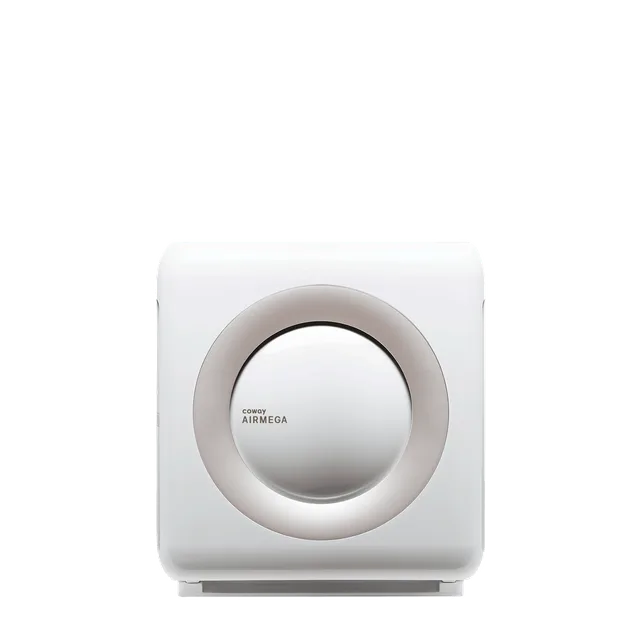
- Coway Airmega AP-1512HH Mighty - Buy. The decade-long top pick that still posts strong test numbers at a fair price.
- Levoit Core 400S - Buy. The smart pick: laser air-quality sensor, real-time PM2.5, and app scheduling.
- Winix 5500-2 - It depends. A longtime budget allergy champ with a great washable-filter design - but Winix has dropped it from its US lineup.
- Molekule Air Mini - Skip. Slick marketing and a premium price, but it's out-cleaned by budget HEPA units.
The verdict in 30 seconds
What mattered most
- Smoke CADR
- Rated room coverage
- Ionizer
- Noise (low / high)
- Smart app / PM2.5
- Ongoing filter cost
For pollen, dust, and pet dander, the only spec that really matters is enough clean-air delivery (CADR) to cycle your room's air several times an hour through a genuine HEPA filter. We looked at manufacturer CADR and room-size ratings plus owner reports to separate three popular budget-to-mid-range units. All three clear allergens; the decision comes down to app features, running cost, and - for one of them - whether you can still buy it.
The decade-long top pick that still posts strong test numbers at a fair price.
Best for: Anyone who wants the proven, low-maintenance pick and doesn't care about app control.
- True HEPA plus washable pre-filter and carbon deodorization
- Among the cheapest replacement filters to run year to year
- Rated for 361 sq ft at 4.8 air changes an hour (smoke CADR 233)
- Effective auto mode with air-quality sensor and a carry handle
- More power-hungry than similar performers, so a higher yearly energy bill
- No app or PM2.5 readout
- Rated only to ~361 sq ft
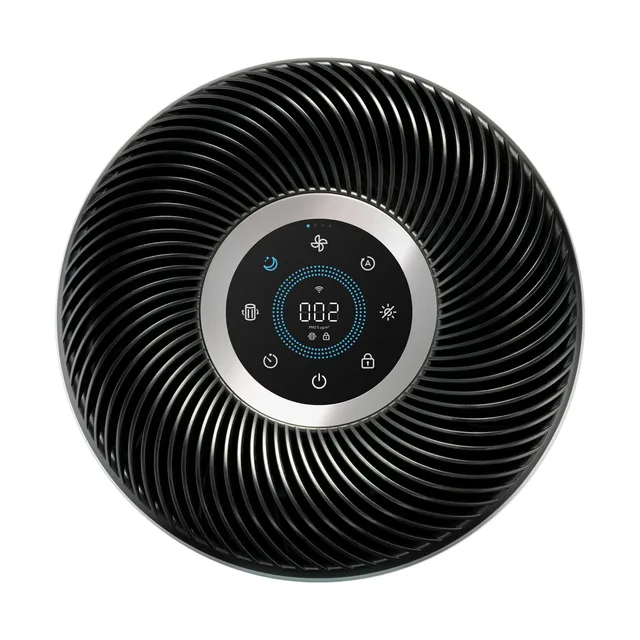
The smart pick: laser air-quality sensor, real-time PM2.5, and app scheduling.
Best for: People who want data, automation, and app control in a medium-to-large room.
- True HEPA with a front PM2.5 readout; the current 400S-P is rated for 358 sq ft at 4.8 air changes
- VeSync app: real-time PM2.5, auto mode, scheduling, filter tracking
- Quiet on low speeds (22 dB on the 400S-P's lowest setting)
- No ozone-producing ionizer
- Higher long-term filter cost than the Coway's
- Levoit has replaced it with the Core 400S-P, so the original 400S is sell-through stock
- App/account requirement is a mild annoyance for a simple appliance
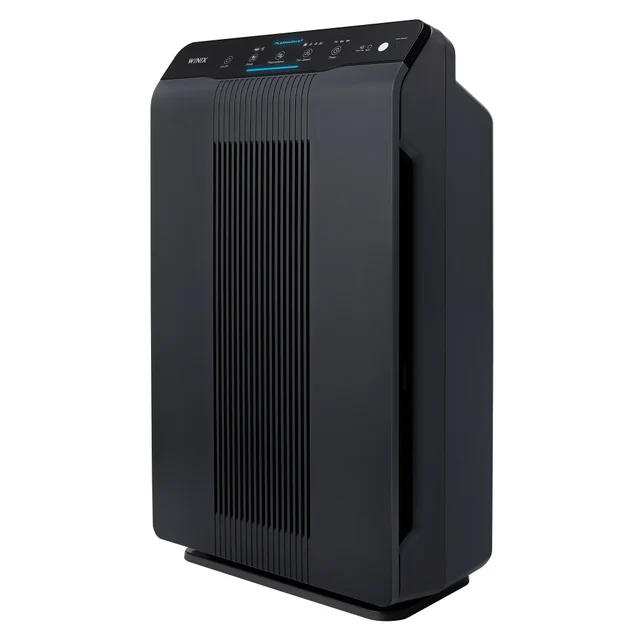
A longtime budget allergy champ with a great washable-filter design - but Winix has dropped it from its US lineup.
Best for: Bargain hunters who find remaining stock and want a washable-filter unit.
- AHAM-verified for 370 sq ft rooms at a budget price
- Washable pre-filter and carbon filter cut ongoing costs
- Responsive auto mode with air-quality sensor
- PlasmaWave ionizer can be switched off with a dedicated button
- Discontinued in the US/Canada in 2025 and removed from Winix's US site - availability is hit-or-miss
- Winix publishes no CADR or noise figures for it on its current pages
- Weaker odor/VOC removal than pelleted-carbon rivals
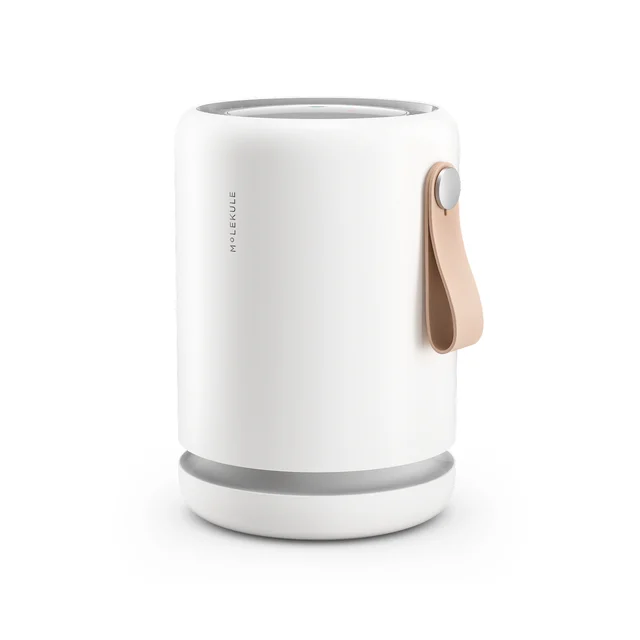
Slick marketing and a premium price, but it's out-cleaned by budget HEPA units.
Best for: Nobody, really - for allergy particulates, far cheaper HEPA units clear more air.
- FDA-cleared PECO tech targets some VOCs and odors
- Compact and portable design
- No published CADR; Molekule rates it only by room size (250 sq ft)
- Loud at top speed (62 dB by Molekule's own figure)
- Expensive filters on top of the premium purchase price
- The original Air Mini had no particle sensor; the current Mini+ adds PM2.5 sensing but is listed as unavailable on Molekule's store
| Criteria | Coway Airmega AP-1512HH Mighty Top pick | Levoit Core 400S | Winix 5500-2 | Molekule Air Mini |
|---|---|---|---|---|
| Verdict | Buy it | Buy it | It depends | Skip it |
| Best for | Anyone who wants the proven, low-maintenance pick and doesn't care about app control. | People who want data, automation, and app control in a medium-to-large room. | Bargain hunters who find remaining stock and want a washable-filter unit. | Nobody, really - for allergy particulates, far cheaper HEPA units clear more air. |
| Price tier | $$ · mid-range | $$ · mid-range | $ · budget | $$$ · premium |
| Smoke CADR | 233 CFM | 231 CFM (400S-P) | Not published (370 sq ft AHAM verified) | Not published |
| Rated room coverage | 361 sq ft | 358 sq ft (400S-P) | 370 sq ft | 250 sq ft |
| Ionizer | Bipolar ionizer, switchable | None | PlasmaWave, defaults on, switchable | None (PECO plus HEPA) |
| Noise (low / high) | 24 / 53 dB | 22 / 52 dB (400S-P) | Not published | 39 / 62 dB |
| Smart app / PM2.5 | No | Yes (real-time) | No | App; PM2.5 sensor (Mini+ only) |
| Ongoing filter cost | Low | Higher | Low (washable pre + carbon) | Highest (costly proprietary filters) |
Which one is right for you?
- Anyone who wants the proven, low-maintenance pick and doesn't care about app control. Buy it Coway Airmega AP-1512HH Mighty
- People who want data, automation, and app control in a medium-to-large room. Buy it Levoit Core 400S
- Bargain hunters who find remaining stock and want a washable-filter unit. It depends Winix 5500-2
- Nobody, really - for allergy particulates, far cheaper HEPA units clear more air. Skip it Molekule Air Mini
How we judged the field
For allergy relief in a bedroom or medium living room, particulate removal matters more than gadgetry, so we weighed clean-air delivery relative to room size, filter design and what replacements actually cost over a year, noise on sleep and low speeds, and how sensibly the sensor and auto mode behave. We discounted marketing around ionizers, “smart” labels, and proprietary reaction chambers unless the underlying particulate performance held up. To be clear about method: we synthesize independent expert testing and verified owner reports rather than running our own lab. On that basis the Coway Airmega AP-1512HH Mighty is our pick for consistent particulate cleaning with minimal fuss, and the Levoit Core 400S is the runner-up when you want an on-unit PM2.5 number and app scheduling.
Coway Airmega AP-1512HH Mighty
Buy itA compact four-stage purifier rated 246, 240 and 233 CADR for dust, pollen and smoke, sized for rooms up to 361 square feet at 4.8 air changes an hour. Its stack runs a washable pre-filter, an activated-carbon deodorization layer, and a True HEPA filter, with an optional bipolar ionizer you can leave off. Two features stand out: the particle sensor that drives Auto mode alongside a color air-quality ring, and Eco mode, which stops the fan after 30 minutes of clean air. What owners and testers like more is how quickly it clears a room and how quiet stage one is, about 24 decibels, making it easy to sleep beside. What they like less: the air-quality light sits on top where you have to stand over it to read, there is no PM2.5 number or app, and the carbon layer is thin, so odor control fades and the deodorization filter wants replacing around every six months. Right buyer: an allergy sufferer wanting set-and-forget particulate cleaning. Wrong buyer: anyone who needs data readouts or heavy VOC control.
Levoit Core 400S
Buy itThe runner-up is a cylindrical True HEPA unit. Levoit has since replaced it with the Core 400S-P, which it rates at 231 CFM CADR and 358 square feet at 4.8 air changes an hour with a 22 to 52 decibel range, so the original 400S is sell-through stock. Its three-stage cartridge combines a pre-filter, True HEPA media, and an activated-carbon layer. The two features that separate it: a front PM2.5 particle readout mirrored in the VeSync app, and genuine smart control, meaning scheduling, air-quality history, auto mode, and Alexa or Google voice. Reviewers and owners like the real-time PM2.5 number and the quiet sleep setting, which together make it easy to trust the auto behavior. What draws complaints: the VeSync app requires an account and cloud sign-in that privacy-minded buyers dislike, the tall cylindrical body needs floor or wide-shelf space rather than a nightstand, and the slim carbon layer handles everyday cooking smells but not persistent smoke or strong VOCs. Right buyer: someone who wants app scheduling and a live pollution number in a larger room. Wrong buyer: anyone avoiding accounts or short on floor space.
Winix 5500-2
It dependsA value-focused True HEPA unit AHAM-verified for 370-square-foot rooms (Winix no longer publishes a CADR for it), notable for two things: a washable AOC activated-carbon filter you rinse and reuse instead of replacing, which lowers running cost, and PlasmaWave, an optional bipolar ionization stage you can switch off. A smart sensor and Auto mode adjust the fan. Owners like the low upkeep from the reusable carbon layer and the strong particulate cleaning for the money. What holds it back from a clear buy: PlasmaWave defaults on and generates trace ozone (it can be disabled with its own button, but ozone-sensitive users must remember to turn it off), the front indicator lights are bright enough to bother some sleepers, and there is no PM2.5 readout or app. Winix has also removed it from its US site in favor of the newer 5510, so stock and long-term filter availability are worth checking. Right buyer: a value seeker who will disable PlasmaWave and does not need an app. Wrong buyer: anyone wanting ionization off by default or live data.
Molekule Air Mini
Skip itA small, design-forward unit built around Molekule’s PECO-HEPA Tri-Power filter, which pairs a HEPA layer with the company’s photoelectrochemical oxidation (PECO) stage aimed at breaking down VOCs, rated for about 250 square feet. In its favor, the current filter does add real HEPA media, the fabric-handled cabinet is truly portable, and some owners report it helps with bedroom odors. But Molekule publishes no CADR, owner and expert reports place its particulate clean-air delivery below far cheaper conventional HEPA purifiers, it runs at a Molekule-rated 62 decibels on high, and the proprietary filter is costly and replaced every six months. Molekule now sells only the Air Mini+ (which adds a PM2.5 sensor and auto mode), and at the time of this update its store lists that model as unavailable. For allergy sufferers judging particulate removal per dollar, that combination is hard to justify. Right buyer: a narrow one, someone wanting a compact, attractive bedroom unit primarily for light odor control and willing to pay a premium for the design. Wrong buyer: most allergy shoppers, who will clear more pollen and dust with either of our top picks.
Sources
Specs in this review come from these pages.
Coway Airmega AP-1512HH Mighty vs Levoit Core 400S: which should you buy?
Both clean allergen particulate reliably in a bedroom or medium living room, so the decision is about feedback and footprint, not filtration quality. The Coway wins on quiet set-and-forget operation: it clears a room quickly, runs near-silent on stage one, and asks nothing of you beyond occasional filter swaps, with no account or app in the loop. The Levoit wins when you want to see what is happening. Its front PM2.5 number and VeSync history let you confirm the air actually improved, and schedule quiet hours. Trade-offs mirror that split: the Coway’s air-quality light is awkward to read and gives no data, while the Levoit needs a cloud account and floor space. Choose the Coway for simplicity beside a bed; choose the Levoit for a larger room where the live readout and scheduling earn their keep.
What to look for
Start with room size and match it to clean-air delivery, not just a manufacturer’s square-footage claim. A CADR in the 230-to-260 range suits most bedrooms and medium living rooms at a few air changes per hour; larger open-plan spaces need more capacity or a second unit. For allergies specifically, prioritize True HEPA particulate performance over ionizers and reaction-chamber marketing, which add cost and, in some cases, trace ozone without improving pollen and dust capture. Next, think about running cost and upkeep: sealed HEPA plus carbon cartridges are replaced on a schedule, while a washable carbon pre-filter cuts recurring spend. Decide whether you want feedback: an on-unit PM2.5 readout and app scheduling help you trust auto mode, but require an account and add nothing to filtration. Check noise on the lowest and sleep settings if the unit lives in a bedroom, since that is the speed it will run most. Finally, weigh placement, tall cylinders need floor space, while boxier units tuck against a wall. Buy for the pollutant and room you actually have.
Our final take
For allergy relief in a bedroom or medium room, the Coway Airmega AP-1512HH Mighty is the safe, quiet default: fast particulate cleaning, low noise, and nothing to manage. Step up to the Levoit Core 400S if you want a live PM2.5 number and app scheduling. The Winix 5500-2 is a strong-value alternative for anyone who will disable its ionizer and skip the app. The Molekule Air Mini is easy to admire and hard to recommend for particulate allergy control at its price.
Questions, answered
Do I need an ionizer or PECO to control allergies?
No. For pollen, dust, and dander, sealed True HEPA does the work. Ionizers and reaction chambers target odors and VOCs, add cost, and can produce trace ozone. If allergies are your goal, prioritize HEPA particulate performance and treat ionization as an optional extra you can leave off.
How often will I replace filters, and does it matter?
Expect True HEPA replacements roughly yearly and carbon layers every six to eight months on the Coway and Levoit, sooner with heavy use. The Winix's washable carbon filter lowers that cost. Neglected filters lose capture efficiency, so budget for replacements before buying any sealed-cartridge model.
Is the Coway or Levoit quieter for a bedroom?
Coway rates the Mighty at 24 decibels on its lowest setting and Levoit rates the Core 400S-P at 22, both quiet enough to sleep beside. The practical difference is feedback: the Levoit's PM2.5 display and app let you confirm and schedule quiet hours, while the Coway simply runs. For pure silence and simplicity, either works well.
Why is the Molekule Air Mini a skip for allergies?
Molekule publishes no CADR, only a 250-square-foot room rating, and owner and expert reports place its particulate clearing below much cheaper conventional HEPA purifiers. It is compact and helps with light odors, but for pollen and dust per dollar, our top picks clear far more air.
Deciding between the top two? See our head-to-head: Coway Airmega AP-1512HH Mighty vs Levoit Core 400S.
More Health & Wellness reviews
 The Best Hot Water Bottles: 4 Compared (and One to Skip)
  Best Humidifiers: Evaporative vs Ultrasonic vs Warm Mist, Compared
  The Best Inversion Tables: 4 Compared (and One to Skip)
  The Best Light Therapy Lamps: 4 Compared (and One to Skip)
  The Best Massage Chairs for Home: 4 Compared (and One to Skip)
  Best Massage Guns: Percussion Power vs Marketing Hype