Explained
Water Filter Pitchers, Explained
After reading this, you'll know which contaminants a pitcher can and can't remove, how to read a certification without being fooled, and why filter life matters more than the price on the box.
In this guide
A water filter pitcher looks like a simple thing: pour water in the top, drink cleaner water from the bottom. But two pitchers that look identical can remove wildly different things, last for wildly different amounts of time, and cost wildly different amounts to keep running. The trap most first-time buyers fall into is judging by capacity and price while ignoring the two specs that actually decide the experience: what the filter is certified to reduce, and how long each cartridge lasts.
The 30-second version
- The filter is the product. the pitcher is just a holder, so judge a model by what its cartridge is certified to remove and how long it lasts, not by the plastic body.
- Certification tells you what's tested, not what's marketed. look for independent certification naming the specific contaminant you care about, especially lead, rather than vague phrases like 'reduces impurities.'
- Filter life is the hidden price tag. a cheap cartridge that needs changing every two months can cost far more per year than a pricier one rated for six.
- More aggressive filtering means slower pours and flatter taste. filters that strip nearly everything, like ion-exchange resin, trade away speed and the minerals that give water body.
- Match the filter to your water. treated city water, well water, and high-dissolved-solids water each reward a different type of filter, so start with what's actually in your tap.
The products this guide is about
Our verdict on each, with the full reasoning on the companion review.
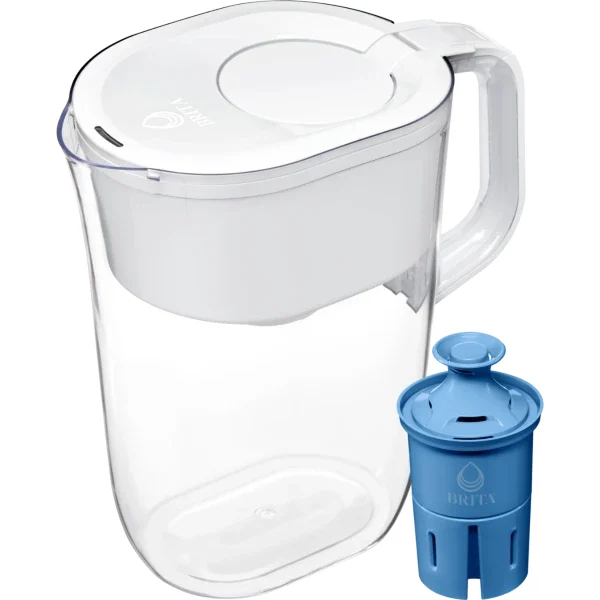
- Buy Brita Tahoe 10-Cup Water Filter Pitcher (with Elite Filter) The sensible default: strong lead reduction, a fast pour, a long-life filter, and cartridges you can buy anywhere. Amazon
- Buy LifeStraw Home 7-Cup Water Filter Pitcher The widest contaminant net of the group, and the only one that also claims bacteria and parasite reduction. Amazon
- It depends ZeroWater 10-Cup Ready-Pour 5-Stage Water Filter Pitcher Unmatched at driving dissolved solids to zero, but slow, thirsty for filters, and prone to flat water as the cartridge tires. Amazon
- Skip PUR PLUS 11-Cup Water Filter Pitcher (PPT111W) Good filtration claims on paper, undermined by widespread clogging and reliability complaints. Amazon
What actually matters
- Certified contaminant reduction is the whole point: a filter is only worth trusting for lead, PFAS, or metals if it has been independently certified to reduce that specific thing under standardized testing, not just claimed to on the box.
- Filter life (rated gallons or months) drives your true cost and hassle. A long-life cartridge means fewer trips to the store and a lower cost per gallon, which is what separates a cheap pitcher from a cheap-to-run one.
- Flow rate decides whether the pitcher fits your patience. Denser, more aggressive filters remove more but pour slowly; a fast gravity filter refills a glass without a wait.
- Taste and mineral retention determine whether you actually keep using it. Filters that leave beneficial minerals in tend to taste fuller; filters that strip everything can taste flat or slightly acidic.
- Capacity and fridge fit matter for daily life. A big pitcher means fewer refills, but only if it actually fits your fridge door shelf.
- Reliability in real use is what specs never show. Clogging, slow flow, and particles in the water are common failure modes that only surface in owner reports, not on the label.
The specs, in plain English
Green flags vs red flags
Green flags
- Independent certification that names the specific contaminants you care about, especially lead and, if relevant, PFAS or microplastics
- A long filter life rating (measured in months and gallons) that keeps cost per gallon low
- Replacement cartridges that are widely stocked and easy to buy on a normal shopping trip
- Consistent owner reports of steady flow and clean taste over the life of the filter, not just when brand-new
- A capacity and shape confirmed to fit a standard fridge door shelf
Red flags
- Vague marketing language like 'reduces impurities' with no named contaminant or independent certification
- A short rated filter life, which quietly raises your yearly cost even if the pitcher is cheap
- Repeated owner complaints about clogging, dramatic slowdowns, or particles appearing in the filtered water
- A proprietary cartridge that's hard to find or only sold by one seller
- Claims that sound too broad to be true, like removing 'everything,' with no testing to back specific removals
Who's who: the brands
- Brita - The default name in filter pitchers; known for widely available, inexpensive cartridges and, in its Elite line, certified lead reduction with a long filter life.
- LifeStraw - Built its reputation on outdoor and emergency filters; its home pitchers pair a membrane microfilter with carbon and ion exchange for an unusually broad contaminant net.
- ZeroWater - Specialist in aggressive ion-exchange filtration that drives dissolved solids toward zero, and it includes a handheld meter so you can see when the filter is spent.
- PUR - A long-standing budget brand with certified lead-and-chlorine filters and large-capacity pitchers, though real-world filter reliability varies.
How to read a listing without getting fooled
Start with the certification line, not the marketing headline. A trustworthy listing will say the filter is independently certified to reduce named contaminants, such as lead, chlorine, mercury, or PFAS, each of which is a separate claim; 'reduces contaminants' with nothing named is a soft phrase, not a guarantee. Next, find the filter life, usually given as gallons and months, and mentally convert it into how many cartridges you'll buy per year, because that, not the sticker price, is your real cost. Watch for claims that quietly widen: 'reduces up to 99%' of one thing does not mean it touches everything else on the page. Finally, cross-check the spec sheet against owner reports for the failure modes labels never mention, clogging, slow flow, and particles, which tell you how the pitcher behaves after month two, not on day one.
How much should you spend?
Think about running cost, not just the box price. The cheapest pitcher on the shelf is often the most expensive to own once you count how many filters it burns through in a year, so a model with a longer-life certified cartridge frequently wins on total cost even if it looks pricier upfront. Spending more genuinely buys you something in two cases: when you need a broader contaminant net, such as PFAS, microplastics, or microbe reduction, which requires a more sophisticated multi-stage filter, or when you want long-life cartridges that lower your cost per gallon. Spending more is not worth it when you're only paying for a bigger body, extra capacity, or indicator lights, since those don't clean your water any better. For most homes on treated city water, the value sweet spot is a mid-priced pitcher with a certified lead-reduction filter and a long service life; reach higher only if your water or your peace of mind calls for the wider net.
Questions, answered
Do water filter pitchers actually remove lead?
Some do, if the specific filter is independently certified for lead reduction, and the best are rated for roughly 99%. But certification describes performance under standardized lab conditions, not your particular plumbing. This is general product information, not water-safety or medical advice; if you suspect lead or another serious contaminant, have your water professionally tested and follow a qualified expert's guidance rather than relying on a pitcher alone.
How often do I really need to change the filter?
It depends entirely on the cartridge and your water. Long-life filters can run about six months or roughly 120 gallons, while short-run cartridges may need changing every two months or so. Hard water or heavy contaminant loads shorten real-world life, so treat the rated number as a best case and change sooner if flow slows or taste changes.
Why does my filtered water taste flat?
Usually because the filter strips minerals along with contaminants. Aggressive ion-exchange filters that drive dissolved solids toward zero remove the minerals that give water its body, which can leave it tasting flat or slightly acidic. Carbon-and-membrane designs tend to keep more of those minerals. A sour or off note can also mean the filter is exhausted and due for replacement.
What's the difference between a carbon filter and an ion-exchange filter?
Carbon filters mainly improve taste and smell by grabbing chlorine and many organic chemicals, and they're generally faster. Ion-exchange filters go further, swapping out dissolved metals and minerals, so they remove more, including things carbon misses, but they pour slowly and can leave water tasting flat. Many higher-end pitchers combine both, sometimes with a membrane, to get breadth without giving up too much taste.
Will a pitcher filter remove PFAS or microplastics?
Only some will, and only if they're certified for it, so check for those contaminants by name rather than assuming. Filters built around a membrane or a multi-stage design are the ones most likely to make and back up PFAS and microplastic claims; a basic carbon-only filter may not. If these are your main concern, make certified reduction of them your first filter for choosing a model.
Is a bigger pitcher always better?
Not necessarily. A larger capacity means fewer refills, but it only helps if the pitcher actually fits your fridge door and if the filter inside is one you trust. A big body with a weak or short-lived filter isn't a better buy than a smaller pitcher with certified, long-life filtration. Decide on the filter first, then pick the largest capacity that fits your fridge and your household.
Or jump to the head-to-head: Brita Tahoe 10-Cup Water Filter Pitcher (with Elite Filter) vs LifeStraw Home 7-Cup Water Filter Pitcher.