

Home & Kitchen
The Best Water Filter Pitchers: 4 Compared (and One to Skip)
We compared four current water filter pitchers on contaminant removal, filtration speed, filter life, taste, and running cost.
The short version
We compared four current water filter pitchers on what actually matters: contaminant removal, flow speed, filter life, taste, and running cost. The Brita Tahoe with the Elite filter is the sensible default, with lead reduction, a fast pour, a long-life cartridge, and widely stocked filters. The LifeStraw Home covers the widest range, uniquely adding microbes to PFAS and microplastics, and owners like the taste, but it costs more and holds less. ZeroWater drives dissolved solids toward zero but is slow, burns through filters, and can taste flat once the resin tires, so it suits only high-TDS households that will manage it closely. The PUR PLUS looks fine on its spec sheet but is dragged down by widespread clogging and reliability complaints. Best for: most households wanting clean-tasting, lead-reduced tap water at low cost should choose the Brita, and those wanting maximum contaminant coverage should choose the LifeStraw Home.
Our picks at a glance
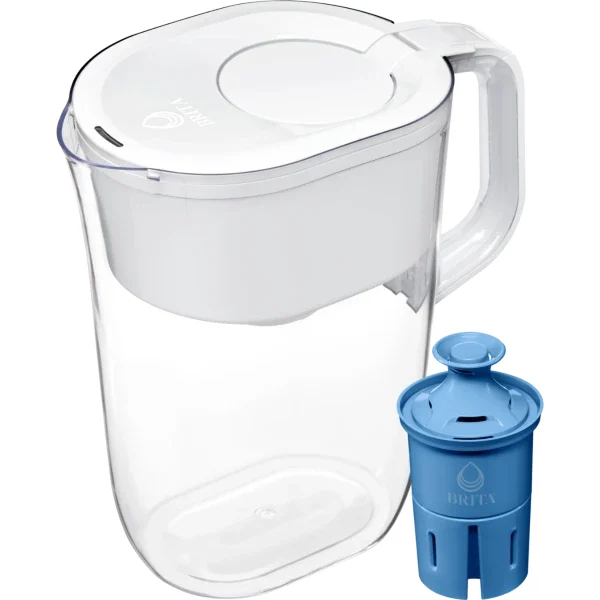
- Brita Tahoe 10-Cup Water Filter Pitcher (with Elite Filter) - Buy. The sensible default: strong lead reduction, a fast pour, a long-life filter, and cartridges you can buy anywhere.
- LifeStraw Home 7-Cup Water Filter Pitcher - Buy. The widest contaminant net of the group, and the only one that also claims bacteria and parasite reduction.
- ZeroWater 10-Cup Ready-Pour 5-Stage Water Filter Pitcher - It depends. Unmatched at driving dissolved solids to zero, but slow, thirsty for filters, and prone to flat water as the cartridge tires.
- PUR PLUS 11-Cup Water Filter Pitcher (PPT111W) - Skip. Good filtration claims on paper, undermined by widespread clogging and reliability complaints.
The verdict in 30 seconds
What mattered most
- Contaminant range
- Certified lead reduction
- Filtration speed
- Filter life
- Taste / mineral retention
- Capacity
A water filter pitcher lives or dies on the boring stuff: how much it actually removes, how fast it pours, how long the cartridge lasts, and whether the water tastes good enough that you keep using it. We synthesized independent lab testing and a large body of owner reports across four widely sold 2026 models. Two are easy recommendations, one is a specialist pick that suits some households and frustrates others, and one has a reliability problem serious enough to skip.
The sensible default: strong lead reduction, a fast pour, a long-life filter, and cartridges you can buy anywhere.
Best for: Most households that want treated municipal tap water to taste clean and reduce lead without fuss or high running costs.
- Brita says the Elite filter removes 99% of lead and reduces 30 contaminants in total, including chlorine taste and odor
- Long filter life (six months / 120 gallons per Brita) means fewer changes and a low cost per gallon
- Fast gravity flow and a 10-cup body that fits most fridge doors
- Replacement filters are inexpensive and stocked almost everywhere
- Does not target dissolved solids the way a heavy-duty ion-exchange filter does
- No microbiological (bacteria/parasite) claim, unlike a membrane-based rival
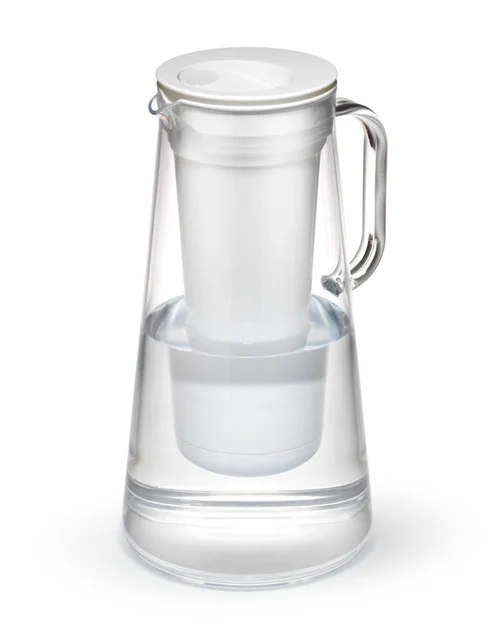
The widest contaminant net of the group, and the only one that also claims bacteria and parasite reduction.
Best for: Buyers on well water or anyone who wants the broadest possible reduction, including microbes and microplastics, and does not mind paying for it.
- Dual-stage membrane microfilter plus activated carbon and ion exchange targets an unusually broad list
- Tested by LifeStraw to reduce lead, PFAS, mercury, herbicides and pesticides, and to remove microplastics
- Owners generally praise the taste
- Also removes bacteria and parasites, a claim none of the others make
- Smaller 7-cup capacity means more frequent refills for a busy household
- Replacement filters cost more, and the multi-stage system is a bigger upfront outlay
- Flow can slow as the membrane loads, requiring occasional care
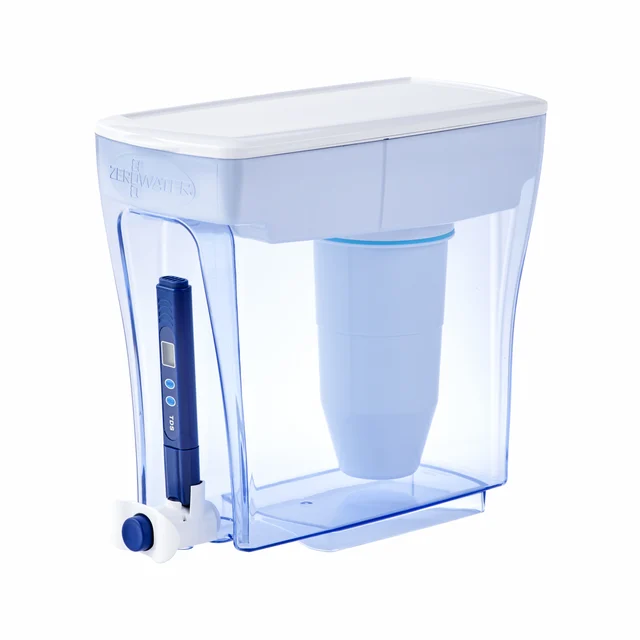
Unmatched at driving dissolved solids to zero, but slow, thirsty for filters, and prone to flat water as the cartridge tires.
Best for: People with high total-dissolved-solids tap water who prioritize maximum reduction and will watch the meter and swap filters diligently.
- Five-stage ion-exchange filter can bring measured dissolved solids to near zero, which is rare
- IAPMO-certified to reduce lead, chromium, mercury, and PFOA/PFOS
- Pairs with a handheld TDS meter so you can see when the filter is spent
- Push-to-dispense spigot makes filling a glass easy
- Noticeably slow flow rate compared with the field
- Short real-world filter life, giving one of the highest costs per gallon here
- Stripping minerals can leave a flat or slightly acidic taste, and owners report a sour or fishy note once the resin exhausts
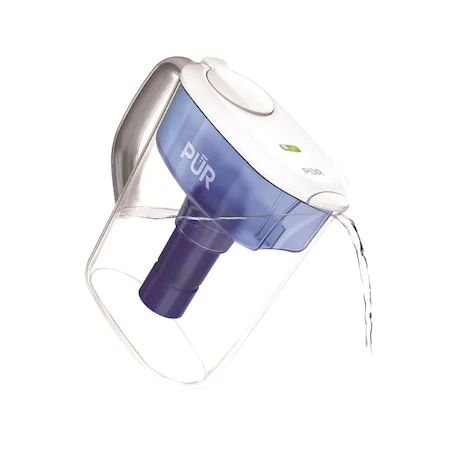
Good filtration claims on paper, undermined by widespread clogging and reliability complaints.
Best for: Hard to recommend broadly; only worth a look for buyers already committed to the PUR ecosystem who can tolerate finicky filters.
- Filter is IAPMO-certified to reduce lead and microplastics and improves taste and odor
- Large 11-cup capacity
- Filter-change light and a stay-tight lid
- Inexpensive to buy and to re-stock filters
- Cartridges are widely reported to clog, sometimes within days, slowing or stopping flow
- Owners describe black carbon particles in the water and short filter life
- Filtration slows markedly as the cartridge nears the end of its roughly 40-gallon rating
| Criteria | Brita Tahoe 10-Cup Water Filter Pitcher (with Elite Filter) Top pick Buy it Buy | LifeStraw Home 7-Cup Water Filter Pitcher Buy it Buy | ZeroWater 10-Cup Ready-Pour 5-Stage Water Filter Pitcher It depends Buy | PUR PLUS 11-Cup Water Filter Pitcher (PPT111W) Skip it Buy |
|---|---|---|---|---|
| Best for | Most households that want treated municipal tap water to taste clean and reduce lead without fuss or high running costs. | Buyers on well water or anyone who wants the broadest possible reduction, including microbes and microplastics, and does not mind paying for it. | People with high total-dissolved-solids tap water who prioritize maximum reduction and will watch the meter and swap filters diligently. | Hard to recommend broadly; only worth a look for buyers already committed to the PUR ecosystem who can tolerate finicky filters. |
| Price tier | $ · budget | $$$ · premium | $$ · mid-range | $ · budget |
| Contaminant range | Broad (lead, chlorine, metals) | Widest (adds PFAS, microplastics, microbes) | Deep on dissolved solids | Broad (lead, microplastics, chlorine) |
| Certified lead reduction | Yes (99% per Brita) | Yes (tested) | Yes (IAPMO) | Yes (IAPMO) |
| Filtration speed | Fast | Moderate | Slow | Slows as filter loads |
| Filter life | Long (~6 months) | Short carbon filter (~2 months), membrane ~1 year | Short | ~2 months |
| Taste / mineral retention | Clean taste | Generally praised | Flat, minerals stripped | Fine when filter is fresh |
| Capacity | 10 cups | 7 cups | 10 cups | 11 cups |
| Ongoing filter cost | Low | High | High per gallon | Low, but frequent |
| Price tier | $ · budget | $$$ · premium | $$ · mid-range | $ · budget |
Which one is right for you?
- Most households that want treated municipal tap water to taste clean and reduce lead without fuss or high running costs. Buy it Brita Tahoe 10-Cup Water Filter Pitcher (with Elite Filter)
- Buyers on well water or anyone who wants the broadest possible reduction, including microbes and microplastics, and does not mind paying for it. Buy it LifeStraw Home 7-Cup Water Filter Pitcher
- People with high total-dissolved-solids tap water who prioritize maximum reduction and will watch the meter and swap filters diligently. It depends ZeroWater 10-Cup Ready-Pour 5-Stage Water Filter Pitcher
- Hard to recommend broadly; only worth a look for buyers already committed to the PUR ecosystem who can tolerate finicky filters. Skip it PUR PLUS 11-Cup Water Filter Pitcher (PPT111W)
How we judged the field
We do not run our own lab. Instead we synthesize independent bench testing and a large volume of owner reports, then weight what shows up consistently across both. For water filter pitchers, five things decide whether a model earns its counter space: how broad and how certified the contaminant reduction is; how fast the pitcher actually pours; how long the filter lasts before it needs replacing; whether the treated water tastes good enough that people keep using it; and the true cost of ownership once you account for filter changes. We treat third-party certifications as evidence of what a filter targets under standardized conditions, not as a guarantee for any individual home, and we lean on owner reports to catch the real-world failure modes, such as clogging or slow flow, that spec sheets never mention.
Brita Tahoe 10-Cup Water Filter Pitcher (with Elite Filter)
Buy itThis is the pick for most people, and it earns that by being unglamorously good at the fundamentals. Brita says the Elite filter removes 99% of lead and reduces 30 contaminants in total, including chlorine taste and odor. Crucially, it lasts six months or 120 gallons, three times the 40-gallon rating of the PUR cartridge, and those replacement filters are stocked almost everywhere. Owners describe fast flow and clean-tasting water, and the 10-cup body is a common size for fridge doors. It will not chase dissolved solids the way an ion-exchange filter does, and it makes no microbiological claim, but for treated municipal water that is rarely the point.
LifeStraw Home 7-Cup Water Filter Pitcher
Buy itIf the Brita is the practical choice, the LifeStraw is the thorough one. Its dual-stage design pairs a membrane microfilter with activated carbon and ion exchange, and LifeStraw says it is tested to remove microplastics, bacteria and parasites while reducing PFAS, lead, mercury, herbicides and pesticides, an unusually wide list and a claim none of the others make. Owners generally praise the taste. The trade-offs are real: at 7 cups it holds less, the carbon and ion-exchange filter is rated for only 40 gallons (two months) alongside a membrane rated for about a year, the multi-stage filters cost more to buy and replace, and flow can slow as the membrane loads. For well water or anyone who simply wants the widest net, those are prices worth paying.
ZeroWater 10-Cup Ready-Pour 5-Stage Water Filter Pitcher
It dependsThe ZeroWater is a specialist. Its five-stage ion-exchange filter can drive measured total dissolved solids to near zero, which no other pitcher here approaches, and it is IAPMO-certified for lead, chromium, mercury, and PFOA/PFOS. A handheld TDS meter lets you watch the filter’s performance, and a push-to-dispense spigot makes filling a glass easy. But the same aggressive resin that removes so much also makes the pitcher slow to filter, strips the minerals that give water body, and leaves a flat or slightly acidic taste; owners report a sour or fishy note as the cartridge exhausts. Add a short real-world filter life and one of the highest costs per gallon in this group, and it only makes sense for households with genuinely high-TDS water who will manage it closely.
PUR PLUS 11-Cup Water Filter Pitcher (PPT111W)
Skip itOn paper the PUR PLUS competes: it is IAPMO-certified to reduce lead and microplastics, holds a generous 11 cups, and has a filter-change light and a stay-tight lid. The problem is reliability. Across owner reports, clogging is a recurring and serious complaint, sometimes within days of installing a fresh cartridge, slowing or stopping flow entirely. Others describe black carbon particles in the water and filtration that drops off well before the 40-gallon rating is reached. A pitcher you have to shake, re-seat, or babysit defeats the purpose, and that is enough to keep it off our recommended list.
Brita Tahoe (Elite) vs LifeStraw Home: which should you buy?
These are the two we would actually put on a kitchen counter, and the choice comes down to your water and your budget. The Brita wins on cost, speed, capacity, and convenience: it pours faster, holds more, should run cheaper thanks to its long-life Elite filter, and its cartridges are widely stocked. Its certified lead reduction covers the contaminant most municipal-water households worry about. The LifeStraw wins on breadth: it is the only pitcher here that covers PFAS, microplastics, and microbes together, and owners generally like the taste. If you are on treated city water and want the best value, buy the Brita. If you are on well water, are concerned about PFAS or microplastics, or simply want the most complete reduction and will accept a smaller pitcher and higher filter costs, buy the LifeStraw Home.
What to look for
- Certification for the contaminants you care about. Look for independent certification specifically for lead, and for PFAS or microplastics if those concern you, rather than vague marketing language.
- Filter life, not just filter price. A cheap cartridge that lasts two months can cost more per year than a pricier one rated for six.
- Flow rate. Aggressive filters remove more but pour slower; match the pitcher to your patience and household size.
- Taste and mineral retention. Ion-exchange filters that strip nearly everything can leave water tasting flat.
- Capacity and fridge fit. Confirm the pitcher fits your fridge door and holds enough for your household between refills.
- Reliability signals. Scan owner reports for clogging, slow flow, and particles in the water; these are the failure modes specs never disclose.
Our final take
Most people should buy the Brita Tahoe with the Elite filter. It nails the fundamentals, strong lead reduction, fast flow, a long-life filter, and widely stocked cartridges, with a low running cost. If you want the widest possible reduction, including PFAS, microplastics, and microbes, and you do not mind paying more for less capacity, the LifeStraw Home is the better tool and an easy second recommendation. Reach for the ZeroWater only if you have high-TDS water and will actively manage its slow flow and short filter life. And unless you are already tied to the ecosystem, skip the PUR PLUS: its numbers look fine, but too many owners fight clogged, short-lived filters for us to send you toward it.
Questions, answered
Do these pitchers actually remove lead?
All four are marketed for lead reduction, and Brita says its Elite filter removes 99%. That said, this is general product information and not water-safety or medical advice. Certifications describe performance under standardized test conditions, not your specific plumbing. If you suspect lead or another serious contaminant, have your water professionally tested and follow the guidance of a qualified expert rather than relying on a pitcher alone.
Why is my ZeroWater so slow, and why does the water taste flat?
Both are inherent to how it works. The five-stage ion-exchange resin is dense, so gravity flow is slow, and because it strips dissolved minerals along with contaminants the water can taste flat or slightly acidic. Owner reports note a sour or fishy note once the resin nears exhaustion; the included meter is meant to tell you to change the filter before that point.
How often will I need to replace the filter?
It varies widely. The Brita Elite is the standout at roughly six months or about 120 gallons. The PUR cartridge is rated for 40 gallons or two months, and the LifeStraw carbon and ion-exchange filter is also rated for 40 gallons or two months, though its membrane lasts about a year. Owners report the ZeroWater often taps out sooner. Frequent changes are the hidden cost that separates a cheap pitcher from a cheap-to-run one.
Which ones reduce PFAS and microplastics?
The LifeStraw Home is the clear leader here, tested to reduce PFAS and remove microplastics, bacteria and parasites, a combination none of the others match. The ZeroWater is IAPMO-certified for PFOA/PFOS and the PUR for microplastics. Favor brands with rigorous, published testing.
Which is cheapest to run over a year?
The Brita, comfortably. Its long filter life plus widely stocked cartridges should give it the lowest cost per gallon of the group. The PUR uses cheap filters but needs them often, and the ZeroWater has one of the highest costs per gallon because its filters are both pricier and short-lived. Factor filter cost, not just the sticker price of the pitcher, into your decision.
Deciding between the top two? See our head-to-head: Brita Tahoe 10-Cup Water Filter Pitcher (with Elite Filter) vs LifeStraw Home 7-Cup Water Filter Pitcher.
More in Home & Kitchen
Water Filter Pitchers, Explained Plain-English guide → Brita Tahoe 10-Cup Water Filter Pitcher (with Elite Filter) vs LifeStraw Home 7-Cup Water Filter Pitcher Head-to-head →  The Best Water Softeners: 4 Compared (and One to Skip)
  The Best Whetstones: 4 Compared (and One to Skip)
  The Best Window Air Conditioners: 4 Compared (and One to Skip)
  The Best Window Insulation Kits: 4 Compared (and One to Skip)