Explained
Window Insulation Kits, Explained
After reading, you'll understand which kind of window fix matches your draft, what the numbers on the box mean and how to avoid damaging your trim.
In this guide
First-time buyers often treat every window kit as the same thing, when film, gap sealers and inserts fix different leaks. Many also skip the measuring step and find the film is too small for the trim. Others put tape where the maker says not to, then pull paint off in spring. Knowing where your heat is escaping makes the choice simple.
The 30-second version
- Find the leak first, because drafts at the sash call for a gap sealer while cold glass calls for film or an insert.
- Indoor kits beat outdoor kits for most homes, since they avoid ladders, weather and nail holes.
- Shrink film is seasonal, so plan on installing it each fall and removing it each spring.
- Read the surface rules, since tape that is safe on varnished trim can lift paint from a wall.
- Custom inserts are a long-term buy, with premium pricing, lead time and fit rules your frame has to meet.
The products this guide is about
Our verdict on each, with the full reasoning on the companion review.
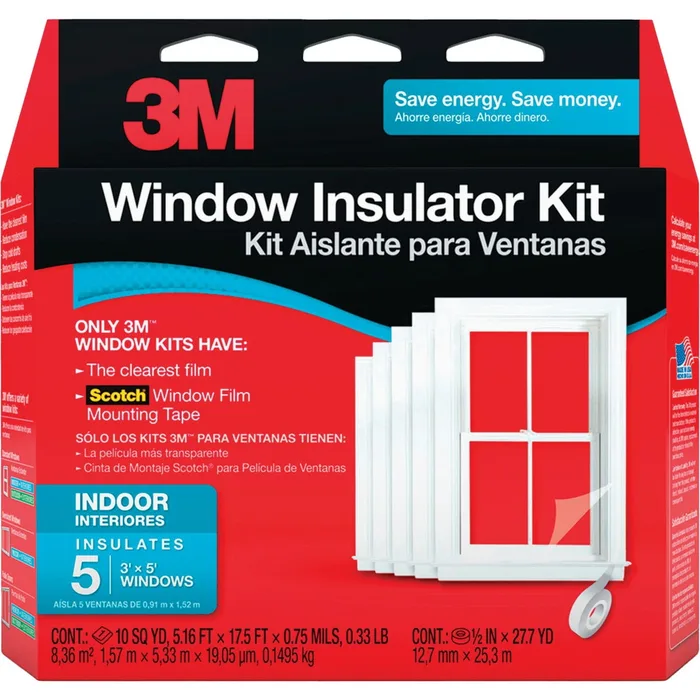
- Buy 3M Indoor Window Insulator Kit, Five Pack (2141W-6) Heat-shrink film on Scotch double-sided tape that turns a drafty window into a sealed pocket of still air for the winter. Amazon
- Buy Duck Brand Rope Caulk, White, 1/8 in. x 35 ft. A soft, paintable cord you press into the cracks around a window sash by hand and pull out again when you are done.
- It depends Indow Thermal Window Inserts (IndowONE, ClearView Thermal acrylic) Custom-made acrylic panels edged in compression tubing that press into the inside of your existing frame and stay for years.
- Skip Frost King Economy Outdoor Plastic Storm Window Kit (P71A, 3 ft x 6 ft) Plain plastic sheeting nailed over the outside of a wood window frame, a cheap but crude fix that newer indoor kits beat.
What actually matters
- Air leakage - Most drafts come through gaps around the sash and frame, not through the glass. Sealing those gaps is often the cheapest improvement you can make.
- Still-air layer - Film and inserts trap air between themselves and the glass, which slows heat loss. This is what helps single-pane windows most.
- Mounting surface - Tape-mounted kits need a smooth trim surface that the maker approves. Painted walls and flaking paint are common trouble spots.
- Indoor or outdoor - Indoor kits are easier to install and protected from wind and sun. Outdoor kits mean ladders and exposure, and some use nails.
- Removal - Renters and anyone with good trim should check how a product comes off. Press-in cords and compression inserts leave far less behind than nailed strips.
- Coverage - Boxes state how many windows of what size they fit. Measure the outside edge of the trim, since that is where film attaches.
- Lifespan - Film and plastic last a season, cords until you remove them, and custom inserts for years. Spread the cost over the years you will use it.
The specs, in plain English
Green flags vs red flags
Green flags
- The maker states exactly how many windows and what size the kit fits.
- The page names which surfaces the tape or seal is safe on.
- Removal instructions are published, not left to guesswork.
- A warranty is stated in writing.
- Performance claims cite a study, test or rating body.
Red flags
- Installation requires nailing into trim you care about.
- No mention of which surfaces the adhesive suits.
- Energy savings quoted with no source or a general house-wide estimate.
- Thin plastic with no shrink step and no clarity claim.
- Custom products with no fit rules or guarantee published.
Who's who: the brands
- 3M - Makes Scotch-branded indoor and outdoor window insulator kits built around its double-sided mounting tape.
- Duck - Known for tape, and sells rolled shrink-film kits, rope caulk and a range of weatherstrip seals.
- Indow - A Portland, Oregon maker of custom acrylic window inserts edged in compression tubing.
- Frost King - A long-running weatherization brand with indoor shrink kits, outdoor plastic kits and Mortite caulking cord.
- M-D Building Products - Sells weatherstripping, door seals and shrink-and-seal window film kits.
How to read a listing without getting fooled
Start with the type: shrink film, plain plastic, gap sealer or insert, since that tells you what the product can fix. Then find coverage, stated as a window count and size or as a length of cord, and compare it with your measured trim or gap length. Look for the surfaces the maker approves and any temperature or install notes in the instructions or FAQ. Check how it comes off and whether a warranty is listed. Treat energy-savings percentages with care: some come from product studies, others are general estimates for sealing a whole house.
How much should you spend?
Rope caulk, foam tape and standard shrink-film kits sit in the budget tier, and a multi-window film pack is usually the best value per window. Larger patio-door and oversized film kits creep toward mid-range. Custom acrylic inserts are firmly premium and priced per window by size, so a whole house adds up quickly. Outdoor nail-on plastic kits are the cheapest of all, but the savings come with nail holes and a cloudier view.
Questions, answered
When should I install window film?
Install it before the coldest weeks so you get a full season of use. 3M says its indoor film can go on in many temperatures, and recommends a bright, sunny day if it is below 0 F outside. Clean and dry the trim first so the tape grips. Outdoor kits from 3M should go on above 50 F, according to its FAQ.
Can I reuse shrink film next year?
Frost King says film still in good shape can be stored for next winter, away from direct sunlight and heat. In practice the tape usually needs replacing, and stretched film may not shrink as neatly a second time. Many people simply buy fresh kits each fall.
Why do I get condensation behind the film?
Moisture trapped between the film and the glass can condense when the glass is cold. 3M's FAQ suggests poking small holes in the corners of outdoor film to let it escape. Indoor film that is well sealed to dry trim tends to reduce condensation on the room side, which 3M lists as a benefit.
Do inserts work on any window?
No. Indow requires a frame step with at least 5/8 inch of unobstructed space around the whole frame for its IndowONE inserts, and says sloped frame steps cannot exceed 15 degrees. Protruding hardware, inside-mounted blinds and uneven frames can block a good seal. Indow also says its inserts are for indoor use only.
Or jump to the head-to-head: 3M Indoor Window Insulator Kit, Five Pack (2141W-6) vs Duck Brand Rope Caulk, White, 1/8 in. x 35 ft..