Explained
Wool Slippers, Explained
After reading, you'll understand how wool type, sole material, footbeds and sizing decide whether a wool slipper suits your floors and feet.
In this guide
Most people pick wool slippers from a photo, and photos show the colour of the felt, not the parts that matter. The sole decides whether you slide on tile, the footbed decides how your feet feel after an hour, and the sizing decides whether they stay on. Washing is the other surprise, because some wool slippers can go in a machine and others are ruined by it. Here is what the listings mean.
The 30-second version
- Felted wool breathes, so it stays warm without the sweaty feel of fleece.
- The sole decides where you can walk, with leather best indoors and rubber better on tile and outside.
- A removable footbed adds support, and lets you swap in your own insoles.
- Whole sizes fit better than bands, because felt does not stretch much.
- Washing rules vary by brand, and a tumble dryer shrinks felted wool.
The products this guide is about
Our verdict on each, with the full reasoning on the companion review.
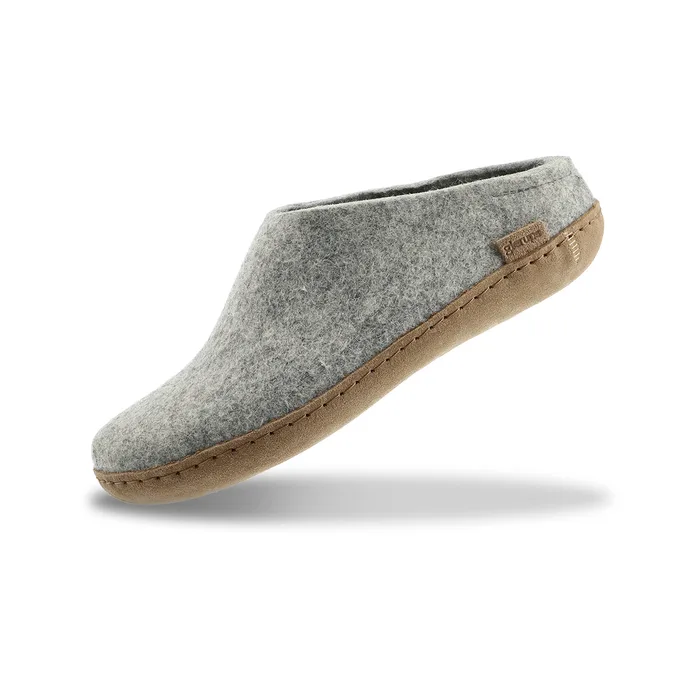
- Buy glerups Slip-on with leather sole Pure felted wool with a soft, chrome-free calfskin sole, made in glerups' own factory.
- Buy Giesswein Veitsch A virgin wool slipper with a grippy rubber sole, a removable footbed and a machine-washable upper.
- It depends Haflinger Everest Classic A boiled wool slipper built around an anatomically shaped cork-latex footbed you can swap out.
- Skip Baabuk Kanga Slippers A light, hand-felted wool slipper that is sized in broad bands and ships without an insole.
What actually matters
- Wool type - virgin, new and New Zealand wool are all common descriptions. A named wool is a better sign than a vague blend.
- Felting - boiled or felted wool is dense and holds its shape. It should feel firm, not loose like a knit.
- Sole - leather is soft and quiet on dry floors. Rubber grips on tile and handles a trip to the mailbox.
- Footbed - cork-latex and wool footbeds add support. Removable ones let you use orthotics.
- Sizing - whole EU sizes give the most precise fit. Bands covering three sizes will be loose for some feet.
- Care - some models are machine washable on a gentle wool cycle. Others must be spot cleaned or hand washed.
- Shape - slim slip-ons feel light and flexible, while clog styles feel more like shoes. Pick for how you move at home.
The specs, in plain English
Green flags vs red flags
Green flags
- A named wool type and a clear sole material.
- Whole-size sizing with a published size chart.
- Clear washing instructions on the product page.
- A removable footbed, or an honest note that there is none.
- A return window long enough to test the fit at home.
Red flags
- "Wool blend" with no percentage.
- Size bands that cover three or more sizes.
- No sole information at all.
- No care instructions.
- Insoles or soles sold separately without saying so up front.
Who's who: the brands
- glerups - A Danish maker of felted wool slippers with leather and natural rubber soles.
- Giesswein - An Austrian family wool company known for boiled wool slippers and wool sneakers.
- Haflinger - A German slipper brand known for boiled wool clogs with cork-latex footbeds.
- Baabuk - A Swiss-designed wool footwear brand whose slippers are hand-felted in Nepal.
How to read a listing without getting fooled
Start with the materials list and look for the upper, the lining, the footbed and the sole named separately. Then check the sizing: whole EU sizes with a chart are best, and band sizing needs a careful look at which sizes each band covers. Find the care instructions next, and note whether the upper is machine washable, hand wash only or spot clean. Finally, check the returns policy, because the only real test of a slipper is wearing it at home for a few evenings.
How much should you spend?
Budget wool slippers tend to be thin felt with a coated bottom and band sizing, fine for travel or a guest room. Mid-range models add a proper rubber sole, a footbed and whole sizes, which is where most people get the best value. Premium slippers use dense felted wool, leather or natural rubber soles and published sourcing or certifications, and they last for years of daily wear.
Questions, answered
Do wool slippers itch?
Dense felted wool usually does not, especially inside a lined slipper. glerups says its wool blend is itch-free, and many people wear felt slippers barefoot. If you are sensitive, wear thin socks for the first weeks, while loose fibres shed.
How long do wool slippers last?
With daily indoor wear, a good pair often lasts years, and the sole usually wears out before the felt. Some brands sell repair kits or resoling. Keeping them out of the dryer and away from harsh detergents is the biggest thing you can do.
Can wool slippers get wet?
Wool handles damp well and resists odour, but soaking felt stresses its shape. Dry wet slippers slowly at room temperature, away from radiators. Follow the brand's washing rules, since some allow a gentle machine wash and others do not.
Are wool slippers good for cold floors?
Yes, felted wool insulates well, and a thicker sole adds more separation from cold tile or stone. A rubber sole with a footbed is the warmest set-up for hard floors. A thin leather sole feels lovely but lets more cold through.
Or jump to the head-to-head: glerups Slip-on with leather sole vs Giesswein Veitsch.