Explained
Vacuum Sealers, Explained
After reading, you will know whether you need an external or chamber sealer and how to judge one without getting lost in marketing terms.
In this guide
Vacuum sealers pull the air out of a bag and heat-seal it shut so food keeps longer, cooks evenly for sous vide, and takes up less freezer space. The first thing that trips buyers up is that there are two very different machines wearing the same name, external and chamber, and they suit completely different kitchens. The second is that a low sticker price often hides weak suction, noisy motors, and expensive proprietary bags.
The 30-second version
- Pick the type before the brand: an external sealer suits most homes and dry-to-semi-moist foods, while a chamber sealer is a heavier, pricier tool built specifically for liquids and fermentation.
- Seal reliability beats feature lists: a machine that seals cleanly every single time, ideally with a double-seal option, is worth more than a long menu of modes you will rarely touch.
- Bags are the real long-term cost: a sealer that accepts any brand of textured bag or roll keeps you free to shop on price, whereas proprietary-only bags quietly add up.
- Liquids are the honest dividing line: if you routinely seal soups, brines or raw marinades, a chamber sealer does it most cleanly; external units tend to compromise here.
- Match the machine to your session length: occasional leftovers need very little, but batch-prepping demands a unit rated for many continuous seals so it does not overheat or slow down.
The products this guide is about
Our verdict on each, with the full reasoning on the companion review.
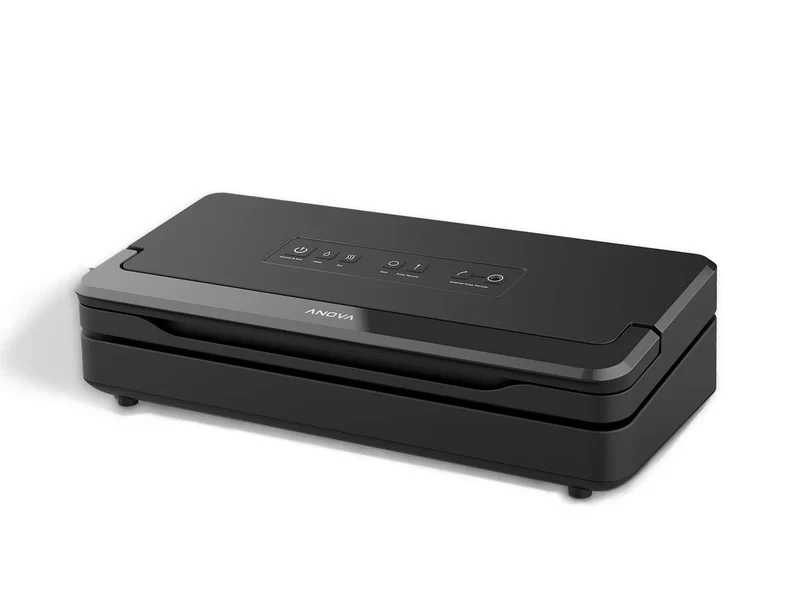
- Buy Anova Precision Vacuum Sealer Pro The external sealer that behaves like a pro tool - consistent, always double-sealed, and genuinely one-handed. Amazon
- Buy Nesco VS-12 Deluxe Vacuum Sealer A feature-loaded external workhorse whose seals sit only a hair behind the Anova, for less fuss. Amazon
- It depends Anova Precision Chamber Vacuum Sealer Restaurant-grade liquid sealing and pickling at home - if you have the counter space, the budget and patience for upkeep.
- Skip FoodSaver FM2100 Vacuum Sealing System A familiar budget name that seals dry goods fine but gets outclassed the moment the job turns demanding. Amazon
What actually matters
- Sealer type (external vs chamber) - this single choice decides size, price and what foods you can seal, so settle it before comparing anything else.
- Seal quality and repeatability - the whole point is an airtight seal that holds session after session; a double-seal option adds a safety margin on juicy foods.
- Wet-food and liquid handling - external sealers pull liquid toward the seal bar and can fail, so look for a moist or low-pressure mode; chamber units handle liquids natively.
- Bag compatibility and running cost - confirm whether the machine needs proprietary bags or accepts any textured bag or roll, because consumables are the ongoing expense.
- Duty cycle and noise - if you seal in long sessions, favour units rated for many continuous seals and expect budget models to run louder and tire faster.
- Everyday usability - one-handed operation, a built-in bag cutter and internal roll storage save real time on batch days and reduce mess.
- Footprint and weight - chamber sealers are large and heavy enough to dominate a counter, so measure your space before committing to one.
The specs, in plain English
Green flags vs red flags
Green flags
- Accepts any brand of textured bag or roll, so you can shop consumables on price
- Offers a double-seal option and a dedicated moist or low-pressure mode
- Rated for many continuous seals without needing to cool down
- Includes practical extras like a built-in cutter and internal roll storage
- One-handed operation that is genuinely easy to use day to day
- Backed by a meaningful warranty and a track record of reliable seals in owner reports
Red flags
- Locks you into proprietary bags only, quietly raising long-term cost
- Owners repeatedly report weak or fading suction over back-to-back seals
- Marketed for heavy or liquid use when it is really a light external unit
- No moist or double-seal option despite claims of handling wet foods
- A loud motor and a short duty cycle that stalls during longer sessions
- A chamber machine bought for space it does not fit or upkeep the buyer will not do
Who's who: the brands
- Anova - Known for sous-vide gear; makes both a polished external sealer and a serious home chamber unit.
- Nesco - Feature-loaded external workhorses with lots of modes and built-in roll handling, popular with hunters and gardeners.
- FoodSaver - The familiar, widely stocked budget name; fine for dry-goods basics but often outclassed on demanding jobs.
- Weston - Heavier-duty external and chamber sealers aimed at bulk buyers and game processors.
- NutriChef - Value-focused compact external sealers commonly sold for light, occasional home use.
How to read a listing without getting fooled
Start by confirming the type: if a listing does not clearly say external or chamber, assume external, because chamber machines usually advertise the fact. Then look past the mode count, which is easy to inflate, and hunt for the words that actually predict performance: a double-seal option, a moist or low-pressure setting, and a stated continuous-seals rating. Check the bag section carefully; phrases like works with any textured bag or roll are good news, while proprietary bags only signals a recurring cost. Treat performance language honestly, framing it as what independent testing found or what owners report rather than a guaranteed result, and be sceptical of a cheap unit that claims to handle liquids, since that is exactly where budget external sealers struggle most.
How much should you spend?
Spend according to how often and how wet your sealing gets. For occasional leftovers and dry pantry goods, an entry-level external sealer is enough, though the cheapest ones trade away suction strength, quiet operation and durability. The value sweet spot for most kitchens is a mid-range external unit that seals cleanly every time, accepts any textured bag, and is rated for long sessions; the step up from budget to mid-range usually buys reliability you notice weekly. Paying flagship money only makes sense for a chamber sealer, and only if you genuinely and regularly seal liquids, pickle or ferment, because otherwise you are buying counter space, slower cycles and maintenance you will not use. Remember that the bags are an ongoing cost, so a machine that frees you to buy generic textured bags can be cheaper to live with than a slightly cheaper one locked to proprietary supplies.
Questions, answered
What is the difference between an external and a chamber vacuum sealer?
An external sealer sucks air out through the open end of a textured bag and then heat-seals it, which is compact, affordable and ideal for dry and semi-moist foods. A chamber sealer places the whole bag inside a sealed chamber and removes air from the entire space at once, so it can seal liquids and delicate items that defeat external units, at the cost of size, weight and price.
Can an external sealer handle soups and marinades?
Only within limits. External sealers pull liquid toward the seal bar, so the common workarounds are freezing liquids first or using a low-pressure or moist setting. If you frequently seal soups, brines or raw marinades, a chamber sealer is the tool actually designed for the job.
Do I have to use the same brand's bags?
Usually not for external sealers, which need textured or embossed bags but mostly accept any brand of textured bag or roll, so you can shop on price. Chamber sealers use cheaper smooth pouches instead, which is a large part of why their running cost is lower over time. Avoid machines locked to proprietary bags if you can.
Is a vacuum sealer worth it for sous vide?
Yes. Removing air lets bags sink and transfer heat evenly, and most sealers, external or chamber, can produce sous-vide-ready pouches. Budget units work for light sous-vide use but tend to be slower and noisier during longer sessions.
How long does vacuum-sealed food actually last?
Vacuum sealing slows freezer burn and oxidation, and manufacturers commonly cite several times longer storage than loose packaging, but exact times vary by food, temperature and packaging. Treat this as general product information rather than food-safety advice: follow standard food-safety practices, keep perishables refrigerated or frozen, and when in doubt consult a qualified food-safety source.
Which type should a first-time buyer choose?
For most people, a mid-range external sealer is the right first machine: it covers dry goods, leftovers, batch prep and sous vide without dominating the counter. Consider a chamber sealer only if you already know you will regularly seal liquids or ferment and are ready to maintain a larger, pricier machine.
Or jump to the head-to-head: Anova Precision Vacuum Sealer Pro vs Nesco VS-12 Deluxe Vacuum Sealer.