Explained
Waffle Makers, Explained
After reading this you will know which waffle-maker features actually change your breakfast and which are just marketing.
In this guide
Waffle makers look nearly identical from the outside, so buyers tend to grab the cheapest one and end up with pale, soggy, or scorched results. The features that matter are mostly invisible on the box: waffle depth, browning control, how evenly the plates heat, and how you clean them. This guide decodes the jargon so you can match a machine to how you actually eat breakfast.
The 30-second version
- Decide Belgian or classic first. because pocket depth is the one thing you cannot change later and it shapes every other choice.
- Browning control is the feature that matters most, since it is the single biggest driver of getting the crispness you want, batch after batch.
- Flip designs earn their bulk for deep waffles, as rotating the plates spreads batter evenly and reduces the pale-top, dark-bottom problem.
- Cleanup depends on plates, not price, so removable dishwasher-safe plates save far more hassle than a fancy housing does.
- Size is a real cost, because a great waffle maker that lives in a hard-to-reach cabinet gets used far less than a mediocre one on the counter.
The products this guide is about
Our verdict on each, with the full reasoning on the companion review.
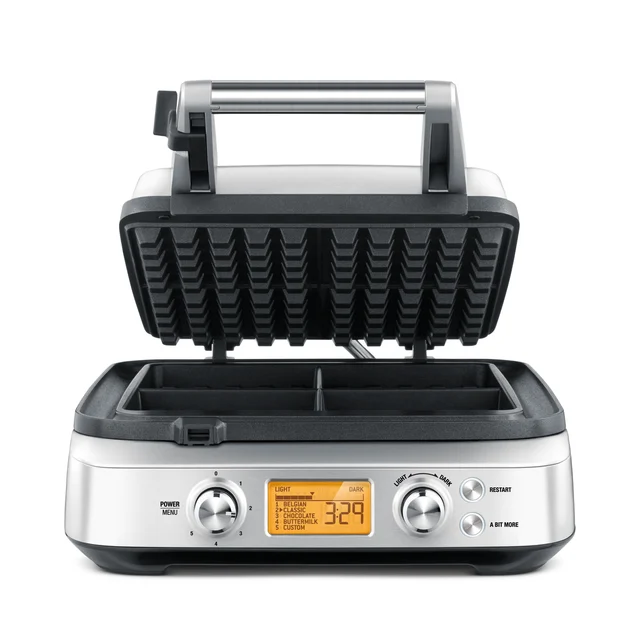
- Buy Breville Smart Waffle Pro 4-Slice (BWM640) The most consistent waffles of the group, from a machine that does the thinking for you. Amazon
- Buy Cuisinart Double Flip Belgian Waffle Maker (WAF-F40) A fast, flip-style iron that turns out two deep Belgian waffles with even, hands-off browning. Amazon
- It depends All-Clad Gourmet Stainless Steel Waffle Maker with Removable Plates (4-Slice) Beautiful, built-to-last stainless that makes excellent waffles for a price most kitchens cannot justify. Amazon
- Skip Dash Mini Waffle Maker A charming, cheap novelty that makes one thin four-inch waffle and little else. Amazon
What actually matters
- Waffle style and depth - Belgian irons make thick, deep-pocketed waffles with a crisp shell; classic (American) irons make thinner, denser ones. This is the first decision because it cannot be adjusted after purchase.
- Browning or shade control - adjustable settings, and ideally automatic timing, are what let you repeat the exact crispness you like instead of guessing. Machines with none are the top reason for inconsistent results.
- Even heating - quality heating elements, and flip mechanisms in particular, keep both grids at the same temperature so you avoid a pale top over a dark bottom.
- Cleanup design - removable dishwasher-safe plates are the easiest to clean; fixed plates mean wiping in place, and an overflow moat or drip tray keeps spilled batter off the counter.
- Capacity per batch - how many waffles it cooks at once decides whether you feed a table in one go or run several rounds while the first waffles cool.
- Footprint and storage - full-size irons are large appliances; confirm you have both the counter room to use one and a place to store it before you buy.
- Build quality - stainless housings and sturdy hinges outlast thin plastic, though a premium shell does not by itself make a better waffle.
The specs, in plain English
Green flags vs red flags
Green flags
- Adjustable browning or shade settings, especially with automatic timing
- A flip or rotary mechanism if you are set on deep Belgian waffles
- Removable dishwasher-safe plates, or at least an overflow moat or removable drip tray
- A ready light plus a beep or tone so you know exactly when to open the lid
- Deep, well-defined pockets if the listing claims Belgian style
- Consistent owner reports of even browning batch after batch, not just a good first waffle
Red flags
- No browning or shade control at all, which makes consistent results harder
- Complaints of pale tops and dark bottoms, a sign of uneven heating
- Shallow grids marketed as Belgian when the pockets are clearly thin
- Flimsy plastic hinges or a lid that does not close flush over a full batter load
- No overflow management, so every slightly overfilled waffle means a counter mess
- A footprint you have nowhere to store, which is how good machines end up unused
Who's who: the brands
- Breville - Premium countertop appliances known for smart automatic timing and granular browning control.
- Cuisinart - Broad mid-range lineup, including well-regarded flip-style Belgian irons that balance features and price.
- All-Clad - Flagship stainless build quality with removable dishwasher-safe plates, at a premium price.
- Dash - Budget and novelty makers, best known for the compact mini waffle iron for single snacks.
- Hamilton Beach - Value-oriented brand offering simple, affordable flip and classic irons for everyday use.
How to read a listing without getting fooled
Start with the pocket depth, because a listing that says 'Belgian' with obviously shallow grids in the photos is really a classic iron in disguise. Next find the browning control: 'X shade settings' or 'X browning levels' tells you how much say you get over crispness, and any mention of automatic or countdown timing is a bonus that removes guesswork. Read the cleanup line carefully, since 'removable plates' and 'dishwasher-safe drip tray' are very different claims; fixed plates mean hand-wiping no matter how the housing looks. Treat 'stainless steel' as a durability and looks signal, not a waffle-quality one. Finally, check the physical dimensions against your counter and cabinet before anything else, because footprint is the spec buyers most often ignore and most often regret.
How much should you spend?
Spend enough to get real browning control and even heating, because those are what separate a good waffle from a gamble, and the cheapest machines usually omit both. The value sweet spot sits with a solid mid-range flip or shade-adjustable iron that makes deep, even waffles without paying for smart electronics you may not use. Paying up for a premium machine is worth it if you make waffles often and want restaurant-consistent results with automatic timing and minimal fuss. Paying up for a flagship stainless model is mostly about build quality, looks, and easy-clean removable plates rather than better waffles, so justify it on longevity and materials, not taste. At the bottom, a tiny budget novelty maker is fine for a single snack or a dorm, but it cannot control browning and will not feed a household, so do not expect breakfast-quality results from it.
Questions, answered
What is the difference between a Belgian and a classic waffle maker?
Belgian irons have deep, wide pockets that make thick, fluffy waffles with a crisp shell, ideal for holding syrup and toppings. Classic (American) irons make thinner, denser waffles with shallow grids. Pick the style first, because it is the one thing you cannot change after buying, and most premium machines lean Belgian while adding a classic preset for range.
Are flip-style waffle makers actually better?
For deep Belgian waffles, usually yes. Rotating the plates 180 degrees mid-cook spreads the batter evenly across both grids, which owners report reduces the common pale-top, dark-bottom problem. The trade-offs are a bulkier body and a rotating handle that needs clearance, so a flip design is most worth it for thick waffles rather than thin classic ones.
Do I really need browning or shade settings?
It is the feature we would prioritize above almost anything else. Browning control is the single biggest driver of getting the crispness you want, and being able to repeat it batch after batch. Machines with no control are the main reason waffles come out inconsistent, so if you care about crisp-versus-soft results, choose a model with adjustable browning and, ideally, automatic timing.
Which is easiest to clean?
Models with removable, dishwasher-safe plates are the clear winners, since the grids simply pop out and go in the dishwasher. Fixed-plate machines require letting the unit cool and wiping with a damp cloth, which handles most residue but takes more effort. A removable drip tray or overflow moat also helps a lot. Whatever the design, avoid abrasive tools that damage the nonstick coating.
How much counter and storage space do waffle makers need?
Full-size Belgian and four-square models are substantial appliances, and flip designs are bulkier still, though some machines store upright to save room. Compact mini makers fit in a drawer but only make one small waffle. Factor storage into your decision, because a great waffle maker that ends up in a hard-to-reach cabinet tends to get used far less than a convenient one.
Is a more expensive waffle maker worth it?
It depends on how you value features versus materials. Paying more for automatic timing and fine browning control is worthwhile if you make waffles often and want fuss-free consistency. Paying more for a flagship stainless build buys durability, looks, and easy-clean removable plates, but not necessarily better-tasting waffles. Match the spend to what you actually care about, and see our companion review for how specific current models compare.
Or jump to the head-to-head: Breville Smart Waffle Pro 4-Slice (BWM640) vs Cuisinart Double Flip Belgian Waffle Maker (WAF-F40).