Explained
Pop-Up Toasters, Explained
After reading this you'll know exactly which toaster specs matter for how you eat, and which are just marketing.
In this guide
A toaster looks like the simplest appliance in the kitchen, but the listings are full of terms like "long slot," "self-centering," and "A Bit More" that don't explain themselves. What actually trips people up is buying for slot count or looks instead of for even browning and the bread they really eat. This guide decodes the specs so you can match a toaster to your household in a couple of minutes.
The 30-second version
- Even browning is the whole job. so prioritize consistent heat on both sides over feature lists or color options.
- Buy for your bread, not the badge. long slots fit bagels, artisan loaves, and long cuts, while standard slots handle everyday sliced bread.
- Slot count should match your household. four slots save real time for families, while two slots suit couples, singles, and tight counters.
- Specialty settings are a baseline, not a bonus. bagel, defrost, and reheat are common on pop-up toasters, so don't pay extra for them.
- A high price should buy performance, not just style. flagship retro looks can cost more without toasting any better.
The products this guide is about
Our verdict on each, with the full reasoning on the companion review.
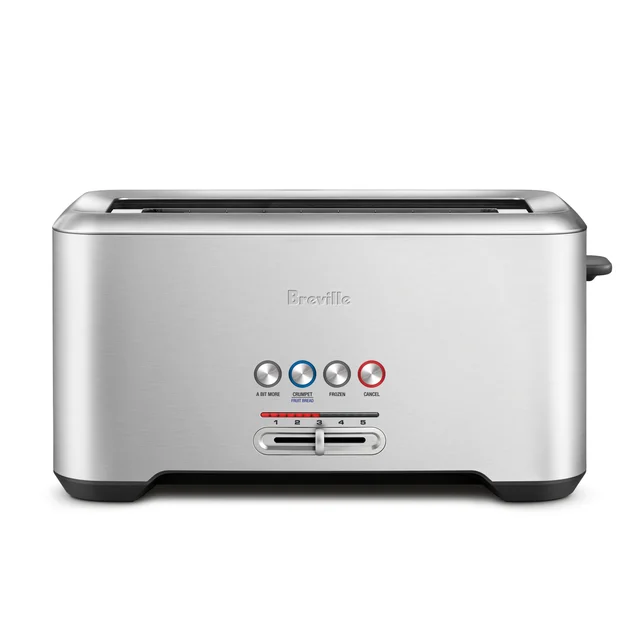
- Buy Breville the 'A Bit More' 4-Slice Long Slot Toaster Variable browning control and extra-long slots that take larger bread and thick bagels. Amazon
- Buy Cuisinart 4-Slice Metal Classic Toaster The dependable value four-slicer, with independent dual controls and a track record owners trust for years. Amazon
- It depends KitchenAid 2-Slice Programmable Toaster A well-built, feature-rich two-slicer that toasts nicely but asks a premium for only two slots. Amazon
- Skip Smeg TSF01 2-Slice Toaster An icon of retro kitchen style that makes good toast, but you pay a flagship price mostly for the looks. Amazon
What actually matters
- Toasting evenness is the single most important trait: a good toaster browns both sides uniformly and gives the same result batch after batch, so you're not babysitting the lever.
- Slot style and width decides what you can actually toast; long or extra-wide slots swallow bagels and thick artisan cuts that jam in narrow slots.
- Capacity versus footprint is a real trade-off; four slots feed a family faster but take up more counter, while two slots keep things compact.
- Browning control matters for repeatability; a clear shade range, and ideally independent dials, let you dial in your preferred toast and run two shades at once.
- Useful feedback features like a lift-to-check window or an add-a-little-more button reduce guesswork and prevent burnt toast.
- Build and durability separate a toaster that lasts years from one you replace; look for a solid carriage and materials owners report holding up.
- Value for the tier ties it together; the price should reflect evenness and longevity, not just a color range or a famous silhouette.
The specs, in plain English
Green flags vs red flags
Green flags
- Long-term owners report it browns evenly on both sides and across all slots
- Slots that match your bread, long or extra-wide if you eat bagels and artisan loaves
- Self-centering guides and a solid, smooth-moving carriage
- A clear browning range with dependable, repeatable results batch to batch
- Bagel, defrost, and reheat included as standard rather than upsold
- A price that reflects performance and build, not just a color palette or retro styling
Red flags
- Owner reports of pale spots or noticeable slot-to-slot variance
- Narrow, fixed-width slots when you regularly eat thick or artisan bread
- A flagship price justified mainly by looks, with only two slots for the money
- Flimsy lever or carriage, or repeated durability complaints over time
- A crowded feature list that distracts from mediocre, uneven toasting
- Darkest setting that runs aggressive, forcing you to under-dial to avoid burning
Who's who: the brands
- Breville - Premium, feature-rich toasters, including a long-slot four-slice model with Lift and Look and a 1-touch A Bit More button.
- Cuisinart - Value-oriented maker of four-slice toasters; check the maker's page for current controls and functions.
- KitchenAid - Well-built, good-looking two-slice models with a wide color range that lean premium for the capacity.
- Smeg - Famous for retro, statement-piece styling in many colors; the price largely reflects the design.
How to read a listing without getting fooled
Start with the words that describe the toasting, not the trim. Find the slot style first: "long slot" or "extra-wide" tells you what bread will actually fit, while a plain "2-slice" with no width note usually means standard slots. Then look for self-centering guides and any mention of even browning backed by aggregated owner reports rather than the brand's own claims. Treat bagel, defrost, and reheat as a checklist you expect to see, not a reason to pay more. Be skeptical when a listing leads with color options, retro looks, or a designer silhouette and buries how it toasts, because that's often where a flagship price is really going. Finally, weigh capacity against your counter: a four-slice model is only an upgrade if you'll use the extra slots and have room for the wider body.
How much should you spend?
Spend based on how you toast, not on the badge. Entry models can toast bread perfectly well, but stepping up usually buys more even browning, sturdier carriages, and flexible long slots, which is worth it if you toast often or eat varied bread. Mid-range four-slicers tend to be the value sweet spot for families: dependable results and useful controls without paying a premium. Where extra money stops paying off is when it's buying aesthetics, a famous silhouette, a big color range, or a compact retro shell, rather than better toast or longer life. If two similar toasters brown equally well and one costs far more for its looks, the difference is style, not substance, and most people are better off putting that money elsewhere.
Questions, answered
Two-slice or four-slice: which should I get?
Choose by how many people you feed at once. A four-slice model saves real time for families and weekend cooking, while a two-slice model suits singles, couples, or tight counters. Long slots are the most flexible because they fit both standard slices and long or artisan cuts, so a two-long-slot design can effectively cover four slices when you need it.
What actually makes toast come out even?
Consistent heating-element coverage, self-centering slots that hold the bread close to the elements, and reliable shade timing. If any of those is weak you get pale patches or one side darker than the other. Running a test batch and dialing in your preferred shade helps on any toaster, but the best models need less babysitting.
Are bagel and defrost settings worth having?
Yes, if you use them, but they're no longer a differentiator. Bagel mode concentrates heat on the cut side while gently warming the outside, and defrost adds time for bread from the freezer. Many toasters include both, so treat them as a baseline you should expect rather than a premium feature.
Is a pop-up toaster different from a toaster oven?
Yes. A pop-up toaster is purpose-built to brown sliced bread, bagels, and similar items quickly and evenly in vertical slots. A toaster oven is a small countertop oven for baking, broiling, and reheating plated food. This guide is about pop-up toasters; if you want to bake or reheat a plate, look at toaster ovens instead.
Is an expensive toaster worth it?
Sometimes. Spending up can buy better evenness, sturdier carriages, and flexible long slots. But a premium price can also reflect design rather than performance, especially with retro statement pieces. The lesson is to check whether the extra cost is buying how it toasts and how long it lasts, not just how it looks.
Why does my toast burn on the highest setting?
Some toasters run their darkest shade aggressively, so the top one or two settings scorch bread faster than you'd expect. If that happens, dial back a notch or two and use any add-a-little-more feature to nudge toast the rest of the way, which gives you more control than the top setting alone.
Or jump to the head-to-head: Breville the 'A Bit More' 4-Slice Long Slot Toaster vs Cuisinart 4-Slice Metal Classic Toaster.