Explained
Touchless Trash Cans, Explained
After reading, you'll understand what makes one touchless trash can genuinely better than another, and which features are worth paying for in your kitchen.
In this guide
A touchless trash can swaps the foot pedal for a motion sensor: wave your hand or step close and the lid opens on its own. That sounds simple, but the category is full of cans that look nearly identical yet behave very differently, and the biggest trap is a plastic can dressed up to look like steel and priced like it. The two things that actually decide whether you'll love or curse a can every day are the sensor and the body, and neither shows up clearly in a product photo.
The 30-second version
- The sensor is the whole product. A can that opens when you want it and stays shut when you walk past is worth far more than one that looks nicer but misfires or lags.
- Steel-look is not steel. Some affordable cans are molded resin or plastic with a thin steel rim for appearances, so match what the body is actually made of to what you're paying.
- Odor control is a real, separate feature. A built-in carbon filter is designed to neutralize kitchen smell, and not every can has one.
- Power source shapes the ongoing cost. A plug-in or AC-adapter option spares you the steady drip of buying disposable batteries.
- Longevity is where budget cans slip. Sensors and lid motors are moving parts, so check the warranty and how long the maker backs the can.
The products this guide is about
Our verdict on each, with the full reasoning on the companion review.
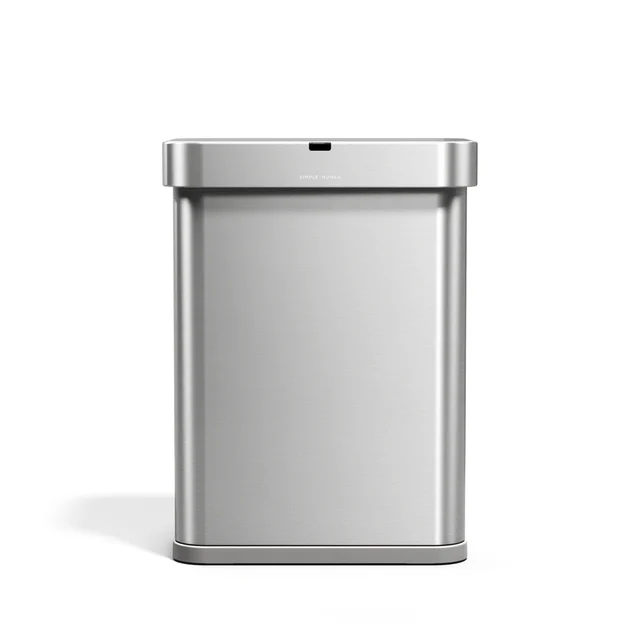
- Buy simplehuman 58L Rectangular Sensor Can with Voice & Motion Control The flagship, with voice and motion control, if you can stomach the price.
- Buy iTouchless 13-Gallon Extra-Wide Stainless Steel Sensor Trash Can with AbsorbX Odor Filter A mid-range can with a carbon odor filter and a motion-sensor lid. Amazon
- It depends Nine Stars DZT-50-9 13.2-Gallon Automatic Motion Sensor Trash Can An inexpensive stainless steel can with a basic feature set and no long-term record.
- Skip Brightroom 13-Gallon Resin Motion Sensor Trash Can with Stainless Rim Looks like a steel can from across the room, but the body is resin.
What actually matters
- Sensor reliability, not just speed: the best cans open fast and, just as important, stay closed when you brush past, and let you tune sensitivity so pets or foot traffic don't set them off.
- Body material relative to price: steel feels solid, while resin or thin plastic is fine at a low price but a poor deal when it costs as much as a real steel can.
- Odor management: a built-in carbon filter plus a snug, well-sealed lid keeps food smells from escaping every time the lid cycles open.
- Liner and bag handling: a hidden liner pocket or a bag-tensioning rim keeps the trash bag taut and out of sight instead of bunched over the edge.
- Power: rechargeable docks and optional AC adapters cut you off the battery treadmill; disposable-battery-only cans are cheaper up front but cost more over time.
- Build of the lid mechanism specifically: even on a steel-bodied can, the lid module is often plastic, and that's the part that opens and closes thousands of times, so it's where wear shows first.
- Warranty and parts availability: longer coverage and easy-to-find replacement liners and filters signal a can meant to last rather than be replaced.
The specs, in plain English
Green flags vs red flags
Green flags
- Adjustable sensitivity and/or open-time settings, which signal a sensor you can actually control
- A manual open/close override in addition to the motion function
- A clearly stated steel body rather than just a steel-look finish
- A built-in carbon odor filter, especially at a mid or lower price
- A plug-in adapter, rechargeable dock or optional AC power to escape disposable batteries
- A longer multi-year warranty and readily available replacement liners or filters
Red flags
- A plastic or resin body priced up near real steel cans
- A maker page that gives no warranty terms or power details
- A thin, tinny lid that feels flimsy or slams shut instead of closing gently
- No way to adjust sensitivity, so the lid pops open at passing foot traffic or pets
- Disposable batteries only, with no AC or rechargeable option
- A 'stainless rim' described as trim or accent, which usually means the body underneath is plastic
Who's who: the brands
- simplehuman - The premium tier: stainless steel cans with voice control, liner pockets with custom fit liners, and a five-year warranty on the 58L model, at flagship prices.
- iTouchless - Mid-range sensor cans, including models with AbsorbX carbon odor filters and optional AC adapters.
- Nine Stars - A budget brand of inexpensive stainless-look touchless cans; its maker page could not be checked for this guide.
- Brightroom - A Target house brand; the model in our review has a resin body with a stainless rim, so judge it on materials rather than looks.
How to read a listing without getting fooled
Read the listing for what the can is made of, not what it looks like. 'Stainless steel finish' or a 'stainless rim' can describe a plastic or resin body with a thin metal accent, so look for language about the body itself and any mention of gauge or 'all-steel' construction. Check whether the sensor is adjustable, since a spec sheet that stays silent on sensitivity and open-time usually means you get neither. Confirm the power source explicitly: 'rechargeable' and 'AC adapter' are good signs, while a can that only lists a battery count is disposable-only. Treat an odor filter as a genuine feature to look for, and remember it's a recurring consumable. Finally, weigh the warranty length and whether replacement bags and filters are easy to buy, because a low price means little if the can dies in a year or the parts vanish.
How much should you spend?
Spend based on how hard your kitchen will work the can, not on how it photographs. The flagship tier buys you the best sensor, real steel, the smartest liner system, and the longest warranty, and it earns its keep in a busy kitchen where the lid cycles dozens of times a day and you plan to keep it for years. For most people a mid-range can hits the value sweet spot: a responsive sensor, a wide opening, real odor control, and a body that feels solid, for a fraction of the flagship outlay. A genuinely cheap can makes sense for a garage, dorm, rental, or secondary can where low cost matters more than lasting a decade. The one thing to avoid at any budget is paying mid-range money for a plastic-bodied, budget-sensor can, which gives you the price of a good can and the substance of a cheap one.
Questions, answered
Do touchless trash cans go through batteries quickly?
It depends on the can and how heavily you use it. Battery-only models mean recurring battery purchases. Cans that offer an AC adapter let you skip batteries, as the iTouchless does as an optional extra and the simplehuman 58L does with its included plug-in adapter.
Is stainless steel or a plastic body better?
Steel generally feels sturdier, though it can show fingerprints unless it has a fingerprint-resistant finish. A resin or plastic body isn't automatically bad at a low price, but paying a steel-can price for a plastic one is poor value. The best of both worlds is fingerprint-resistant stainless.
Why does the lid sometimes open on its own?
Motion sensors can trigger on passing foot traffic, a pet walking by, or even a nearby wall or cabinet reflecting the beam. Move the can away from the walkway, and check the manual for any sensitivity or open-time setting.
Is a built-in odor filter worth it?
If the can holds food waste, yes. A carbon filter is designed to neutralize the smell that escapes each time the lid opens. Just remember the filter is a consumable you'll replace periodically, so it's a small ongoing cost in exchange for a fresher kitchen.
Will a standard trash bag fit, or do I need special liners?
Many touchless cans accept standard bags, and the iTouchless page says it fits standard 13 gallon bags. Some premium cans, like the simplehuman 58L, are designed around their own fitted liners for the cleanest look. If a tidy look matters to you, check whether the can has a liner pocket or tensioning rim.
How long should a good touchless trash can last?
Makers do not publish a lifespan, so the warranty is the best guide. The simplehuman 58L page lists five years. The sensor and lid motor are the moving parts, so warranty length and parts availability are worth weighing alongside the sticker price.
Or jump to the head-to-head: simplehuman 58L Rectangular Sensor Can with Voice & Motion Control vs iTouchless 13-Gallon Extra-Wide Stainless Steel Sensor Trash Can with AbsorbX Odor Filter.