

Home & Kitchen
The Best Pop-Up Toasters: 4 Compared (and One to Skip)
We compared four current 2- and 4-slice pop-up toasters on toasting evenness, slot flexibility, controls, build, and value.
The short version
After synthesizing maker specifications and owner reports, the Breville 'A Bit More' 4-Slice is our top pick for its variable browning control and flexible long slots. The Cuisinart 4-Slice Metal Classic is the value buy, delivering dependable everyday toast for far less. The KitchenAid 2-Slice is a genuine it-depends: nicely built and good-looking, but a premium ask for only two slots. The Smeg TSF01 makes fine toast, yet its flagship price buys style more than substance, so most people should skip it. Best for: even, no-fuss toast for a busy household, where the Breville earns its place and the Cuisinart covers the budget.
Our picks at a glance
- Breville the 'A Bit More' 4-Slice Long Slot Toaster - Buy. Variable browning control and extra-long slots that take larger bread and thick bagels.
- Cuisinart 4-Slice Metal Classic Toaster - Buy. The dependable value four-slicer, with independent dual controls and a track record owners trust for years.
- KitchenAid 2-Slice Programmable Toaster - It depends. A well-built, feature-rich two-slicer that toasts nicely but asks a premium for only two slots.
- Smeg TSF01 2-Slice Toaster - Skip. An icon of retro kitchen style that makes good toast, but you pay a flagship price mostly for the looks.
The verdict in 30 seconds
What mattered most
- Toasting evenness
- Slots & capacity
- Browning control
- Specialty functions
- Build & durability
- Countertop footprint
A good pop-up toaster comes down to even browning, slots that fit what you actually eat, and controls you can trust batch after batch. We synthesized maker specifications and aggregated owner reports across four current models spanning value to flagship. Two earn a clear buy, one is a genuine it-depends, and one gorgeous machine is hard to justify for most kitchens.
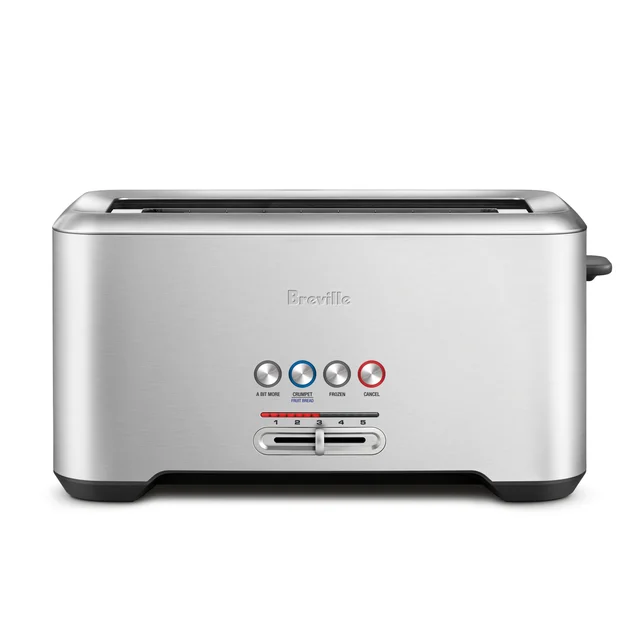
Variable browning control and extra-long slots that take larger bread and thick bagels.
Best for: Households that toast in volume or eat varied bread shapes and want flexible slots.
- Variable browning control with an LED that shows browning progress
- Extra-long slots take larger artisan bread, thick bagels and dense pastries
- Lift & Look and A Bit More buttons let you check and add time without restarting the cycle
- Dedicated Frozen and Bagel buttons, plus a pull-out crumb tray
- Long-slot body takes up meaningful counter space
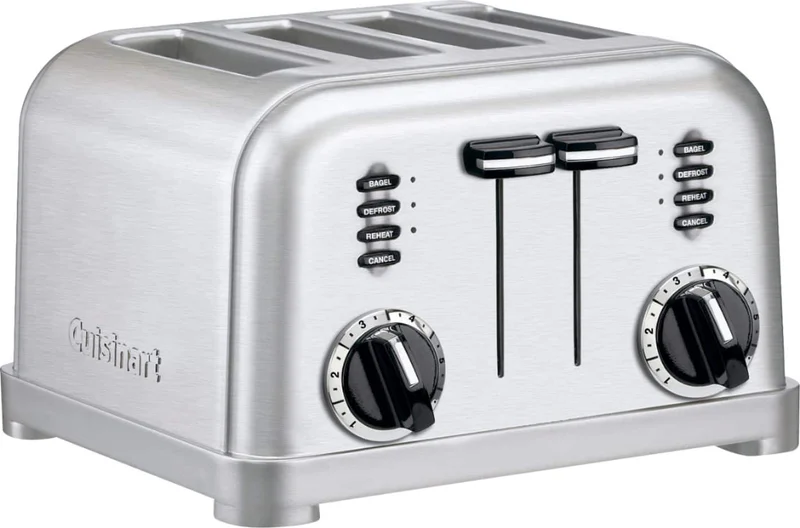
The dependable value four-slicer, with independent dual controls and a track record owners trust for years.
Best for: Value-minded families who want a proven four-slice workhorse without paying a premium.
- Two independent browning dials let you run different shades on each pair of slots
- Bagel, defrost, and reheat functions cover the everyday basics
- Owner reports frequently cite many years of reliable daily use
- Brushed stainless housing looks tidier than most at its tier
- Some owners report uneven browning between slots and occasional pale spots
- Standard-width slots are less accommodating of very thick artisan cuts
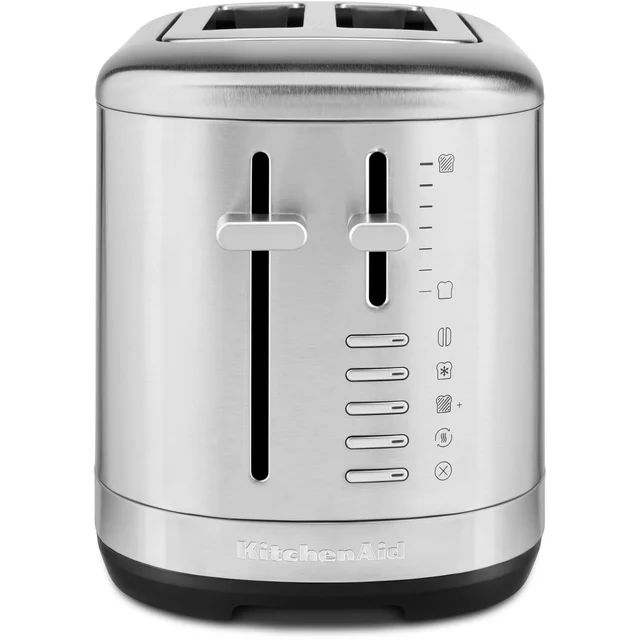
A well-built, feature-rich two-slicer that toasts nicely but asks a premium for only two slots.
Best for: Buyers who want a premium two-slice toaster with strong looks and are willing to pay for the badge and build.
- Solid, weighty build with a clean push-button control layout and progress indicator
- Toasts standard bread and pastries in two wide slots
- Extra-wide slots and functions like bagel, defrost, and keep-warm add versatility
- Wide color range for matching a KitchenAid kitchen
- Premium price for a two-slice capacity that value models beat on cost-per-slice
- Some owner reports flag inconsistency and durability concerns over time
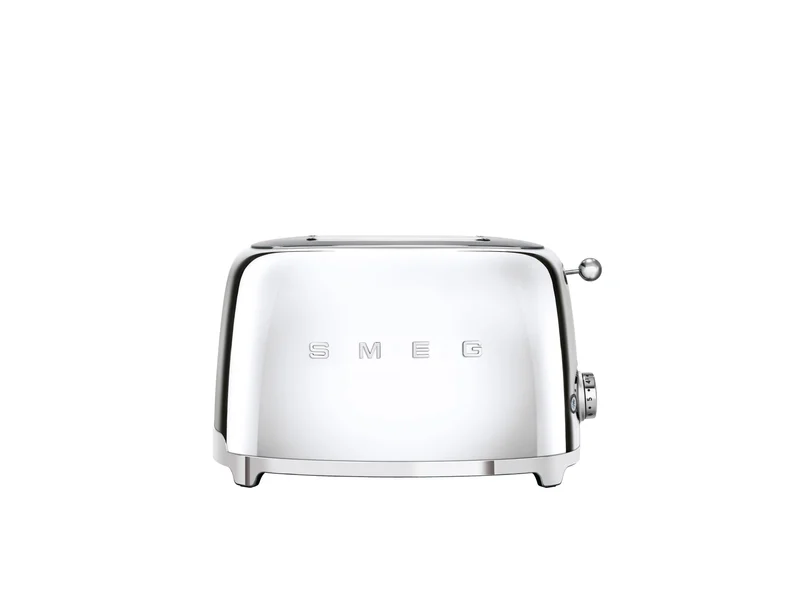
An icon of retro kitchen style that makes good toast, but you pay a flagship price mostly for the looks.
Best for: Design-first buyers for whom a statement piece on the counter matters more than value or capacity.
- Instantly recognizable retro design in a wide palette of colors
- Bagel, reheat, and defrost modes
- Self-centering slots and a solid, well-finished shell
- Flagship pricing is driven largely by aesthetics rather than performance
- Only two slots and a compact capacity for the money
- Owners note the styling, not the toasting, is the main reason to buy
| Criteria | Breville the 'A Bit More' 4-Slice Long Slot Toaster Top pick Buy it Buy | Cuisinart 4-Slice Metal Classic Toaster Buy it Buy | KitchenAid 2-Slice Programmable Toaster It depends Buy | Smeg TSF01 2-Slice Toaster Skip it Buy |
|---|---|---|---|---|
| Best for | Households that toast in volume or eat varied bread shapes and want flexible slots. | Value-minded families who want a proven four-slice workhorse without paying a premium. | Buyers who want a premium two-slice toaster with strong looks and are willing to pay for the badge and build. | Design-first buyers for whom a statement piece on the counter matters more than value or capacity. |
| Price tier | $$$ · premium | $$ · mid-range | $$$ · premium | $$$$ · flagship |
| Toasting evenness | Variable control, LED progress | Good, some slot-to-slot variance | Attractive and near-even | Good and even |
| Slots & capacity | Extra-long slots, 4 slices | Four standard slots | Two extra-wide slots | Two wide slots |
| Browning control | Variable, LED progress, Lift & Look | Dual independent dials | Push-button dial with indicator | 6-setting rotary dial |
| Specialty functions | A Bit More, Frozen, Bagel | Bagel, defrost, reheat | Bagel, defrost, keep-warm | Bagel, reheat, defrost |
| Build & durability | Brushed stainless steel | Proven over years of use | Heavy, premium feel | Solid, well-finished shell |
| Countertop footprint | Large (long-slot) | Wide (four-slice) | Compact | Compact |
| Price tier | $$$ · premium | $$ · mid-range | $$$ · premium | $$$$ · flagship |
Which one is right for you?
- Households that toast in volume or eat varied bread shapes and want flexible slots. Buy it Breville the 'A Bit More' 4-Slice Long Slot Toaster
- Value-minded families who want a proven four-slice workhorse without paying a premium. Buy it Cuisinart 4-Slice Metal Classic Toaster
- Buyers who want a premium two-slice toaster with strong looks and are willing to pay for the badge and build. It depends KitchenAid 2-Slice Programmable Toaster
- Design-first buyers for whom a statement piece on the counter matters more than value or capacity. Skip it Smeg TSF01 2-Slice Toaster
How we judged the field
We do not run our own lab. Instead, we synthesize maker specifications and aggregated owner reports. For pop-up toasters, a few things separate the good from the forgettable:
- Evenness: how uniformly each side browns, and whether results hold across all slots.
- Slot flexibility: standard, extra-wide, or long slots, and how well they fit bagels and thick artisan bread.
- Control and feedback: shade range, independent dials, and helpful extras like a lift-to-check function.
- Everyday functions: bagel, defrost, and reheat modes that most households actually use.
- Build and longevity: carriage feel, materials, and what long-term owners report.
- Value: what you get for the price tier, not just the sticker.
With those criteria, two models stood out as easy recommendations, one earned a qualified nod, and one is hard to justify unless looks are your priority.
Breville the ‘A Bit More’ 4-Slice Long Slot Toaster
Buy itThis is the most complete toaster in the group. Breville gives it variable browning control with an LED progress indicator, and the extra-long slots take larger artisan bread, thick bagels and dense pastries. The Lift & Look feature lets you peek mid-cycle without cancelling, and the A Bit More button adds a short burst when toast comes up just shy of done. The trade-off is size, since the long-slot body is large on the counter. For most households that toast often and eat varied bread, it is the pick.
Cuisinart 4-Slice Metal Classic Toaster
Buy itThe value champion. Two independent dials mean you can run one pair of slots darker than the other, and the bagel, defrost, and reheat functions cover daily use. Owner reports repeatedly mention years of dependable service, and the brushed stainless housing looks more expensive than it is. It is not perfect: some owners note browning that varies between slots, and the standard-width slots are less forgiving of very thick cuts. But for the money, it delivers the fundamentals reliably, which is exactly what most buyers need.
KitchenAid 2-Slice Programmable Toaster
It dependsThe KitchenAid is well made and good looking, with a weighty shell, a clean push-button layout, a progress indicator, and extra-wide slots. The color range is broad. The catch is value: you pay a premium price for only two slots, and some owner reports raise consistency and durability concerns over time. If you specifically want a premium two-slice toaster and the design fits your kitchen, it makes sense. If cost-per-slice or long-term peace of mind matters more, the buys above are stronger.
Smeg TSF01 2-Slice Toaster
Skip itThere is no denying the appeal: the TSF01 is a retro icon that anchors a kitchen, and it offers the usual bagel, reheat, and defrost modes. The problem is the math. Its flagship price is driven largely by aesthetics, you get only two slots, and even enthusiastic owners tend to say the styling, not the toasting, is the reason to buy. Unless a statement piece on the counter genuinely matters to you, your money buys more toaster elsewhere.
Breville the ‘A Bit More’ 4-Slice vs Cuisinart 4-Slice Metal Classic: which should you buy?
Both are four-slice toasters that earn a buy, so the decision is about flexibility versus value. The Breville wins on slot versatility: its extra-long slots take bagels, sandwich bread, and larger artisan cuts. It also costs more and occupies more counter space. The Cuisinart answers with independent dual dials, a smaller price, and a long track record of reliability from owners, at the cost of some slot-to-slot variance and narrower slots. Spend up for the Breville if you toast a lot or eat varied bread; choose the Cuisinart if you want dependable everyday toast and prefer to keep the budget in check.
What to look for
- Slot style: long slots are the most versatile; extra-wide slots help with bagels and thick bread.
- Even browning: prioritize models that owners report brown consistently on both sides.
- Independent controls: dual dials or per-side shade settings are useful when people want different toast.
- Useful functions: confirm bagel, defrost, and reheat are present; treat them as a baseline, not a bonus.
- Lift-and-check and add-time features: they reduce guesswork and prevent over-toasting.
- Capacity vs footprint: four slots save time but need more space; match this to your counter and household.
- Value for the tier: a higher price should buy performance and durability, not just design.
Our final take
If you want the best results with the least fuss, the Breville ‘A Bit More’ 4-Slice is the toaster to buy: variable browning control and long slots that fit larger bread and bagels. The Cuisinart 4-Slice Metal Classic is the value pick that covers the same everyday needs for less and has the owner track record to back it up. The KitchenAid is a fair choice if you want a premium two-slicer and love the look, but it is a want more than a need. And the Smeg, for all its charm, is a style purchase first; most people should skip it and put the difference toward better toast.
Questions, answered
Two-slice or four-slice: which should I get?
Choose by how many people you feed at once. A four-slice model like the Cuisinart or the Breville long-slot saves real time for families or weekend cooking, while a two-slice model such as the KitchenAid or Smeg suits singles, couples, or tight counters. Long slots are the most flexible because they fit both standard slices and long or artisan cuts.
What actually makes toast come out even?
Even browning comes from consistent heating-element coverage, self-centering slots that hold the bread close to the elements, and reliable shade timing. Some owners report slot-to-slot variance on some models, which is why running a test batch and dialing in your preferred shade helps.
Are bagel and defrost settings worth having?
Yes, if you use them. A bagel mode concentrates heat on the cut side while gently warming the outside, and a defrost setting adds time for bread straight from the freezer. These are common on pop-up toasters, so treat them as a baseline you should expect.
Is a pop-up toaster different from a toaster oven?
Yes. A pop-up toaster is purpose-built for browning sliced bread, bagels, and similar items quickly and evenly in vertical slots. A toaster oven is a small countertop oven for baking, broiling, and reheating. This comparison covers pop-up toasters only; if you want to bake or reheat plated food, look at toaster ovens instead.
Is an expensive toaster worth it?
Sometimes. Spending up can buy extra slot flexibility and features, as with the Breville. But a premium price can also reflect design rather than performance, which is the case with the Smeg. The mid-range Cuisinart shows you do not have to spend the most to get dependable results.
Deciding between the top two? See our head-to-head: Breville the 'A Bit More' 4-Slice Long Slot Toaster vs Cuisinart 4-Slice Metal Classic Toaster.
More in Home & Kitchen
Pop-Up Toasters, Explained Plain-English guide → Breville the 'A Bit More' 4-Slice Long Slot Toaster vs Cuisinart 4-Slice Metal Classic Toaster Head-to-head →  The Best Tortilla Presses: 4 Compared (and One to Skip)
  The Best Touchless Kitchen Trash Cans: 4 Compared (and One to Skip)
  The Best Towel Warmers: 4 Compared (and One to Skip)
  The Best Tower Fans: 4 Compared (and One to Skip)