

Home & Kitchen
The Best Tower Fans: 4 Compared (and One to Skip)
We compared four popular tower fans on airflow, noise, oscillation quality, controls, and long-term reliability to find real winners.
The short version
After synthesizing independent testing and owner reports across four of 2026's most popular tower fans, the Dreo Nomad One is the one most people should buy - its owner-praised quiet low speeds suit sleeping and it offers strong airflow for its size at a fair mid-range price. The Vornado OSCR37 is the upgrade pick: it costs more, but its circulator design genuinely moves air around an entire room and its oscillation is the smoothest of the group. The Lasko Wind Curve T42951 is the value play - impressive raw breeze for a budget price, but only three speeds, a constant hum, and shakier long-term durability make it a conditional pick. The Honeywell QuietSet HYF290B is the one to skip: owners widely report grinding oscillation noise and modest airflow that undercut both halves of its 'QuietSet Whole Room' name. Best for: bedroom and office cooling, get the Dreo; whole-room comfort, get the Vornado.
Our picks at a glance
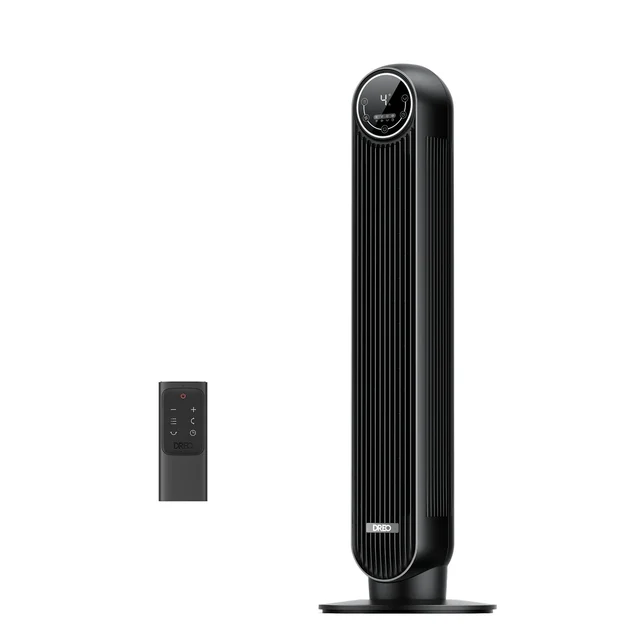
- Dreo Nomad One Tower Fan - Buy. The quiet default that most bedrooms and offices should buy.
- Vornado OSCR37 Oscillating Tower Circulator - Buy. The whole-room circulator that actually moves air to the far corners, not just past your chair.
- Lasko Wind Curve T42951 Tower Fan - It depends. A lot of raw airflow for very little money, if you can live with three speeds and some fan hum.
- Honeywell QuietSet Whole Room Tower Fan (HYF290B) - Skip. A best-seller whose 'quiet' branding writes checks its oscillation gears and airflow can't cash.
The verdict in 30 seconds
What mattered most
- Motor type
- Speeds / modes
- Noise character
- Room coverage
- Oscillation quality
- Timer
A good tower fan should move serious air without sounding like a jet engine, oscillate smoothly, and survive more than one summer. We synthesized independent testing and thousands of owner reports on four of the most-bought tower fans of 2026. Two earn a clear buy, one is a solid pick only if the price is right, and one popular best-seller falls short of its own marketing.
The quiet default that most bedrooms and offices should buy.
Best for: Bedrooms, offices, and anyone who wants near-silent low-speed cooling without a premium price
- Owners describe the low speeds as quiet, ideal for sleeping
- Strong, far-reaching airflow for its size, with 90-degree oscillation
- Four speeds plus sleep and auto modes, an 8-hour timer, and a remote
- Display light can bother some light-sensitive sleepers
- Top speed trades its quietness for a noticeable whoosh
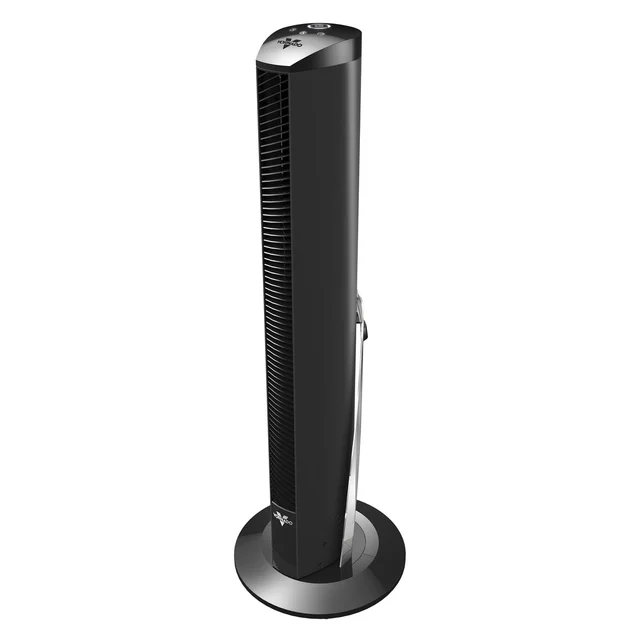
The whole-room circulator that actually moves air to the far corners, not just past your chair.
Best for: Living rooms and larger spaces where you want the whole room cooler, not just one spot
- Signature air-circulation design pushes air across an entire room, not just a narrow lane
- Smooth, quiet oscillation that owners praise
- Simple touch controls, a 3/6/9/12 hour timer, and a 5-year satisfaction guarantee
- Costs meaningfully more than similarly sized competitors
- Audible at medium and high speeds; it prioritizes air movement over silence
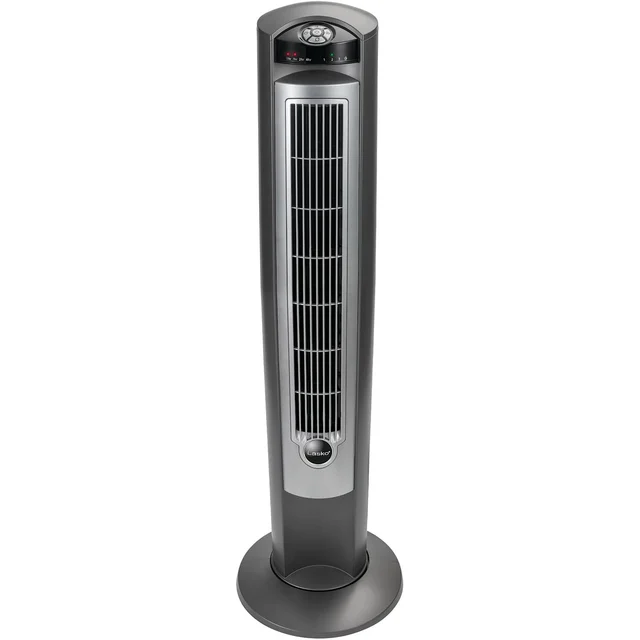
A lot of raw airflow for very little money, if you can live with three speeds and some fan hum.
Best for: Budget buyers who want maximum breeze per dollar and are not picky about noise
- Strong airflow that independent testing consistently ranks above its price class
- Nighttime mode auto-steps the speed down and dims the controls for sleep
- Built-in carry handle and a remote control
- Only three speeds, with a coarse jump between them and some motor hum
- Owners report more plastic rattle and shorter lifespans than pricier competitors
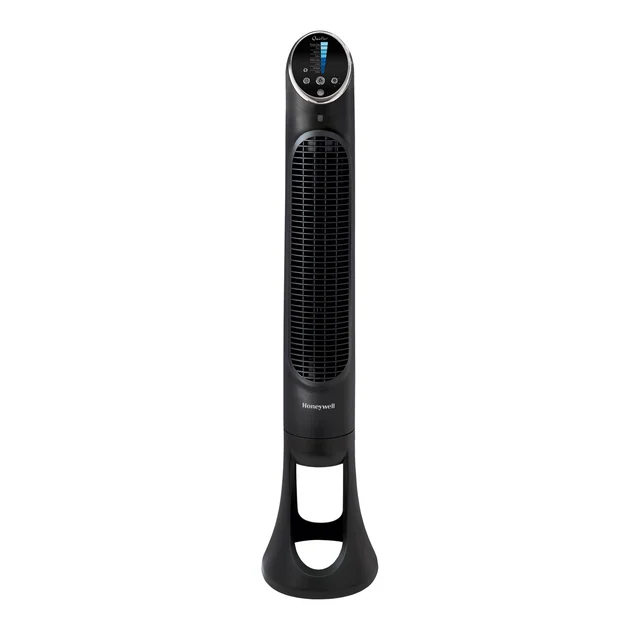
A best-seller whose 'quiet' branding writes checks its oscillation gears and airflow can't cash.
Best for: Almost nobody at this price; small-room users who never oscillate it are the only fit
- Offers more speed settings than most rivals
- Genuinely quiet on the lowest whisper settings
- Owners widely report a grinding, clicking oscillation noise that undermines the QuietSet promise
- Airflow is modest even at top speed, underpowered for the 'whole room' claim
- Motor vibration and rattling complaints climb on the upper speed settings
| Criteria | Dreo Nomad One Tower Fan Top pick Buy it Buy | Vornado OSCR37 Oscillating Tower Circulator Buy it Buy | Lasko Wind Curve T42951 Tower Fan It depends Buy | Honeywell QuietSet Whole Room Tower Fan (HYF290B) Skip it Buy |
|---|---|---|---|---|
| Best for | Bedrooms, offices, and anyone who wants near-silent low-speed cooling without a premium price | Living rooms and larger spaces where you want the whole room cooler, not just one spot | Budget buyers who want maximum breeze per dollar and are not picky about noise | Almost nobody at this price; small-room users who never oscillate it are the only fit |
| Price tier | $$ · mid-range | $$$ · premium | $ · budget | $$ · mid-range |
| Motor type | Not stated by maker | Not stated by maker | Not stated by maker | Not stated by maker |
| Speeds / modes | 4 speeds + sleep, auto modes | 4 speeds, on-demand oscillation | 3 speeds + nighttime mode | More speeds incl. whisper settings |
| Noise character | Near-silent lows, audible max | Smooth whoosh, audible at mid+ | Constant hum, coarser at high | Quiet lows, but grinding oscillation reported |
| Room coverage | Small to medium rooms | Whole-room circulation, large rooms | Medium rooms at close range | Small rooms only |
| Oscillation quality | Smooth 90-degree sweep | Very smooth, praised by owners | Standard, some rattle over time | Frequent grinding/clicking complaints |
| Timer | 8 hours | 3/6/9/12 hours | Up to 7.5 hours | Timer included |
| Reliability reputation | Strong owner reports | Strong, long guarantee | Mixed after year one | Mixed, oscillation gear a weak point |
| Price tier | $$ · mid-range | $$$ · premium | $ · budget | $$ · mid-range |
Which one is right for you?
- Bedrooms, offices, and anyone who wants near-silent low-speed cooling without a premium price Buy it Dreo Nomad One Tower Fan
- Living rooms and larger spaces where you want the whole room cooler, not just one spot Buy it Vornado OSCR37 Oscillating Tower Circulator
- Budget buyers who want maximum breeze per dollar and are not picky about noise It depends Lasko Wind Curve T42951 Tower Fan
- Almost nobody at this price; small-room users who never oscillate it are the only fit Skip it Honeywell QuietSet Whole Room Tower Fan (HYF290B)
How we judged the field
We don’t run our own lab. Instead, we synthesized independent testing of airflow, velocity, and noise with large volumes of aggregated owner reports - the long-term signal that reveals what a fan is like after month three, not day three. Four criteria mattered most: how much air the fan actually moves across a room, how it sounds at the speeds you’ll really use (especially overnight), how smoothly and quietly it oscillates, and whether owners are still happy after a full summer or two. We also weighed controls, timers, and the honesty of each product’s marketing against its real-world performance.
Dreo Nomad One Tower Fan
Buy itThe Nomad One is the fan we’d hand to almost anyone who asks. Owner reports agree that the low speeds are very quiet, which makes it one of the few tower fans you can run beside your bed all night without noticing it. Yet it doesn’t sacrifice daytime performance - reviewers report airflow that reaches across a normal bedroom or office with ease, helped by a 90-degree oscillation sweep that covers the space evenly. The controls are thoughtfully done: four speeds plus sleep and auto modes, an 8-hour timer, and a remote. Complaints are minor - the display light bothers some light-sensitive sleepers, and the top speed gives up the silence in exchange for a strong whoosh. At a mid-range price, it’s the best balance of quiet, power, and polish in the group.
Vornado OSCR37 Oscillating Tower Circulator
Buy itMost tower fans blow a flat ribbon of air in one lane; the OSCR37 is built on Vornado’s circulator philosophy, and the difference shows up in owner reports again and again - people describe the whole room feeling cooler, not just the spot in front of the fan. Independent testing backs the reach, and the oscillation deserves special mention: it’s unusually smooth and quiet, the exact area where cheaper fans develop clicks and grinding. Touch controls, a 3/6/9/12 hour timer, a remote, and a 5-year satisfaction guarantee round out a genuinely premium package. The trade-offs are price and outright silence - it costs meaningfully more than the Dreo, and at medium-to-high speeds it’s clearly audible, because it’s moving more air. If your main space is a living room or large open area, this is the fan that actually handles it.
Lasko Wind Curve T42951 Tower Fan
It dependsThe Wind Curve is the classic budget muscle option, and on raw breeze per dollar it’s hard to beat - independent testing regularly finds it pushing more air than fans well above its price. The nighttime mode, which steps the speed down gradually and dims the display, is a genuinely nice touch, and the carry handle shows Lasko knows its audience. But the compromises are real: only three speeds with coarse jumps between them, some motor hum, and owner reports of plastic rattles and units that don’t survive far past the first year as reliably as pricier competitors. If the price is low and you want maximum airflow in a den, garage room, or spare bedroom, it earns its keep. If quiet or longevity matter, spend up.
Honeywell QuietSet Whole Room Tower Fan (HYF290B)
Skip itThe HYF290B is a widely sold tower fan, and that’s exactly why it needs a hard look. The multi-speed QuietSet ladder sounds great on paper, and to be fair, the lowest whisper settings are genuinely quiet. But two consistent problems surface across owner reports. First, the oscillation mechanism: a grinding, clicking noise while sweeping is one of the most repeated complaints about this fan, which is fatal for a product whose entire brand is quietness. Second, airflow: reviewers and owners alike find the output modest even at top speed - fine for a small room at close range, but well short of the ‘Whole Room’ promise on the box. Add reports of motor vibration and rattling on the upper speeds, and you have a fan that underdelivers on both halves of its name while costing about the same as the Dreo Nomad One, which owners find does more of it better. Skip it.
Dreo Nomad One vs Vornado OSCR37: which should you buy?
This comes down to room size and what you’re optimizing for. The Dreo Nomad One is the better bedroom and office fan: owners find it quieter at the speeds you’ll actually sleep next to, it has more operating modes, and it costs less. The Vornado OSCR37 is the better whole-room fan: its circulator design moves air around a living room in a way the Dreo’s straighter airflow pattern can’t match, and its oscillation is the smoothest we found anywhere in the category. If you’re buying one fan for a bedroom, get the Dreo and pocket the difference. If you’re buying one fan to make a family room or open-plan space livable in July, the Vornado justifies its premium. Neither choice is a mistake - they’re simply tuned for different rooms.
What to look for
- Motor type first. A DC motor generally means quieter low speeds, finer control, and lower power draw, but makers do not always state it. If the fan will run overnight, check for it.
- Judge noise at the speed you’ll use. Most fans are quiet on minimum. What matters is the sound at the middle speeds that actually cool you.
- Oscillation quality, not just presence. Grinding or clicking during the sweep is one of the most common tower-fan failure points - check owner reports specifically for it.
- Match reach to your room. A narrow-lane tower is fine for a desk or bed; a large living space needs a circulator-style design that moves air around the room.
- Sleep features earn their keep. A display that turns off in sleep mode, a gradual nighttime mode, and a decent timer matter more in practice than a high speed count.
- Check the warranty and the year-two reports. Cheap fans often sound fine in week one; owner reports from the second summer tell the real durability story.
Our final take
The tower-fan market in 2026 splits cleanly. The Dreo Nomad One is the default: quiet where it counts, strong for its size, sensibly priced, and backed by consistently happy owners - it’s our pick for most people. The Vornado OSCR37 is the room-scale upgrade, worth its premium whenever the job is a whole living space rather than one person. The Lasko Wind Curve T42951 remains a fair deal for budget buyers who value breeze over refinement and know what they’re trading away. And the Honeywell QuietSet HYF290B, despite its enormous popularity, is the cautionary tale - a fan whose grinding oscillation and modest output contradict the very promises printed on its box. Buy the Dreo, upgrade to the Vornado, bargain-hunt the Lasko, and let the Honeywell’s sales chart shrink without you.
Questions, answered
Are tower fans better than pedestal or box fans?
They trade a little raw airflow for a much smaller footprint. A tower fan slots into corners and beside beds where a pedestal fan won't fit, and modern towers like the Dreo Nomad One close much of the airflow gap while running quietly. If you have unlimited floor space and want maximum air, a pedestal fan still wins on pure output.
Does the motor type matter in a tower fan?
DC motors generally run quieter at low speeds, use less electricity, and allow finer speed control, though not every maker states which motor a model uses. Owners describe the Dreo Nomad One as quiet at night while the Lasko Wind Curve has a more noticeable hum. If the fan will run in a bedroom every night, check the maker's page for motor type and read owner reports on low-speed noise.
Why skip the Honeywell QuietSet when it has so many reviews?
Volume of reviews isn't the same as quality of experience. Beneath the headline rating, owners consistently report a grinding or clicking noise when the fan oscillates and airflow that feels weak for a 'whole room' fan. With the Dreo Nomad One available at a similar price with a quieter motor and stronger airflow, the Honeywell is hard to justify.
How big a room can a tower fan actually cool?
Fans don't lower air temperature; they create a wind-chill effect on your skin and improve circulation. Most tower fans work best within a small-to-medium room at moderate distance. The Vornado OSCR37 is the exception here - its circulator design is built to move air around a full living-room-sized space rather than in one straight lane.
How do I keep a tower fan from getting rattly and loud over time?
Dust is the main culprit. Vacuum the intake grilles every few weeks during heavy use, keep the fan on a level hard surface, and avoid knocking it over - impact is a common cause of new rattles in owner reports. Fans with sturdier bases, like our two buy picks, tend to age more gracefully.
Deciding between the top two? See our head-to-head: Dreo Nomad One Tower Fan vs Vornado OSCR37 Oscillating Tower Circulator.
More in Home & Kitchen
Tower Fans, Explained Plain-English guide → Dreo Nomad One Tower Fan vs Vornado OSCR37 Oscillating Tower Circulator Head-to-head →  The Best Travel Mugs: 4 Compared (and One to Skip)
  The Best Vacuum Sealers: 4 Compared (and One to Skip)
  The Best Waffle Makers: 4 Compared (and One to Skip)
  The Best Water Filter Pitchers: 4 Compared (and One to Skip)