Explained
Tire Shine and Tire Dressings, Explained
After reading this you will know whether you want a water based or solvent based dressing, why sling happens, and which label claims are worth paying for.
In this guide
Tire dressing looks like a wall of interchangeable bottles that all promise a deep black shine. Underneath the marketing there is really one decision: what the shine is carried in. Water based products dry down clean and need refreshing often, solvent and silicone based products deliver the wet gloss and last longer but ask for a careful hand. Most of the complaints people have about this category, sling onto paint especially, come from application rather than from the product they picked.
The 30-second version
- The carrier is the category. Water based versus solvent or silicone based decides how the tire looks, how long it lasts, and how much of it ends up on your paint. Brand matters far less.
- Water based dries down, solvent stays wet. Water based dressings flash off to a touch dry satin or semi gloss and sling almost never; solvent gels leave a thicker wet film that looks deeper and lasts longer between washes.
- Sling is over-application, not a defect. When more dressing sits on the sidewall than the rubber can absorb, the wheel throws the excess off at speed. Thin coats, a levelling wipe, and ten minutes of dwell fix it on nearly any product.
- Petroleum solvents are the long game concern. Owners and tire retailers frequently report sidewalls looking dried out or discoloured after seasons of heavy solvent dressing use, which is why water based is the safer habit for regular use.
- Buy a wipe step, not a no-wipe promise. Products that make you level the coat are the ones that control how much material stays on the tire. Touchless aerosols remove the only control you had.
The products this guide is about
Our verdict on each, with the full reasoning on the companion review.
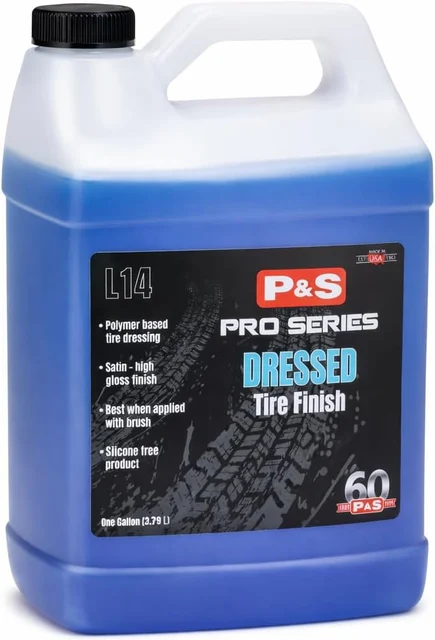
- Buy P&S Professional Detail Products Dressed Tire Finish A water based polymer dressing, made as an alternative to silicone dressings, that owners layer from satin toward gloss with very little sling. Amazon
- Buy Chemical Guys VRP Vinyl, Rubber, Plastic Protectant The sensible default: a dry-to-the-touch protectant that dresses tires, trim, and interior plastics from one bottle. Amazon
- It depends Meguiar's Endurance Tire Gel The gloss benchmark, and a thick gel that rewards a thin careful coat and punishes a generous one. Amazon
- Skip Armor All Tire Foam Protectant The touchless aerosol whose main selling point, no wiping, is exactly what causes the sling and overspray owners complain about. Amazon
What actually matters
- Carrier chemistry (water based vs solvent based). This is the fork in the road. Water based suspends polymers or silicone emulsions in water and dries to the touch. Solvent based carries silicone oils in a petroleum distillate that evaporates and leaves a wetter, glossier, longer lasting film. Everything else about the product follows from this choice.
- Finish level. Satin and wet gloss are different products, not different amounts of the same product. Decide which look you want before you shop, or you will buy a gloss gel and then complain that it looks greasy.
- Sling resistance. Sling is dressing flung onto your rocker panels and rear quarters. It correlates with how thick the film is and whether the product includes a levelling step, so the application method matters as much as the formula.
- Reapplication interval. Water based typically wants refreshing every wash or two, and rain shortens that. Solvent gels commonly stretch several weeks. Neither is better in the abstract; it depends on whether you wash weekly or a few times a year.
- Application method. Brush, foam applicator, trigger spray, and aerosol are not interchangeable. Anything applied by hand gives you control over quantity and keeps product off your wheel faces and brake components.
- Silicone content. Silicone free formulas do not build the greasy film that makes the next wash harder, and they are safer to have around if you also do bodywork or apply a ceramic coating nearby.
- Double duty. Some dressings also handle bumper trim, wheel well liners, and interior plastics from the same bottle, which changes the value math considerably against a tires only product.
The specs, in plain English
Green flags vs red flags
Green flags
- The label states the carrier plainly as water based or solvent based rather than hiding it behind shine claims
- Silicone free is called out, especially if you also polish, coat, or paint the car
- The instructions include a wipe or levelling step rather than telling you to spray and walk away
- The finish is described as adjustable by dilution or number of passes, so you pick the look
- The same bottle is rated for exterior trim and plastics, not tires only
- Application calls for a brush or foam applicator, which means you control how much stays on the rubber
Red flags
- A touchless aerosol that specifically tells you not to wipe, which removes the only control over quantity
- Marketing that leads with permanent or months long shine from a spray on dressing
- No mention of carrier chemistry anywhere on the label or product page
- Owner photos in listings that show wet product pooling on the sidewall rather than an even film
- A cheap foam pad taped to the bottle presented as a real applicator
- Claims that the product prevents browning, when browning is usually the tire's own antiozonant additive surfacing
Who's who: the brands
- P&S - Professional detailing supply line sold mainly in gallon sizes; its tire dressing is a water based polymer formula made as an alternative to silicone dressings.
- Chemical Guys - Consumer detailing brand with enormous retail reach; its dry-to-the-touch rubber and plastic protectant is the common one bottle answer for tires, trim, and interior plastics.
- Meguiar's - Long established consumer car care name; its concentrated tire gel is the benchmark for deep wet gloss and the product most people picture when they hear tire shine.
- Armor All - The mass market aerosol brand stocked in every supermarket and parts store; convenience first, which is also the source of most sling and overspray complaints.
- Adam's Polishes - Enthusiast focused range with both water based dressings and longer wearing tire coatings, aimed at owners who already have an applicator drawer.
- Griot's Garage - Detailing brand with a reputation for understated satin finishes rather than high gloss, favoured by owners who want the tire to look new rather than shiny.
How to read a listing without getting fooled
Start by finding the carrier, because everything else follows from it. If the label or product page does not say water based, look for a combustible liquid or flammable warning, a petroleum distillate in the ingredients, or the words gel and wet look, all of which point to a solvent carrier. Then read the application instructions rather than the front label claims: a product that tells you to apply thin and wipe or level is a product designed to control how much material stays on the tire, and a product that tells you to spray and walk away has handed that control to gravity and centrifugal force. Treat durability figures as a best case on a freshly cleaned tire, not a promise, because road film, rain, and a dirty sidewall cut them sharply. Ignore before and after photos entirely, since any dressing looks spectacular for the first ten minutes. The useful questions are how it looks the next day, how much of it ends up on your paint, and how many washes it survives. If the bottle is a concentrate, check the dilution guidance, because that is what lets you choose satin or gloss instead of accepting whatever the manufacturer baked in.
How much should you spend?
This is a category where spending more buys control rather than shine, because cheap products get plenty glossy. The cost drivers are carrier quality, whether the formula is silicone free, and whether the bottle is a concentrate you dilute. Budget aerosols and basic gels are genuinely inexpensive and the gloss they deliver is real, so the cheap end is not a trap on looks alone; it is a trap on mess, since the money you save comes straight back as time spent cleaning slung product off your paint. The value sweet spot sits with a mid range water based dressing plus a proper foam applicator or dressing brush, which together cost little and solve most complaints in this category. Professional sizes look expensive at the till but usually work out cheapest per application, especially if the product dilutes, so they make sense for anyone washing weekly. Spending up into tire coating territory is only worth it if you dress your tires rarely and want months of wear, and it is wasted money if you wash often enough to reapply a simple dressing anyway. What is never worth paying for is a premium price attached to a no-wipe convenience claim.
Questions, answered
Water based or solvent based: which should I actually buy?
It comes down to how often you wash. Water based dries to the touch, gives a satin to semi gloss look, slings very little, and needs refreshing every wash or two. Solvent based gels leave a thicker wet gloss film and last noticeably longer, but they demand a thin, careful, levelled application. If you wash weekly, water based is the easier habit. If you dress your tires once a month or less, a solvent gel earns its keep.
Why does tire shine sling onto my paint?
Because more dressing is sitting on the sidewall than the rubber can absorb, so the wheel throws the excess off at speed. It is an application problem far more often than a product fault. Apply a thin coat, level it with the applicator, and let the car sit about ten minutes before driving. Aerosols that instruct you not to wipe are the hardest to control, which is why they generate the most sling complaints.
Does tire dressing damage tires or cause brown sidewalls?
The brown film is usually antiozonant bloom, a protective additive migrating out of the rubber to the surface, which is normal tire behaviour rather than dressing damage. That said, owners and tire retailers frequently report that heavy repeated use of petroleum solvent dressings leaves sidewalls looking dried out or discoloured over several seasons. If you dress your tires constantly, water based is the safer long term habit.
Do I really need to clean the tire first?
Yes, and it changes the result more than switching brands does. Dressing applied over old dressing, brake dust, and road film goes on blotchy and lifts unevenly. Use a dedicated tire and rubber cleaner with a stiff brush until the foam runs clear rather than brown, and most streaking complaints disappear on their own.
Is silicone in tire dressing something to avoid?
Not for the tire itself, but it matters for what is nearby. Silicone leaves a slick film that attracts dust, makes the next wash harder, and can contaminate paint before polishing, coating, or bodywork. If you only dress tires, it is a minor concern. If you also apply ceramic coatings or do any paint work, silicone free is worth choosing deliberately.
How long should a dressing last before I reapply?
Water based products typically look their best for a wash or two, roughly one to two weeks, and rain shortens that. Solvent gels commonly stretch to several weeks, and dedicated tire coatings run longer still. Any published figure assumes a properly cleaned tire, so treat it as a rough guide and judge by how the sidewall actually looks.
Or jump to the head-to-head: P&S Professional Detail Products Dressed Tire Finish vs Chemical Guys VRP Vinyl, Rubber, Plastic Protectant.