Explained
Tonneau Covers, Explained
After reading this you'll know which tonneau cover style fits how you actually use your truck, and how to read a listing without getting fooled.
In this guide
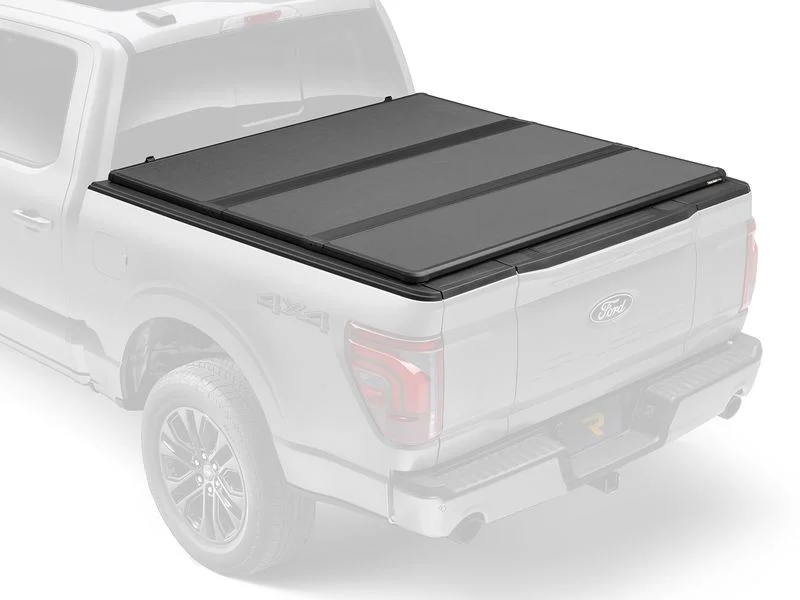
A tonneau cover is the hard or soft lid that goes over your truck bed to hide cargo, keep out weather, and clean up the look. The category splits sharply between cheap soft covers that open fast but give up security, and pricier hard or retractable covers that lock down like a trunk. The single thing that trips up most first-time buyers is fitment: every cover is built for one specific truck, model year, and bed length, so a great cover ordered for the wrong bed simply will not fit.
The 30-second version
- Pick the type by how you use the bed, not by looks alone. Soft roll-ups win on price and fast full-bed access; hard folding and retractable covers win on security and weather sealing.
- Hard beats soft on security and staying dry, because latching aluminum panels or key-locking slats plus real drainage protect cargo in ways soft vinyl and rail seals cannot.
- Fitment is non-negotiable, so order for your exact make, model year, and bed length, and check for RamBox, bed-liner, or utility-track conflicts before you buy.
- No-drill clamp install keeps things simple, letting most owners fit the cover in about an hour without modifying the truck or risking bed warranties.
- A cover is not a cargo rack, since hard covers hold only modest evenly spread weight and soft covers hold none, so plan for load-rated rails or a bed rack if you stack gear on top.
The products this guide is about
Our verdict on each, with the full reasoning on the companion review.
- Buy Extang Solid Fold ALX An all-aluminum hard tri-fold that seals, secures, and looks premium without the retractable-cover price.
- Buy TruXedo Lo Pro QT The soft roll-up to buy: low-profile, quick daily access, and a long warranty for the money.
- It depends RetraxEQ Retractable Tonneau Cover A slick key-locking retractable that slides away like a rolltop desk, if you can justify the cost and lost bed depth.
- Skip BAKFlip G2 Hard Folding Cover A dated hard tri-fold that costs close enough to better matte covers that it's hard to recommend new.
What actually matters
- Cover type decides everything downstream. Soft roll-up, soft or hard tri-fold, retractable, and one-piece hinged each trade differently across security, access, weather, and price, so choose the format first.
- Security is the real hard-versus-soft divide. Soft vinyl offers deterrence at best; latching hard panels and multi-point key locks on retractables give genuine theft resistance.
- Weather sealing and drainage determine whether your bed stays dry in a downpour or car wash. Look for perimeter rail seals plus drain tubes that route water out through the bed drains.
- Bed access versus full coverage is a daily-use trade-off. Some covers open the whole bed in seconds; others open to any position but permanently give back space to a storage canister.
- Load and stackability matter if you ever set anything on top. Hard covers take a few hundred pounds of evenly distributed weight, never point loads; soft covers take nothing.
- Install method affects removability and warranty. No-drill clamp-on covers keep the bed unmodified and the cover removable; drilled installs are permanent and can complicate bed warranties.
- Material and UV durability shape how it ages. Matte aluminum resists sun fade and looks factory for years; vinyl is lighter and cheaper but weathers faster.
The specs, in plain English
Green flags vs red flags
Green flags
- The listing states an exact fitment: your make, model year, and bed length, plus notes on RamBox or utility-track compatibility.
- No-drill clamp install described, so the cover stays removable and the bed unmodified.
- Weather protection spelled out with rail seals and drain tubes, not just a vague 'water-resistant' claim.
- Aluminum panels or slats with a matte or powder-coated finish for security and UV durability.
- A clearly stated, multi-year warranty from a maker owners report actually honors.
- Honest load language: a rated distributed weight for hard covers, or a clear 'do not load' note for soft ones.
Red flags
- The listing sells one cover as fitting many trucks or leaves bed length unspecified.
- Security described only as a tailgate lock on a soft vinyl cover, marketed as 'secure.'
- No mention of seals or drainage, or vague weatherproofing promises with no detail.
- Claims you can stand or stack heavy gear on a soft cover, or big point loads on any cover.
- Drilling required with no clamp option, on a truck you want to keep unmodified.
- Sagging bargain vinyl with no tensioning system, which pools water and looks loose within months.
Who's who: the brands
- Extang - Known for premium low-profile hard tri-folds with matte aluminum panels and easy no-drill installs.
- TruXedo - Soft roll-up specialist praised for taut, tensioned vinyl and long warranties by soft-cover standards.
- Retrax - Makes the retractable, key-locking canister covers, with step-up lines that add load-rated rails.
- BAK - Long-running maker of hard folding covers spanning older budget models and current matte designs.
- UnderCover - Best known for one-piece hinged and folding covers with a clean, trunk-like look.
How to read a listing without getting fooled
Start at the fitment line and treat it as a filter, not a footnote: confirm the cover is sold for your exact make, model year, and bed length, and scan for compatibility flags like RamBox, factory bed liners, or utility-track systems that need a bracket. Next, translate the marketing into the format that actually determines security and weather: 'roll-up' and 'soft' mean vinyl with rail seals and no real theft protection, while 'aluminum,' 'latching,' 'retractable,' and 'key-lock' mean hard security and better sealing. Look for concrete weather language (rail seals plus drain tubes) rather than a bare 'water-resistant.' Check the install method for the words 'no-drill' or 'clamp-on' if you want the cover removable and the bed unmodified. Finally, read the load claim literally: a hard cover's 'a few hundred pounds' means evenly distributed, never a single heavy point, and a soft cover's real load rating is zero, no matter how the photo is staged.
How much should you spend?
Price tracks the format more than the brand. Soft roll-ups and soft folding covers are the entry point, and a mid-tier soft cover with proper tensioning and a decent warranty is the value sweet spot for buyers who mainly want to hide cargo, cut drag, and open the bed fast. Hard folding aluminum covers cost a clear step more, and for most owners that step is worth it because you gain lockable security, real weather sealing, and a finish that ages well, which is where the money genuinely earns its keep. Retractable and one-piece hinged covers sit at the top, and they only make sense if trunk-like key-locking security or a specific look is worth both the premium and, on retractables, the bed space the canister consumes. Spending more stops paying off when you are buying features you will not use, such as load-rated rails you will never load; spending too little bites when a bargain cover sags, leaks, and needs replacing. When two covers are close in price, favor the newer, better-sealed design over an older one, since the small savings rarely offset weaker sealing and a finish that scuffs sooner.
Questions, answered
Do tonneau covers fit any truck?
No. Every cover is engineered for a specific make, model year, and bed length, and it clamps to that bed's exact rail dimensions. A cover for a short 5.5-foot bed will not fit a 6.5-foot bed even on the same truck. Always pick the listing that matches your truck exactly, and check whether a factory cargo-track, utility-rail, or in-bed storage box like RamBox needs a compatibility bracket or a special version of the cover.
Are soft or hard covers more secure and weatherproof?
Hard and retractable covers win on both. Soft roll-ups rely on tailgate locking and rail seals, so a determined thief can get past them and heavy rain or dust can still work in. Hard folding covers add latched aluminum panels and better drainage, and retractable covers add multi-point key locks for the closest thing to a lockable trunk. If security or a bone-dry bed matters to you, buy a hard or retractable cover.
Can I stack cargo or stand on a tonneau cover?
Only carefully, and only on hard covers. Hard folding and retractable aluminum covers are typically rated for a few hundred pounds of evenly distributed weight, not concentrated point loads, so they are not a work surface or a place to stand. Soft covers hold no top load at all. If you routinely carry gear on top, look for a cover with load-rated T-slot rails or add a dedicated bed rack.
Will a tonneau cover improve gas mileage?
Usually a little. Covering the bed smooths airflow and reduces drag, and both independent testing and owner reports generally find a small highway efficiency gain rather than a dramatic one. Treat any mileage improvement as a bonus on top of the real reasons to buy: security, weather protection, and a cleaner look.
How hard is it to install a tonneau cover myself?
For most no-drill covers, not hard at all. They clamp to the inside of the bed rails with hand tools, and many owners finish in about an hour, with soft roll-ups being the fastest and heavier hard or retractable covers easier with a second set of hands. Choosing a clamp-on cover keeps the bed unmodified and the cover removable, and avoids the risk of drilling into your truck.
Can I keep a bed toolbox or haul tall loads with a cover on?
It depends on the cover. Folding and roll-up covers can be left partly open or fully rolled or folded back for tall cargo, but they must be closed to seal. Retractable covers open to any position, though their canister takes up space at the front of the bed. If you run a crossbed toolbox, order a toolbox-compatible version of the cover or a low-profile box, since a standard cover will not clear most full-height boxes.
Or jump to the head-to-head: Extang Solid Fold ALX vs TruXedo Lo Pro QT.