Explained
Wash Mitts, Explained
After reading, you'll understand how a mitt actually prevents scratches, and which material suits the soap you already use.
In this guide
The wash mitt is the only thing that touches your paint under pressure during a wash, which makes it the most likely cause of swirl marks and the least specified product in the aisle. What a mitt does is lift grit off the panel and hold it deep in its fibres until you rinse it away. Everything worth knowing follows from that: fibre length, pile construction, how much solution the mitt carries, and how you launder it.
The 30-second version
- A mitt works by holding grit away, so long fibres protect paint and short dense pile drags it.
- Never use a sponge, because a flat cell surface gives grit nowhere to go except back onto the panel.
- Lambswool needs pH neutral soap, or the fibres loosen and shed early, as one brand states on its own page.
- Two mitts minimum, since a mitt used on wheels should never touch upper paint.
- Fabric softener ruins mitts, coating fibres and destroying both absorbency and grit release.
The products this guide is about
Our verdict on each, with the full reasoning on the companion review.
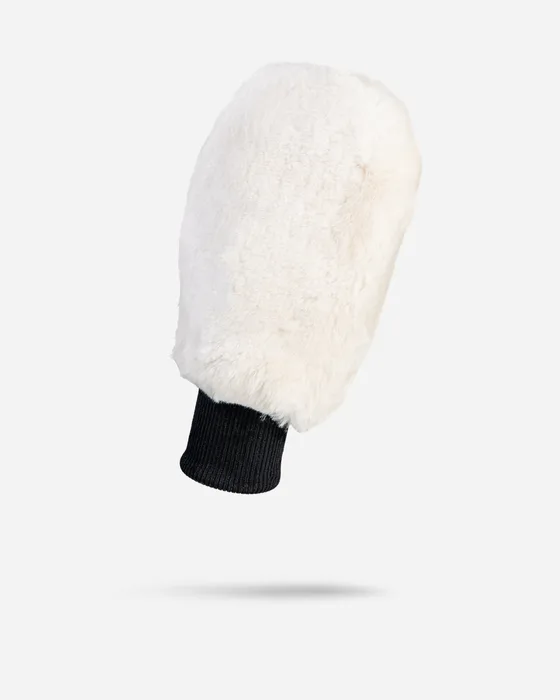
- Buy Adam's Polishes Lambskin Wash Mitt Real lambswool, a published size, and the only care instruction in the category that tells you how to not ruin it.
- Buy Chemical Guys Big Noodle Supersized Wash Mitt A supersized noodle mitt that holds a great deal of soapy solution, which is most of what a mitt has to do. Amazon
- It depends P&S Detail Products TWISTER Micro Fiber Premium Wash Mitt The twist construction is the right idea, and the product page contains no description at all.
- Skip Turtle Wax Gray Chenille Wash Mitt Titled as chenille and described as plush microfibre, with no dimensions to settle the question either way.
What actually matters
- Material - lambswool is the traditional professional choice for absorbency and gentleness; microfibre covers everything else and is more tolerant of harsh soap and laundering.
- Construction - noodle mitts use long dangling fibres, twist mitts use twisted strands that wick, chenille and plush use short dense pile. Longer and looser generally means safer for paint.
- Size - a bigger mitt holds more solution, which is the lubricating layer between the fibre and your clear coat. It also gets heavier when soaked.
- Double sided - whether both faces of the mitt work. It effectively doubles the surface you can use between rinses, which means fewer trips to the bucket.
- Cuff - the wrist band. A snug cotton or elasticated cuff keeps control of a heavy wet mitt, which is why the mitt format beats a loose pad.
- Care requirements - whether the mitt needs pH neutral soap and careful laundering. Wool does; synthetic largely does not.
- Replacement cadence - a mitt that has been dropped is finished for paint work. Cheap mitts make that decision easier to actually follow.
The specs, in plain English
Green flags vs red flags
Green flags
- The material named specifically, and the same material named in the title and the description.
- Dimensions published, since size sets how much solution the mitt carries.
- A statement that the mitt is double sided.
- Care instructions, especially any soap requirement.
- A construction described in terms of fibre length rather than only as plush or premium.
Red flags
- A title and a description that name different materials.
- No product description at all beyond the name.
- Supersized or oversized claimed with no dimensions anywhere.
- No care guidance on a natural fibre product.
- Sponge-like flat surfaces sold for washing paint.
Who's who: the brands
- Adam's Polishes - Sells genuine lambskin mitts with published dimensions and explicit care requirements, unusual in this category.
- Chemical Guys - The widest consumer range of synthetic mitts, strongest on long noodle constructions at accessible prices.
- P&S Detail Products - Professional supply, selling twist and premium microfibre mitts to daily users with minimal published detail.
- Turtle Wax - Mass-market mitts sold alongside the chemicals, aimed at routine washing rather than specification.
- The Rag Company - A microfibre specialist best known for towels that also sells wash mitts and wash pads.
How to read a listing without getting fooled
Find the material and check that the title and the description agree, because on one mitt in the comparison above they do not. Then look for a dimension, since size determines how much lubricating solution sits between the fibres and your paint, and only one mitt here publishes one. Read the construction in terms of fibre length rather than adjectives: noodle and twist keep grit further from the surface than short plush or chenille. Look for care instructions, and treat a stated soap requirement as useful information rather than a drawback. Finally, note whether the page says anything at all, because a mitt sold with an empty description is asking you to buy on the logo.
How much should you spend?
Wash mitts are inexpensive across the board, which is the argument for owning several rather than one good one. The budget tier buys perfectly serviceable synthetic mitts, and their cheapness is a feature, because it makes it easy to retire a mitt the moment it touches the ground. Mid-range buys genuine lambswool and better-constructed noodle and twist mitts, which hold more solution and last longer if you launder them properly. There is very little above that worth paying for. The best use of money in this category is two or three mitts kept strictly to separate jobs, rather than one expensive mitt doing wheels and paint.
Questions, answered
Why is a sponge worse than a mitt?
Because a sponge has a flat cell surface with nowhere for grit to go. Anything the sponge picks up stays on the face of it and gets dragged across the panel on the next pass. A mitt with any real pile depth carries that grit up into the fibres and away from the paint until you rinse it out. It is the single easiest upgrade to a home wash, and it costs very little.
How often should I rinse the mitt while washing?
After every panel at minimum, and more often on a dirty car. The point of the rinse bucket is that grit leaves the mitt there rather than travelling to the next panel, and a mitt that has not been rinsed is carrying everything it has collected. Rub it against a grit guard in the bottom of the bucket rather than just dunking it, since agitation is what releases the debris.
Can I put wash mitts in the washing machine?
Synthetic mitts, yes, on warm with a plain liquid detergent, and never with fabric softener or bleach. For lambswool, follow the maker's care instructions, since wool is far less forgiving. Softener coats microfibre and wool alike and destroys the fibre's ability to hold water and release grit, which is the entire function. Wash mitts separately from cotton items that shed lint, and separately from anything used on wheels. Air dry or tumble on low, since high heat melts synthetic fibre.
When should I replace a mitt?
Immediately if it has been dropped, because it will have picked up grit that no rinse reliably removes. Otherwise, when the pile has matted down and no longer stands off the backing, or when a wool mitt starts shedding noticeably. A matted mitt holds less solution and keeps grit closer to the paint, which is exactly the condition you bought a mitt to avoid.
Or jump to the head-to-head: Adam's Polishes Lambskin Wash Mitt vs Chemical Guys Big Noodle Supersized Wash Mitt.