Explained
Windshield Wiper Blades, Explained
You'll know which blade design suits your car and climate, how to get the size and connector right the first time, and when your current blades are done.
In this guide
A wiper blade is a strip of rubber held against curved glass under spring pressure. That is the whole product, and yet the aisle offers three very different ways of doing it plus a wall of sizes and connector types. Most bad wiper purchases are not brand mistakes, they are fit mistakes: the wrong length, or a blade that won't clip to your arm.
The 30-second version
- Fit is the whole game. The right blade in the wrong size or with the wrong connector is useless. Your two front blades are often different lengths, so look up both before you buy anything.
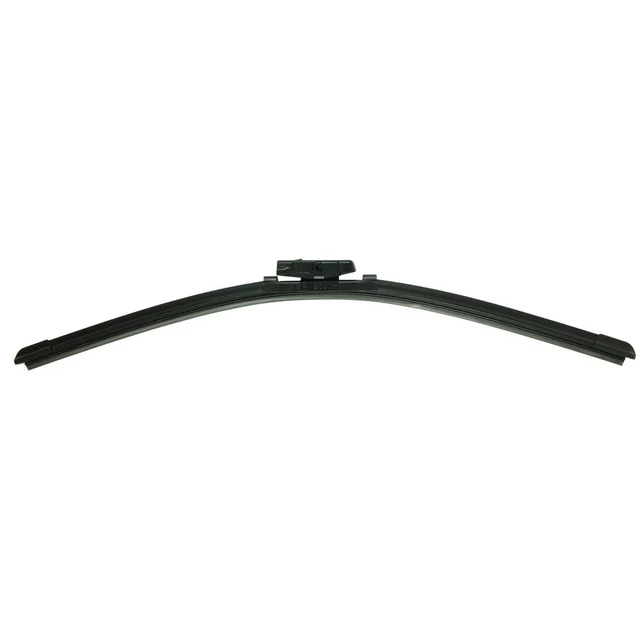
- Beam blades are the modern default. A frameless beam has a tensioned steel spine inside the rubber, so it presses evenly across today's curved windshields and has no exposed frame for snow to pack into.
- Hybrids are beams in armor. A hard plastic shell over the mechanism keeps ice and slush out. Worth it in snow country, more blade than you need in a mild, dry climate.
- Conventional framed blades are the old design. A metal skeleton with claws holding the rubber. Cheap and widely fitting, but it clogs with ice and applies uneven pressure on curved glass, so streaks show up sooner.
- Rubber ages whether you drive or not. Sun, heat, and ozone harden the wiping edge. Plan on replacing blades roughly every six to twelve months, sooner if you see streaking, skipping, or chatter.
The products this guide is about
Our verdict on each, with the full reasoning on the companion review.
- Buy Bosch ICON Wiper Blades A frameless beam that wipes clean, shrugs off winter, and outlasts almost everything else in the aisle.
- Buy Michelin Stealth Ultra Hybrid Wiper Blade A hard-shell hybrid that hugs the glass and laughs at snow, with the easiest install of the bunch.
- It depends Bosch Clear Advantage Wiper Blades Most of a premium beam's wipe for noticeably less money — the catch is how long it lasts.
- Skip Trico 30-Series Conventional Wiper Blade The cheapest blade here, and the one whose old-school framed design modern beams have left behind.
What actually matters
- Correct length for each side because driver and passenger blades are frequently different sizes on the same car. Guessing gets you a blade that either misses glass or collides with the other arm.
- Your wiper arm connector because the hook or clip on the end of your arm decides what will physically attach. J-hook, pinch tab, bayonet, side pin, and push button are all common, and a blade that doesn't match won't mount.
- Included adapters because most quality blades ship with a pre-installed connector plus spares in the box. More adapters means a better chance of a tool-free, few-minute install rather than a return trip.
- Blade design versus your climate because an exposed metal frame is a liability in snow and ice, while a beam or hard-cover hybrid has nowhere for slush to pack and freeze.
- Rubber compound and coating because that thin edge is what actually clears water. Better compounds resist sun and ozone cracking and stay quiet longer, which is most of what you pay for in a premium blade.
- Expected lifespan against price because a cheap blade you replace twice as often is not the bargain it looks like, especially if you keep the car for years.
- The rear wiper, if you have one because it is a separate part with its own size and its own connector, and it is not covered by whatever you buy for the front.
The specs, in plain English
Green flags vs red flags
Green flags
- The listing states a specific length and connector type, and a fitment lookup confirms both for your exact year and trim
- A frameless beam or hard-cover hybrid design, if your windshield is curved (nearly all modern cars)
- Multiple adapters included in the box, with one pre-installed for the most common arm type
- A named rubber upgrade such as halogen-hardened or silicone, or a graphite or Teflon coating
- Owner reports and independent testing that mention lifespan, not only how it wipes on day one
- Sold as a pair or clearly labeled per side, so you know whether you're buying one blade or two
Red flags
- A 'universal fit' claim with no size chart and no connector detail
- An exposed metal frame being sold to you as a winter blade with no boot or cover
- No mention of what rubber or coating is used, only vague talk about a 'premium wipe'
- A single-blade listing priced like a pair, or a pair listing that ships one blade
- Reviews clustering around chatter, squeak, or streaking within a few months
- A rear-wiper listing that only specifies front sizes, or vice versa
Who's who: the brands
- Bosch - A mainstay across tiers, best known for its beam blades. The premium line leans on long-life rubber and even spring tension; the value line gives you a real beam for less.
- Michelin - Strong in hybrids, with hard-cover designs favored in cold climates and quick-connect fittings that make installation about as easy as it gets.
- Rain-X - Widely stocked, with blades that apply a water-repellent treatment to the glass as they wipe. Available in beam, hybrid, and framed styles.
- Trico - A long-established name with very broad vehicle coverage, including inexpensive conventional framed blades and universal multi-adapters, plus beam options higher up the range.
- Valeo - An original-equipment supplier to many automakers, so its blades often mirror what came on the car from the factory.
- Anco - A budget-to-mid staple in North American parts aisles, known more for availability and easy fitment than for long life.
How to read a listing without getting fooled
Start with your car, not the blade. Run a fitment lookup on your year, make, model, and trim, and write down three things: driver-side length, passenger-side length, and the arm connector type. Then check the rear if you have one, because it is a separate part. Only now look at listings, and ignore anything that won't confirm your size and connector. Next, read the design: 'beam' or 'frameless' means a tensioned spine and no exposed frame, 'hybrid' means a hard cover over the mechanism, and 'conventional' or 'traditional' means a metal skeleton. Then look for what the rubber actually is, since halogen-hardened, silicone, or a graphite coating are the specific claims worth paying for, while 'advanced wiping technology' is not a claim at all. Finally, confirm whether the price is for one blade or a pair, which is the single most common surprise at checkout.
How much should you spend?
Budget blades are almost always conventional framed designs. They wipe acceptably when new and cost very little, which makes them reasonable as a spare, for an older vehicle built around framed blades, or for a car you're about to sell. The mid tier is where most drivers should land: genuine beam blades and hard-cover hybrids with better rubber, decent adapter kits, and quiet operation. Stepping up to premium buys longer-lived rubber compounds and more even spring tension, which mostly converts into fewer replacements and a cleaner wipe deeper into the blade's life. The math is personal. If you keep cars for years, drive a lot, or face harsh sun or real winters, spending up once tends to beat replacing budget blades repeatedly. If you drive little, live somewhere mild, or turn cars over quickly, a value beam gives you nearly all the performance for much less. What is rarely worth paying for is styling, packaging, or vague claims that don't name a rubber compound, a coating, or a design.
Questions, answered
How do I find the right size wiper blades for my car?
Use a fitment lookup by year, make, model, and trim, either on a retailer's site or an in-store catalog, and cross-check it against your owner's manual. It will return a length for each front blade, and these are frequently different, with the driver's side usually longer. If you already have the correct blades on the car, you can also measure them end to end. Note the arm connector type at the same time, because size alone won't tell you whether a blade will attach.
What are J-hook, pinch tab, and bayonet connectors?
They're the different fittings on the end of your wiper arm. The J-hook (sometimes called hook or U-hook) is a curved hook and is by far the most common. A pinch tab has a small squeeze-release clip. A bayonet is a straight blade-shaped end that slides in. Side pin and push button are other variants. Most quality blades come with one adapter pre-installed for the most common type plus extra adapters in the box, so check the packaging lists yours before buying.
Beam, hybrid, or conventional: which should I get?
For nearly any modern car with curved glass, a beam blade is the sensible default. It has a tensioned spine that presses evenly across the whole blade and no exposed frame for snow to pack into. Choose a hybrid if you face heavy snow and ice, since the hard cover keeps the mechanism from freezing solid, or if you want the most foolproof install. Conventional framed blades make sense mainly on a tight budget, as a spare, or on an older vehicle specifically designed around them.
Does the rubber type actually matter?
Yes, and it's most of what separates a blade that lasts from one that doesn't. Plain natural rubber wipes fine when new but hardens and cracks under sun, heat, and ozone. Halogen-hardened rubber is treated to resist that wear and stay quieter. Silicone tolerates UV and heat considerably better and can last much longer, though it's less common and costs more. A graphite or Teflon coating on the edge reduces friction, which is what keeps the wipe smooth and silent until the coating wears away.
How often should I replace wiper blades, and what are the warning signs?
Roughly every six to twelve months is a reasonable default, and rubber ages from sun and ozone whether you use the wipers or not. Replace sooner if you notice streaking (thin lines of water left behind), skipping (the blade hopping across the glass instead of gliding), chattering or squeaking, or visible splits and hardening in the rubber edge. Premium blades tend to sit at the longer end of that range and budget framed blades at the shorter end.
Do I need to buy a rear wiper separately?
Yes, if your vehicle has one. The rear wiper on a hatchback, wagon, or SUV is its own part with its own length, typically much shorter than the fronts, and it often uses a different connector style than the front arms. A front pair does not include it. Look it up the same way, by year, make, model, and trim.
Or jump to the head-to-head: Bosch ICON Wiper Blades vs Michelin Stealth Ultra Hybrid Wiper Blade.