

Explained
Tire Pressure Gauges, Explained
After reading this you will know which gauge type fits your vehicle, which accuracy and reach specs matter, and how to avoid a gauge that reads differently every time.
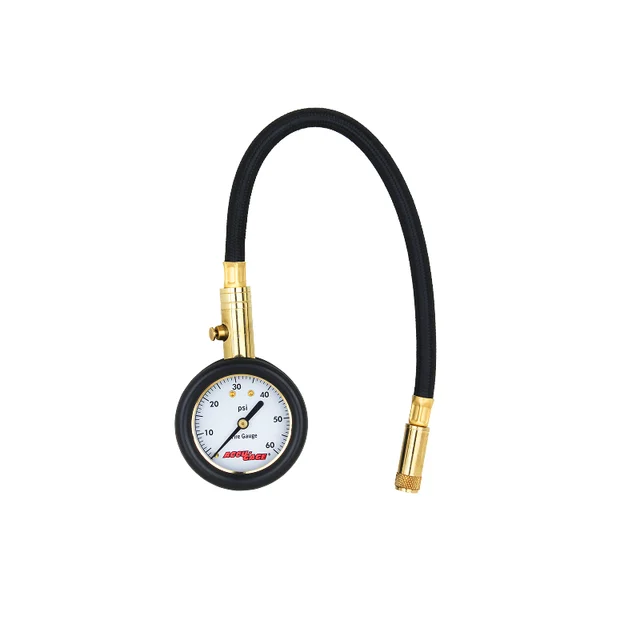
In this guide
A tire pressure gauge is the cheapest safety and fuel-economy tool you can keep in the car, yet the readouts vary wildly in how much you can trust them. The two things that trip people up are assuming the dashboard warning light replaces a gauge, and chasing a big accuracy number when what really counts is getting the same reading twice. This guide decodes the types and specs so you can match a gauge to what you actually drive.
The 30-second version
- There are three main types, and they trade accuracy and readability for durability: pencil/stick gauges are near-indestructible but coarse, dial/analog gauges are precise and battery-free, and digital gauges are the easiest to read in the dark.
- Consistency beats a fancy accuracy number, because a gauge that reads the same value every time lets you set pressure reliably even if it has a small, steady offset you can account for.
- Match the pressure range to your vehicle, since a range built for high-load trucks squeezes ordinary car pressures into a cramped corner of the scale where small differences are hard to see.
- The TPMS dashboard light is not a gauge, as it usually only warns once a tire is already well below spec, so you still need to check pressures yourself and do it when the tires are cold.
- Small features earn their keep, like a bleed valve to fine-tune pressure on the stem, a backlit display for dark driveways, and an angled or hose-mounted chuck for hard-to-reach valves.
What actually matters
- Gauge type and how you read it — pencil, dial, and digital each present the number differently; pick the one you will actually read correctly and quickly, because a gauge you misread is worse than none.
- Accuracy grade — a certified analog movement (often cited as an ANSI grade) or a digital with credible owner-reported accuracy within roughly a PSI is plenty for keeping tires at spec; you do not need lab-grade precision.
- Repeatability — the ability to give the same reading twice on the same tire matters more than the absolute number, because a consistent gauge is a usable gauge.
- Pressure range vs your vehicle — cars sit in a modest pressure band while trucks, trailers, RVs, and some bikes run much higher or lower, so the range should cover your tires without wasting the scale.
- Readability in poor light — a backlit screen, a lit nozzle tip, or a large high-contrast dial saves frustration in a dark garage or driveway where most checks happen.
- Reach at the valve — an angled chuck, a flexible hose, or a dual head lets you seat the gauge squarely on valves hidden behind spokes or on inner dual-rear wheels, which reduces air loss and misreads.
- Durability and power source — analog gauges shrug off years of glovebox life with no battery, while digital gauges depend on a cell you will eventually replace.
The specs, in plain English
Green flags vs red flags
Green flags
- A stated accuracy grade or tolerance rather than a vague claim, so you know what to expect from the reading.
- A pressure range that matches your vehicle without a lot of wasted scale above your normal pressures.
- A bleed valve if you like to set pressure precisely, or an angled chuck or hose if your valves are hard to reach.
- A backlit display or lit nozzle on a digital, or a large high-contrast face on a dial, for low-light checks.
- Owner reports describing the gauge as consistent and close to a shop or reference gauge over time.
- A sturdy, rubber-guarded or metal body that survives being tossed in a glovebox or trunk.
Red flags
- No accuracy figure at all, just words like 'accurate' with nothing to back them up.
- A very wide pressure range on a gauge sold for everyday car use, which sacrifices readability where you need it.
- Reports of the reading jumping around or changing between checks on the same tire.
- A flimsy all-plastic body or a screen with no backlight if you check pressures at night.
- A bargain digital with no mention of battery type, auto-off, or how it holds accuracy as the cell ages.
- A short straight chuck only, if your car hides its valves behind spokes or you run dual rears.
Who's who: the brands
- Accu-Gage by Milton - Known for certified analog dial gauges with bleed valves and braided hoses aimed at accuracy and long life.
- Milton - Long-standing maker of rugged tire and air tools, including the classic all-metal pencil gauge.
- AstroAI - Popular for affordable, easy-to-read digital gauges with backlit screens and lit nozzle tips.
- JACO - Offers dial and digital gauges pitched at durability and everyday accuracy for car owners.
- TEKTON - Value-focused hand-tool brand whose lineup includes straightforward digital and dial tire gauges.
How to read a listing without getting fooled
Start with the type and picture yourself using it: will you read a needle, a screen, or a slide-out bar, and can you do it correctly in a dark driveway? Then find the accuracy claim and treat a specific grade or plus-or-minus figure as far more meaningful than the word 'accurate' with nothing behind it. Check that the pressure range comfortably covers your tires without stretching so far above them that your everyday readings land in a cramped corner of the scale. Look for the practical features that match your situation: a bleed valve if you like to dial pressure in on the stem, a backlight for night checks, and an angled chuck, hose, or dual head if your valves are awkward to reach. Finally, scan owner reports for the words that matter most, consistent and repeatable, because a gauge praised for giving the same number twice is more useful than one with an impressive spec on paper but a wandering reading.
How much should you spend?
You do not need to spend much to get a genuinely good gauge, and spending a lot does not guarantee one. The cost is driven mostly by the mechanism and the extras: a certified analog movement, a bleed valve, a braided hose, or a quality digital sensor and backlight all add to the price, while the cheapest gauges cut corners on consistency. The value sweet spot sits at a well-made dial or a solid backlit digital, either of which is affordable and trustworthy for years. Stepping up beyond that mainly buys convenience features and heavier-duty reach, which is worth it if you service trucks, trailers, or awkward valves, and not worth it if you only ever set passenger-car pressures. The one place to avoid the bottom of the market is the ultra-cheap no-name gauge, where the savings usually come out of the accuracy you were buying the tool for in the first place.
Questions, answered
Is a digital or a dial gauge more accurate?
Both can be excellent. A quality certified dial gauge holds its calibration for years with no battery, while a good digital reads to a tenth of a PSI and is easier to see in the dark. The gap between well-made examples of either type is small; the real accuracy risk is a very cheap gauge of any type, and coarse pencil gauges tend to be the least consistent.
Isn't my dashboard tire pressure light enough?
No. The TPMS warning light is a safety backstop, not a maintenance tool. It usually only comes on once a tire is already well below its target, by which point you have lost some fuel economy, handling, and tread life. A handheld gauge lets you catch small drops early and set each tire to its exact spec.
When should I check my tire pressure?
Check when the tires are cold, meaning before you have driven far or after the car has sat for a few hours, because driving heats the air inside and raises the reading. Checking cold gives you a consistent baseline that matches the pressure your vehicle's door-jamb sticker specifies.
What pressure range should my gauge cover?
Match it to what you drive. Most passenger cars run in a modest pressure band, so a gauge tuned to that range gives you the most readable, spread-out scale. Step up to a wider high-pressure range only if you regularly air up light trucks, RVs, trailers, or other tires rated well above ordinary car pressures, since that wider range squeezes normal readings into a smaller part of the scale.
Do I need a bleed valve or a hose on the gauge?
Neither is essential, but both are genuine conveniences. A bleed valve lets you release air to hit an exact target without pulling the gauge off the stem, which is handy if you over-inflate. A short hose with an angled chuck makes it much easier to seat cleanly on valves hidden behind spokes or on inner dual-rear wheels; a compact straight chuck is fine for exposed valves.
How do I keep a gauge accurate over time?
Store it where it will not get dropped or crushed, keep the chuck clean of grit, and replace a digital gauge's battery before it gets weak. Dial gauges can drift if dropped on a hard surface, so handle them gently. If you ever doubt a reading, compare it against another known-good gauge and watch for a consistent offset you can account for.
Related guides
 Windshield Sun Shades After reading, you'll know which sun shade style fits your car, which materials actually block heat, and how to size one correctly the first time.
  Backup Cameras After reading, you'll understand every choice that matters when adding a reversing camera to a car that never had one — and which specs are just noise.
  Car Battery Chargers After reading this you'll know the difference between a charger and a maintainer, how many amps you actually need, and which specs are safety non-negotiables.
  Car Covers After reading this you will know which type of car cover fits where your car actually sleeps, and why chasing the word waterproof usually backfires.
 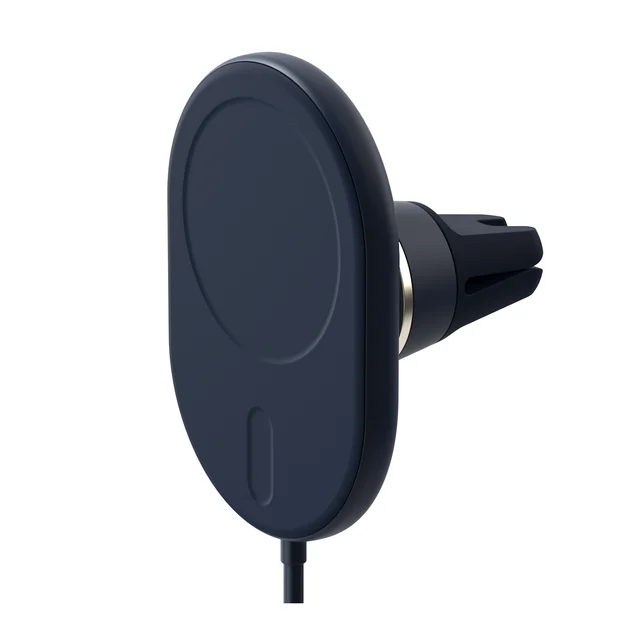 Car Phone Mounts After reading this, you'll know which mount attachment style and grip mechanism fits your car and phone, and which spec-sheet claims to trust.
 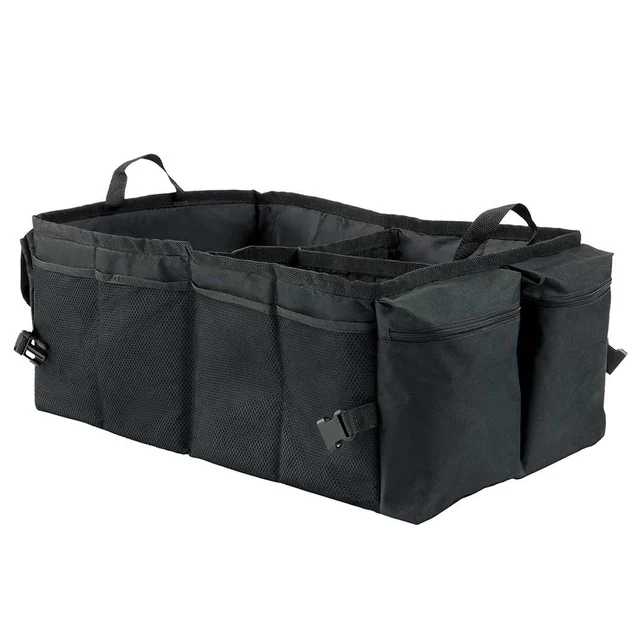 Car Seat Organizers After reading, you'll know which type of car organizer fits your clutter, and how to spot the specs that keep it upright, anchored, and easy to clean.