

Automotive
The Best Tire Pressure Gauges: 4 Compared (and One to Skip)
We compared four tire pressure gauges spanning pencil, digital, and dial on accuracy, range, readability, bleed valves, and reach.
The short version
After weighing independent testing and owner reports on accuracy, range, and readability, the 0-60 PSI Accu-Gage by Milton dial gauge is the pick for most people: ANSI-certified precision, a bleed valve to let air out on the valve, and a braided hose for hard-to-reach stems, all with no battery. The backlit AstroAI digital is the value choice and the easiest to read in the dark, trailing only because it has no air-release valve. Step up to the 0-160 PSI Accu-Gage only if you run trucks, RVs, or trailers, where the wide scale earns its keep. The Milton S-921 pencil gauge is built to last forever but reads too coarsely to trust as your everyday gauge. Best for: an accurate, battery-free dial (Accu-Gage 0-60) with a cheap backlit digital (AstroAI) as the value alternative.
The verdict in 30 seconds
What mattered most
- Readout type
- Accuracy
- Pressure range
- Bleed / air-release valve
- Low-light readability
- Reach
A tire gauge is the cheapest safety and fuel-economy tool in your car, but the readouts vary wildly in accuracy and how easy they are to trust. We synthesized independent testing and owner reports across a pencil stick, a budget digital, and two dial gauges to find which ones actually hold a repeatable reading. Two are easy buys, one is a specialist that depends on what you drive, and one classic design is best left on the shelf if you check pressures regularly.
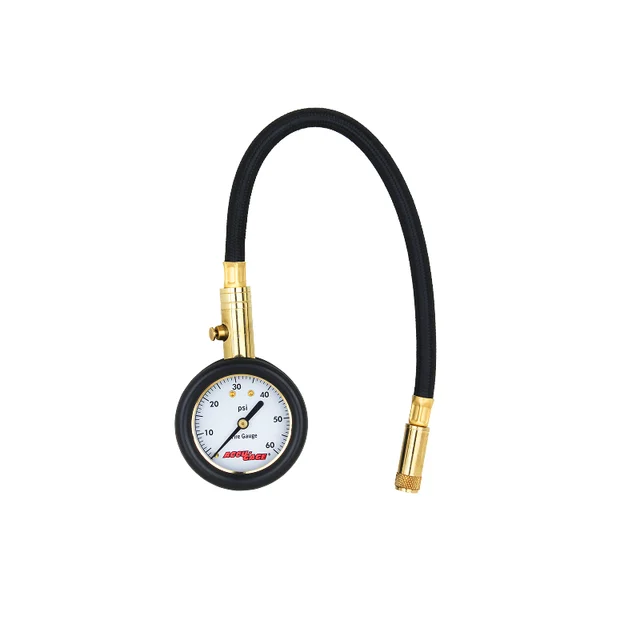
The reference-grade dial most car owners should buy: certified accuracy, a bleed valve, and a hose that reaches recessed valves.
Best for: Everyday drivers who want one accurate, no-battery gauge they can trust for years.
- ANSI B40.1 certified movement holds a repeatable reading that owners report matching shop gauges closely
- Air-release (bleed) button lets you dial pressure down without pulling the gauge off the valve
- Tight 0-60 PSI scale spreads everyday car pressures across a wide, easy-to-read arc
- Flexible braided hose and angled chuck reach valves behind wheel spokes and dual rears
- Needle can be knocked out of calibration if dropped on a hard floor
- Dial face is harder to read in the dark than a backlit digital
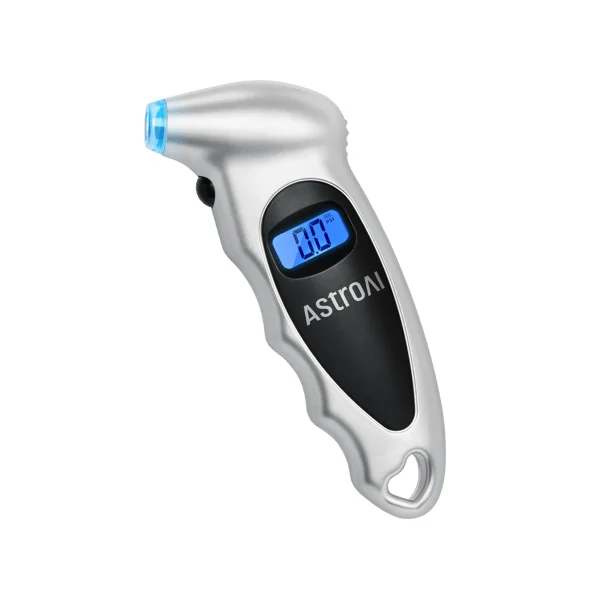
The best value pick: a backlit, lit-nozzle digital that anyone can read to the tenth of a PSI in a dark driveway.
Best for: Anyone who wants an inexpensive, easy-to-read gauge and does not mind swapping a battery.
- Backlit LCD plus a lighted nozzle tip make night and garage checks genuinely easy
- Reads in 0.1 PSI steps across four units (PSI, BAR, KPA, kg/cm2) for bikes through trucks
- Owners report readings within about a PSI of certified dial gauges out of the box
- Pocketable, ergonomic body with auto-shutoff to save the coin batteries
- No air-release valve, so you overshoot then re-check when letting pressure out
- Battery dependent, and very cheap digital gauges can drift as the cells age

Same trusted dial built for high-pressure work, but the wide scale wastes resolution on ordinary passenger-car pressures.
Best for: Owners of trucks, RVs, trailers, or anything running well above 60 PSI.
- 0-160 PSI range covers light-truck, RV, trailer, and high-load tires a 60 PSI gauge cannot
- Same ANSI-certified movement, bleed valve, and braided hose as the everyday model
- One gauge covers a mixed garage of cars and heavier vehicles
- Everyday 30-40 PSI car readings sit in a cramped corner of the dial, so fine differences are hard to see
- Overkill and less precise for drivers who only ever set passenger-car pressures

A tough, battery-free glovebox classic, but the coarse slide-bar readout is too imprecise to recommend as your main gauge.
Best for: A backup gauge to toss in the trunk, not the tool you check pressures with every week.
- No battery, nearly indestructible brass-and-steel build, and slips into a pocket or clip
- Cheap enough to keep one in every vehicle as an emergency backup
- Slide-out bar reads in coarse increments, and owners report needing a couple of tries for a steady number
- Easy to misread by a few PSI from parallax, and there is no bleed valve or light
| Criteria | Accu-Gage by Milton Dial Tire Pressure Gauge (0-60 PSI, Braided Hose) Top pick | AstroAI Digital Tire Pressure Gauge (150 PSI) | Accu-Gage by Milton Dial Tire Pressure Gauge (0-160 PSI, Braided Hose) | Milton S-921 Single-Chuck Pencil Tire Pressure Gauge (5-50 PSI) |
|---|---|---|---|---|
| Verdict | Buy it | Buy it | It depends | Skip it |
| Best for | Everyday drivers who want one accurate, no-battery gauge they can trust for years. | Anyone who wants an inexpensive, easy-to-read gauge and does not mind swapping a battery. | Owners of trucks, RVs, trailers, or anything running well above 60 PSI. | A backup gauge to toss in the trunk, not the tool you check pressures with every week. |
| Price tier | $$ · mid-range | $ · budget | $$ · mid-range | $ · budget |
| Readout type | Analog dial | Digital LCD | Analog dial | Pencil slide-bar |
| Accuracy | ANSI B40.1 certified (about +/-2%) | About +/-1 PSI (owner reports) | ANSI B40.1 certified (about +/-2%) | Coarse, varies by read |
| Pressure range | 0-60 PSI | 0-150 PSI | 0-160 PSI | 5-50 PSI |
| Bleed / air-release valve | Yes | No | Yes | No |
| Low-light readability | Fair (printed dial) | Excellent (backlit + lit tip) | Fair (printed dial) | Poor |
| Reach | Braided hose + angled chuck | Direct short nozzle | Braided hose + angled chuck | Direct short chuck |
| Durability | High (rubber-guarded) | Medium (battery/plastic) | High (brass body) | Very high (all metal) |
| Price tier | $$ · mid-range | $ · budget | $$ · mid-range | $ · budget |
Which one is right for you?
- Everyday drivers who want one accurate, no-battery gauge they can trust for years. Buy it Accu-Gage by Milton Dial Tire Pressure Gauge (0-60 PSI, Braided Hose)
- Anyone who wants an inexpensive, easy-to-read gauge and does not mind swapping a battery. Buy it AstroAI Digital Tire Pressure Gauge (150 PSI)
- Owners of trucks, RVs, trailers, or anything running well above 60 PSI. It depends Accu-Gage by Milton Dial Tire Pressure Gauge (0-160 PSI, Braided Hose)
- A backup gauge to toss in the trunk, not the tool you check pressures with every week. Skip it Milton S-921 Single-Chuck Pencil Tire Pressure Gauge (5-50 PSI)
How we judged the field
We do not run our own tire lab. Instead we synthesized independent bench testing and a broad read of owner reports to judge each gauge on the things that actually matter at the valve stem: does it give the same number twice, is that number close to a certified reference, and can a normal person read and use it without fuss. The criteria we weighed were accuracy and repeatability, how well the pressure range matches everyday tires, readability in poor light, whether there is a bleed valve to fine-tune pressure, how easily the chuck reaches awkward valves, and long-term durability.
That framing tends to reward two things: a certified analog movement that never needs a battery, and a clear digital readout that anyone can use in the dark. It also exposes the classic pencil gauge, which is nearly indestructible but reads too coarsely to trust when you are chasing a couple of PSI.
Accu-Gage by Milton Dial Tire Pressure Gauge (0-60 PSI, Braided Hose) — buy
This is the gauge we would hand to most drivers. The movement is ANSI B40.1 certified, and owners consistently report it agreeing with shop and reference gauges within a small margin, then holding that reading test after test. The 0-60 PSI scale is the sweet spot for passenger cars: normal 30-40 PSI pressures land across a wide, easy-to-read arc rather than bunched in a corner. A hold valve freezes the reading so you can bring the gauge to your eyes, and the air-release button lets you bleed an over-inflated tire down to target without lifting off the stem. The braided hose and angled chuck reach valves hidden behind spokes or on dual rears, and the rubber guard shrugs off knocks. The only real cautions are that a hard drop can disturb calibration and, like any printed dial, it is harder to read in the dark than a lit digital.
AstroAI Digital Tire Pressure Gauge (150 PSI) — buy
The AstroAI is the value pick and the one to grab if readability is your priority. The backlit LCD plus a lighted nozzle tip make it genuinely easy to use at night or in a dim garage, and it reads in 0.1 PSI steps across four unit systems, so it covers bicycles through trucks. Owner reports put it within about a PSI of certified dial gauges out of the box, which is plenty for keeping tires at spec. It is compact, ergonomic, and shuts itself off to preserve the coin cells. Two honest limits keep it from the top spot: there is no air-release valve, so letting pressure out means overshooting and re-checking, and it depends on a battery, where the cheapest digital gauges can drift as cells age. For the money, though, it is hard to beat.
Accu-Gage by Milton Dial Tire Pressure Gauge (0-160 PSI, Braided Hose) — it depends
Mechanically this is the same trustworthy gauge as our top pick, with the identical certified movement, bleed valve, and braided hose, but stretched to a 0-160 PSI range. That matters if you air up light trucks, RVs, trailers, or anything rated well above 60 PSI, where a car-focused gauge simply runs out of scale. The trade-off is resolution: spread across 160 PSI, everyday 30-40 PSI car readings sit in a cramped section of the dial, so small differences are harder to see and set precisely. If your garage is a mix of vehicles it is a sensible one-gauge answer; if you only ever check passenger cars, the 0-60 version is the better, more precise tool.
Milton S-921 Single-Chuck Pencil Tire Pressure Gauge (5-50 PSI) — skip
We have a soft spot for the pencil gauge: brass and steel, no battery, nearly indestructible, and cheap enough to keep one in every vehicle. As an emergency backup in the trunk it earns its place. But as the gauge you actually check pressures with, it falls short. The slide-out bar reads in coarse increments, owners report needing a couple of tries to get a steady number, and it is easy to misread by a few PSI from parallax. There is no bleed valve and nothing to light the scale. When an accurate dial or a backlit digital costs only a little more, we would skip the pencil gauge for regular use.
Accu-Gage 0-60 dial vs AstroAI digital: which should you buy?
These are the two we would actually put in a shopping cart, and the choice comes down to how you like to read a number and whether you want a battery in the loop. The Accu-Gage dial wins on trust and longevity: certified accuracy, a bleed valve to set pressure precisely on the stem, a hose for awkward valves, and nothing to run flat. It is the buy-it-for-a-decade choice. The AstroAI wins on ease and price: the backlit screen and lit tip make it the easiest to read in the dark, and it costs less, at the cost of a battery and no air-release valve. If you want one gauge to trust for years and do not mind a printed dial, take the Accu-Gage. If you want the easiest readout for the least money and will keep a spare battery around, the AstroAI is the smart pick.
What to look for
- Certified accuracy: Look for an ANSI B40.1 certified dial or a digital with credible owner-reported accuracy within about a PSI.
- Right range: A 0-60 PSI scale is ideal for passenger cars; only go to 0-160 PSI if you run trucks, RVs, or trailers.
- Bleed valve: An air-release button lets you set pressure down to target without pulling the gauge off the stem.
- Readability: A backlit screen or a large, high-contrast dial saves frustration in low light.
- Reach: A short braided hose with an angled chuck seats cleanly on valves hidden behind spokes or on dual rears.
- Durability and power: Analog gauges need no battery and last for years; if you choose digital, keep a spare cell.
Our final take
Buy the 0-60 PSI Accu-Gage by Milton dial if you want one gauge to trust for the long haul: it is accurate, battery-free, has a bleed valve, and reaches the valves other gauges cannot. Buy the AstroAI digital if you want the easiest, cheapest readout and do not mind a battery. Choose the 0-160 PSI Accu-Gage only if you regularly service high-pressure tires. And keep the Milton pencil gauge for what it is truly good at, an indestructible backup, rather than the tool you rely on every week.
Questions, answered
Are digital or dial tire gauges more accurate?
Both can be excellent. A quality ANSI-certified dial gauge like the Accu-Gage holds calibration for years with no battery, while a good digital such as the AstroAI reads to a tenth of a PSI and is easier to see in the dark. Independent testing shows the gap between well-made examples is small; the bigger accuracy risk is a very cheap gauge of either type. Cheap pencil gauges tend to be the least consistent.
What is a bleed valve and do I need one?
A bleed or air-release valve is a small button that lets you release air while the gauge stays on the valve stem, so you can set an over-inflated tire down to the exact target without repeatedly pulling the gauge off to re-check. Both Accu-Gage dial gauges here have one; the AstroAI digital and the Milton pencil do not. It is a genuine convenience but not essential if you inflate slowly and re-measure.
What pressure range should my gauge cover?
Most passenger cars run in the 30-40 PSI zone, so a 0-60 PSI gauge gives you the most readable, spread-out scale for everyday use. Only step up to a 0-160 PSI gauge if you regularly air up light trucks, RVs, trailers, or other tires rated well above 60 PSI, since that wider range squeezes normal car pressures into a small, harder-to-read part of the dial.
Do I need a hose on the gauge?
A short braided hose with an angled chuck, like the one on the Accu-Gage models, makes it much easier to seat the chuck squarely on valves tucked behind spokes or on inner dual-rear wheels, which reduces air loss and misreads. A direct-mount gauge such as the AstroAI is more compact and fine for exposed valves, but can be fiddly on recessed stems.
How do I keep a tire gauge accurate over time?
Store it where it will not get dropped or crushed, keep the chuck free of grit, and replace the battery in a digital gauge before it gets weak. Dial gauges can drift if dropped on a hard surface, so treat them gently. If you ever doubt a reading, compare it against another known-good gauge and watch for a consistent offset.
More Automotive reviews
 The Best Windshield Sun Shades: 4 Compared (and One to Skip)
  The Best Aftermarket Backup Cameras: 4 Compared (and One to Skip)
  The Best Car Battery Chargers & Maintainers: 4 Compared (and One to Skip)
  The Best Car Covers: 4 Compared (and One to Skip)
  The Best Car Phone Mounts: 4 Compared (and One to Skip)
  The Best Car Backseat & Trunk Organizers: 4 Compared (and One to Skip)