

Automotive
The Best Torque Wrenches: 4 Compared (and One to Skip)
Four click torque wrenches compared on stated accuracy, calibration certificates, usable torque range and drive size for home car maintenance.
The short version
Buy the TEKTON TRQ52402 first. It is half inch drive, covers 40 to 200 ft-lb, is rated within plus or minus 3 percent in both directions, and ships with a serialized certificate calibrated to the stricter ISO standard. Add the GEARWRENCH 85176CERT for three eighths drive engine and brake work down to 10 ft-lb, with a NIST traceable certificate and a fine-tooth 120XP head. The LEXIVON LX-183 is a fair single tool compromise if you will only ever own one wrench, at a looser 4 percent tolerance and a clockwise only rating. Skip the NEIKO Pro 03709B, whose 50 ft-lb floor puts too much ordinary maintenance off the scale. Wind any click wrench back to its lowest setting before storage, and use it for tightening only, never for loosening. Best for: home mechanics who want their wheel, brake and engine fasteners torqued to spec rather than guessed at.
Our picks at a glance
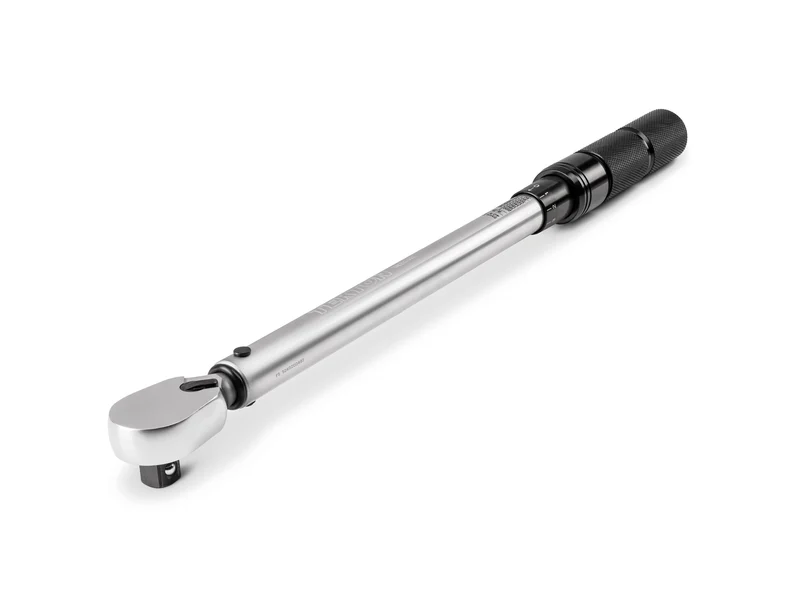
- TEKTON TRQ52402 1/2 Inch Drive Micrometer Torque Wrench - Buy. Rated by TEKTON to the stricter ISO standard in both directions, with a serialized certificate in the case.
- GEARWRENCH 85176CERT 3/8 Inch Drive 120XP Certified Micrometer Torque Wrench - Buy. The three eighths drive companion for engine and brake work, sold with a NIST traceable certificate and a fine-tooth 120XP ratcheting head.
- LEXIVON LX-183 1/2 Inch Click Torque Wrench - It depends. A budget half inch wrench with a genuinely wide 10 to 150 ft-lb range and a serialized certificate, at a looser tolerance.
- NEIKO Pro 03709B 1/2 Inch Click Torque Wrench - Skip. A 50 ft-lb floor puts most ordinary car fasteners off the scale, and nothing here beats the alternatives at the jobs that are left.
The verdict in 30 seconds
What mattered most
- Drive size and intended job
- Torque range
- Stated accuracy
- Calibration certificate included
- Calibration standard cited
- Ratchet swing arc
A torque wrench is a measuring instrument, and the two specs that separate a real one from a toy are the stated accuracy percentage and whether a serialized calibration certificate ships in the box. We compared four current click wrenches on those specs plus the range and drive size that actually match home car work. Two are easy recommendations, one is a reasonable compromise with a caveat, and one covers too narrow a slice of the job to be worth owning.
Rated by TEKTON to the stricter ISO standard in both directions, with a serialized certificate in the case.
Best for: The first torque wrench for anyone who rotates their own tires, changes brakes, or works on suspension.
- Rated within plus or minus 3 percent clockwise and counterclockwise, not clockwise only
- Calibrated to ISO 6789-1:2017, which tests the lowest marked value on the scale
- Serialized certificate of calibration in the box, listing the actual readings for your wrench
- Range starts at 40 ft-lb, so nothing lighter than suspension and wheel work is on the scale
- You still need a three eighths drive wrench for engine bay fasteners
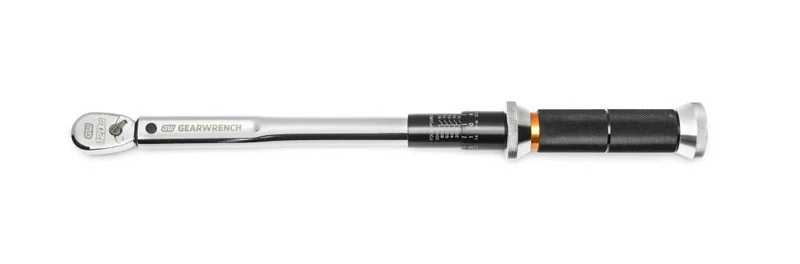
The three eighths drive companion for engine and brake work, sold with a NIST traceable certificate and a fine-tooth 120XP ratcheting head.
Best for: Under hood work, brake jobs and anyone who wants a documented certificate rather than a generic quality card.
- NIST traceable certificate of calibration included, with serial number, date and actual readings
- 10 to 100 ft-lb range covers the engine bay and brake fasteners a half inch wrench cannot reach
- Fine-tooth 120XP ratcheting head for tight access
- Enclosed ratchet head resists grit, the usual failure point on a cabinet dwelling wrench
- Meets or exceeds ASME B107.300 on load and cycle
- Accuracy is stated for the clockwise direction and the upper 80 percent of capacity only
- Calibration portion of the warranty runs 90 days while parts coverage runs a year
- The certified version costs meaningfully more than the otherwise identical uncertified model
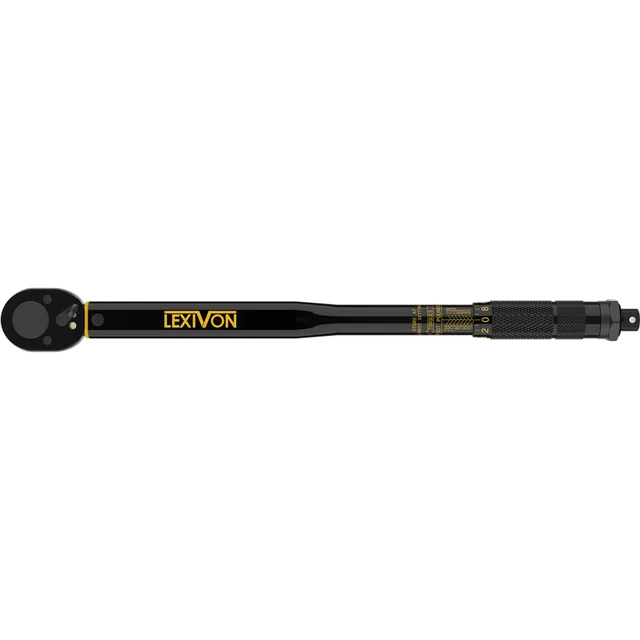
A budget half inch wrench with a genuinely wide 10 to 150 ft-lb range and a serialized certificate, at a looser tolerance.
Best for: Someone who wants exactly one torque wrench for wheels and general chassis work and will not buy a second.
- Ships pre-calibrated with a certificate carrying a traceable serial number, which is unusual at this price
- 10 to 150 ft-lb on one tool covers wheels, brakes and most chassis work
- Clear dual scale markings that owners report staying readable in poor light
- Distinct, unmistakable click that is hard to miss under a car
- Reversible ratchet head and a dual range scale printed in yellow
- Rated at plus or minus 4 percent rather than 3 percent
- Torque is measured in the clockwise direction only even though the head reverses
- The wide range means light fasteners land in the bottom of the scale, where click mechanisms are least repeatable
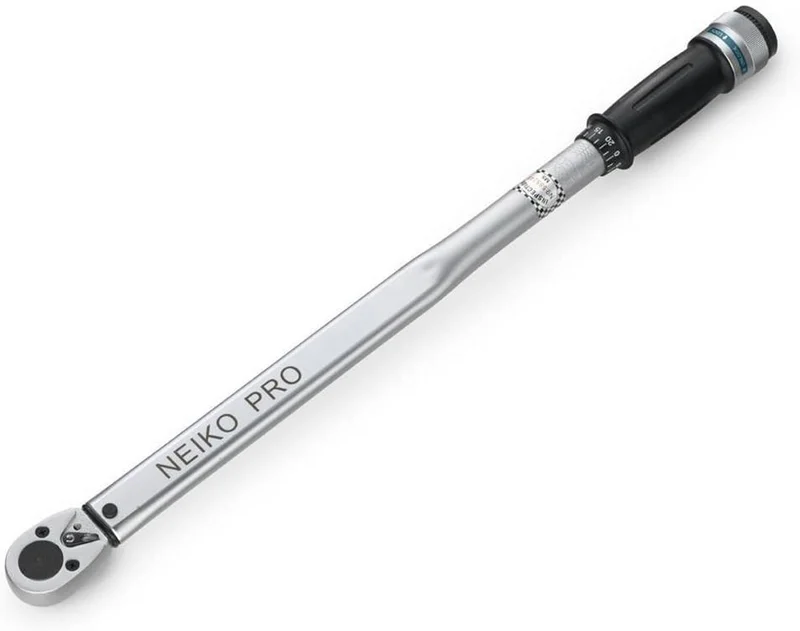
A 50 ft-lb floor puts most ordinary car fasteners off the scale, and nothing here beats the alternatives at the jobs that are left.
Best for: Almost nobody. If lug nuts are genuinely all you will ever torque, the better half inch wrenches here cost only a little more.
- Inexpensive way to get a lug nut torqued correctly instead of guessed at
- Long handle makes high torque wheel and suspension fasteners easy to reach
- Factory calibration quoted at plus or minus 4 percent
- Range starts at 50 ft-lb, which puts brake caliper brackets and many chassis bolts off the scale entirely
- Click wrenches are least repeatable at the bottom of their range, so the trustworthy window starts higher still
- Listing promises factory calibration but does not commit to a serialized certificate for your individual wrench
- No published recertification path from the brand
- The 25 inch handle is awkward in a wheel well and easy to overshoot a low setting with
| Criteria | TEKTON TRQ52402 1/2 Inch Drive Micrometer Torque Wrench Top pick | GEARWRENCH 85176CERT 3/8 Inch Drive 120XP Certified Micrometer Torque Wrench | LEXIVON LX-183 1/2 Inch Click Torque Wrench | NEIKO Pro 03709B 1/2 Inch Click Torque Wrench |
|---|---|---|---|---|
| Verdict | Buy it | Buy it | It depends | Skip it |
| Best for | The first torque wrench for anyone who rotates their own tires, changes brakes, or works on suspension. | Under hood work, brake jobs and anyone who wants a documented certificate rather than a generic quality card. | Someone who wants exactly one torque wrench for wheels and general chassis work and will not buy a second. | Almost nobody. If lug nuts are genuinely all you will ever torque, the better half inch wrenches here cost only a little more. |
| Price tier | $ · mid-range | $$ · premium | $ · budget | $ · budget |
| Drive size and intended job | 1/2 inch: wheels, axles, suspension | 3/8 inch: engine bay, brakes, general service | 1/2 inch: wheels and general chassis work | 1/2 inch: lug nuts and heavy suspension only |
| Torque range | 40 to 200 ft-lb | 10 to 100 ft-lb | 10 to 150 ft-lb | 50 to 250 ft-lb |
| Stated accuracy | Plus or minus 3 percent, clockwise and counterclockwise | Plus or minus 3 percent clockwise, upper 80 percent of range | Plus or minus 4 percent, clockwise measurement | Plus or minus 4 percent, factory quoted |
| Calibration certificate included | Yes, serialized, with actual readings | Yes, NIST traceable and serialized | Yes, with traceable serial number | Not documented per wrench |
| Calibration standard cited | ISO 6789-1:2017 and ASME B107.300 | ASME B107.300 | Not published | Not published |
| Ratchet swing arc | Not confirmed | Fine-tooth 120XP head, arc not stated | Not published | Not published |
| Manufacturer recertification | Not confirmed | Not stated on the product page | Not published | Not published |
| Price tier | $ · mid-range | $$ · premium | $ · budget | $ · budget |
Which one is right for you?
- The first torque wrench for anyone who rotates their own tires, changes brakes, or works on suspension. Buy it TEKTON TRQ52402 1/2 Inch Drive Micrometer Torque Wrench
- Under hood work, brake jobs and anyone who wants a documented certificate rather than a generic quality card. Buy it GEARWRENCH 85176CERT 3/8 Inch Drive 120XP Certified Micrometer Torque Wrench
- Someone who wants exactly one torque wrench for wheels and general chassis work and will not buy a second. It depends LEXIVON LX-183 1/2 Inch Click Torque Wrench
- Almost nobody. If lug nuts are genuinely all you will ever torque, the better half inch wrenches here cost only a little more. Skip it NEIKO Pro 03709B 1/2 Inch Click Torque Wrench
How we judged the field
A torque wrench is a measuring instrument that happens to look like a ratchet, so we judged these the way you would judge any instrument: by what the maker is willing to put in writing. We read published specifications, manuals and standards claims from each brand, then weighed those against what independent testing and long-run owner reports say about how these tools hold their setting after a year or two of garage use.
Four things decided the ranking. First, the stated accuracy percentage, and whether the maker commits to it in both directions or only clockwise. Second, whether a serialized calibration certificate ships in the box, meaning a document with your wrench’s serial number and its actual test readings, not a generic sticker. Third, whether the torque range actually covers the fasteners on a family car, because a click wrench is least trustworthy at the very bottom of its scale. Fourth, drive size and head access, since half inch drive belongs on lug nuts and suspension bolts while three eighths belongs on engine and brake work.
We did not run our own calibration lab and we do not publish invented test numbers. Everything below is a synthesis of manufacturer specifications, the standards those specifications reference, and the pattern of owner reports over time.
This is the wrench most home mechanics should own first. TEKTON rates it within plus or minus 3 percent in both clockwise and counterclockwise directions, and calibrates it to ISO 6789-1:2017 rather than only the ASME standard many competitors cite. The practical difference matters: the ISO standard requires testing at the lowest marked value on the scale and holds counterclockwise accuracy to the same tolerance as clockwise. A serialized certificate of calibration comes in the case, with the actual readings for your specific wrench printed on it.
The 40 to 200 ft-lb range is well matched to half inch drive work. Lug nuts, strut and control arm bolts, axle hardware and subframe fasteners all live inside it. When the spring eventually drifts, it will need recalibration, so ask TEKTON or a calibration lab about recertification before you assume it is a buy once tool.
The limitation is the bottom of the range. Nothing under 40 ft-lb is on the scale, so valve cover bolts, oil pan bolts and most interior fasteners need a smaller wrench. That is not a defect, it is the correct design choice for a half inch drive tool, but it means this wrench is half of a complete setup rather than all of it.
GEARWRENCH 85176CERT 3/8 Inch Drive 120XP Certified Micrometer Torque Wrench
Buy itCheck price on AmazonThis is the other half. Three eighths drive, 10 to 100 ft-lb, and a fine-tooth 120XP ratcheting head for tight access. That range is exactly where engine and brake work happens: caliper bracket bolts, thermostat housings, intake fasteners, wheel bearing hardware on smaller cars.
The reason to pay for the CERT version rather than the standard 85176 is in the name. A NIST traceable certificate of calibration ships with the wrench, listing model and serial number, the date, the actual readings, and the test equipment used. GEARWRENCH rates accuracy at plus or minus 3 percent clockwise across the upper 80 percent of capacity, and the tool is built to meet or exceed ASME B107.300. The enclosed head design keeps grit out of the ratchet, which is the usual failure point on a wrench that lives in a rolling cabinet.
Two caveats. The accuracy claim covers clockwise only, so this is a tightening tool and nothing else. And the calibration portion of the warranty runs 90 days while the parts warranty runs a year, which is normal for the category but worth knowing before you assume the certificate is a lifetime promise.
The LX-183 covers 10 to 150 ft-lb on one half inch drive tool and ships pre-calibrated to plus or minus 4 percent with a certificate carrying a traceable serial number. For a budget wrench that is a genuinely good spec sheet, and owners consistently report a crisp, unmistakable click and a scale that stays readable under a work light.
It earns a conditional recommendation rather than a straight buy for two reasons. The tolerance is 4 percent rather than 3, and torque is measured clockwise only even though the ratchet head reverses. More importantly, the wide 10 to 150 range is a compromise. A click mechanism is at its least repeatable in the bottom fifth of its scale, so the readings you actually get near 10 ft-lb deserve less trust than the ones near 100. Buying one wrench to cover everything sounds efficient, and it is, right up to the point where you are torquing something small and delicate at the ragged edge of the tool’s usable window.
Buy it if you want one wrench that will handle wheels, brakes and general chassis work without a second purchase, and you accept that precision jobs deserve a dedicated smaller tool. Skip it if you already plan to own a three eighths drive wrench, because then the extra low end range buys you nothing and you would rather have the tighter tolerance.
On paper this looks like the others: half inch drive, click mechanism, factory calibration quoted at plus or minus 4 percent, chrome vanadium construction. The problem is the range. It starts at 50 ft-lb and runs to 250, and a click wrench is at its worst at the bottom of its scale, so the trustworthy portion realistically begins well above 50.
That rules out a large share of what a home mechanic actually torques. Brake caliper bracket bolts, many control arm and sway bar fasteners, and most bolts that call for 30 to 45 ft-lb are simply off the scale. What is left is lug nuts and heavy suspension hardware, and for that narrow job the better wrenches here cost only a little more and come with a document that ties their accuracy to a serial number. The product listing promises factory calibration but does not commit to a serialized certificate for your individual wrench, and there is no published recertification path from the brand.
The 25 inch handle compounds it. Extra length makes big fasteners easy, but it also makes it easy to blow past a low setting before the click registers, and it is awkward to swing in a wheel well. This is a lug nut wrench being sold as a general purpose one.
TEKTON TRQ52402 vs GEARWRENCH 85176CERT: which should you buy?
These two are not really competitors, which is the most useful thing to understand about them. The TEKTON is a half inch drive tool covering 40 to 200 ft-lb. The GEARWRENCH is a three eighths drive tool covering 10 to 100 ft-lb. Between them they cover essentially every fastener on a normal car, with a deliberate overlap in the 40 to 100 ft-lb band where either will do.
If you buy one, buy the TEKTON. Wheels are the job most people bought a torque wrench for in the first place, its ISO calibration is the stricter of the two standards, and its accuracy claim covers both directions rather than clockwise only.
Buy the GEARWRENCH second, or first if your work is mostly under the hood rather than at the corners of the car. Three eighths drive is the right size for engine bay fasteners, the 10 ft-lb floor reaches things the TEKTON cannot, and the certificate is NIST traceable and serialized. Owning both is the setup that stops you guessing.
What to look for
- A stated accuracy percentage, in writing. Plus or minus 3 percent is good, 4 percent is acceptable, and no published figure at all is a red flag. Check whether the number applies to both directions or clockwise only.
- A serialized calibration certificate in the box. It should name your wrench’s serial number and list the actual readings taken. A generic “quality tested” card is not the same thing.
- The standard it is calibrated to. ISO 6789-1:2017 tests the lowest marked value on the scale. ASME B107.300 accuracy is typically stated from 20 percent of range up. Both are legitimate, but ISO is stricter.
- Drive size matched to the job. Half inch for lug nuts, axle nuts and suspension. Three eighths for engine, brake and general under hood work. Quarter inch for interior trim and small covers.
- A range that puts your fasteners in the middle. Click wrenches are least repeatable in the bottom 20 percent of their scale. If everything you torque sits near the floor of the range, buy a smaller wrench.
- A tight ratchet swing arc. A 3 to 5 degree arc, meaning roughly 72 to 120 teeth, is what lets you work in a wheel well or against a frame rail.
- A published recertification path. Springs drift. A brand that will recalibrate your wrench for a fee is offering a tool with a service life rather than a disposable one.
- A hard case. Not a luxury. A torque wrench knocking around a drawer loses its calibration faster than one that gets used.
Our final take
The spec that separates a real torque wrench from a toy is not the finish or the click feel, it is whether the maker states an accuracy percentage and backs it with a serialized certificate. Both of our picks do. The TEKTON TRQ52402 does it against the stricter ISO standard and in both directions, which makes it the one to buy first, and its half inch drive and 40 to 200 ft-lb range put it exactly where wheels and suspension live. The GEARWRENCH 85176CERT is the three eighths drive companion that reaches down to 10 ft-lb for engine and brake work, with a NIST traceable certificate of its own.
The LEXIVON LX-183 is a reasonable single tool compromise if you want one wrench and will accept a 4 percent tolerance and a clockwise only rating. The NEIKO Pro 03709B is the one to leave on the shelf, not because it is badly made but because a 50 ft-lb floor puts it out of reach of too much ordinary maintenance while offering nothing the better wrenches do not.
Whichever you buy, treat it like an instrument. Wind the handle back to the lowest setting on the scale before you put it away, or the spring takes a set and your readings drift. Use it for final tightening only and never to break a fastener loose, because the overload wrecks the calibration you paid for. Pull smoothly to the click and stop at the first one. And get it recertified every couple of years, or sooner if you drop it.
Questions, answered
Do I need a calibration certificate, or is that just marketing?
It is the single best signal in the category. A serialized certificate names your wrench, lists the actual readings taken during its test, and identifies the equipment used. That is a maker putting a number in writing for the specific tool you bought. A wrench with no published accuracy percentage and no certificate is asking you to take its word for something you cannot check, and the whole point of buying a torque wrench is not taking anyone's word for it.
Half inch or three eighths drive: which one should I buy first?
Match the drive to the job. Half inch drive covers lug nuts, axle nuts, subframe and suspension hardware, roughly 40 ft-lb and up. Three eighths covers engine bay work, brake caliper brackets, thermostat housings and most bolts under 100 ft-lb. If wheels are the reason you are shopping, start with half inch. If you are doing your own tune ups and brake jobs, start with three eighths. Most people end up owning both because neither range covers the other's work.
Why do people say to wind a click wrench back after using it?
A click wrench works by preloading an internal spring against a cam. Leaving it stored at a high setting keeps that spring compressed for months, and it gradually takes a set, which shifts every reading afterward. Wind the handle down to the lowest number on the scale before the wrench goes in its case. Do not force it below the lowest marked value, which can unseat the mechanism on some designs. This one habit does more for long term accuracy than anything else you can do.
Can I use a torque wrench to loosen bolts?
No. A torque wrench is a tightening tool. Breaking a stuck fastener loose can spike well past the wrench's capacity in an instant, and that overload is exactly what wrecks the calibration you paid for. Use a breaker bar or a standard ratchet to loosen, then bring the torque wrench out for final tightening only. The same goes for using it as a general purpose ratchet to run fasteners down.
How often does a torque wrench need recalibration?
The common guidance is every 5,000 cycles or once a year for heavy use, and every couple of years for occasional home use. Recalibrate sooner if you drop it, if you used it to loosen something, or if the click starts feeling vague. Buying from a brand with a published recertification service matters here, because a wrench you cannot get recalibrated is a wrench with an expiry date. Between services, store it wound down and in its case.
Deciding between the top two? See our head-to-head: TEKTON TRQ52402 1/2 Inch Drive Micrometer Torque Wrench vs GEARWRENCH 85176CERT 3/8 Inch Drive 120XP Certified Micrometer Torque Wrench.
More Automotive reviews
 The Best Tow Straps and Recovery Gear: 4 Compared (and One to Skip)
  The Best Trailer Hitch Cargo Carriers: 4 Compared (and One to Skip)
  The Best Trim Restorers: 4 Compared (and One to Skip)
  The Best Wash Mitts: 4 Compared (and One to Skip)
  The Best Water Spot Removers: 4 Compared (and One to Skip)
  The Best Wheel Brushes: 4 Compared (and One to Skip)