

Automotive
The Best Tow Straps and Recovery Gear: 4 Compared (and One to Skip)
We compared a kinetic recovery rope, a snatch strap, a set of traction boards and a hook-end tow strap on published breaking strength, stretch, end hardware and what job each one is actually designed to do.
The short version
The Yankum Ropes 7/8 inch "Python" kinetic rope is our overall pick: Yankum publishes both a minimum breaking strength of 28,600 lb and a working load limit range of 5,700 to 9,000 lb, which almost nobody else does, and it is sized by the weight of the recovery vehicle rather than the stuck one. The ARB Snatch Strap ARB705LB is the value pick, a 30 ft webbing strap with a published 17,600 lb breaking strength, roughly 20 percent stretch and a 3 year warranty. MAXTRAX MKII traction boards are the "depends" pick: they are the only tool here that gets you out alone with no second vehicle, but they cost premium money and MAXTRAX says wheel spin can melt them and voids the warranty. Skip the Keeper 20 ft Emergency Tow Strap and every other strap with forged metal hooks on the ends, because a hook that lets go under load becomes a projectile. Whatever you buy, attach it only to a rated recovery point, never a tow ball, and lay a damper over the line. Best for: drivers who want one honest answer about which of these four tools their trips actually call for.
Our picks at a glance
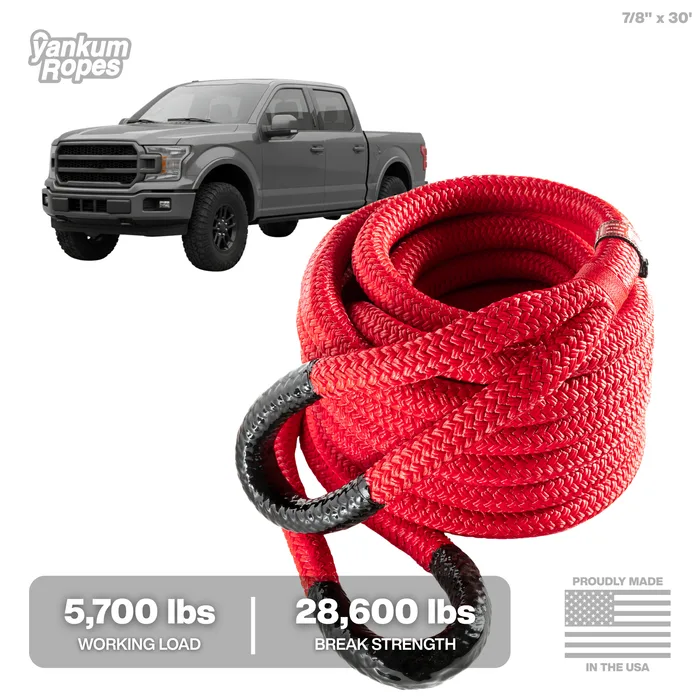
- Yankum Ropes 7/8" Kinetic Recovery Rope "Python" - Buy. A double braid nylon kinetic rope with a published 28,600 lb minimum breaking strength and, unusually, a published working load limit range.
- ARB 4x4 Accessories Snatch Strap 17,500lb (ARB705LB) - Buy. A 30 ft nylon snatch strap with a published 17,600 lb breaking strength, reinforced eyes with protector sleeves and a 3 year warranty.
- MAXTRAX MKII (pair) - It depends. Australian-made reinforced nylon traction boards that get one vehicle out of sand, mud or snow with no second vehicle involved.
- Keeper 20' Emergency Tow Strap (89819) - Skip. A cheap 2 inch webbing strap with forged metal slip hooks on both ends, marketed for towing and recovery.
The verdict in 30 seconds
What mattered most
- Tool type
- Published strength
- Published working load limit
- Stretch
- End hardware
- Size
Recovery gear is one of the few things you can buy for a vehicle where picking the wrong item can kill somebody. The words on the packaging look interchangeable, but a tow strap, a snatch strap, a kinetic rope and a tree saver are four different tools with four different jobs. Stretch is the dividing line: a tow strap is meant to barely stretch while you drag a rolling vehicle, and a kinetic rope or snatch strap is meant to stretch a lot so it can store energy and yank a stuck vehicle free. We picked four things people actually put in the back of a truck and judged them on what the makers publish, not on marketing adjectives.
A double braid nylon kinetic rope with a published 28,600 lb minimum breaking strength and, unusually, a published working load limit range.
Best for: Someone with a Jeep, half-ton truck or large SUV who expects to be the vehicle doing the pulling and wants published numbers rather than a single vague rating.
- Yankum publishes both the minimum breaking strength (28,600 lb) and a working load limit range of 5,700 to 9,000 lb, so you are not guessing at a safety factor.
- The product page states a vehicle weight window of 5,000 to 7,200 lb and tells you to size the rope to the recovery vehicle, not the stuck one.
- Double braid nylon with a polymeric coating and rubber-dipped eyes, sold in 20 ft and 30 ft, made in the USA.
- Yankum states plainly that its ropes are not towing ropes, so this does not replace a tow strap for dragging a rolling vehicle.
- The warranty is 1 year limited, shorter than the ARB strap's 3 years.
- Premium pricing before you add the soft shackles it needs, and Yankum recommends a 7/16 inch soft shackle or 3/4 inch hard shackle to go with it.
- Nylon absorbs water and mud, so it needs rinsing and drying, and it takes up more room in a bag than flat webbing.
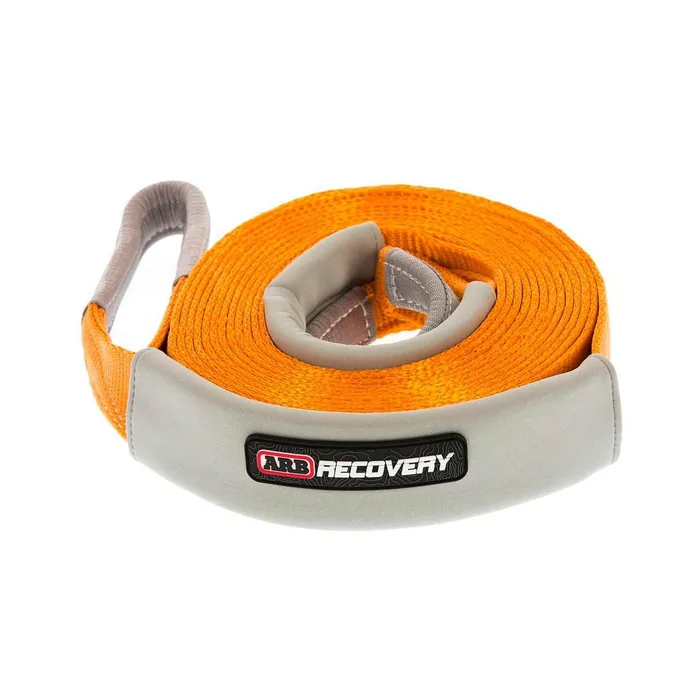
A 30 ft nylon snatch strap with a published 17,600 lb breaking strength, reinforced eyes with protector sleeves and a 3 year warranty.
Best for: The driver who wants one properly made stretch recovery strap from a mainstream off-road brand without paying rope money.
- ARB publishes a 17,600 lb breaking strength and describes roughly 20 percent stretch, and the listing is explicit that a snatch strap is elastic under load unlike a tow strap.
- Reinforced eyes with eye and seam protector sleeves, which is where cheap straps usually fail first.
- 3 year warranty and a listed product weight of 7 lb, so it packs flatter and lighter than a comparable rope.
- ARB's own page is inconsistent about the fibre, with the description calling it nylon and the specification table listing polyester.
- No working load limit is published, only a breaking strength, so you have to apply your own safety factor.
- Flat webbing takes on grit and is harder to inspect for internal damage than a coated rope.
- At 17,600 lb it is below the Python's 28,600 lb, which matters if your recovery vehicle is heavy.
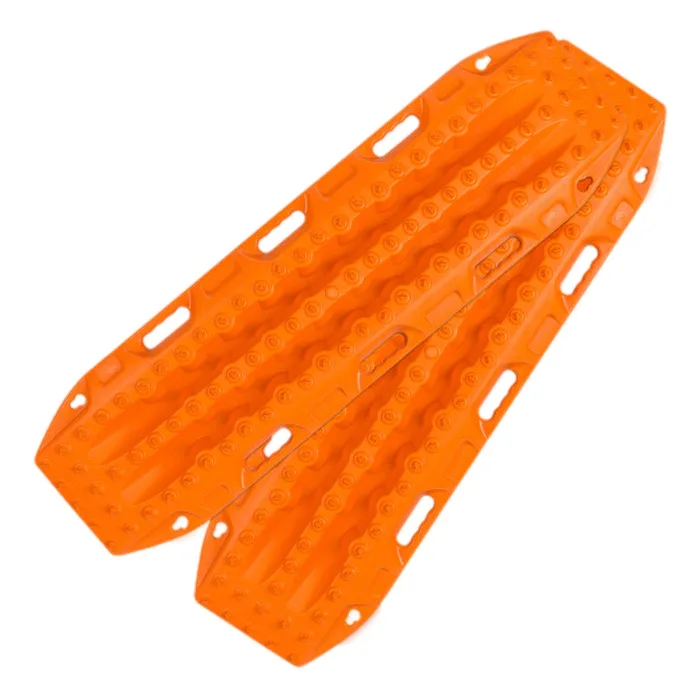
Australian-made reinforced nylon traction boards that get one vehicle out of sand, mud or snow with no second vehicle involved.
Best for: Solo travellers and anyone who spends time in sand or snow, where the usual problem is traction rather than being properly stuck.
- The only tool in this comparison that works when you are alone, because nothing is under tension and nothing can fly at anybody.
- 45 x 13 x 3.5 inches and 7.5 lb per board, 15 lb per pair, with six built-in handles and a shovel at either end.
- UV-stabilised engineering-grade reinforced nylon, made in Australia, with a limited lifetime warranty against faulty materials and workmanship.
- MAXTRAX does not publish a load rating or vehicle weight limit, so you cannot compare it numerically with a strap or rope.
- MAXTRAX warns that spinning the wheels generates enough heat to melt the boards and burn off the lugs, and damage from wheel spin is not covered by the warranty.
- They are bulky, so most people end up buying a rack or pin mount to carry them.
- They do nothing for a vehicle that is genuinely hung up on its frame or axles rather than short of traction.
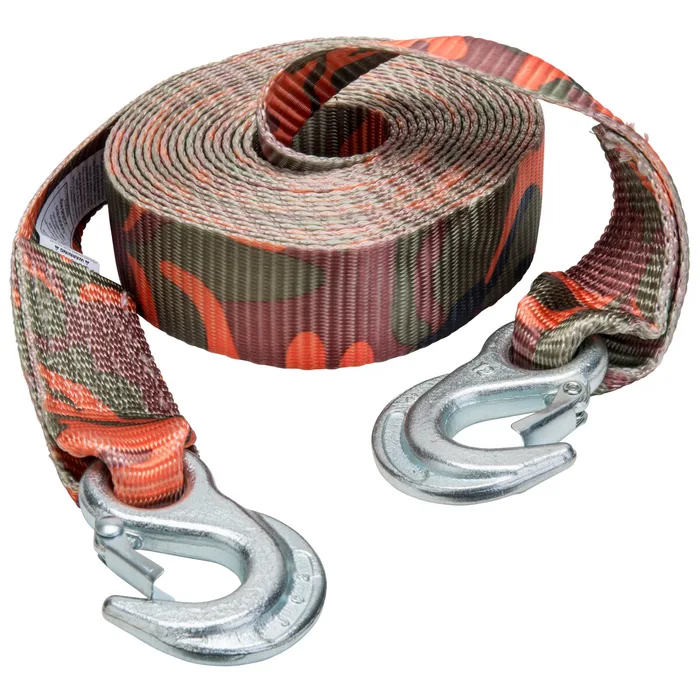
A cheap 2 inch webbing strap with forged metal slip hooks on both ends, marketed for towing and recovery.
Best for: Almost nobody in an off-road context. If you genuinely need a tow strap, buy a loop-end one and connect it with rated shackles instead.
- Keeper publishes clear numbers: 12,000 lb break strength and a 5,000 lb maximum vehicle weight.
- Light and cheap enough that it is easy to keep one in a car boot.
- The hooks have a safety latch, which is more than many hook-end straps in the same aisle offer.
- Metal hooks are the core problem: if a hook comes off a mounting point under load, the strap can throw it, and this is a recognised cause of serious injuries in vehicle recovery.
- It is described as suitable for recoveries, but a low-stretch webbing strap with hard hardware is the wrong tool for yanking a stuck vehicle.
- The published 12,000 lb figure is a break strength with no working load limit, and Australia's mandatory recovery strap standard advises breaking strength between two and three times the lighter vehicle's gross mass, which leaves very little margin here.
- 90 day limited warranty.
| Criteria | 7/8" Kinetic Recovery Rope "Python" Top pick | Snatch Strap 17,500lb (ARB705LB) | MAXTRAX MKII (pair) | 20' Emergency Tow Strap (89819) |
|---|---|---|---|---|
| Verdict | Buy it | Buy it | It depends | Skip it |
| Best for | Someone with a Jeep, half-ton truck or large SUV who expects to be the vehicle doing the pulling and wants published numbers rather than a single vague rating. | The driver who wants one properly made stretch recovery strap from a mainstream off-road brand without paying rope money. | Solo travellers and anyone who spends time in sand or snow, where the usual problem is traction rather than being properly stuck. | Almost nobody in an off-road context. If you genuinely need a tow strap, buy a loop-end one and connect it with rated shackles instead. |
| Price tier | $$$ · premium | $$ · mid-range | $$$ · premium | $ · budget |
| Tool type | Kinetic recovery rope, double braid nylon | Snatch strap, nylon webbing | Traction boards, reinforced nylon | Tow strap, webbing with metal hooks |
| Published strength | MBS 28,600 lb | Breaking strength 17,600 lb | None published | Break strength 12,000 lb |
| Published working load limit | 5,700 to 9,000 lb | Not published | Not published | Not published (5,000 lb max vehicle weight) |
| Stretch | High, figure not published | About 20 percent per ARB | Not applicable | Not published |
| End hardware | Spliced, rubber-dipped eyes | Reinforced eyes with protector sleeves | None, no tension involved | Forged slip hooks with safety latch |
| Size | 7/8 in diameter, 20 ft or 30 ft | 30 ft x 2 3/8 in | 45 x 13 x 3.5 in per board | 20 ft x 2 in |
| Needs a second vehicle | Yes | Yes | No | Yes |
| Warranty | 1 year limited | 3 years | Limited lifetime | 90 day limited |
Which one is right for you?
- Someone with a Jeep, half-ton truck or large SUV who expects to be the vehicle doing the pulling and wants published numbers rather than a single vague rating. Buy it Yankum Ropes 7/8" Kinetic Recovery Rope "Python"
- The driver who wants one properly made stretch recovery strap from a mainstream off-road brand without paying rope money. Buy it ARB 4x4 Accessories Snatch Strap 17,500lb (ARB705LB)
- Solo travellers and anyone who spends time in sand or snow, where the usual problem is traction rather than being properly stuck. It depends MAXTRAX MKII (pair)
- Almost nobody in an off-road context. If you genuinely need a tow strap, buy a loop-end one and connect it with rated shackles instead. Skip it Keeper 20' Emergency Tow Strap (89819)
How we judged the field
Five things decide whether a piece of recovery gear is worth owning. First, whether it is the right tool at all: low stretch for towing a rolling vehicle, high stretch for yanking a stuck one, and a tree saver or winch extension for anchoring, because swapping those around is where people get hurt. Second, whether the maker publishes numbers you can actually use, and specifically whether it separates minimum breaking strength from working load limit instead of printing one big figure. Third, the end hardware, since eyes, sleeves and shackles fail long before the middle of a good rope does. Fourth, whether the size guidance is tied to vehicle weight and to the correct vehicle, which for kinetic recovery is the one doing the pulling. Fifth, the boring durability details: coating, abrasion protection, warranty length and how easy the thing is to inspect after a muddy weekend.
The field splits cleanly. On one side are stretch tools, kinetic ropes and snatch straps, which is what most people shopping for a “tow strap” actually need. On the other are no-tension tools, meaning traction boards, which solve the same problem without putting anybody in the danger zone. Sitting underneath both is a large pile of cheap hook-end straps sold in the same aisle with the same words on the packet. We took the best-documented rope, the mainstream webbing snatch strap that most off-road shops stock, the traction board that set the template for the category, and one representative hook-end strap to show exactly what the problem with that whole class is.
Yankum Ropes 7/8” Kinetic Recovery Rope “Python”
Buy itYankum’s 7/8 inch Python is the pick mostly because of how much the company is willing to commit to in writing. The page gives a minimum breaking strength of 28,600 lb, a working load limit range of 5,700 to 9,000 lb, and a vehicle weight window of 5,000 to 7,200 lb, then explains that you get a WLL by dividing MBS by a safety factor of roughly three to five. It also tells you to match the rope to the recovery vehicle rather than the stuck one, which is the mistake most first-time buyers make. Construction is double braid nylon with a polymeric coating for UV, water and abrasion, and the eyes are dipped in a thick rubber coating, which is the part that wears out first in real use. It is available in 20 ft and 30 ft, made in the USA, and covered by a 1 year limited warranty. Yankum is also blunt that this is not a towing rope. Best for the person who will be doing the pulling and wants to understand the numbers rather than trust them.
ARB 4x4 Accessories Snatch Strap 17,500lb (ARB705LB)
Buy itThe ARB705LB is the strap most off-road shops will hand you, and it earns that. ARB publishes a 17,600 lb breaking strength for a 30 ft by 2 3/8 inch strap, describes roughly 20 percent genuine stretch, lists a 7 lb product weight and backs it with a 3 year warranty. The eyes are reinforced and fitted with eye and seam protector sleeves, which matters because that junction is where a webbing strap usually gives up. ARB also makes the tow versus snatch distinction explicitly in its own copy, describing the strap as elastic under load unlike a tow strap. Two caveats. ARB’s own page is inconsistent about the fibre, calling it nylon in the description and polyester in the spec table, and there is no working load limit published, only the breaking figure, so you supply the safety factor yourself. Flat webbing is also harder to inspect for internal damage than a coated rope. Best for someone buying one good stretch strap and not thinking about it again.
MAXTRAX MKII (pair)
It dependsMAXTRAX MKII boards belong to a different category of solution and that is the whole point of including them. Each board is 45 by 13 by 3.5 inches and weighs 7.5 lb, 15 lb for the pair, moulded in UV-stabilised engineering-grade reinforced nylon with six handles, a shovel at either end and keyhole accessory points for pin mounts. They are made in Australia and carry a limited lifetime warranty against faulty materials and workmanship. Because nothing is under tension, a board recovery cannot throw hardware at a bystander, and it works with nobody else around, which no strap or rope can claim. The honest limits are these: MAXTRAX does not publish a load rating or vehicle weight limit, so you cannot line them up against a rope numerically; they are bulky enough that most owners buy a mount; and MAXTRAX warns that wheel spin melts the material and burns the lugs off, with that damage excluded from warranty. Best for solo travellers and anyone whose usual problem is traction, not being properly stuck.
Keeper 20’ Emergency Tow Strap (89819)
Skip itThe Keeper 89819 is here as the representative of a whole shelf, not because Keeper is uniquely bad. It is a 2 inch by 20 ft webbing strap with forged slip hooks and safety latches, a published 12,000 lb break strength and a stated 5,000 lb maximum vehicle weight, sold with a 90 day limited warranty. Keeper is clearer about its numbers than many competitors. The problem is the format. Metal hooks concentrate load on a small piece of hardware and on whatever they are hooked to, and a hook that releases under tension has a loaded strap behind it. Keeper describes the strap as suitable for recoveries, but a low-stretch strap with hard end fittings is the wrong tool for a snatch. And at 12,000 lb, measured against the two to three times gross vehicle mass guidance in Australia’s mandatory standard, the margin for anything heavier than a small car is thin. Best for almost nobody; buy a loop-end strap and rated shackles instead.
Sources
Specs in this review come from these pages.
- ACCC Product Safety - Motor vehicle recovery straps guide (productsafety.gov.au)
- ACCC Product Safety - Recovery straps for motor vehicles mandatory standard (productsafety.gov.au)
- Yankum Ropes - 7/8" Kinetic Recovery Rope "Python" (yankum.com)
- ARB 4x4 Accessories - Snatch Strap 17,500lb ARB705LB (store.arbusa.com)
- MAXTRAX USA - MAXTRAX MKII and instructions for use (maxtraxus.com)
- Factor 55 - Extreme Duty Soft Shackle 3/8" x 20" (factor55.com)
Yankum Ropes 7/8” Kinetic Recovery Rope “Python” vs ARB 4x4 Accessories Snatch Strap 17,500lb (ARB705LB): which should you buy?
Both buy picks do the same job, which is stretching under load so a moving vehicle can pull a stuck one free without shock loading everything. They differ in material, in numbers and in what the maker is prepared to publish. The Python is a coated double braid nylon rope with a 28,600 lb minimum breaking strength and a stated 5,700 to 9,000 lb working load limit range, sized to a 5,000 to 7,200 lb recovery vehicle. The ARB705LB is flat nylon webbing with a 17,600 lb breaking strength, roughly 20 percent stretch and no published working load limit. The rope stretches more, packs bulkier, absorbs water and carries a shorter warranty. The strap packs flat at 7 lb, costs less, and gets a 3 year warranty, but you have to pick your own safety factor and webbing hides internal damage better than a coated rope does.
Choose by how often you expect to use it and how heavy your rig is. If your recovery vehicle is at the upper end of that 5,000 to 7,200 lb band, or you are the person your group calls when somebody buries a truck, the extra breaking strength and the published working load limit on the Python are worth the money and the bulk. If you are buying one item to live in the back of a mid-size SUV for the rare weekend when a friend gets stuck in a fire road puddle, the ARB strap is enough tool, and the money you save goes toward the two things you also need: a pair of rated soft shackles and a recovery damper. Neither one is a tow strap. If you want to drag a rolling vehicle any real distance, buy a low-stretch loop-end tow strap on top of whichever of these you pick.
What to look for
- Stretch tells you the job: high stretch means kinetic recovery of a stuck vehicle, low stretch means towing a vehicle that still rolls, and the two are not interchangeable.
- MBS is not WLL: minimum breaking strength is the point of failure, working load limit is what you should actually apply, and it is the breaking figure divided by a safety factor of roughly three to five.
- Loop ends, not hooks: buy straps and ropes with sewn or spliced eyes and connect them with rated shackles, so there is no metal hook to release under tension.
- Rated recovery points only: recovery loads can break tie-down eyes, tow balls, towbars and suspension components that are not rated for recovery, so confirm your vehicle has a point the maker rates for recovery.
- A damper is not optional: drape a purpose-made damper, heavy bag or blanket over the line, and keep bystanders well clear of the line.
- Buy the anchoring gear too: a wide tree saver protects both the trunk and your line, a winch extension is for reach and not for snatching, and neither should be substituted with a kinetic rope.
Our final take
Most people walk into this category looking for “a tow strap” and walk out with the wrong tool. Decide first whether the vehicle rolls. If it rolls, you want low stretch and loop ends. If it is stuck, you want a kinetic rope or snatch strap, and the Yankum Python is our pick because it publishes the numbers that let you size it honestly, with the ARB705LB the sensible cheaper answer. If you travel alone, traction boards like the MAXTRAX MKII solve the problem with nothing under tension at all. Whatever you buy, the gear is only half of it: use rated recovery points, rated shackles, a damper over the line, and keep everybody well clear. Straps with metal hooks are the one thing here worth actively avoiding.
Questions, answered
What is the actual difference between a tow strap and a kinetic recovery rope?
A tow strap is built to stretch as little as possible. You use it when the stuck or dead vehicle still rolls and you are simply dragging it, so you want a direct, controlled pull with no stored energy. A kinetic recovery rope or snatch strap is built to stretch a lot, typically in the region of 20 percent or more, so the recovery vehicle can take a short run-up and the line stores and releases energy to break the stuck vehicle free. Yankum states on its own product page that its ropes are not towing ropes, and ARB's listing makes the same distinction from the other direction. Using a low-stretch strap for a snatch shock loads everything in the chain, and using a stretchy rope for a long tow gives you a vehicle that surges and never settles.
Can I attach a recovery strap to my tow ball or hitch ball?
No. The force of a recovery strap can break or snap off attachment points that are not rated for recovery, such as tie-down eyes, tow balls, towbars and suspension components, and a detached component can strike and seriously injure or kill a person. A tow ball is a bolted-on steel sphere loaded from a direction it was never designed for, and when it lets go it leaves at speed with a strap attached. Use a recovery point that the vehicle or accessory manufacturer rates for recovery, or a proper receiver-mounted recovery point with a pin through it. If your vehicle has no rated recovery point, that is worth solving before you buy the strap.
How strong does my strap or rope need to be?
The starting reference is Australia's mandatory recovery strap standard, which requires straps to carry advice that the breaking strength should be between two and three times the vehicle's gross vehicle mass, matched to the lighter of the two vehicles involved. That is a floor, not a target. Then note that breaking strength and working load limit are not the same thing: Yankum publishes an MBS of 28,600 lb for the 7/8 inch Python and a working load limit range of 5,700 to 9,000 lb, arrived at by dividing the MBS by a safety factor. Most brands publish only the breaking number, so you have to apply your own factor. Also size to the recovery vehicle, since that is what puts the energy into the line.
Do I need soft shackles, or are steel bow shackles fine?
Both can work when they are rated and used correctly, but they fail very differently. A steel bow shackle is a heavy lump of metal with a screw pin, and if a rigging point fails it travels. A soft shackle is braided synthetic line, so there is less metal in the system and less mass to throw. Factor 55 describes its soft shackles as a lightweight replacement for common steel screw pin shackles and publishes both figures for the 3/8 inch Extreme Duty version, a minimum breaking strength of 43,500 lb and a working load limit of 8,700 lb. What is not acceptable in either case is unrated hardware from a hardware store bin. Whatever you use, the connection is the weakest link in the whole recovery.
Do traction boards replace a strap or a rope?
They replace it in one specific situation and not in others. Traction boards solve a traction problem: the vehicle would roll if the tyres had something to bite, which is the usual story in sand, snow and slick mud. In that case boards get you out with no second vehicle, no tension and nothing that can fly at anybody, which makes them the safest recovery in this comparison. They do not help if the vehicle is sitting on its frame, wedged on a rock or nose-down in a hole. MAXTRAX also warns that spinning the wheels generates enough heat to melt the boards and burn the lugs off, and says that damage is not covered by warranty. Most people who travel remote end up carrying both boards and a rope.
Deciding between the top two? See our head-to-head: Yankum Ropes 7/8" Kinetic Recovery Rope "Python" vs ARB 4x4 Accessories Snatch Strap 17,500lb (ARB705LB).
More Automotive reviews
 The Best Trailer Hitch Cargo Carriers: 4 Compared (and One to Skip)
  The Best Trim Restorers: 4 Compared (and One to Skip)
  The Best Wash Mitts: 4 Compared (and One to Skip)
  The Best Water Spot Removers: 4 Compared (and One to Skip)
  The Best Wheel Brushes: 4 Compared (and One to Skip)
  The Best Wheel Cleaners: 4 Compared (and One to Skip)