

Automotive
The Best Wheel Cleaners: 4 Compared (and One to Skip)
Four wheel and tire cleaners compared on brake dust removal, pH, and which finishes each one can safely touch.
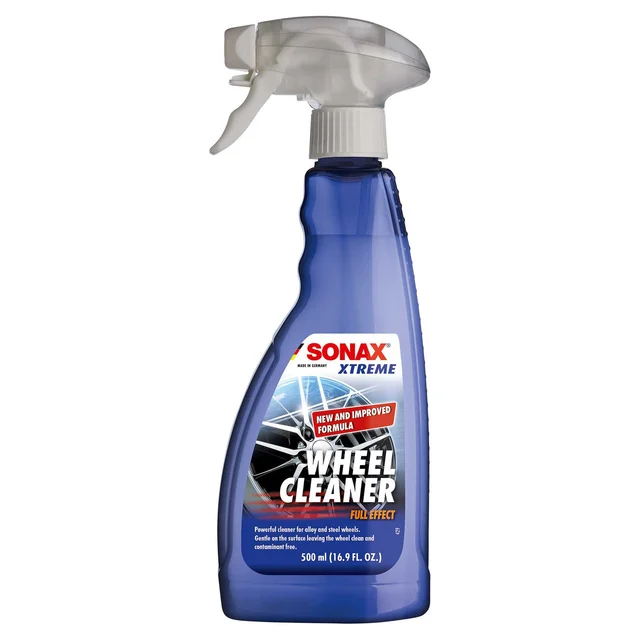
The short version
Buy SONAX Wheel Cleaner Full Effect. It is a pH-neutral iron remover, which means it is formulated to loosen embedded brake dust without etching bare or anodized aluminum, and it cleans well. Griot's Garage Heavy-Duty Wheel Cleaner is a near-neutral clinging gel, better on deep-dish and multi-spoke wheels and cheaper by the gallon. P&S Brake Buster is the professional value pick, but it is strongly alkaline rather than neutral, so keep it away from polished lips and anodized finishes. Skip Meguiar's Wheel Brightener unless you run a shop: it is an ammonium bifluoride acid that etches anything not clear-coated, and that damage cannot be polished out. Best for: anyone who wants brake dust gone without gambling a wheel finish on the wrong pH.
Our picks at a glance
- SONAX Wheel Cleaner Full Effect - Buy. The pH-neutral iron remover that cleans hardest while staying safe on anodized, and clear-coated wheels.
- Griot's Garage Heavy-Duty Wheel Cleaner - Buy. Thick, clinging gel with a color change that stays on spoke faces instead of running to the ground.
- P&S Professional Detail Products P&S Brake Buster Total Wheel Cleaner - It depends. The professional workhorse: dirt cheap per wheel and brutally effective, but alkaline enough to stain bare and anodized aluminum.
- Meguiar's Detailer Wheel Brightener (D140) - Skip. An ammonium bifluoride acid cleaner that erases brake dust instantly and etches polished, bare, and anodized wheels permanently.
The verdict in 30 seconds
What mattered most
- Chemistry type
- pH
- Safe on polished or bare aluminum
- Safe on anodized finishes
- Cleans tires too
- Ready to use or dilute
Wheel cleaner is one of the few car care products that can cause permanent, unrepairable damage in about thirty seconds. The dividing line is chemistry: pH-neutral iron removers are the lowest risk for most finishes, strong alkaline cleaners are cheap and effective but attack bare and anodized aluminum, and acid cleaners etch polished metal beyond recovery. We compared four widely sold options across those three categories. Two are easy recommendations, one is a value pick with a real restriction, and one belongs in a professional shop rather than your driveway.
The pH-neutral iron remover that cleans hardest while staying safe on anodized, and clear-coated wheels.
Best for: Owners with polished lips, anodized, or ceramic-coated wheels who want maximum cleaning from an acid-free, pH-neutral formula.
- Acid-free and pH-neutral, so it is formulated not to etch bare or anodized aluminum
- Strong brake dust removal in a pH-neutral formula
- Manufacturer lists it for painted alloy, anodized, clear-coated, chrome, aluminum, and stainless steel wheels
- Color change from fluorescent yellow-green to deep red shows when it is working
- Ready to use only, so cost per wheel is the highest in this group
- Strong sulfur smell, which is inherent to the chemistry
- Iron remover first, degreaser second: heavy oily film needs a soapy wash before it goes on
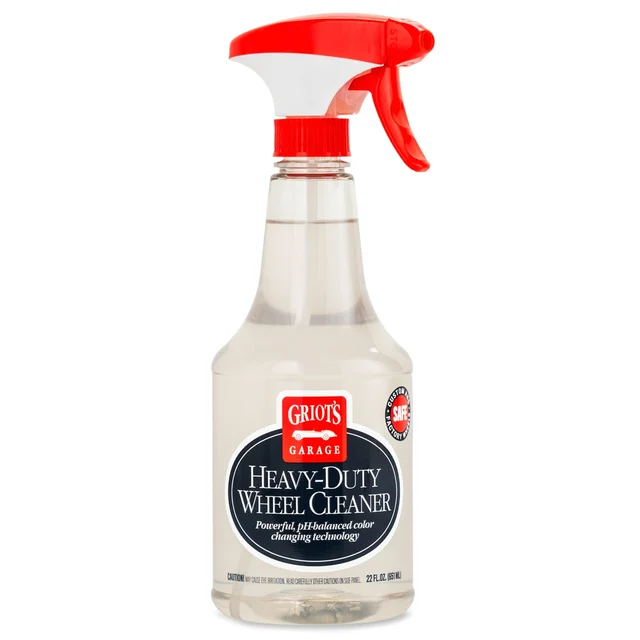
Thick, clinging gel with a color change that stays on spoke faces instead of running to the ground.
Best for: Deep-dish or multi-spoke wheels, and anyone washing weekly who wants a gallon on the shelf.
- Griot's states it is safe for use on any wheel finish
- Thicker formula clings to vertical spokes, barrels, and deep-dish faces
- Available in a gallon refill, which drops the cost per wheel substantially
- Color change to a deeper purple as it works, per Griot's
- Generally needs a slightly longer dwell than the SONAX to match it on heavy buildup
- The cling that helps on spokes takes more rinsing out of lug pockets
- Same rotten-egg odor as any iron remover
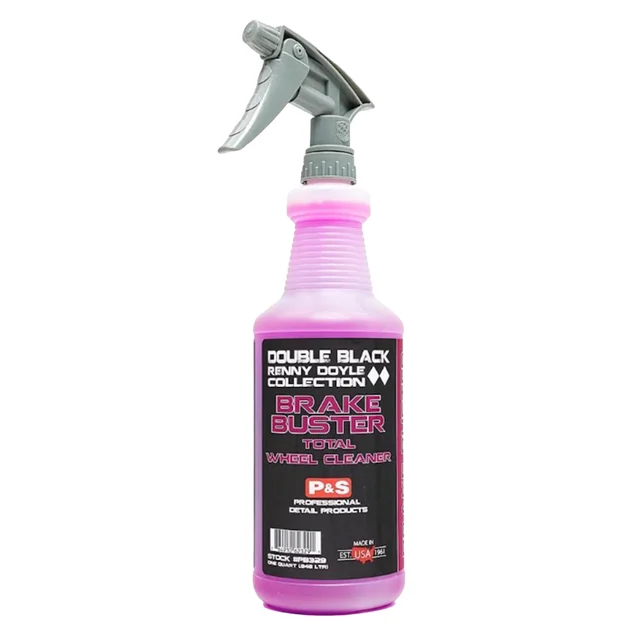
The professional workhorse: dirt cheap per wheel and brutally effective, but alkaline enough to stain bare and anodized aluminum.
Best for: High-volume washing of clear-coated factory wheels where value and tire cleaning matter more than finish sensitivity.
- Cuts oily brake dust, road film, and old tire dressing in a single pass
- Sold as a clinging gel in pint through 5 gallon sizes, which keeps the cost per wheel low on clear-coated wheels
- Contains corrosion inhibitors that leave a protective film behind
- Not pH-neutral: the safety data sheet lists a pH of 12.5 and sodium metasilicate
- Strong alkali can dull or whiten bare, machined, or polished aluminum and attack anodized layers
- Strips wax and most sealants from wheels
- Must not be used on hot wheels or in direct sun, where it can dry before rinsing
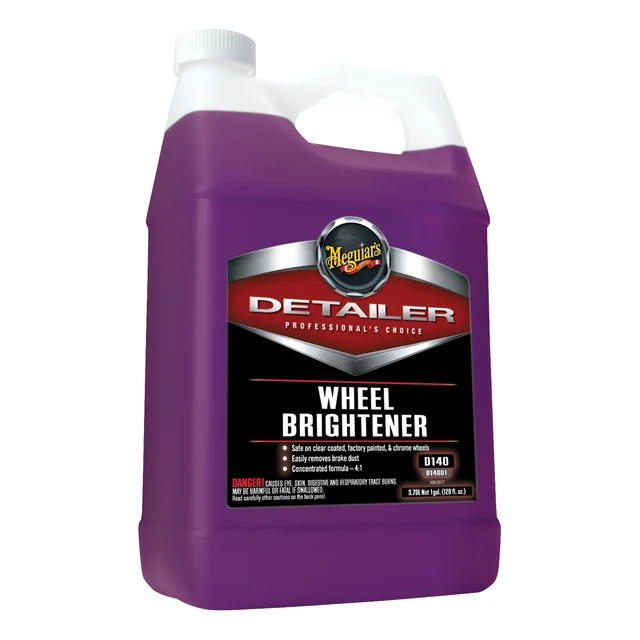
An ammonium bifluoride acid cleaner that erases brake dust instantly and etches polished, bare, and anodized wheels permanently.
Best for: Professional shops with proper PPE, controlled dilution, and nothing but clear-coated wheels passing through.
- Removes heavy brake dust and rail dust with almost no agitation
- Heavy brake dust and rail dust come off with little agitation
- A legitimate tool for volume shops working on clear-coated fleet wheels
- Built on ammonium bifluoride, which forms hydrofluoric acid in solution
- Intended for professional use on clear-coated wheels, so check the label for approved finishes
- Etches polished lips, bare and machined faces, and anodized finishes, and the damage cannot be polished out
- Hazard profile includes severe skin burns, serious eye damage, and organ damage from repeated exposure
- Creeps under any chip or crack in a clear coat
| Criteria | SONAX Wheel Cleaner Full Effect Top pick | Griot's Garage Heavy-Duty Wheel Cleaner | P&S Brake Buster Total Wheel Cleaner | Meguiar's Detailer Wheel Brightener (D140) |
|---|---|---|---|---|
| Verdict | Buy it | Buy it | It depends | Skip it |
| Best for | Owners with polished lips, anodized, or ceramic-coated wheels who want maximum cleaning from an acid-free, pH-neutral formula. | Deep-dish or multi-spoke wheels, and anyone washing weekly who wants a gallon on the shelf. | High-volume washing of clear-coated factory wheels where value and tire cleaning matter more than finish sensitivity. | Professional shops with proper PPE, controlled dilution, and nothing but clear-coated wheels passing through. |
| Price tier | $ · mid-range | $ · mid-range | $ · budget | $ · budget |
| Chemistry type | pH-neutral, acid-free cleaner with color change | Near-neutral clinging gel with color change | Non-acid caustic alkaline with surfactants | Acid (ammonium bifluoride) |
| pH | Neutral | Not published | 12.5 per safety data sheet | Strongly acidic |
| Safe on polished or bare aluminum | Yes | Yes | No, risk of dulling and white staining | No, permanent etching |
| Safe on anodized finishes | Yes | Yes | No, alkali attacks the anodic layer | No, fluoride attacks the anodic layer |
| Cleans tires too | Not stated by maker | Not stated by maker | Not stated by maker | Not stated by maker |
| Ready to use or dilute | Ready to use | Ready to use, gallon size available | Gel, pint to 5 gallon sizes | Concentrate |
| Handling and odor | Owners report a sulfur smell | Maker says the new formula smells better | Caustic, gloves and eye protection advised | Corrosive, full PPE and ventilation required |
| Price tier | $ · mid-range | $ · mid-range | $ · budget | $ · budget |
Which one is right for you?
- Owners with polished lips, anodized, or ceramic-coated wheels who want maximum cleaning from an acid-free, pH-neutral formula. Buy it SONAX Wheel Cleaner Full Effect
- Deep-dish or multi-spoke wheels, and anyone washing weekly who wants a gallon on the shelf. Buy it Griot's Garage Heavy-Duty Wheel Cleaner
- High-volume washing of clear-coated factory wheels where value and tire cleaning matter more than finish sensitivity. It depends P&S Professional Detail Products P&S Brake Buster Total Wheel Cleaner
- Professional shops with proper PPE, controlled dilution, and nothing but clear-coated wheels passing through. Skip it Meguiar's Detailer Wheel Brightener (D140)
How we judged the field
We do not run a lab. We synthesize independent testing, manufacturer technical data and safety data sheets, and a large volume of owner reports, then weigh those against each other. Four things drove the ranking.
First, chemistry. Whether a cleaner is a pH-neutral iron remover, a caustic alkaline degreaser, or an acid decides which wheels it can legally touch, and it matters more than any other spec on the label.
Second, finish safety, judged against label warnings and SDS ingredients rather than marketing copy.
Third, real cleaning power on sintered-in brake dust with a short dwell and one light agitation pass, because nobody scrubs each wheel for ten minutes.
Fourth, cost per wheel once dilution is accounted for.
One point shapes everything below: “non-acid” and “pH-neutral” are not the same claim. Plenty of non-acid wheel cleaners are strongly caustic, and sodium hydroxide dissolves bare aluminum and strips anodized layers just as surely as acid etches them, only through a different reaction. Meanwhile, nearly every factory wheel sold in the last two decades is clear-coated painted aluminum, which shrugs off almost anything. The finishes that actually get ruined are polished lips, bare or machined-face aluminum, anodized aftermarket and motorcycle wheels, raw magnesium, and older chrome that has already started to pit. If you own any of those, the pH line on this page is the only line that matters.
This is the safest strong cleaner in the group, and that combination is rare. SONAX describes it as acid-free and pH neutral, with a color-change foam: it sprays on fluorescent yellow-green and turns deep red as it loosens brake dust, oil and rubber residue. The color is a reaction indicator, not a strength meter, but it does tell you the cleaner is working.
SONAX lists it as safe on painted alloy, anodized, clear-coated, chrome, aluminum, and stainless steel wheels. Because the formula is pH neutral, it is a sensible choice for anodized finishes and expensive wheels, where a caustic or acid product would be a gamble.
The trade-offs are ordinary. It is a ready-to-use spray rather than a concentrate, so cost per wheel is the highest here. It is an iron remover first and a degreaser second, so on a wheel carrying heavy oily road film you want a pre-rinse and a soapy wash before it goes on, or you waste product dissolving grime instead of iron. And it smells like rotten eggs, which is intrinsic to the chemistry and not a defect.
Griot’s describes this as a thick solution that clings to the surface and turns a deeper purple as it works. The thicker body holds on vertical spoke faces and inside barrels instead of sheeting straight onto the ground, which matters on deep-dish and multi-spoke wheels where the dirtiest surfaces are the ones gravity works against. Griot’s states it is safe for use on any wheel finish.
It is also the more practical buy for anyone cleaning wheels often. It ships in 22 ounce, 35 ounce and gallon sizes, so cost per wheel should drop in the larger sizes.
The reason it sits behind the SONAX rather than beside it: on very heavily loaded wheels it generally wants a longer dwell to match the same result, and the cling that helps on spokes makes it slightly fussier to rinse fully out of lug pockets. Griot’s says the current formula smells better than the old one.
The professional detailing world runs on this stuff, and there is a reason. P&S describes it as a cleaning gel that adheres to the wheel, removes brake dust, oil, dirt, stains and light corrosion, and leaves a thin layer of corrosion inhibitors. It comes in pint to 5 gallon sizes, which keeps it cheap per wheel on clear-coated wheels.
The caveat is the part the marketing does not lead with. This is not a pH-neutral product. P&S’s safety data sheet lists a pH of 12.5 with sodium metasilicate among the ingredients, which is strongly alkaline. On clear-coated factory wheels that is a non-issue and the corrosion inhibitors do their job. On bare, machined, or polished aluminum, and on anodized finishes, strong alkali can dull, whiten, or stain the surface, especially if the product dries on a hot wheel in sun. P&S says it cleans premium wheels without damaging the surface, but a pH of 12.5 is the number to believe on bare or anodized aluminum. When a marketing line and a data sheet disagree, believe the more cautious one.
It will also strip wax and most sealants from wheels, which is fine if you reapply and annoying if you do not. Buy it if your wheels are clear-coated, you clean a lot of them, and you will rinse before it dries. Skip it if there is a polished lip or an anodized finish anywhere on the car.
This is the product that ruins wheels, and it ruins them permanently. Wheel Brightener is an acid cleaner built on ammonium bifluoride, which forms hydrofluoric acid in solution. It is spectacular at what it does: heavy brake dust and rail dust vanish on contact with almost no agitation, and a concentrated gallon should go a long way.
It is also the only product here with a hazard profile that includes severe skin burns, serious eye damage, and organ damage from repeated exposure. Fluoride chemistry is genuinely dangerous to handle, which is why it lives in a professional line and expects gloves, eye protection, and ventilation.
More to the point for buyers: this is a professional line product aimed at clear-coated wheels, so check the label for the finishes it is approved for. Ammonium bifluoride etches aluminum. It hazes polished lips, frosts bare and machined faces, attacks anodized layers, and finds any chip or crack in a clear coat and works underneath it. The damage is chemical etching, not staining, so polishing does not bring it back. Refinishing does.
If you are a volume shop with clear-coated fleet wheels, correct PPE, and controlled dilution, it has a place. For a driveway with one car, the risk-to-reward is upside down. A pH-neutral wheel cleaner gets you most of the result with far less chance of an unrecoverable mistake.
SONAX Wheel Cleaner Full Effect vs Griot’s Garage Heavy-Duty Wheel Cleaner: which should you buy?
These two are close enough that both are correct answers, and neither can damage a wheel finish, so the decision is about wheel shape and how often you wash.
The SONAX is the one owners credit with stronger single-pass cleaning. On a wheel that has gone a few weeks between washes, owners report it lifts more embedded brake dust per minute of dwell, and its thinner body reaches into lug pockets and behind spokes. It is the one to buy if you wash occasionally, you want the least scrubbing, and you are treating a set of wheels rather than a fleet.
The Griot’s wins on geometry and on running cost. The gel body stays where you spray it, which is worth more than raw strength on deep concave faces, wide barrels, and anything with a lot of vertical surface area. Buy it if you have big multi-spoke wheels, if you clean wheels weekly, or if you want a gallon on the shelf so the per-wheel cost stops mattering.
If your wheels are plain clear-coated factory alloys and you want one bottle, take the SONAX. If they are polished, anodized, or ceramic-coated and you clean them regularly, the Griot’s gel is the more forgiving daily driver.
What to look for
- Identify your finish first. Clear-coated painted aluminum, the factory default, tolerates nearly any cleaner. Polished, bare, machined-face, anodized, raw magnesium, and pitted chrome do not. If you cannot tell, treat the wheel as delicate.
- Read pH, not the word “non-acid.” Non-acid only rules out one of the two ways a cleaner damages metal. Strong alkaline products are non-acid and still attack bare aluminum and anodizing.
- Prefer pH-neutral, acid-free cleaners for anything you care about. They are the lowest risk for bare, anodized and expensive finishes, but still check the maker’s finish list.
- Match the body to the wheel. Thin liquids reach tight barrels and lug pockets. Gels cling to spoke faces and vertical surfaces. Deep-dish wheels want a gel.
- Never let any wheel cleaner dry. Work one wheel at a time, in shade, on a cool wheel, and rinse thoroughly. Most reported damage comes from dwell time and heat, not from the product itself.
- Check whether it cleans tires. Many wheel cleaners do not state it, so you may still want a dedicated tire cleaner.
- Buy a larger size if you wash often. A gallon changes the cost math versus a small trigger bottle.
- Expect a smell. Many color-change wheel cleaners smell of sulfur, which is not a sign of a bad batch.
Our final take
The category has a simple structure once you see it. Acid cleaners are the fastest and the most destructive. Caustic alkaline cleaners are the cheapest per wheel and safe only on clear coat. pH-neutral cleaners are slightly slower and slightly pricier, and they are the lowest risk for the finishes you own.
For nearly everyone, the last group is the right trade. SONAX Wheel Cleaner Full Effect is the pick because it combines strong cleaning in that group with a finish-safety list that covers painted, anodized, clear-coated, chrome, aluminum, and stainless wheels. Griot’s Garage Heavy-Duty Wheel Cleaner is the better buy if your wheels are deep or complex, or if you clean them often enough that a gallon refill pays for itself.
P&S Brake Buster earns its reputation among professionals and is excellent value on clear-coated wheels, but its alkalinity makes it the wrong default for anyone with a polished lip or an anodized set. And Meguiar’s Wheel Brightener is a tool for shops with PPE and clear-coated fleet wheels, not for a driveway. The money it saves is not worth a wheel you cannot polish back.
Questions, answered
Does "non-acid" mean the same thing as pH-neutral?
No, and assuming it does is how most wheels get damaged. Non-acid only rules out one of the two chemical routes to damage. A strongly alkaline cleaner built on sodium or potassium hydroxide is genuinely non-acid and will still dull, whiten, or stain bare and polished aluminum and attack an anodized layer. pH-neutral is the claim that matters. If a label says non-acid but not pH-neutral, treat it as caustic.
How do I tell whether my wheels are clear-coated, polished, or anodized?
Most factory alloy wheels made in the last twenty years are painted or powder-coated aluminum under a clear coat, and they look uniformly glossy with a slightly plastic depth to the finish. Polished aluminum looks like a mirror and shows fine swirl marks, most often on a lip or a machined face. Anodized wheels are common on aftermarket, off-road, and motorcycle applications and have a dry, slightly satin metallic look with a colored tint. If you genuinely cannot tell, use a pH-neutral cleaner. It is safe on all three.
Is an acid wheel cleaner ever the right choice?
For a professional shop cleaning clear-coated fleet or rental wheels at volume, with gloves, eye protection, ventilation, and disciplined dilution, acid cleaners save real time. For a home driveway with one or two cars, they are the wrong trade. A pH-neutral iron remover reaches nearly the same result with a slightly longer dwell and one pass of a wheel brush, and no chance of an etch you have to pay a refinisher to fix.
Will any of these strip the ceramic coating or wax on my wheels?
PH-neutral iron removers are safe on wheel coatings and sealants and are the standard maintenance product for coated wheels. Strong alkaline cleaners will strip wax and most sealants and will shorten the life of a coating with repeated use. Acid cleaners strip everything and can damage the substrate underneath. If your wheels are coated, stay with the neutral products.
Why do iron removers smell like rotten eggs, and does the color change mean it is working?
Many iron removers use sulfur based chemistry, which is why they smell like rotten eggs, and the smell is not a sign of a bad bottle. The purple or red bleeding is the cleaner reacting with the brake dust. It tells you the reaction is happening and roughly when it has finished, but a deeper color only means more iron was there, not that one product is stronger than another.
Deciding between the top two? See our head-to-head: SONAX Wheel Cleaner Full Effect vs Griot's Garage Heavy-Duty Wheel Cleaner.
More Automotive reviews
 The Best Windshield Repair Kits: 4 Compared (and One to Skip)
  The Best Windshield Sun Shades: 4 Compared (and One to Skip)
  The Best Winter Tires: 4 Compared (and One to Skip)
  The Best Wireless CarPlay Adapters: 4 Compared (and One to Skip)
  The Best Car Wax: 4 Compared (and One to Skip)
  The Best Dual Action Polishers: 4 Compared (and One to Skip)