Explained
Teething Toys, Explained
After reading, you'll understand the main teething products, what the FDA recommends, and which items to keep away from your baby.
In this guide
Teething products range from simple rubber toys to gels, necklaces and gadgets, and tired parents are an easy market. Some popular items carry real risks. The FDA's guidance, which follows the American Academy of Pediatrics, is short and practical. Knowing it makes the choice simple.
The 30-second version
- A firm rubber teether is the recommendation, along with gentle gum massage.
- Avoid liquid-filled teethers, since the FDA specifies teethers that are not liquid-filled.
- Chill, do not freeze, because very hard frozen items can hurt gums.
- Teething jewelry is dangerous, with reports of strangulation and choking.
- Skip numbing gels, since the FDA warns against benzocaine and lidocaine for teething.
The products this guide is about
Our verdict on each, with the full reasoning on the companion review.
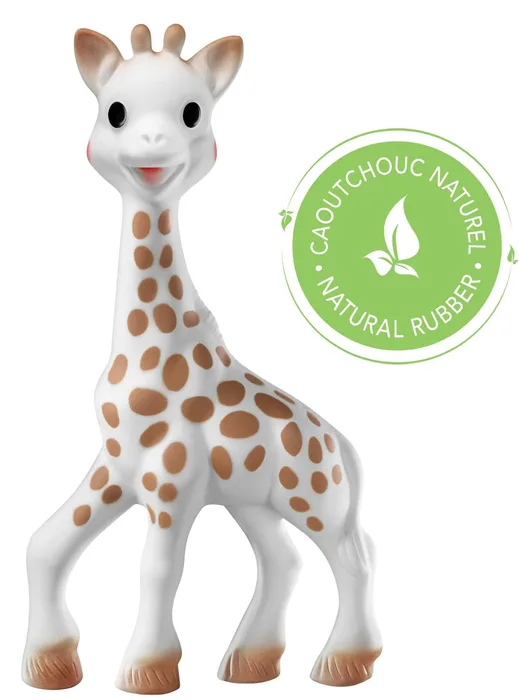
- Buy Sophie la girafe Natural Rubber Teether The classic natural rubber teether, firm enough to chew and easy for babies to grip.
- Buy Comotomo Silicone Baby Teether A food-grade silicone teether shaped like tiny fingers, easy to grab and chew.
- It depends Munchkin Fresh Food Feeder A mesh feeder that lets babies gum fresh fruit, useful for teething once they are 6 months or older.
- Skip Momma Goose Baltic Amber Teething Necklace An amber bead necklace sold for teething relief, the type of product the FDA warns against.
What actually matters
- Firmness - Babies soothe gums by biting down. A firm teether gives them something to press against.
- Material - Natural rubber and food-grade silicone are common choices. Look for clear material information.
- Grip - Handles, loops and long shapes help small hands hold on.
- Cleaning - Solid teethers are easiest to keep clean. Hollow toys need extra care.
- Temperature - Chilled teethers soothe gently. Frozen ones can be too hard.
- Supervision - Any item in a baby's mouth needs watching. Feeders especially.
- What to avoid - Teething jewelry, numbing gels and homeopathic tablets are all discouraged by the FDA.
The specs, in plain English
Green flags vs red flags
Green flags
- A firm, solid teether
- Clear material information
- Easy-to-grip shape
- Simple cleaning instructions
- An age recommendation
Red flags
- Necklaces or bracelets sold for teething
- Claims that amber releases pain relief
- Numbing gels for babies
- Liquid-filled teethers
- Advice to freeze teethers solid
Who's who: the brands
- Sophie la girafe - French maker of the classic natural rubber giraffe teether, made since 1961.
- Comotomo - Known for silicone baby bottles and a finger-shaped silicone teether.
- Munchkin - Baby products brand known for feeders, cups and bath toys.
- Momma Goose - Sells Baltic amber jewelry, including necklaces marketed for teething.
How to read a listing without getting fooled
Check the material first: natural rubber, food-grade silicone or plastic. Look for an age recommendation and cleaning instructions, and make sure the teether is solid rather than liquid-filled. Read any health claims skeptically, especially claims that a material releases pain relief. If a product goes around a baby's neck or wrist, do not buy it for teething.
How much should you spend?
Silicone teethers and feeders are the budget tier and work well. Classic natural rubber teethers sit in the mid-range. Teething jewelry is often priced like a premium product, but the FDA's warnings mean price is not the issue.
Questions, answered
How many teethers does a baby need?
Two or three is plenty, so one can be washed while another is in use. Babies often prefer different textures on different days. More toys are not necessary.
How do I clean a teether?
Follow the maker's instructions. Solid silicone teethers can usually be washed in warm soapy water. Hollow rubber toys are best wiped clean and kept dry inside.
Can teething cause a fever?
Teething may cause fussiness and drooling, but a real fever usually has another cause. Call your pediatrician if your baby has a fever or seems unwell. Do not assume it is teething.
Are wooden teethers safe?
A solid, one-piece wooden teether with no small parts can be used with supervision. The FDA's jewelry warning covers wooden bead bracelets too. Avoid anything strung on a cord.
Or jump to the head-to-head: Sophie la girafe Natural Rubber Teether vs Comotomo Silicone Baby Teether.