Explained
Toddler Beds, Explained
After reading this you'll know exactly what makes a toddler bed safe, what the certifications mean, and where it is worth spending more.
In this guide
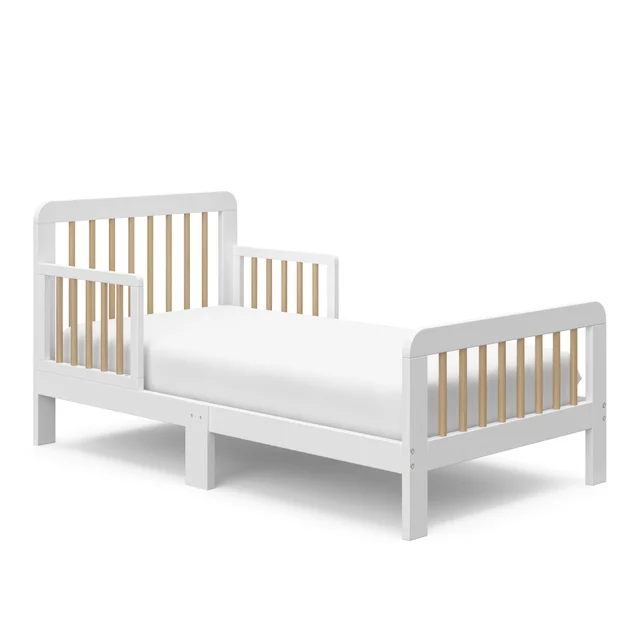
A toddler bed is a deliberately simple thing: a low, guardrailed frame sized for the crib mattress you already own, built so a one-to-three-year-old can climb in and out on their own. Where first-time buyers get tripped up is assuming more money buys a safer bed, or that a cute themed headboard is a feature rather than a cost. It isn't. The whole category comes down to a handful of concrete things, and once you can read them you can shop the whole shelf in five minutes.
The 30-second version
- Guardrails are the one job. A toddler bed exists to catch a rolling sleeper and shorten a fall, so rail coverage matters more than any other spec.
- Lower is safer. The closer the sleeping platform sits to the floor, the easier the independent climb-in and the gentler any tumble.
- You usually do not need a new mattress. These beds are built around a standard crib mattress, which is a big part of why they are inexpensive.
- Certifications are checkable, not marketing. JPMA, CPSC/ASTM compliance, and GREENGUARD Gold are specific, verifiable standards, not vague reassurances.
- Don't pay a novelty premium. A themed cutout adds cost, is outgrown fast, and never makes the bed safer or sturdier.
The products this guide is about
Our verdict on each, with the full reasoning on the companion review.
- Buy Storkcraft Pasadena Toddler Bed with Guardrails Built-in guardrails on both sides, GREENGUARD Gold certified, on a low, tidy frame that still looks like a grown-up bed. Amazon
- Buy Delta Children MySize Toddler Bed The value benchmark: low height, dual guardrails, and both JPMA and GREENGUARD Gold certification. Amazon
- It depends Graco Benton Toddler Bed with Guardrails A classic-looking bed with GREENGUARD Gold certification, though the maker page lists no weight limit.
- Skip Storkcraft Teddy Bear Toddler Bed with Guardrails You pay a novelty premium for bear-ear cutouts on a bed with similar guardrails and materials to a plainer one.
What actually matters
- Guardrail coverage is the single most important thing, because catching a roll is the only job this bed adds over a plain frame. Favor tall, long rails over short token panels.
- Height off the floor decides how easily your child gets in and out unassisted and how minor a fall is. Lower is almost always better.
- Frame material is worth reading on the listing. Pine, wood composites and engineered wood are all common, so check what the maker says.
- Safety certifications tell you the bed was independently screened. JPMA plus stated CPSC/ASTM compliance is the baseline; an air-quality mark like GREENGUARD Gold is a bonus.
- Mattress fit matters for cost and safety. A standard crib-mattress design lets you reuse what you own, and a mattress that isn't too thick keeps the guardrails standing proud.
- Weight limit is a reminder of scope. Many toddler beds list a limit of around 50 lb, so they are a genuine toddler-only purchase, not a bed to stretch to age five.
- Style longevity is a hidden cost. A neutral frame ages with the room; a theme your child outgrows in a year quietly wastes money.
The specs, in plain English
Green flags vs red flags
Green flags
- Two real guardrails that run most of the length of each side, not short token panels
- A frame that sits genuinely low to the floor for easy climb-in and minor falls
- JPMA certification plus a stated claim that it meets current CPSC/ASTM requirements
- A standard-crib-mattress design so you reuse what you already own
- Solid or solid-plus-engineered wood construction that feels planted once assembled
- A GREENGUARD Gold or similar low-emissions mark, especially welcome on a budget bed
Red flags
- Short, partial rails that leave a wide opening yet the bed is priced like a premium model
- A mid-range or premium price justified mainly by a themed or novelty headboard
- A pure particleboard frame described only as 'wood' with no certification listed
- No mention of JPMA or CPSC/ASTM compliance anywhere in the listing
- Hardware that owners repeatedly report works loose and needs constant re-tightening
- A mattress requirement that isn't a standard crib size, forcing an extra purchase
Who's who: the brands
- Storkcraft - A mainstream nursery-furniture maker whose toddler beds list built-in guardrails and GREENGUARD Gold certification.
- Delta Children - A high-volume value brand; its MySize toddler bed lists JPMA and GREENGUARD Gold certification.
- Graco - Best known for car seats and gear, it also sells classic-looking toddler beds; check each listing for materials and limits.
- Dream On Me - A budget-focused juvenile brand offering simple, lightweight toddler and convertible beds at low price points.
How to read a listing without getting fooled
Start with the guardrails: look at how tall and how long the rails are in the photos, not just the word 'guardrail' in the title, because a short partial panel and a full slatted rail both use the same term. Next check the material line. 'Solid wood' and 'solid + engineered wood' feel sturdier than a listing that only says 'wood' or 'wood composite,' which usually means particleboard. Scan for the certification acronyms, JPMA and CPSC/ASTM, and treat a listing that mentions none of them as a question mark rather than a bargain. Confirm it uses a standard crib mattress so you aren't quietly buying a second mattress, and note the weight limit to be sure it is a genuine toddler bed. Finally, be honest about any theme: a bear-ear or race-car cutout is a styling choice you are paying for, not a safety or durability feature, and it is the first thing your child will outgrow.
How much should you spend?
Toddler beds are a low-drama, low-cost category, and that works in your favor. The value sweet spot is a plain, low, well-railed frame that reuses your crib mattress, which keeps the whole purchase cheap. Spending a little more is worth it when the extra money buys genuinely taller and longer guardrails or a sturdier solid-plus-engineered-wood frame, since those are the things you actually feel at 2 a.m. Spending more is not worth it when the premium is going toward a themed headboard, a designer name, or a silhouette, because none of those improve safety, durability, or sleep. At the bottom end, a certified budget bed can be an honest buy as long as you accept a lighter build and check that it still carries JPMA and CPSC/ASTM claims. Since these beds are frequently discounted, patience on timing often matters more than budget.
Questions, answered
When should we move our child from a crib to a toddler bed?
Most families switch somewhere between 18 months and 3 years. The clearest signal is climbing: once a child can hoist themselves over the crib rail, the crib has become the bigger fall risk and a low toddler bed is actually safer. There is no prize for rushing, though. If your child is content and contained in the crib, there is no need to move early.
Are the built-in guardrails enough to stop my child falling out?
Toddler-bed guardrails are designed to catch a rolling sleeper on a bed that already sits only a few inches off the floor. They are deliberately partial, leaving an opening so the child can get in and out, so they are not full-length bed rails. Coverage varies a lot between models, which is why rail height and length are the first thing to check. For a restless sleeper, a soft rug beside the bed and, if needed, an add-on guardrail add extra peace of mind.
How do I know a toddler bed is actually safe and meets current standards?
This is general guidance, not a safety certification of any specific product, so always follow the manufacturer's own instructions. That said, the practical checklist is: look for JPMA certification and a stated claim that the bed meets or exceeds current U.S. CPSC and ASTM requirements, which cover guardrail geometry, slat spacing, and structural strength. Keep the frame low to the floor, assemble it exactly per the instructions, re-tighten the hardware after the first week, and respect the weight limit (usually around 50 lb). Certifications and standards change over time, so confirm the current listing still shows them before you buy.
Do I need to buy a new mattress?
Usually not. Most toddler beds are built around a standard crib mattress (about 52 by 28 inches), so in most cases you simply move the mattress from the crib straight into the toddler bed. That reuse is a big reason toddler beds are inexpensive. Just check the mattress is in good shape and not overly thick, since a very tall mattress reduces how far the guardrails stick up.
Is a standalone toddler bed better than converting our convertible crib?
It depends on what you own. If your crib came with a toddler conversion kit, using it is usually the cheapest and most space-neutral path. A standalone toddler bed makes more sense when your crib does not convert, when you want the crib back for a new baby, or when you want a genuinely low, lightweight bed of its own. Either way, look for the same things: a low frame, two real guardrails, and a standard-crib-mattress fit.
Is it worth paying more for a themed or 'designer' toddler bed?
On the merits, rarely. A themed cutout or a fashion finish does not make a bed safer, sturdier, or more comfortable, and it is the exact part your child outgrows first. If two beds cost the same and one spends its budget on taller guardrails or a sturdier frame while the other spends it on a silhouette, the plainer bed is the better buy. Dress a neutral frame with bedding and you get the fun look for far less.
Or jump to the head-to-head: Storkcraft Pasadena Toddler Bed with Guardrails vs Delta Children MySize Toddler Bed.