

Baby & Family
The Best Teething Toys: 4 Compared (and One to Skip)
We compared natural rubber and silicone teethers, a mesh fresh-food feeder and an amber teething necklace against the FDA's guidance on soothing teething babies.
The short version
Sophie la girafe is our pick: a firm, natural rubber teether made in France since 1961, the kind of teether the FDA's advice describes. The Comotomo Silicone Baby Teether is the value pick, with food-grade silicone shaped like the little fingers babies already chew. The Munchkin Fresh Food Feeder suits babies starting solids, letting them gum fruit through mesh, but it is a feeder first and needs close supervision. Skip amber teething necklaces like Momma Goose: the FDA has received reports of death and serious injuries, including strangulation and choking, from teething jewelry. Best for: parents of teething babies who want relief without added risk.
Our picks at a glance
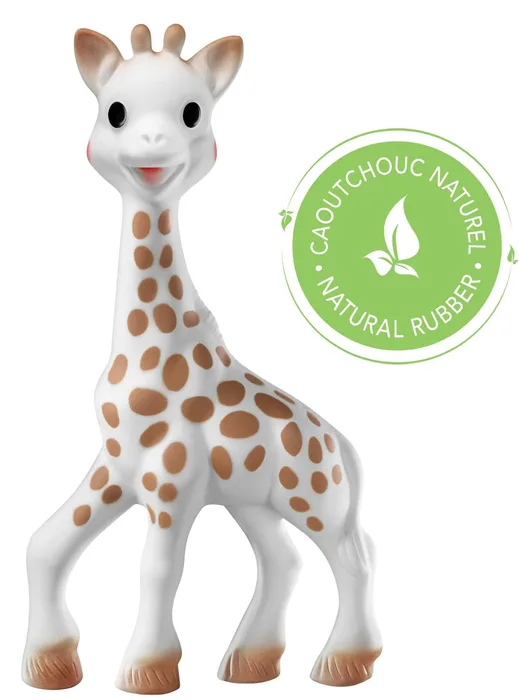
- Sophie la girafe Natural Rubber Teether - Buy. The classic natural rubber teether, firm enough to chew and easy for babies to grip.
- Comotomo Silicone Baby Teether - Buy. A food-grade silicone teether shaped like tiny fingers, easy to grab and chew.
- Munchkin Fresh Food Feeder - It depends. A mesh feeder that lets babies gum fresh fruit, useful for teething once they are 6 months or older.
- Momma Goose Baltic Amber Teething Necklace - Skip. An amber bead necklace sold for teething relief, the type of product the FDA warns against.
The verdict in 30 seconds
What mattered most
- Type
- Material
- Matches FDA advice
- Age
- Main risk
- Cleaning
Teething makes babies miserable and parents desperate, which is exactly when risky products sell. The FDA, echoing the American Academy of Pediatrics, keeps its advice simple: massage the gums, offer a firm rubber teether, and supervise. It also warns against teething jewelry after reports of deaths and serious injuries. We compared a classic natural rubber teether, a silicone teether, a mesh fresh-food feeder and a popular amber teething necklace.
The classic natural rubber teether, firm enough to chew and easy for babies to grip.
Best for: Parents who want the classic, firm rubber teether most babies recognize.
- Made from 100% natural rubber from the Hevea tree, phthalate-free, with non-toxic food-grade paint.
- A firm rubber teether, which matches the FDA's recommendation for soothing sore gums.
- Long legs and ears are easy for small hands to hold and bring to the mouth.
- Costs more than simple silicone teethers.
- The hollow body with a squeaker is harder to clean thoroughly than a solid teether.
- Natural rubber is not ideal for families managing latex sensitivities; check with your pediatrician.
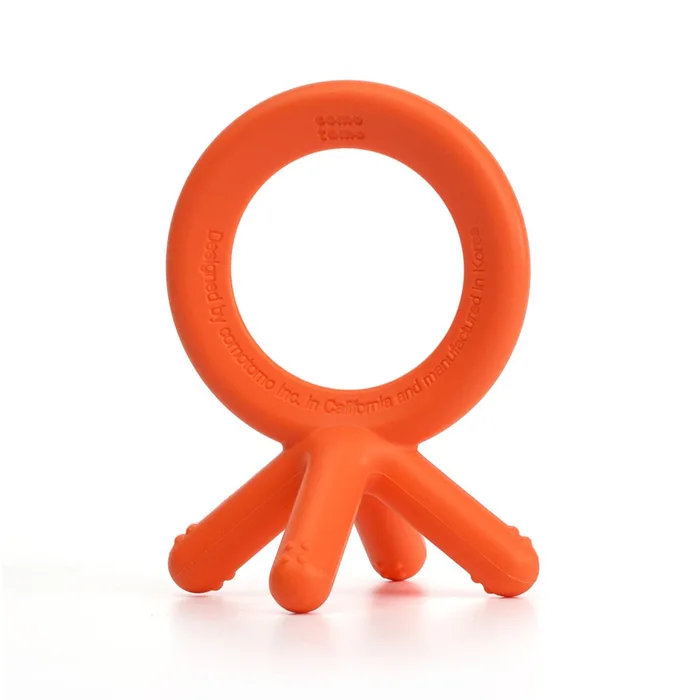
A food-grade silicone teether shaped like tiny fingers, easy to grab and chew.
Best for: Younger babies who need something light and easy to hold.
- Made from high-quality, food-grade silicone that Comotomo describes as durable but chewy.
- Shaped to mimic the baby fingers babies already gnaw on.
- Designed to be easy to grab and hold, even for fussy babies.
- Softer and chewier than natural rubber, which some babies like less.
- Silicone attracts lint and dust, so it needs regular washing.
- A single shape without the textures some teethers offer.
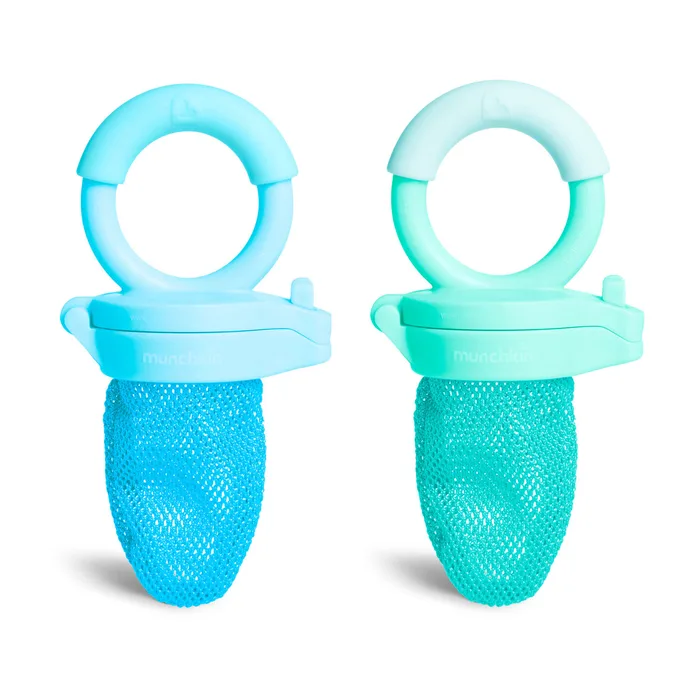
A mesh feeder that lets babies gum fresh fruit, useful for teething once they are 6 months or older.
Best for: Babies starting solids who find chilled fruit soothing on sore gums.
- Munchkin says only small, digestible pieces get through the mesh, helping reduce the risk of choking.
- Snaps shut around fresh fruit or vegetables for self-feeding.
- BPA-free, with colored mesh that reduces staining, sold as a 2-pack.
- For babies 6 months and up, so not for early teething.
- The mesh is fiddly to clean thoroughly after sticky fruit.
- The FDA advises against frozen teething rings because hard, frozen objects can hurt gums, so chill food rather than freezing it solid.
- It is a feeder, so it always needs close supervision.
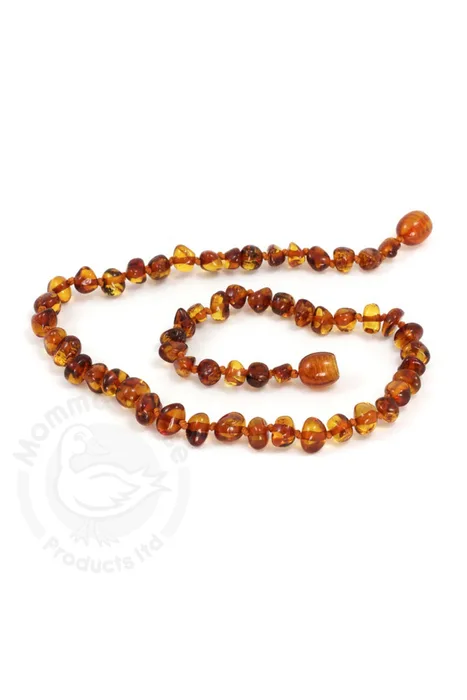
An amber bead necklace sold for teething relief, the type of product the FDA warns against.
Best for: No one; choose a firm rubber teether instead.
- Made with genuine Baltic amber beads.
- Sold in small and medium sizes.
- Popular and widely available from baby boutiques.
- The FDA has received reports of death and serious injuries, including strangulation and choking, caused by teething jewelry such as amber teething necklaces.
- The retailer listing claims amber releases succinic acid for pain relief; the FDA's teething guidance recommends firm rubber teethers instead.
- The seller notes the necklaces are not meant to be chewed, so they do nothing for the gums directly.
- A necklace on a baby is a risk during naps and unsupervised moments.
| Criteria | Sophie la girafe Natural Rubber Teether Top pick | Comotomo Silicone Baby Teether | Munchkin Fresh Food Feeder | Momma Goose Baltic Amber Teething Necklace |
|---|---|---|---|---|
| Verdict | Buy it | Buy it | It depends | Skip it |
| Best for | Parents who want the classic, firm rubber teether most babies recognize. | Younger babies who need something light and easy to hold. | Babies starting solids who find chilled fruit soothing on sore gums. | No one; choose a firm rubber teether instead. |
| Price tier | $$ · mid-range | $ · budget | $ · budget | $$ · mid-range |
| Type | Natural rubber teether | Silicone teether | Mesh fresh-food feeder | Amber bead necklace |
| Material | 100% natural rubber, food-grade paint | Food-grade silicone | BPA-free plastic and mesh | Baltic amber beads |
| Matches FDA advice | Yes, firm rubber teether | Firm teether, silicone | Feeder, supervise closely | No, FDA warns against |
| Age | Not listed | Not listed | 6 months and up | Not recommended |
| Main risk | Cleaning the hollow body | Lint and dust | Choking without supervision | Strangulation and choking |
| Cleaning | Hollow body, harder to clean | Easy to wash | Mesh needs scrubbing | Not applicable |
| Freezing | Not recommended | Not recommended | Chill, do not freeze solid | Not applicable |
| Best for | Classic firm teether | Tiny hands | Starting solids | No one |
Which one is right for you?
- Parents who want the classic, firm rubber teether most babies recognize. Buy it Sophie la girafe Natural Rubber Teether
- Younger babies who need something light and easy to hold. Buy it Comotomo Silicone Baby Teether
- Babies starting solids who find chilled fruit soothing on sore gums. It depends Munchkin Fresh Food Feeder
- No one; choose a firm rubber teether instead. Skip it Momma Goose Baltic Amber Teething Necklace
How we judged the field
Five things decide whether a teething product is worth buying: whether it matches pediatric safety guidance, how firm it is, how easy it is for a baby to hold, how easy it is to clean, and what could go wrong when a parent looks away. Safety comes first, because the most serious teething injuries come from products that seemed harmless. Firmness matters because babies soothe their gums by biting down.
The field splits into teethers, feeders, topical gels and teething jewelry. The FDA, endorsing American Academy of Pediatrics advice, recommends gum massage, firm rubber teethers that are not liquid-filled and close supervision, and warns against teething jewelry and numbing gels. We picked two teethers, a feeder and a popular amber necklace, then compared them with that guidance.
Sophie la girafe has been soothing teething babies since 1961, and it still fits the FDA’s advice better than most modern gadgets. It is made from 100% natural rubber from the sap of the Hevea tree, phthalate-free, and painted with non-toxic, food-grade paint, and it is firm enough to bite down on. The long legs and ears give small hands something to grip and steer into the mouth, and the shape reaches the back of the gums where molars come through later. The trade-offs are practical. It costs more than a basic silicone teether, and the hollow body with a squeaker is harder to clean thoroughly than a solid teether. Families managing latex sensitivities should check with their pediatrician. For most babies, it is the classic for good reason. Keep a second teether on hand for when one needs washing.
The Comotomo Silicone Baby Teether takes a simple idea: babies already chew their fingers, so Comotomo shaped a teether like tiny fingers. It is made from high-quality, food-grade silicone that Comotomo describes as durable but chewy, and the shape is easy to grab and hold even for fussy babies. Being light makes it a good first teether for younger babies who struggle with heavier toys. Silicone has downsides. It is chewier and softer than natural rubber, which some babies like less when their gums are really sore, and it attracts lint and dust, so it needs regular washing. It is a single shape without the extra textures some teethers offer. As an inexpensive, easy-to-hold teether that fits the firm, non-liquid guidance, it is an excellent value buy. Comotomo’s playful shape also makes it an easy gift for new parents.
The Munchkin Fresh Food Feeder is a feeder first and a teether second. You snap fresh fruit or vegetables into the mesh bag, and Munchkin says only small, digestible pieces get through, which helps reduce the risk of choking. For babies starting solids, gumming chilled fruit can be soothing, and the colored mesh reduces staining. It is BPA-free and comes as a 2-pack. The limits matter. It is for babies 6 months and up, so it does not help with early teething. The mesh is fiddly to clean after sticky fruit. And the FDA advises against frozen teething rings because hard, frozen objects can injure gums, so chill fruit rather than freezing it solid. Because it holds real food, it always needs close supervision. For older babies eating solids, it is a useful extra.
The Momma Goose Baltic Amber Teething Necklace is the product we would keep off your baby entirely. The retailer listing says amber contains succinic acid that relieves pain when worn against the skin, and notes the necklace is not meant to be chewed. The FDA’s position is clear: it has received reports of death and serious injuries to infants and children, including strangulation and choking, caused by teething jewelry such as amber teething necklaces. The FDA cites an 18-month-old strangled by an amber necklace during a nap, and lists choking, strangulation, mouth injury and infection among the risks. Sizing a necklace so a baby cannot reach it with their mouth does not remove the strangulation risk. A firm rubber teether does the soothing job with none of it. If a relative gives you one, it is fine to put it away.
Sophie la girafe Natural Rubber Teether vs Comotomo Silicone Baby Teether: which should you buy?
Sophie la girafe and the Comotomo teether both fit the FDA’s firm-teether advice, and the difference is feel. Sophie is natural rubber, firmer, and shaped with legs and ears that reach further into the mouth. Comotomo’s silicone is lighter, chewier and shaped like fingers, which suits younger babies.
If you want one classic teether that grows with your baby, buy Sophie. If your baby is very young or you want a cheaper, lighter option, buy the Comotomo. Many families end up with both.
What to look for
- Firm, not liquid-filled: the FDA recommends a firm rubber teether.
- Easy to grip: long handles or loops help small hands bring it to the mouth.
- Food-grade materials: natural rubber or food-grade silicone without added chemicals.
- Easy to clean: solid designs are simpler to keep clean than hollow ones.
- Chilled, not frozen: very hard frozen items can injure gums.
- No jewelry, no numbing gels: the FDA warns against teething jewelry and benzocaine or lidocaine for teething.
Our final take
Soothe with a firm teether and your finger. Sophie la girafe is our pick because it is the firm, natural rubber teether the FDA’s advice describes, and babies have loved it for decades. The Comotomo Silicone Baby Teether is the value choice for younger babies and small hands. The Munchkin Fresh Food Feeder is useful once your baby is 6 months or older and eating solids, as long as you supervise and chill rather than freeze. Skip amber teething necklaces like Momma Goose: the FDA has linked teething jewelry to deaths and serious injuries.
Questions, answered
What does the FDA recommend for teething pain?
The FDA endorses the American Academy of Pediatrics advice: gently rub or massage the gums with a clean finger, or give the child a firm rubber teether that is not liquid-filled. It also advises close supervision to prevent choking. Talk to your pediatrician if your baby seems very uncomfortable.
Are amber teething necklaces safe?
The FDA warns against teething jewelry. It has received reports of death and serious injuries to infants and children, including strangulation and choking, caused by teething jewelry such as amber teething necklaces. Risks include choking, strangulation, mouth injury and infection. Choose a teether instead.
Should I freeze a teether?
The FDA advises that teething rings should not be frozen, because very hard objects can injure delicate gums. A teether chilled in the refrigerator is a gentler option. The same logic applies to fruit in a feeder: chilled, not frozen solid.
Are teething gels safe for babies?
The FDA warns against benzocaine products for teething because they can cause a serious, sometimes fatal condition called methemoglobinemia, and against lidocaine for teething because of risks including seizures. It also discourages homeopathic teething tablets. Ask a pediatrician before using any medication.
When should I call the doctor about teething?
Teething can make babies fussy and drool more, but it is not usually a cause of high fever or serious illness. If your baby has a fever, diarrhea or seems unusually unwell, call your pediatrician rather than assuming it is teething. They can also suggest safe pain relief.
Deciding between the top two? See our head-to-head: Sophie la girafe Natural Rubber Teether vs Comotomo Silicone Baby Teether.
More Baby & Family reviews
 The Best Toddler Beds: 4 Compared (and One to Skip)
  The Best Toddler Plates: 4 Compared (and One to Skip)
  The Best Toddler and First Walker Shoes: 4 Compared (and One to Skip)
  The Best Toddler Step Stools and Kitchen Helper Towers: 4 Compared (and One to Skip)
  The Best Toddler Tricycles: 4 Compared (and One to Skip)
  The Best Toddler Utensils: 4 Compared (and One to Skip)