Explained
Tankless Water Heaters, Explained
After reading this you'll know how to size a tankless water heater to your real climate and fuel, and how to spot the specs that actually matter.
In this guide
Tankless water heaters heat water on demand instead of keeping a big tank hot all day, which promises endless hot water and lower standby losses. But the single number on the box, its peak flow rate, is measured under ideal conditions and rarely reflects what you'll get on a cold winter morning. The two things that trip up almost every first-time buyer are underestimating how much cold incoming water saps output, and underestimating the gas or electrical work a whole-home unit demands.
The 30-second version
- Size to flow and temperature rise, not the headline number. A heater rated for high flow in a warm state can deliver half that in a northern winter, because it has to raise cold water much further.
- Fuel decides the ceiling. Gas condensing units sustain high flow even with cold inlet water; whole-home electric units are simpler and vent-free but their output drops in the cold and they demand heavy electrical service.
- Installation is the hidden cost. Gas needs proper gas sizing, sealed condensing venting, and a condensate drain; big electric units often need a new high-amperage circuit or a full service upgrade.
- Endless does not mean unlimited. You get continuous hot water only up to the unit's flow capacity; run too many fixtures at once and the temperature drops.
- Plan for annual maintenance. Descaling or flushing keeps any tankless unit efficient, and a built-in flush port makes that yearly chore far less painful.
The products this guide is about
Our verdict on each, with the full reasoning on the companion review.
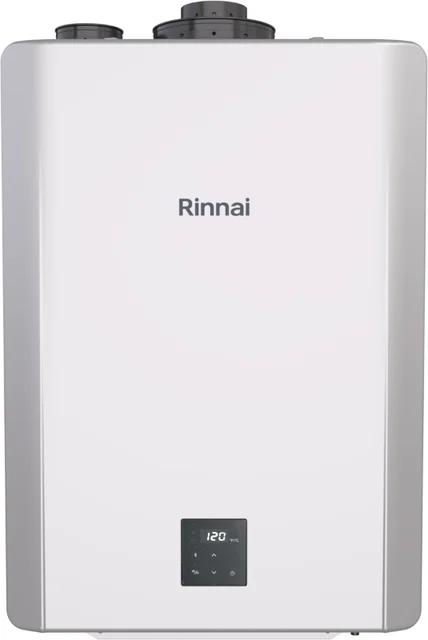
- Buy Rinnai SENSEI RX199iN The most complete whole-home gas condensing unit - high flow, top-tier efficiency, and genuinely useful app control. Amazon
- Buy Rheem ThermaForce RTGH-L199i A simpler, well-warrantied gas condensing alternative that covers most homes for less than the flagship. Amazon
- It depends Stiebel Eltron Tempra 36 Plus The electric unit to buy if you have the electrical service and a mild-to-moderate climate - and only then. Amazon
- Skip EcoSmart ECO 36 Marketed as whole-home, but owner reports of cold-climate shortfalls and reliability issues make it a risky pick. Amazon
What actually matters
- Flow rate at your real temperature rise - the gallons per minute a unit can deliver while heating water from your local incoming temperature to a usable shower temperature, not the best-case number on the label.
- Fuel type and infrastructure - whether you have natural gas, propane, or only electricity fundamentally changes which units can serve a whole home and what the install involves.
- Cold-climate capability - how gracefully the unit copes when winter groundwater is genuinely cold, which is where many electric units fall short.
- Efficiency (UEF) - how much of the fuel actually ends up in your hot water, which drives operating cost over the years you keep the unit.
- Install and code requirements - venting, gas sizing, condensate handling, and electrical service, all of which need a licensed professional.
- Warranty - especially on the heat exchanger, the expensive core component, since coverage length signals how long the maker expects it to last.
- Recirculation options - a built-in or add-on pump that cuts the wait for hot water at taps far from the unit, worth it for long pipe runs.
The specs, in plain English
Green flags vs red flags
Green flags
- The listing states flow rate at a specific temperature rise, not just a single peak GPM.
- The unit is clearly rated as whole-home and its output matches the fixtures you plan to run at once.
- A gas model is condensing with a high UEF and a long heat-exchanger warranty.
- The spec sheet is upfront about venting, gas sizing, or amperage requirements.
- There's a built-in flush or service port that makes annual descaling easy.
- Recirculation is available if you have long pipe runs and hate waiting for hot water.
Red flags
- A low price paired with a whole-home claim but no mention of the heavy electrical service it needs.
- Only a single peak GPM number with no temperature-rise context.
- Owner reports repeatedly describing it failing to keep up in cold climates.
- A short heat-exchanger warranty relative to comparable units.
- Marketing that implies DIY install is fine when the unit clearly needs gas or high-amperage work.
- Frequent reports of element or reliability failures compared with pricier rivals.
Who's who: the brands
- Rinnai - Long-established tankless specialist known for high-flow condensing gas units and app-based smart controls.
- Rheem - Broad water-heating maker offering value-minded condensing gas units with long heat-exchanger warranties.
- Stiebel Eltron - German maker of premium whole-home electric units with Advanced Flow Control.
- EcoSmart - Electric brand; check the amperage and cold-climate flow before trusting a whole-home claim.
- Navien - Condensing gas brand worth cross-shopping; check the maker's page for current efficiency and recirculation details.
- Bosch - Tankless brand worth cross-shopping; confirm current models and specs on the maker's page.
How to read a listing without getting fooled
Start with the flow rate, but never take it at face value: a peak GPM figure is almost always measured at a small, warm-climate temperature rise. Look for the flow quoted at a realistic rise for your region, or mentally discount the headline number if you live somewhere with cold winters. Next, confirm the fuel and infrastructure line items, gas units will list venting type and gas requirements, electric units will list kW and amperage. Treat a suspiciously low price on a whole-home electric unit as a prompt to check the amperage, because the install cost of a service upgrade can dwarf the sticker. Finally, read the warranty on the heat exchanger specifically, not just the headline warranty, and skim owner reports for patterns of cold-weather shortfalls rather than one-off complaints.
How much should you spend?
Think of tankless pricing in tiers rather than exact figures. Flagship gas condensing units cost the most and justify it with the highest flow, top efficiency, smart controls, and features like built-in recirculation, worth it for larger households that run several fixtures at once and plan to keep the unit a decade or more. A step down, well-built condensing gas units cover most two- and three-bathroom homes for less by dropping the smart extras, and this is where the value sweet spot usually sits. Electric units can look cheaper on the sticker, but the true cost includes any electrical service upgrade the unit demands, so a 'budget' electric heater can end up the most expensive option once install is priced in. Spending more is worth it for efficiency and warranty if you'll keep the unit long term; it is not worth it to buy capacity or smart features you'll never use. Whatever tier you choose, budget separately for professional installation, it is part of the real price, not an optional add-on.
Questions, answered
How do I size a tankless water heater for my home?
Add up the flow (GPM) of every fixture you want to run at the same time, then check the unit's flow at your coldest incoming water temperature, not its best-case rating. A heater that hits high flow in a warm state may deliver much less in a northern winter because it has to raise the water further. This gap is exactly why the same model can be great in one region and inadequate in another.
Is gas or electric better for a whole house?
For true whole-home demand, gas condensing units generally win because they sustain high flow even with cold incoming water and rarely need an electrical upgrade. Whole-home electric units are simpler and vent-free, but their output drops in cold climates and they can require roughly 150 amps of dedicated service. If you already have gas, a condensing gas unit is usually the more dependable choice.
Can I install a tankless water heater myself?
We strongly recommend against it. Gas units need correct gas-line sizing, sealed condensing venting, and a condensate drain, while whole-home electric units often need a new high-amperage circuit or a service upgrade. Both fuel types carry code, permit, and safety requirements that a licensed plumber or electrician should handle, and DIY installation commonly voids the warranty.
Do tankless heaters really give endless hot water?
They provide continuous hot water as long as demand stays within the unit's flow capacity, but they don't create unlimited simultaneous flow. Exceed the GPM rating and the temperature drops. Right-sizing to your fixtures and climate is what makes the 'endless' experience real, and a recirculation option can also cut the wait for hot water at distant taps.
Why does venting matter so much for gas models?
Condensing gas heaters produce cooler, acidic exhaust that must use the correct sealed venting material routed to code, plus a condensate drain. Improper venting is a carbon-monoxide and durability risk, not a cosmetic detail, and it's a core reason professional installation is non-negotiable for gas tankless units.
Do tankless water heaters need maintenance?
Yes. An annual descaling or flush keeps mineral buildup from choking efficiency and shortening the unit's life, especially in hard-water areas. A model with a built-in flush port makes this yearly task much easier, so it's worth factoring maintenance ease into your buying decision.
Or jump to the head-to-head: Rinnai SENSEI RX199iN vs Rheem ThermaForce RTGH-L199i.