

Home & Kitchen
The Best Tankless Water Heaters: 4 Compared (and One to Skip)
We compared two whole-home gas condensing units and two 36 kW electric units on flow rate, efficiency, cold-climate performance, and install reality.
The short version
A gas condensing tankless is the safest whole-home choice in almost any climate, and the Rinnai SENSEI RX199iN leads on flow (~11 GPM), efficiency (up to 0.98 UEF), and app control. The Rheem ThermaForce RTGH-L199i is the value-minded gas runner-up with a long heat-exchanger warranty. High-output electric units like the Stiebel Eltron Tempra 36 Plus can work well, but only in warm-to-moderate climates and only if your panel can handle roughly 150 amps, making it a true 'it depends.' We'd skip the EcoSmart ECO 36 for whole-home duty in cold regions, where owner reports of shortfalls and reliability issues pile up. All of these need professional installation. Best for: households that size the unit to their real climate and fuel rather than the box claims.
Our picks at a glance
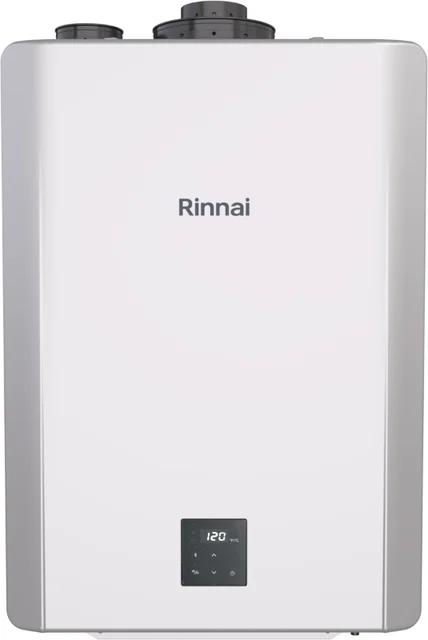
- Rinnai SENSEI RX199iN - Buy. The most complete whole-home gas condensing unit - high flow, top-tier efficiency, and genuinely useful app control.
- Rheem ThermaForce RTGH-L199i - Buy. A simpler, well-warrantied gas condensing alternative that covers most homes for less than the flagship.
- Stiebel Eltron Tempra 36 Plus - It depends. The electric unit to buy if you have the electrical service and a mild-to-moderate climate - and only then.
- EcoSmart ECO 36 - Skip. Marketed as whole-home, but owner reports of cold-climate shortfalls and reliability issues make it a risky pick.
The verdict in 30 seconds
What mattered most
- Fuel & type
- Max hot-water flow
- Efficiency
- Cold-climate capability
- Install requirements
- Smart & recirculation
Tankless water heaters promise endless hot water and lower standby losses, but the right pick depends heavily on your fuel, your climate, and your home's wiring or gas supply. We synthesized independent testing and owner reports across two whole-home gas condensing units and two high-output 36 kW electric units. Two earn a clear buy, one is a genuine 'it depends,' and one popular electric unit is an honest skip for most whole-home buyers.
The most complete whole-home gas condensing unit - high flow, top-tier efficiency, and genuinely useful app control.
Best for: Larger households on natural gas or propane that want maximum simultaneous hot-water capacity and long-term efficiency.
- Delivers roughly 11 GPM, enough for multiple simultaneous showers in most homes
- Condensing design reaches up to 0.98 UEF, among the highest efficiency available
- Smart Sense and Bluetooth app control, plus a Quick Flush port that simplifies annual maintenance
- Flagship pricing and, like all gas units, needs professional gas and venting work
- Built-in recirculation requires stepping up to the RXP pump variant
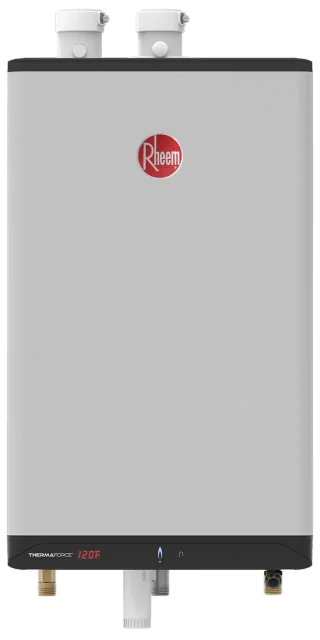
A simpler, well-warrantied gas condensing alternative that covers most homes for less than the flagship.
Best for: Gas households that want strong whole-home output and a lengthy warranty without paying for smart extras.
- Roughly 10 GPM of condensing output covers most 2-3 bathroom homes
- Reviewers highlight a simplified design with few moving parts and a long heat-exchanger warranty
- Supports wireless multi-unit cascading without depending on home Wi-Fi
- No built-in recirculation pump or app control at this trim
- Still requires professional gas sizing and condensing venting
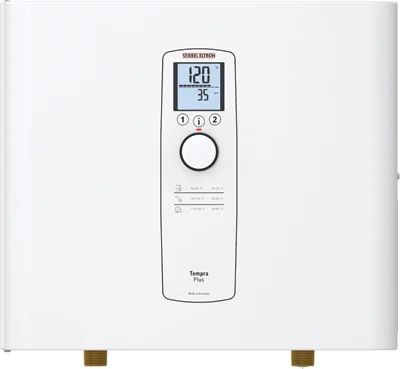
The electric unit to buy if you have the electrical service and a mild-to-moderate climate - and only then.
Best for: Homes without gas in warm or moderate climates that already have (or can add) heavy electrical service.
- Advanced Flow Control gently throttles water flow instead of running lukewarm when demand spikes
- Quiet, compact, and no combustion means no venting or gas line
- Owners in warm-inlet regions report consistent, reliable whole-home performance
- 36 kW draws around 150 amps, so many homes need a costly electrical service upgrade
- Cold incoming water in northern winters sharply cuts how many fixtures it can supply at once
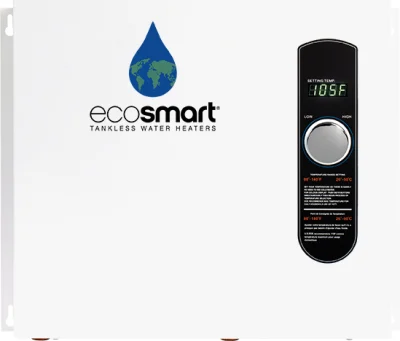
Marketed as whole-home, but owner reports of cold-climate shortfalls and reliability issues make it a risky pick.
Best for: At best a single-point or warm-climate light-duty role - not a dependable whole-home heater for cold regions.
- Lower upfront cost than premium gas or electric rivals
- Compact, self-modulating, and simple to operate via a digital dial
- Still needs roughly 150 amps of dedicated service despite the budget framing
- Owners in cold regions frequently report it cannot keep up with 'whole-home' claims
- More frequent reports of element and reliability problems than the pricier competitors
| Criteria | Rinnai SENSEI RX199iN Top pick | Rheem ThermaForce RTGH-L199i | Stiebel Eltron Tempra 36 Plus | EcoSmart ECO 36 |
|---|---|---|---|---|
| Verdict | Buy it | Buy it | It depends | Skip it |
| Best for | Larger households on natural gas or propane that want maximum simultaneous hot-water capacity and long-term efficiency. | Gas households that want strong whole-home output and a lengthy warranty without paying for smart extras. | Homes without gas in warm or moderate climates that already have (or can add) heavy electrical service. | At best a single-point or warm-climate light-duty role - not a dependable whole-home heater for cold regions. |
| Price tier | $$$$ · flagship | $$$ · premium | $$$ · premium | $$ · mid-range |
| Fuel & type | Condensing natural gas / propane | Condensing natural gas / propane | Electric, 240V 36 kW | Electric, 240V 36 kW |
| Max hot-water flow | Up to ~11 GPM | Up to ~10 GPM | ~4-6 GPM (climate-dependent) | ~3-6 GPM (climate-dependent) |
| Efficiency | Up to 0.98 UEF | 0.90 UEF | ~99% at the unit | ~99% at the unit |
| Cold-climate capability | Strong | Strong | Limited by amperage | Weak in winter |
| Install requirements | Pro gas + condensing venting | Pro gas + condensing venting | Pro electrical; ~150A service | Pro electrical; ~150A service |
| Smart & recirculation | Bluetooth app; RXP adds pump | RF cascading; no app/pump | Flow Control; no app | Basic digital dial; no app |
| Warranty | 12-yr heat exchanger | 15-yr heat exchanger | 3-yr limited | Lifetime (conditional) |
| Price tier | $$$$ · flagship | $$$ · premium | $$$ · premium | $$ · mid-range |
Which one is right for you?
- Larger households on natural gas or propane that want maximum simultaneous hot-water capacity and long-term efficiency. Buy it Rinnai SENSEI RX199iN
- Gas households that want strong whole-home output and a lengthy warranty without paying for smart extras. Buy it Rheem ThermaForce RTGH-L199i
- Homes without gas in warm or moderate climates that already have (or can add) heavy electrical service. It depends Stiebel Eltron Tempra 36 Plus
- At best a single-point or warm-climate light-duty role - not a dependable whole-home heater for cold regions. Skip it EcoSmart ECO 36
How we judged the field
We don’t run our own lab. Instead, we synthesize independent testing, manufacturer specifications, and aggregated owner reports to find where the marketing and the real-world experience diverge. For tankless water heaters, the criteria that actually separate good from bad are: sustained flow rate at a realistic temperature rise, efficiency, how gracefully the unit copes with cold incoming water, install and electrical or gas requirements, warranty, and long-term reliability. We deliberately weighted cold-climate performance and installation reality heavily, because those are where owners are most often disappointed after buying on peak-flow numbers alone.
We compared two whole-home gas condensing units and two 36 kW electric units so the trade-offs between fuels are visible side by side.
Rinnai SENSEI RX199iN - buy
This is the most complete whole-home unit in the group. As a condensing gas heater it sustains roughly 11 GPM even when incoming water is cold, which is enough to run multiple showers and a fixture at once in most homes. Efficiency tops out around 0.98 UEF, and reviewers consistently note the value of Rinnai’s Bluetooth app control and the built-in Quick Flush port, which makes the annual maintenance that keeps any tankless unit healthy far less painful. It is priced at the top of the field, and like every gas unit it needs professional gas and condensing-vent work, but for capacity plus efficiency plus usability it’s the pick.
Rheem ThermaForce RTGH-L199i - buy
The ThermaForce is the sensible-money gas choice. It delivers around 10 GPM of condensing output, which still covers most two- and three-bathroom homes, and independent coverage highlights its simplified design with few moving parts and a notably long heat-exchanger warranty. You give up the flagship’s built-in recirculation and app control at this trim, and it still requires professional gas sizing and venting, but as a durable, high-output gas unit for less than the flagship it’s easy to recommend.
Stiebel Eltron Tempra 36 Plus - it depends
This is the electric unit we’d actually trust, with a big caveat. Its Advanced Flow Control gently slows water flow rather than delivering lukewarm water when demand outstrips capacity, and owners in warm-inlet regions report consistent whole-home performance with none of the venting or gas hassle. The problem is physics and wiring: at 36 kW it draws close to 150 amps, so many homes need an expensive service upgrade, and in a cold northern winter the number of fixtures it can supply at once drops sharply. If you lack gas, live somewhere temperate, and have the panel capacity, it’s genuinely good. Otherwise it isn’t.
EcoSmart ECO 36 - skip
The ECO 36 is marketed as a whole-home solution at a friendlier price, and that framing is where owners get burned. It needs the same roughly 150 amps of dedicated service as the pricier Stiebel, so the ‘budget’ label is misleading once installation is priced in. More importantly, owner reports repeatedly describe it failing to keep up with whole-home claims in cold climates, alongside more frequent element and reliability complaints than the other units here. It can make sense in a warm climate or a lighter-duty point-of-use role, but as a dependable whole-home heater for most of the country, we’d skip it.
Rinnai SENSEI RX199iN vs Rheem ThermaForce RTGH-L199i: which should you buy?
Both are strong condensing gas units, so the decision is about how much capacity and convenience you need. The Rinnai wins on peak flow (~11 GPM vs ~10 GPM), higher top-end efficiency, and app control, and its optional pump variant adds recirculation for faster hot water at distant taps. The Rheem answers with a longer heat-exchanger warranty, a simpler mechanical design that some owners prefer for longevity, and a lower price. If you have a large household or want smart control and recirculation, pay up for the Rinnai. If you want dependable whole-home output and a long warranty without the extras, the ThermaForce saves money without meaningfully compromising the hot water.
What to look for
- Match flow rate to your climate, not the headline number. Check GPM at your coldest incoming water temperature, then add up the fixtures you’ll run at once.
- Confirm your fuel and infrastructure. Gas units need proper gas sizing and condensing venting; whole-home electric units often need ~150 amps of dedicated service.
- Budget for professional installation and permits. This is a code-and-safety job for a licensed plumber or electrician, not a weekend DIY.
- Prioritize efficiency (UEF) and warranty if you plan to keep the unit a decade or more.
- Consider recirculation if you have long pipe runs and hate waiting for hot water.
- Plan for maintenance. Annual descaling/flushing keeps any tankless unit efficient; a built-in flush port makes it easier.
Our final take
For whole-home hot water in almost any climate, a gas condensing unit is the most reliable answer, and the Rinnai SENSEI RX199iN is the pick for its combination of flow, efficiency, and controls. The Rheem ThermaForce RTGH-L199i is the value runner-up that still covers most homes. High-output electric like the Stiebel Eltron Tempra 36 Plus is a legitimate choice, but only where the climate is mild and the electrical service is up to it, which is why it lands as an ‘it depends.’ The EcoSmart ECO 36 is the one to skip for serious whole-home duty. Whichever you choose, size it to your real conditions and have it installed by a professional, and the endless-hot-water promise will actually hold up.
Questions, answered
Can I install a tankless water heater myself?
We strongly recommend against it. Gas condensing units require correct gas-line sizing, sealed condensing venting, and a condensate drain, while whole-home electric units often need a new high-amperage circuit and sometimes a service upgrade. Both fuel types have code, permit, and safety requirements that a licensed plumber or electrician handles, and DIY installation commonly voids the warranty.
How do I size a tankless heater for my home?
Sizing is about flow rate versus temperature rise, and it changes with your climate. Add up the GPM of fixtures you want to run at once, then check the unit's flow at your coldest incoming water temperature. A heater rated at 10 GPM in a warm state may only deliver half that in a northern winter, because it has to raise the water further. This is exactly why the same electric model can be excellent in one region and inadequate in another.
Is gas or electric better for a whole house?
For true whole-home demand, gas condensing units generally win because they sustain high flow even with cold incoming water and rarely need an electrical upgrade. Whole-home electric units are simpler and vent-free, but their output drops in cold climates and they can require roughly 150 amps of dedicated service. If you already have gas, a condensing gas unit is usually the more dependable choice.
Why does venting matter so much for gas models?
Condensing gas heaters produce cooler, acidic exhaust and must use the correct sealed venting material routed to code, plus a condensate drain. Improper venting is a carbon-monoxide and durability risk, not a cosmetic detail. This is a core reason professional installation is non-negotiable for gas tankless units.
Do tankless heaters really give endless hot water?
They provide continuous hot water as long as demand stays within the unit's flow capacity, but they do not create unlimited simultaneous flow. Exceed the GPM rating and temperature drops. Right-sizing to your fixtures and climate is what makes the 'endless' experience real, and adding a recirculation option can also cut the wait for hot water at distant taps.
Deciding between the top two? See our head-to-head: Rinnai SENSEI RX199iN vs Rheem ThermaForce RTGH-L199i.
More Home & Kitchen reviews
 The Best Toaster Ovens (and Air-Fryer Hybrids) We'd Actually Buy
  The Best Pop-Up Toasters: 4 Compared (and One to Skip)
  The Best Touchless Kitchen Trash Cans: 4 Compared (and One to Skip)
  The Best Tower Fans: 4 Compared (and One to Skip)
  The Best Travel Mugs: 4 Compared (and One to Skip)
  The Best Vacuum Sealers: 4 Compared (and One to Skip)