Explained
Stand Mixers, Explained
After reading, you will understand every spec on a stand mixer listing and know which ones actually matter for the baking you do.
In this guide
A stand mixer is a hold-it-for-years purchase, and listings pile on numbers, wattage, quarts, speed counts, that rarely tell you how the machine performs. What really matters is how the beater moves through the bowl, whether the motor holds steady under stiff dough, and whether you will ever use the attachments you are paying for. This guide decodes the terms so you can match a mixer to what you bake rather than to marketing.
The 30-second version
- Match the mixer to your baking, not the spec sheet. A light-batter baker and a weekly bread baker need very different machines, and the biggest wattage number rarely settles it.
- Bowl coverage is the quiet dealbreaker. The most common owner regret is a beater that misses the bottom and sides, leaving ingredients unmixed no matter how powerful the motor is.
- Tilt-head suits most people; bowl-driven suits heavy bread. Easy loading and tool swaps win for everyday baking, while a rotating-bowl design gives the torque and capacity serious bread needs.
- Attachments are only worth it if you will use them. A power hub that grinds meat or rolls pasta adds real cost, and paying for an ecosystem you ignore is wasted money.
- Counter presence decides how much you use it. A heavy mixer that lives in a cupboard gets used far less than a lighter one left out, so weight and footprint are buying criteria, not afterthoughts.
The products this guide is about
Our verdict on each, with the full reasoning on the companion review.
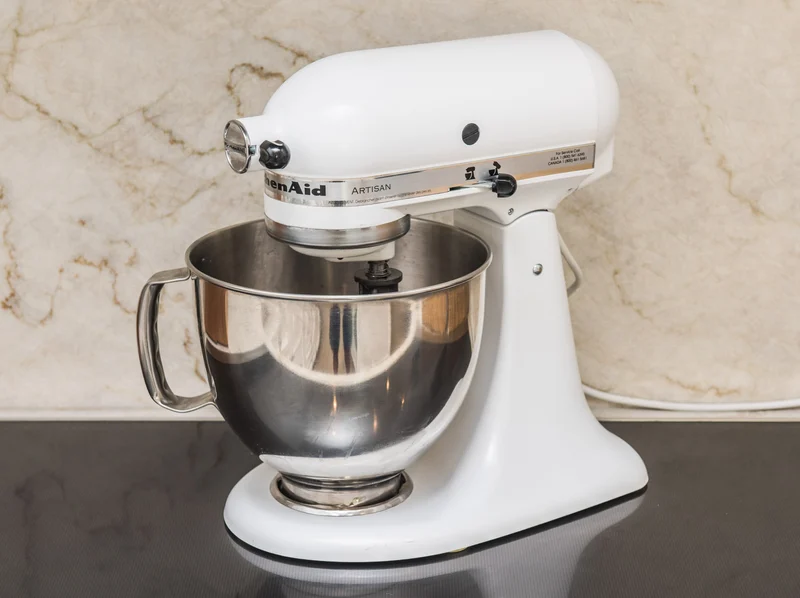
- Buy KitchenAid Artisan 5-Quart Tilt-Head Stand Mixer The versatile all-rounder that does most home baking well and takes more attachments than anything else here. Amazon
- Buy Breville Bakery Chef Stand Mixer A quieter, feature-rich tilt-head that scrapes the bowl for you but skips the wide attachment ecosystem. Amazon
- It depends Ankarsrum Original Stand Mixer A bowl-driven bread powerhouse with huge capacity, but a real learning curve and awkward with small jobs. Amazon
- Skip Hamilton Beach 6-Speed Classic Stand Mixer A cheap two-in-one that converts to a hand mixer, but under-mixes and feels flimsy where it counts. Amazon
What actually matters
- Bowl coverage is how completely the beater reaches the bottom and sides. Poor coverage forces constant hand-scraping and is the single most common long-term complaint.
- Motor behavior under load matters more than raw wattage. A good mixer holds its speed as dough thickens instead of bogging down or overheating.
- Bowl capacity should fit your typical batch. Too small and bread dough crowds and climbs; too large and small jobs like a little cream never whip properly.
- Drive style (tilt-head, bowl-lift, or bowl-driven) sets how you load the machine and how much heavy-dough strength you get.
- Attachment ecosystem determines whether the mixer can grow into pasta, grinding, or spiralizing, or stay a dedicated baker.
- Footprint, weight, and noise decide whether the machine stays on the counter and pleasant to run, which drives how often you actually reach for it.
- Parts and accessory availability affects long-term value, since a machine you keep for a decade needs replaceable beaters and bowls.
The specs, in plain English
Green flags vs red flags
Green flags
- A beater or scraper design that clearly reaches the whole bowl, ideally noted in owner reports as needing little manual scraping
- A motor described as holding speed under heavy dough rather than bogging or heating up
- Bowl capacity that matches the batches you actually make
- Widely available replacement bowls, beaters, and parts for the long haul
- A footprint and weight you are willing to leave out on the counter
Red flags
- Repeated owner reports that the beaters miss the bottom and sides and leave ingredients unmixed
- A motor that reportedly slows, strains, or smells hot on stiff or doubled dough
- Flimsy-feeling bowl and attachments, or a build that wobbles under load
- A big attachment catalog you are paying for but will never realistically use
- Hard-to-source or proprietary accessories that make future repairs difficult
Who's who: the brands
- KitchenAid - The default household name; broad tilt-head range with the widest attachment ecosystem and easy-to-find parts.
- Breville - Feature-focused tilt-heads known for quieter, load-sensing motors and extras like scraper beaters and built-in timers.
- Ankarsrum - Swedish bowl-driven machines built for high-torque, high-capacity bread kneading rather than lifestyle attachments.
- Hamilton Beach - Budget-oriented mixers, including two-in-one stand-and-hand designs, aimed at occasional light mixing.
How to read a listing without getting fooled
Start by ignoring the headline wattage, which sells boxes but does not tell you how the machine mixes. Instead look for how the beater covers the bowl and whether the motor holds speed under load; owner reports are more honest here than the spec table. Read the capacity as a match to your batches, not as bigger-is-better, since an oversized bowl whips small quantities poorly. Note the drive style to understand loading and heavy-dough strength: tilt-head for easy everyday use, bowl-lift or bowl-driven for serious bread. Finally, treat the attachment list as optional cost, not value, and confirm that basic parts like extra bowls and beaters are easy to buy, because you will keep this machine for years.
How much should you spend?
Spend according to what and how often you bake rather than chasing the top of the range. Entry-level machines can genuinely under-mix and strain on dough, so if you bake with any regularity, the mid-range is where reliability and proper bowl coverage begin, and it is usually the value sweet spot for most homes. Paying up buys quieter running, steadier motors under heavy dough, larger capacity, and conveniences like timers or scraper beaters, all worth it for frequent or serious bakers. It stops being worth it when you are paying for a large attachment ecosystem you will never touch or capacity far beyond your typical batch. If you bake rarely and only mix thin batters, the cheapest tier may suffice, but expect to scrape by hand and to accept a flimsier feel.
Questions, answered
Is a tilt-head or bowl-lift mixer better?
Tilt-head models are easier to load and swap tools, which suits most home baking. Bowl-lift and bowl-driven designs are more stable and stronger for stiff dough in large batches. Choose based on how often you knead heavy bread versus mixing lighter batters.
Does higher wattage mean a better mixer?
Not directly. Wattage measures electrical draw, not mixing strength, and gearing plus a load-sensing motor often matter more. A well-designed lower-wattage machine can out-mix a higher-wattage one that bogs down under stiff dough.
What bowl size should I get?
Around five quarts fits most households for cakes, cookies, and the occasional loaf. Go larger only if you regularly make big or doubled bread batches, and be aware very large bowls whip small quantities of cream or egg whites poorly.
Are cheap stand mixers worth buying?
Usually not for regular baking. Budget models often under-mix because the beaters miss the bowl's bottom and sides, and their motors strain on dough. If you bake rarely and mix thin batters one can suffice, but expect manual scraping and a flimsier build.
Do I really need the attachments?
Only if you will use them. A power hub that rolls pasta or grinds meat adds real cost and value only to people who want those functions. If you just bake, the included beater, whisk, and dough hook cover almost everything.
Or jump to the head-to-head: KitchenAid Artisan 5-Quart Tilt-Head Stand Mixer vs Breville Bakery Chef Stand Mixer.